The Nigerian Prize For Literature 2016: The Judges’ Report

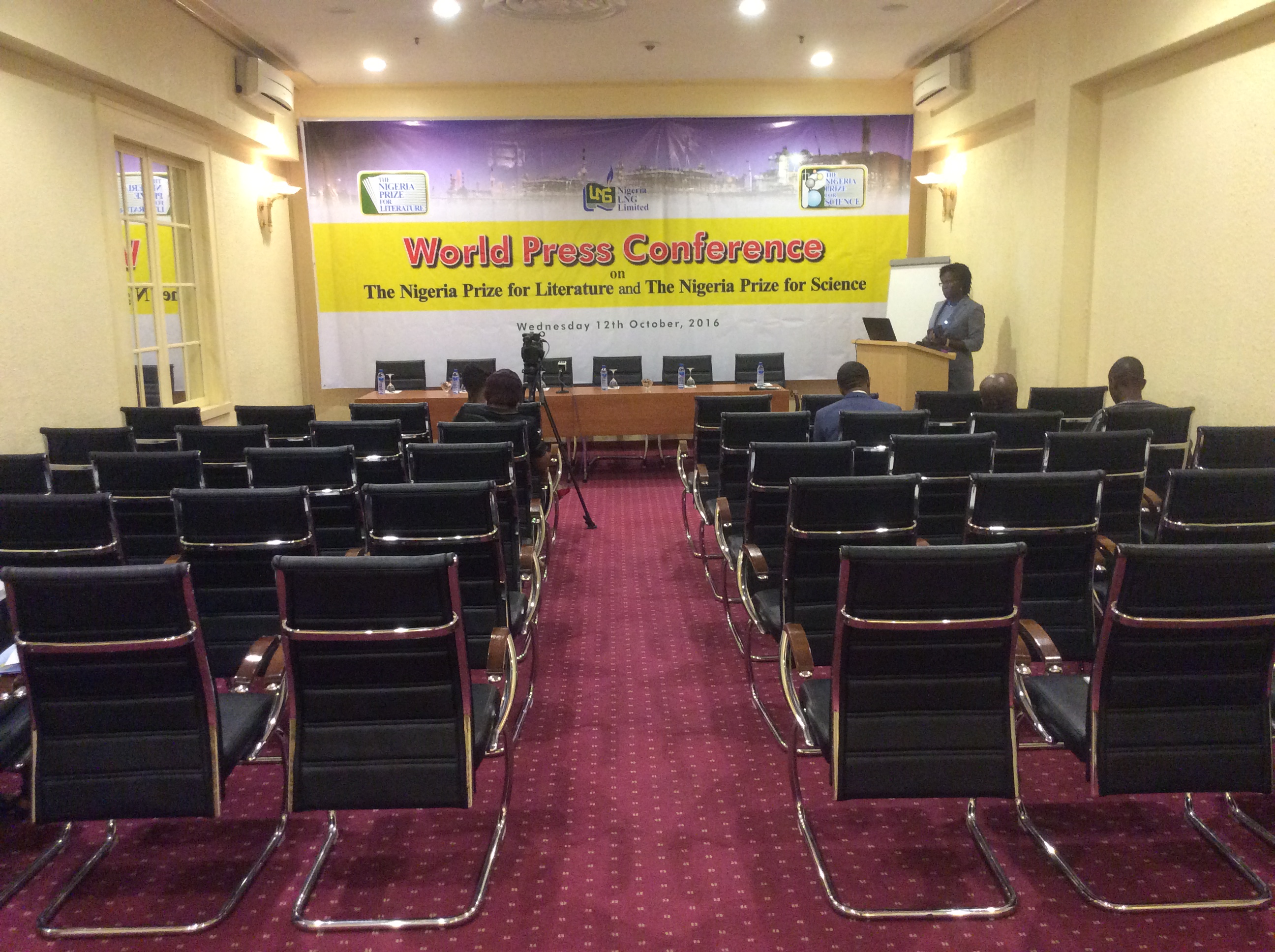
Editor’s note: Today, at Sheraton Hotel, Ikẹjà, Lagos, the winner of the 2016 Nigeria Prize for Literature was announced as Abubakar Adam Ibrahim for his novel Season of Crimson Blossoms (Parressia, 2015) and for the “competent manner in which Ibrahim demonstrated the execution of his work.” Here is the full speech given by Emeritus Professor Ayọ̀ Bánjọ, the Chairman of the Advisory Board for the Prize, on the justification for the prize, and other commentary on the whole judging process.

_____________
image

__________

GENERAL COMMENTS ABOUT THE 2016 COMPETITION BY PROFESSOR AYỌ BÁNJỌ

The Nigeria Prize for Literature is an annual competition which awards annual prizes to winning entries in the literary genres of Prose Fiction, Drama, Poetry and Children’s Literature on a rotational basis.

This year, the genre in focus is Prose Fiction. The following advertised rules were applied during the process of short listing and selecting the winning entry.  

Eligibility: The competition is open to all Nigerians anywhere in the world. This does not mean that writing about other peoples and cultures in a foreign setting is acceptable.

Relevance should be interpreted as consistency with the goals and aspirations of the Nigerian nation and its peoples – specifically, respect for their traditions and their identity as Africans.

Publishing: The prize is meant to encourage local publishing and book distribution, among other goals. Books published outside the country are eligible for entry. Only properly published texts are acceptable. However, efficient editing and good presentation of text are considered essential parts of publishing and are taken into account during the process of evaluation. The quality of the language is important, and errors of style and grammar are  considered major blemishes; these errors may not pass as typographical errors.

Genre: for this year’s competition, a basic distinction is drawn between fiction – that is imaginative prose which may incorporate factual materials and non-fiction like history, biography and sociological tracts which sometimes feature in the submissions for the competition.

This year’s completion has attracted a strong field with such high quality that even without this current shortlist of 3 books there would have still been a winner.
image

COMMENTS ON SHORTLIST OF THREE BOOKS

All the three shortlisted texts cover a wide range of urgent societal and cultural issues such as the status of women in a patriarchal society, the education of youths, the search for identity, the danger of youth unemployment, corruption, insurgency, religious hypocrisy, migration, broken homes and single parenthood and attendant impact on women and children who are usually at the receiving end of most of these problems.

  • Chika Unigwe’s Night Dancer, tells the familiar story of the continuing marginalization of women in Igbo society. The author shows a strong awareness of this context by  the flavoring of the narrative with linguistic and cultural insertions. The novel tells the story of Mma, a young woman’s anguished search for her roots from the opening of the novel when she feels that she has been denied by her mother, until she gradually discovers that her mother had been deeply hurt by both her matrimonial and maiden families. In the course of Mma’s adventures in excavating her identity and her mother’s past, she is predictably confronted by the same cultural inhibitions that her mother had rebelled against. Mma’s own denunciation of those traditions and her belated adulation of a mother she had despised at the beginning of the novel is a slow and painful process of discovering the truth of her family background, and a radical change in her perception and understanding of this background. All this is aimed at validating Unigwe’s passionate call for the extension of the frontiers of women’s space in society.
  • Elnathan John’s Born on a Tuesday is a book about contemporary Northern Nigerian Society as seen through the eyes of a young man. The narrative is told from within a deviant community seen through the first person consciousness of street boys, popularly described as al-majiri. Virtually abandoned by parents and community the  young boy, who tells the story in his own words, finds his survival through a brotherhood of other street boys. Their small outcast community is exploited by politicians and the brutally victimized as scapegoats by law enforcement agencies.  They inevitably patronized and taken over by leaders of religious sects and become a source of recruitment terrorist groups. One of the strong points of the novel is its insight into the social mechanisms that lead to national crisis and terrorism or the social processes that give rise to religious fundamentalism and political hypocrisy, corruption and exploitation.
  • Abubakar Adam Ibrahim’s Season of Crimson Blossoms is a very skillful and sympathetic narrative handling of a most psychologically and emotionally painful between an aging widow, who seeks release from her culturally imposed sexual repression, and a young outcast leader of a group of “weed” – i.e. hard drug – dealers who are ready thugs for politicians. In the background as immediately cause of the widow’s troubles, is the violent history of ethnic hatred and conflicts in Jos, placed within the larger context of contemporary Nigerian history with its complex and sometimes violent intertwining of politics, religion and culture. The novel moves from its evocative and passionate first sentence through a web of anxious moments to a tragic and painful conclusion with hardly a moment of respite.  All through its projects through is main action, the implications of certain key social issues for younger audience – key issues such as early marriage, drug abuse and impact of relationships on human action. It is a novel whose narrow domestic action has wider universal relevance beyond its relevance for its immediate setting.

On behalf of the advisory board of the Nigeria Prize for Literature and of the judges and international consultant, I have the pleasure of announcing as the winner of this year’s entry, Season of Crimson Blossoms by Abubakar Adam Ibrahim.

________

The award ceremony will take place early next year.
Three Writers Shortlisted for the Nigerian Literature prize

elnathanOut of the total of 173 entries received for the NLNG-sponsored Nigerian Literature Prize 2016, a shortlist of three has been released. This announcement follows an initial shortlist of eleven which was released in July. The three shortlisted entries, in alphabetic order, are:

  • Born on a Tuesday (Elnathan John)
  • Night Dancer (Chika Unigwe), and
  • Season of Crimson Blossoms (Abubakar Adam Ibrahim).

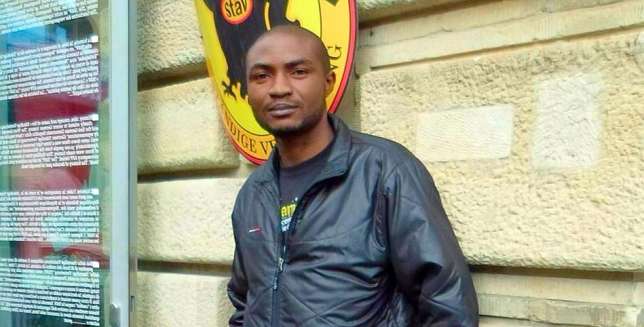
Born on a Tuesday, published by Parresia Books, is a story about contemporary northern Nigeria which has over the years experienced religious violence and carnage as seen through the eyes of a young man. Born on a Tuesday is Elnathan John’s first novel. John is a writer, lawyer and a Civitella Ranieri Fellow. He has also been shortlisted twice by the Caine Prize for African Writing.

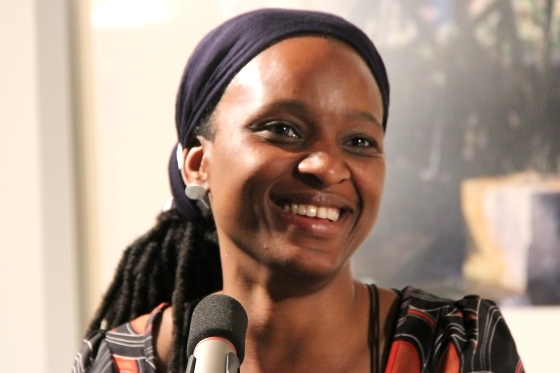
unigweChika Unigwe’s Night Dancer, published by Jonathan Cape, focusses on the young protagonist’s search for identity and her consequent reappraisal of her mother’s values. This is Chika Unigwe’s second time on the fiction shortlist. She won in 2012 with her novel On Black Sisters’ Street. Unigwe sits on the Board of Trustees of pan-African literary initiative Writivism, and was recently appointed a judge for the Man Booker Prize, 2017.

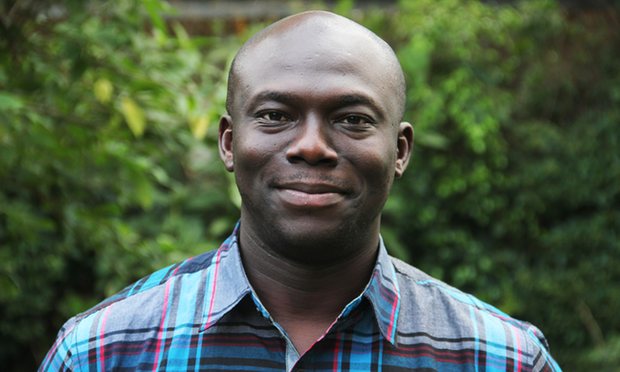
Season of Crimson Blossoms is a novel set in conservative northern Nigeria. It focusses on unusual love affairs between characters, as well as ambiguities in religion and politics. Published by Cassava Republic Press, Season of Crimson Blossoms is Ibrahim’s debut novel. Ibrahim has won the BBC African Performance Prize and the Amatu Braide Prize for Prose. He is a Gabriel Garcia Marquez Fellow (2013) and a Civitella Ranieri Fellow (2015).


More from the press release:Abubakar-Adam-Ibrahim

“The Nigeria Prize for Literature has since 2004 rewarded eminent writers such as Gabriel Okara for his volume of poetry, The Dreamer, His Vision (co-winner 2005 – poetry); Professor Ezenwa Ohaeto, for his volume of poetry, Chants of a Minstrel (co-winner 2005 poetry); Ahmed Yerima (2006 – drama) for his book Hard Ground;  Mabel Segun (co-winner 2007 – children’s literature) for her collection of short plays Reader’s Theatre; Akachi Adimora-Ezeigbo (co-winner 2007 – children’s literature) with her book, My Cousin Sammy; Kaine Agary (2008 – prose) for her novel Yellow Yellow; Esiaba Irobi (2010 – drama) who won the prize posthumously with his book Cemetery Road; Adeleke Adeyemi (2011 – children’s literature) with his book The Missing Clock and Chika Unigwe (2012 – prose), with her novel, On Black Sisters’ Street, Tade Ipadeola (2013 – poetry) with his collection of poems, The Sahara Testaments and Sam Ukala (2014-drama) with his play, Iredi War.”

The eventual winner of the competition will be announced at a World Press Conference in October, 2016.

Congrats to the shortlisted writers.

________

Photo Credit: Bookslive.co.za, GuardianUK, PulseNG

NLNG Releases a Shortlist of 11 for 2016

According to the Advisory Board for The Nigeria Prize for Literature, led by Emeritus Professor Ayo Banjo, 11 Nigerian authors have been shortlisted for this year’s Literature Prize for Prose Fiction, worth $100,000. This initial shortlist was drawn from 173 books.

Here are the authors (resident in the country and outside) and their work in the shortlist:

  • Chika Unigwe (winner of the prize in 2012): Night Dancer (2014).
  • Ogochukwu Promise (author of over fifteen novels): Sorrow’s Joy
  • Yejide Kilanko (a writer of poetry and fiction): Daughters Who Walk This Path.
  • Ifeoma Okoye (a writer and author of children’s literature): The Fourth World
  • Sefi Atta (author of Everything Good Will Come): A Bit of Difference
  • Abubakar Adam Ibrahim (writer and journalist): Season of Crimson Blossoms
  • Ifeoluwa Adeniyi (radio broadcaster): On the Bank of the River
  • Elnathan John (lawyer and writer): Born On A Tuesday
  • Aramide Segun (winner of an ANA Prose Prize): Eniitan Daughter of Destiny
  • Maryam Awaisu (radio presenter): Burning Bright
  • Mansim Chumah Okafor (author of two previous books of fiction): The Parable of the Lost Shepherds

The list was presented by the chairman, panel of judges for this year’s prize, Prof. Dan Izevbaye, well-respected literary critic and a professor of English Language at Bowen University, Iwo. Other members of the panel of judges include Professor Asabe Usman Kabir, Professor of Oral and African Literatures at Usmanu Danfodiyo University Sokoto and Professor Isidore Diala, a professor of African Literature at Imo State University, Owerri and first winner of The Nigeria Prize for Literary Criticism.

“The Nigeria Prize for Literature has, since 2004, rewarded eminent writers such as Gabriel Okara (co-winner, 2004, poetry), Professor Ezenwa Ohaeto (co-winner, 2004, poetry) for The Dreamer, His Vision; Ahmed Yerima (2005, drama) for his play, Hard Ground; Mabel Segun (co-winner, 2007, children’s literature) for her collection of short plays Reader’s Theatre; Professor Akachi Adimora-Ezeigbo (co-winner, 2007, children’s literature) for her book, My Cousin Sammy; Kaine Agary (2008, prose) for her book Yellow Yellow; Esiaba Irobi (2010, drama) who clinched the prize posthumously with his book Cemetery Road; Adeleke Adeyemi (2011, children’s literature) with his book The Missing Clock; Chika Unigwe (2012, prose), with her novel, On Black Sisters Street; Tade Ipadeola (2013, poetry) with his collection of poems, The Sahara Testaments and Professor Sam Ukala (2014, drama) with his play, Iredi War.”

Sailing Young Imagination

When I started teaching in Lagos, in 2012, on return from Edwardsville, one of the things I had in mind was finding a way to combine my passion for literature with my training and vocation as a teacher and linguist. First through a series of “Meet-A-Writer” events where we brought practising writers to meet and interact with the students, and also through excursions to events to fire up students’ artistic sensibilities, I succeeded to a reasonable extent. One of the highlights of the last Ake Arts and Books Festival, for me as a guest and as a guide to the students of mine that I brought along, was the ride home listening to the literary and creative aspirations of the students and their prospects for the future.

Gradually becoming disenchanted with the overall purpose of teaching English language as a compulsory subject (and a medium of instruction) in a post-colonial society, the idea of literature as a flight of fancy and a window into the mind and creativity of young adults became something more interesting, and certainly more rewarding than teaching grammar in a language compelled by law, sustained by an illusion, and limited in the true sense of the capacity to genuinely express the true identity of the continent. There’s an irony here, of course, in the fact that these literatures, for now, are also expressed in this same “limiting” language. But that’s a story for another day.

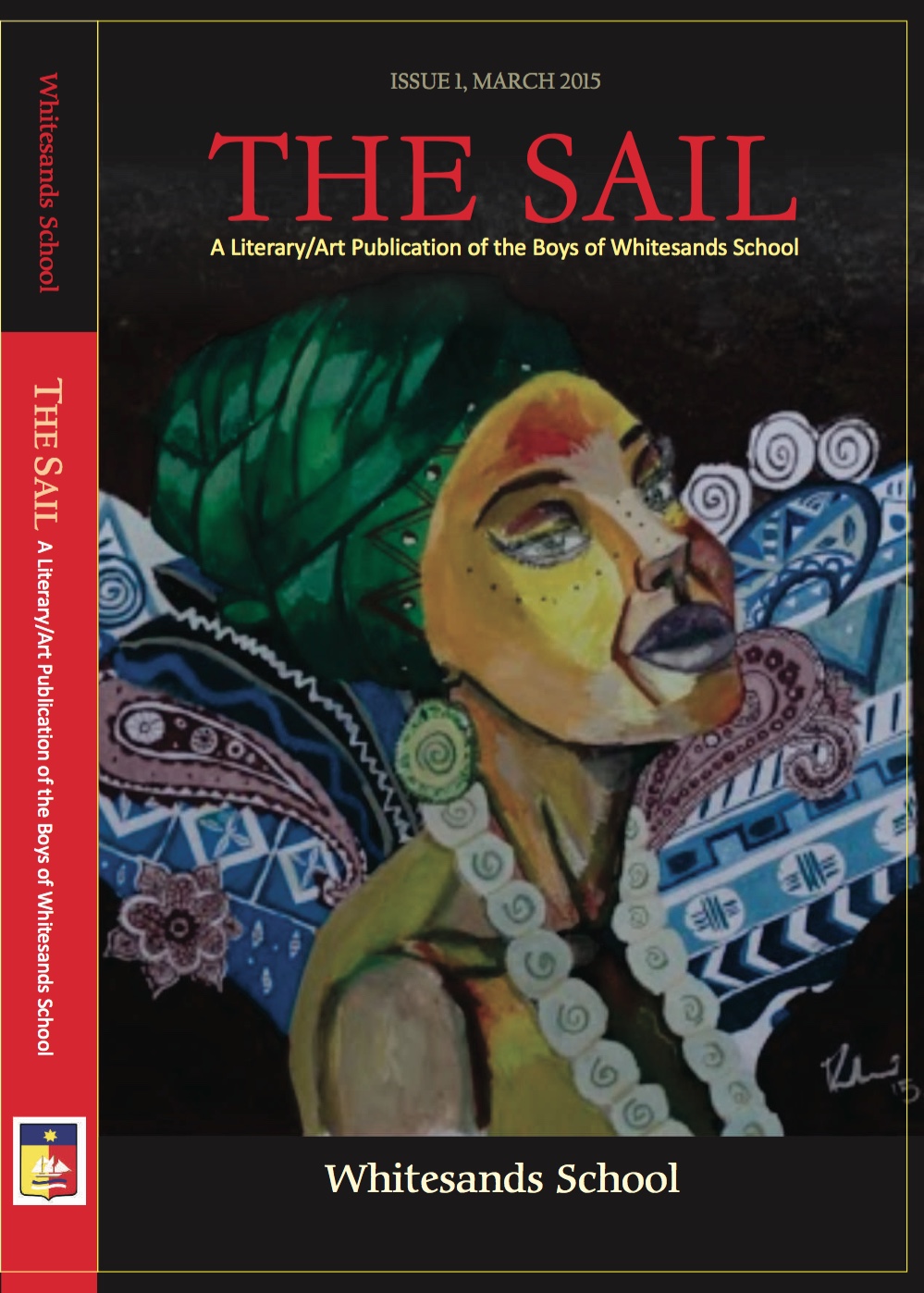
FrontLast year, an idea I’ve had for a while on the possibility of harnessing students’ creative energy in a book form found enthusiastic audience with the school administration. The result is an 86-paged anthology of students’ work in poetry, prose fiction, drama, essay, and visual arts, published by Whitesands School and Feathers & Ink publishing house in Ibadan. Along with the privilege of being in the book, a few of the students are also being rewarded with positions when their work is compared with the others. We were also privileged to have prominent literary practitioners in Nigeria read and judge the prizes beforehand. For this first edition, these judges were Chika Unigwe and Tade Ipadeola, both previous winners of the Nigerian Prize for Literature (worth $100,000). In short, it was a thoroughly emotionally and intellectually stimulating experience for the teachers and the students.

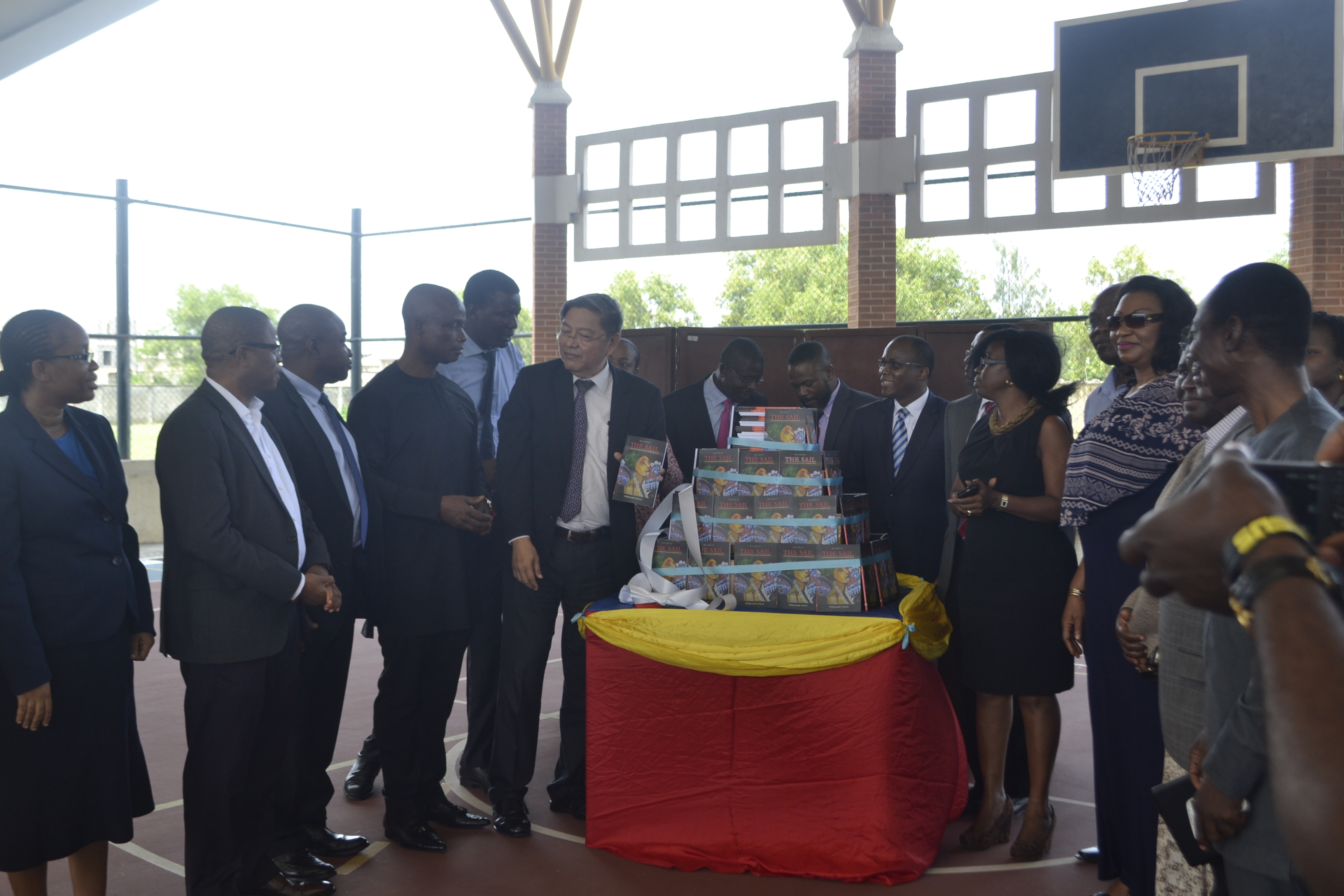
_DSC0871The book was publicly presented on June 25 at the school, with parents of winning students present. The book is also being given to all the over 400 students in the school as an incentive to working hard to be selected for the next edition. From what I’ve heard, it is having precisely that effect. For the students whose work appear in it as well, there’s an obvious air of pride and accomplishment. In the next couple of weeks, the book should also be on Amazon and other internet outlets for free download. From what I’ve heard as positive reviews of the project, even the idea itself is ripe for scaling. Given adequate sponsorship, there’s plenty more dimensions in which this can go. For now, however, the pride of being able to accomplish something this little with substantial impact is unquantifiable. Read Tade Ipadeola’s review.

_DSC0758Here’s one anecdote that almost brought me to tears. Yesterday, the vice-principal of the school called to tell me of the decision of a parent of one of the students to pull out the child. As a dual citizen of the United States and Nigeria, the parents thought it was time for the child to relocate and join his other siblings. Not having told the boy before now, he was devastated, but not for an obvious reason. According to the father, the child expressed regret that having missed a chance to be published in The Sail: Issue 1, he had already started working towards entering as many creative work as possible so as to get a chance for the next issue (due January, 2016). Now, that dream is being taken away from him, without an agency to influence the process.

I have been dejected, and then extraordinarily buoyed, by the sadness of that story for the last 24 hours. It’s almost enough to compensate for everything else wrong with the compulsion in English language learning.

Chika Unigwe in Lagos

154155_525183577503551_1026276156_n…on January 31st, 2013. 

But before then at the University of Nsukka on January 29th to read from her works.

Chika is the winner of the NLNG Nigerian Prize for Literature 2013 and the author of On Black Sister’s Street.