Simplicity of Youth

It is night in a once noisy village, and the cool wind of the evening blows around the rest of the dust floating around the sky. During the day, the bustle of the street rivals that of many small markets around Ibadan. Children racing with used car wheels from baale’s house downhill towards Mama Lawyer’s clinic at the end of the street, young girls hawking vegetables scream the price of their wares on the top of their lungs, children run around bare-feet without any care in the world, and loud music plays from the many rooms around the street. Now, at night, everything is quiet, except for the little transistor radio in father’s hands as he paces around the house looking for the signal for the Voice of America.

The concrete slab that extends from the front door of the house bends towards the sand at a steep angle. It goes on for a few metres and is suddenly cut off, leaving a ledge where water drips down into the open field when it rains. The field has grandmother’s garden of vegetables. It had garden eggs, yanrin, and spinach. Farther down a few metres on is the well for water. All the other parts of the compound has different crops, depending on the time of the year. Maize grew in April. We planted them in March. Cassava grew many times during the year, as did coco-yam. As soon as the rain fell, we went out with hoes and made heaps. We got loam from two houses away where the chicken farmer dumped the waste from the poultry. They told us that the soft black dung when mixed with the soil in our compound made the corn come out bigger and stronger. They gave us buckets and seeds. We were six, and seven, and ten. We fancied ourselves as brilliant farmers who knew just what the land wanted, and gave it to it. We treasured millipedes and centipedes, and the little white worm that surprises us from within the dung. They called it ogongo. Ogongo was another name for ostrich, but I’d never seen an ostrich before.

Behind mother’s window north of the house was a large guava tree. Underneath is was the softest soil around the house. Two plots for a house compound was large enough for any kind of play, and we ran around to the best of our strength. When raining season came, we settled on that spot behind her window for the site of the corn and beans garden. The soil is heaped in serrated ridges and space is put in-between them for walking. Corn is planted in twos and threes. Olaolu said he had been told that planting them in threes made the odds more favourable for the seeds. I looked at the small black bed of soil and smiled in contentment. It always took two to five days for the first leaf to sprout out of the heap, and all that would be left is the need to add water, or just wait for the rain to pick up. But there I was just smiling at the result of my accomplishment. Mother looked out of her room through a striped red curtain and giggled. “Kola, you won’t be standing there forever, would you? It doesn’t start growing as soon as you plant it, you know.”

Night. We lay on mats on the concrete slab just a few feet away from the front door. It’s quiet and the evening breeze blows around the village tossing up the remaining dust left of the children’s running feet. There usually is no electric light. If there is, it would have been put off deliberately. What lights the evening is the moon and the cheer in our voices as we talk about whoknowswhat, mostly in hush and sometimes excited tones. Father is still pacing around the house this time with his little transistor close to his ears. Occasionally, the words Tamil Tiger rebels or Bosnia Herzegovina will assail my ears as the others giggle at his strange hobbies. Mostly, when he comes around in those heavy paces holding the radio to his ears, those giggling a few minutes earlier would have relapsed into a mode of pretend-sleep. The front porch had its charm, especially when it rained. It was the best place to sit and watch the lightening rip the blackness of the village sky into shreds, and give certain shivers needed for a good night sleep. But those were the days.
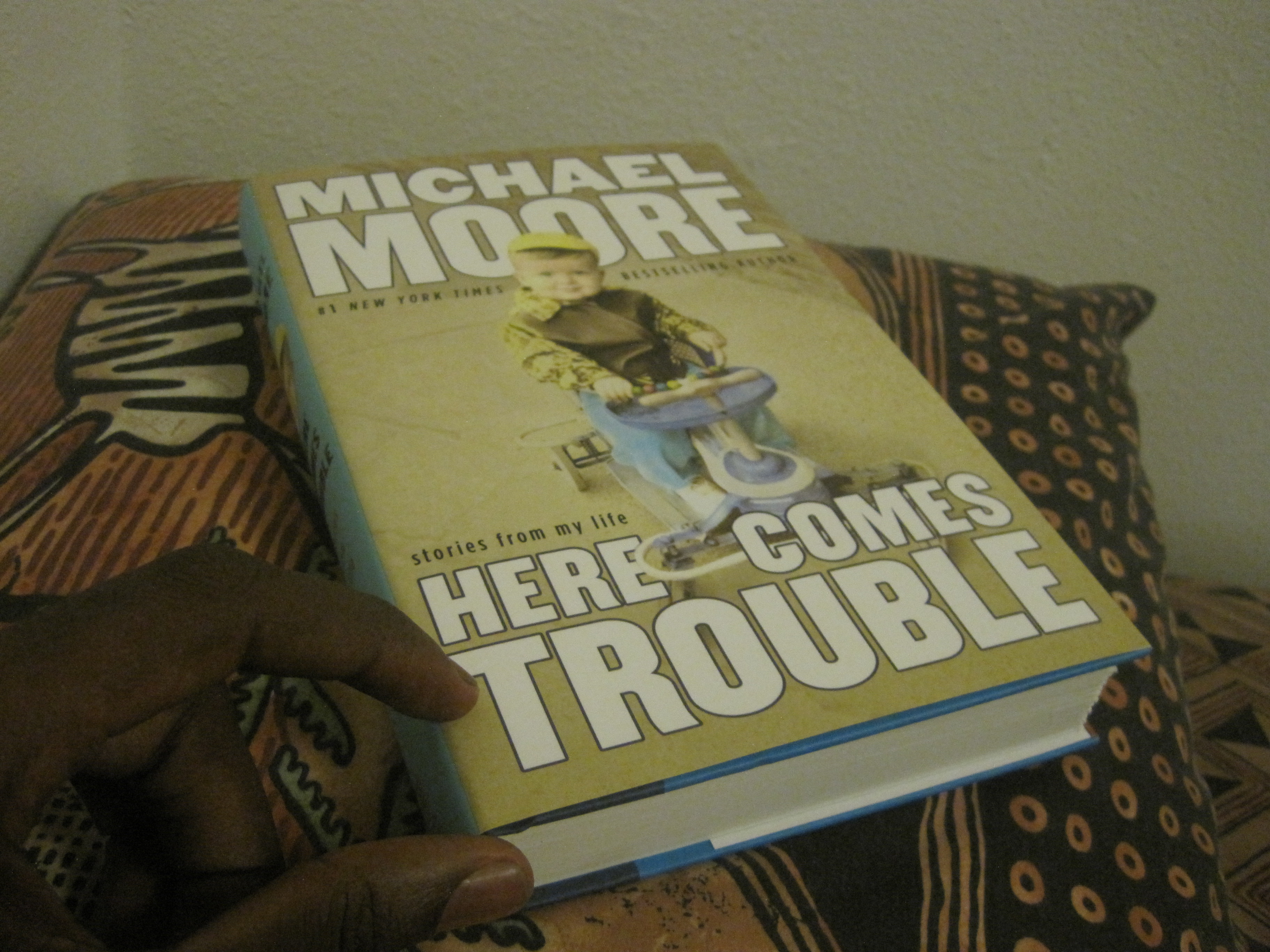
Here Comes Trouble

Michael Moore’s new autobiography follows the sometimes ordinary, sometimes extraordinary, life of one of America’s most controversial commentators. His movie Fahrenheit 9/11 is the highest grossing documentary of all time. Aptly titled Here Comes Trouble because of the perception of the author and movie maker during the first few years of the George W. Bush administration and his war in Iraq. He describes in great detail and with sufficient personal reflection what it felt like to criticize the administration on live television during his first Oscar win acceptance speech, and the turbulence of his life after he became public enemy number one.

The memoir-writing style of American writers (mostly public figures) has often amazed me in their ordinariness. No attempt at lyricism or any special verbal sophistication. Just facts, told sometimes with a flourish, and with humour. Not much with any real attempt at literary brilliance. This commentary of mine is ironic, of course, because the straight-forwardness of the narrative makes it a fun and light-hearted read. But it ends there. I’ll remember the facts in the book more than the beauty of how the facts were told. In short, it doesn’t challenge me even though the recollection surely delights. I’m sure this makes some sense.

Michael Moore is a controversial figure, and holding his book with me around campus has already got me a few stares. We no longer live in a George Bush America but it is still fascinating the kind of response his name elicits. A few minutes ago, a student saw it on my desk and asks what I thought could be a tricky question: “So you like Michael Moore, eh?” “I like his work,” I replied. It seems like the safest answer to give given the circumstance. As the book shows, he is however a man bold enough to take risks, and who because of those risks – and some other coincidences in life – has lived a truly remarkable life.

I Went to Hannibal

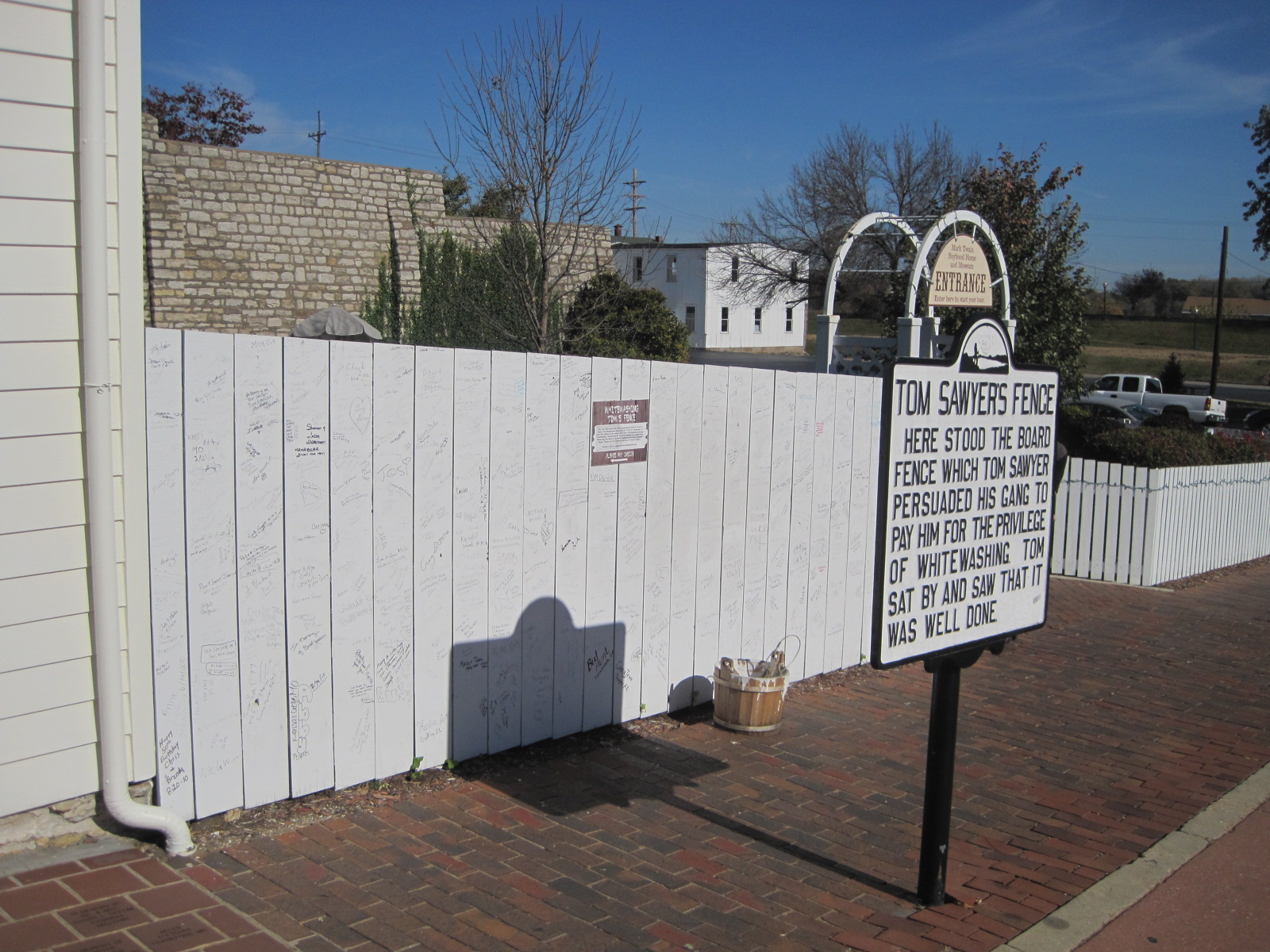
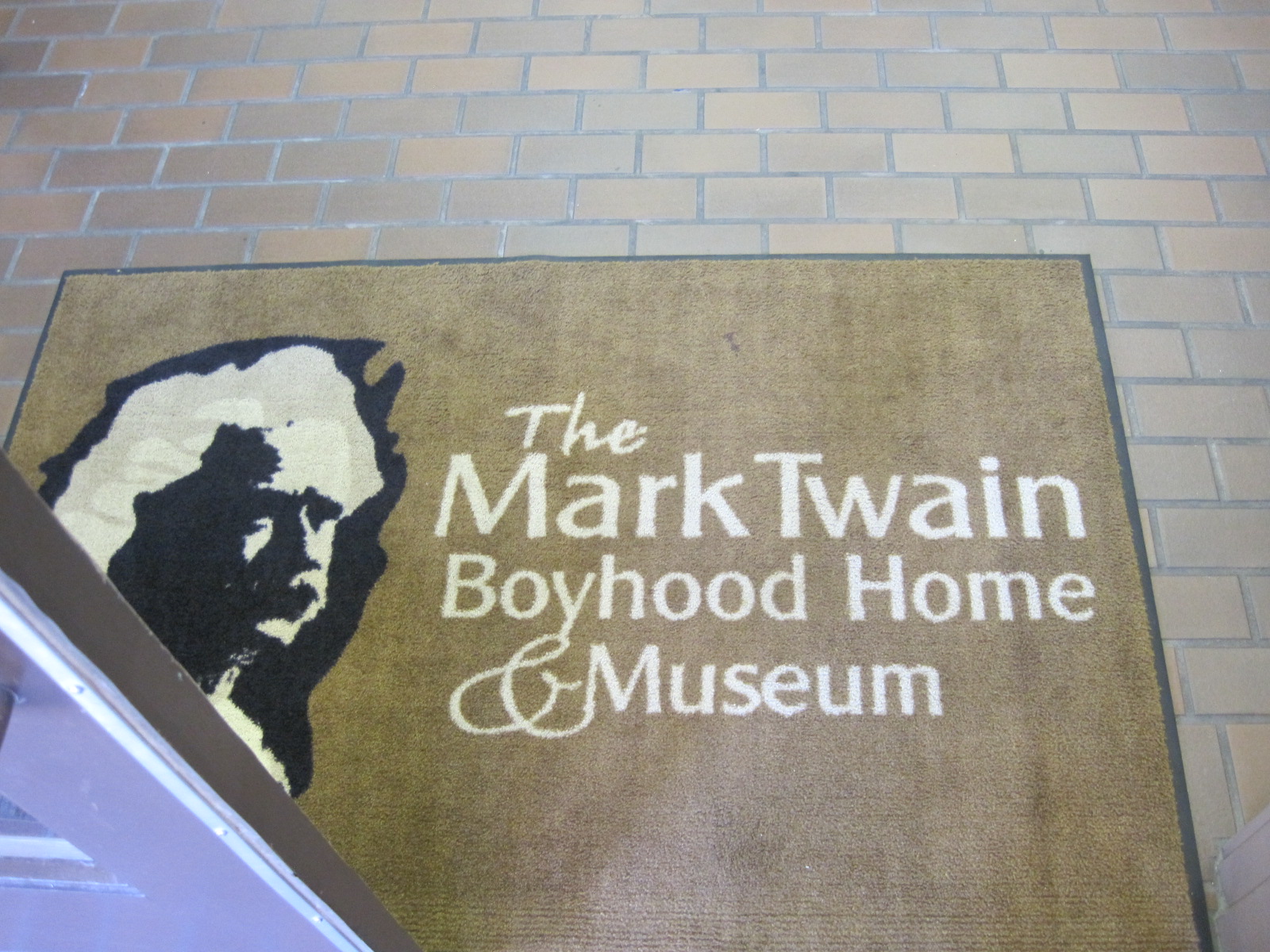
And so I went to Hannibal, a little town two and a half hours away (131 miles north) from my present location. More than anything, it is famous for being the birthplace of Mark Twain (born Samuel Clemens) and the site of his boyhood home with the famous white-washed fence. There’s so much to say about the journey, from the open land of the highway which reminded me of the trip between Kaduna and Zaria to the coolness of the fresh morning air on the way and back. Then there were the sculptures, the quietness of the town, the beauty of the museum building, and the amazing detail of the house as compared to the descriptions that Twain wrote about them in his books The Adventures of Tom Sawyer and Huckleberry Finn. The famous white-washed fence was there all right, now marked with names of visitors from all over the world.

For those not familiar with the story, the young boy Tom had successfully conned his bullying friends into doing his own chore of white-washing his house fence for him. Samuel Clemens grew up in this house in Hannibal, a son of a judge of a father living on a low income. He moved out of it in 1853 to seek his fortune. Twenty years would pass before he started writing The Adventures of Tom Sawyer, and he drew most of his materials from the events of his own childhood on the streets of Hannibal in a house overlooking the Mississippi river. This makes a lot of sense: living through a very hard but colourful childhood and amassing in the process a very large stash of memories, and waiting at least twenty years to set them down to paper, sometimes after returning to visit the place and reliving the memories. Now that’s an idea.

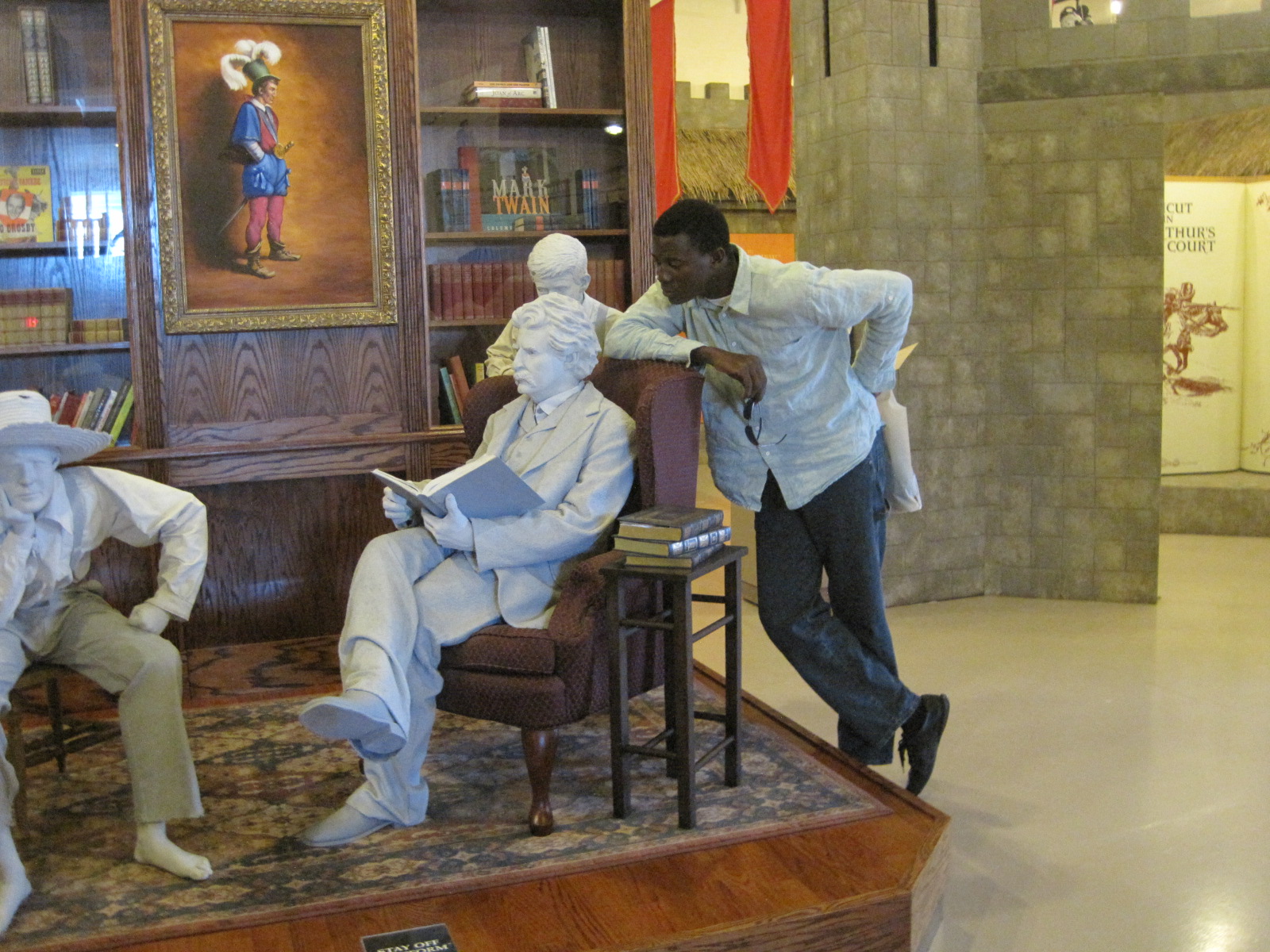
The museum had many fun sights: a marble sculpture of the man reading stories to kids, a boat deck to simulate the view of ship captains (the original inspiration for the name, Mark Twain), a gallery of famous quotes of the man, and a cave built to the type described in his books about his childhood days. It also has a gift shop filled with postcards, t-shirts, and countless books (including his autobiography. He had written it – The Autobiography – by himself and had instructed that it be published a hundred years after his death. It has now been published, and is the current #1 bestseller on Amazon and the #2 on NY Times bestseller list. One of the famous quotes on the t-shirts being sold there reads: “Travel is fatal to prejudice, bigotry, and narrow-mindedness, and many of our people need it sorely on these accounts.” Another one read: “Action speak louder than words but not nearly as often.” And there were many more.

I may not successfully exhaust my report of the visit to a place that holds much significance to me as a consumer of literature and the works of the man as a writer and a chronicler of a certain epoch in American history. His views on slavery, politics, and life in general have been highly documented in many of his books, including this final autobiography. But I can tell you this: that it was a worthwhile visit that I would gladly make again, if only to be able to spend more time in the town and see what else they have besides the very many resources of the Clemens. One more thing before we left (Temie and I) was to sign our names on the white-washed fence. The traveller was here. No, that wasn’t what I wrote. You have to go there to find out for yourself.

Oh, and one more quote now going to remain on my office computer: “To succeed in life, you need two things: ignorance and confidence.” Oh well!

Pictures by Temie Giwa

A Review

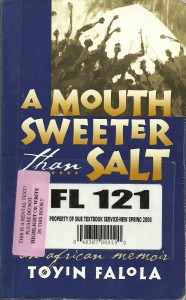
I love this review of the book A Mouth Sweeter Than Salt by Toyin Falola. It was done by Nigerian writer Ikhide Ikheloa in 2008. By the the time I was writing my mini review of that book last year on this blog, I had no idea that some other person had written something longer, deeper, more expressive of my earlier perception of the work.

Like last semester, we shall be reading the book again this semester for the foreign language and culture class. It is a fascinating account of a man’s childhood in the Nigeria of the 50s, 60s and 70s. Get and read the book if you can, and take a very wild ride in the serene happy days of my country’s early nationhood.

At the end of last semester, I asked all my class students to write a two-paged review of their experience in my class. The following is an excerpt from the submission one of them.

“The one thing that I did not like about the class was the book, “A Mouth Sweeter Than Salt.”  I know you did not pick it out, but it was the worst book I have read in a very long time.  If you could, I would get a different novel for your class to read next semester because every chapter I read felt like pulling teeth.  Well it was not quite that bad, but it was not enjoyable.  Besides the book though everything else was very enjoyable.  I cannot remember a class more enjoyable than this one, or a class that I laughed so much in.

Overall I could not have been more satisfied with the class.  The material that I learned helped me grow as a person and made me see a part of the world how it should be looked at, and not just from a “single story.”  My perception of the Yoruba and Africans in general was corrected.  After going through the semester I could not have been happier in my choice to take this class.  It is a great feeling knowing that I can communicate in Yoruba, even if it is at a rudimentary level.  The class was more than fair in difficulty and work required.  When looking back at the first day of class I realize that I never had anything to worry about and the man who walked in with the traditional attire on was a lot like me.  Although I may have not changed the place where I sit in the class, almost all of my views of the African culture have been altered throughout the semester.  I am thankful that I chose to take this class because it has made me a better person as a whole and have come to greater appreciate people of different cultures.”

Needless to say, he was the only one of nine people who felt sufficiently annoyed by the book to write about it in a final essay. Others passed their displeasure to me outside the class about the often winding and distracted writing style of the author. Nevertheless, it’s a great book. I recommend it.