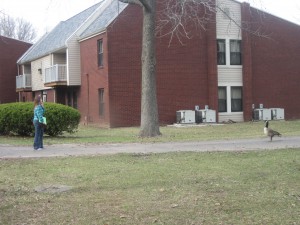
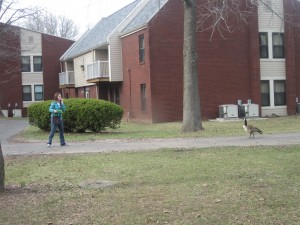
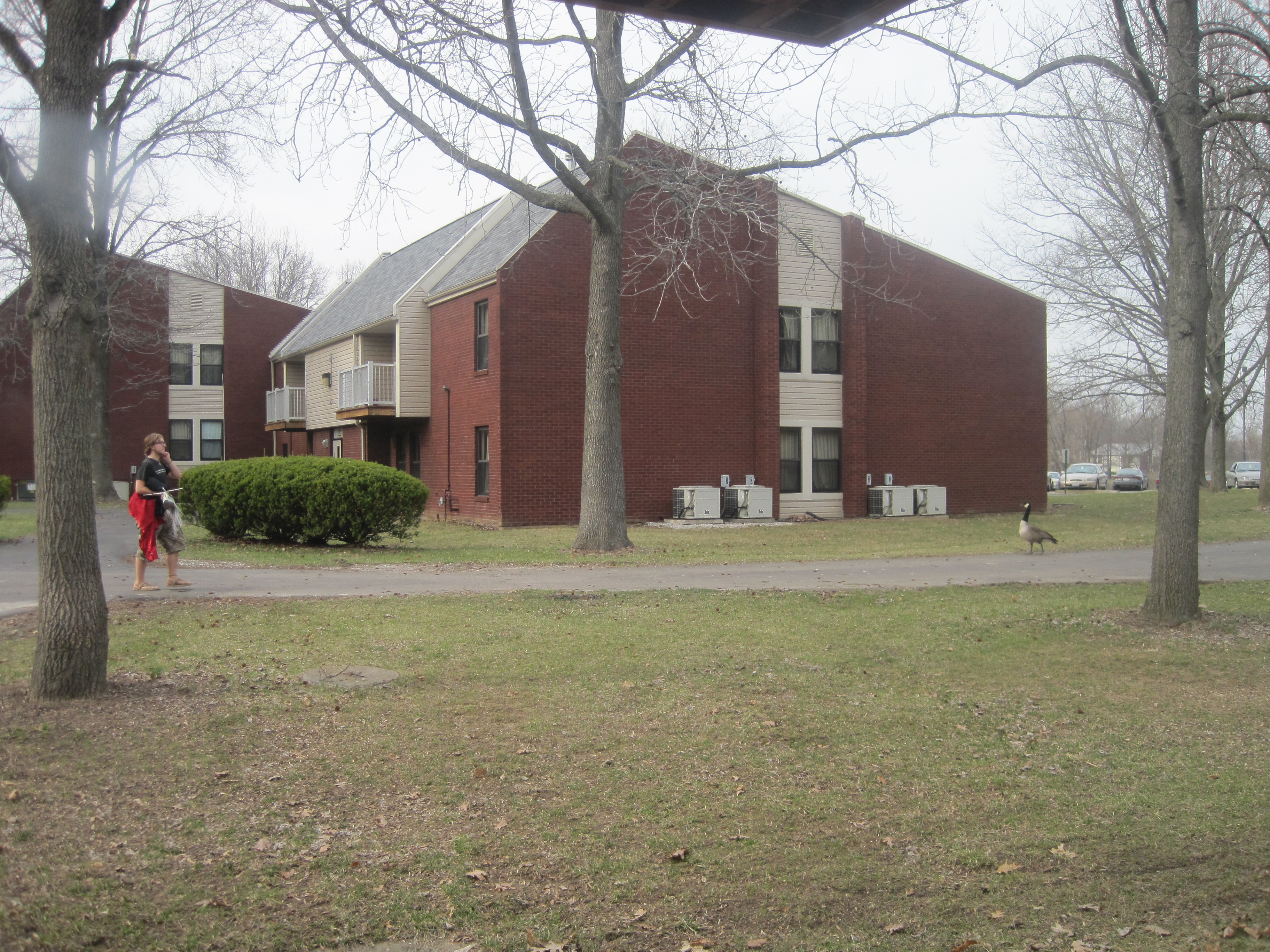
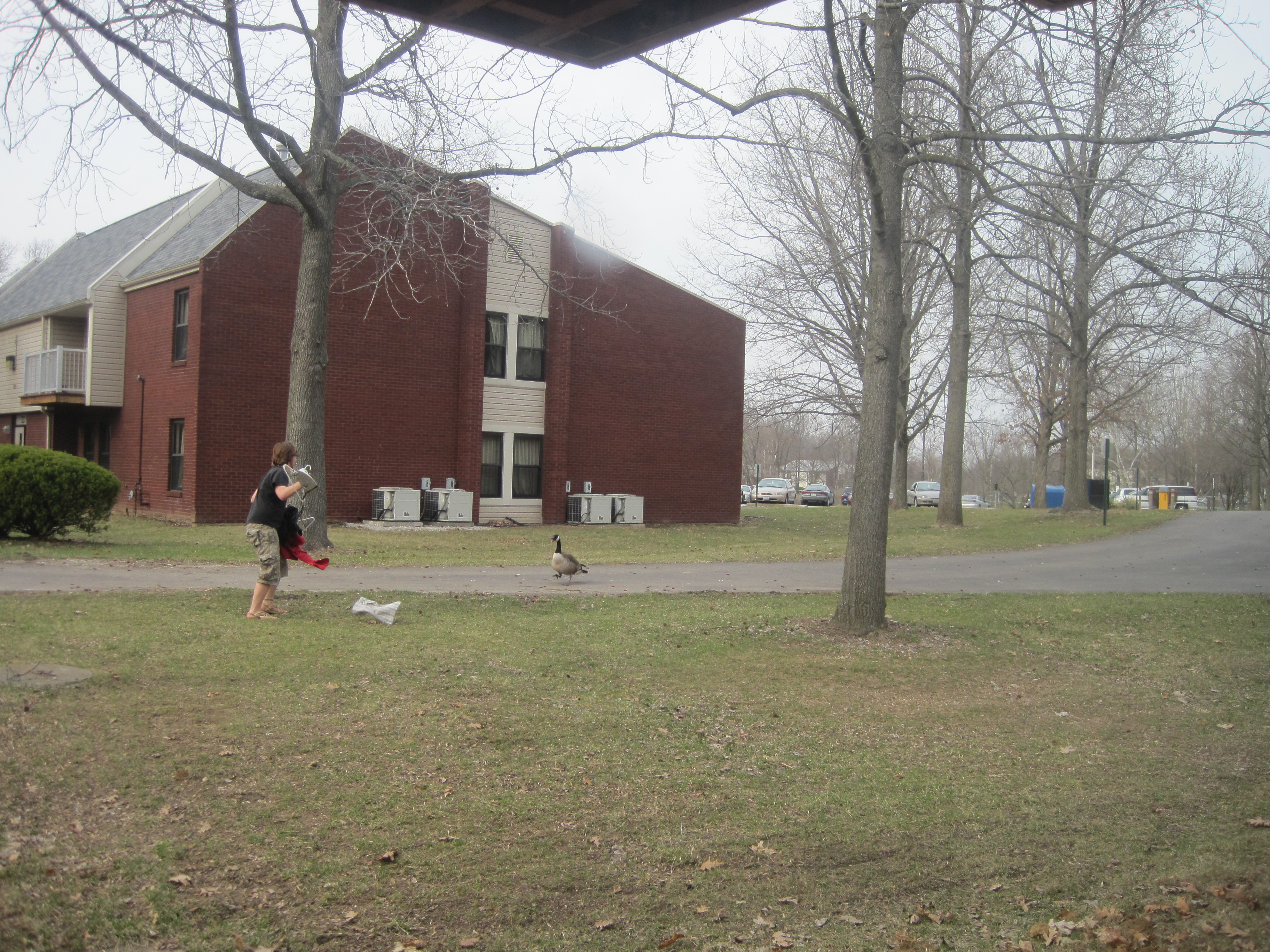
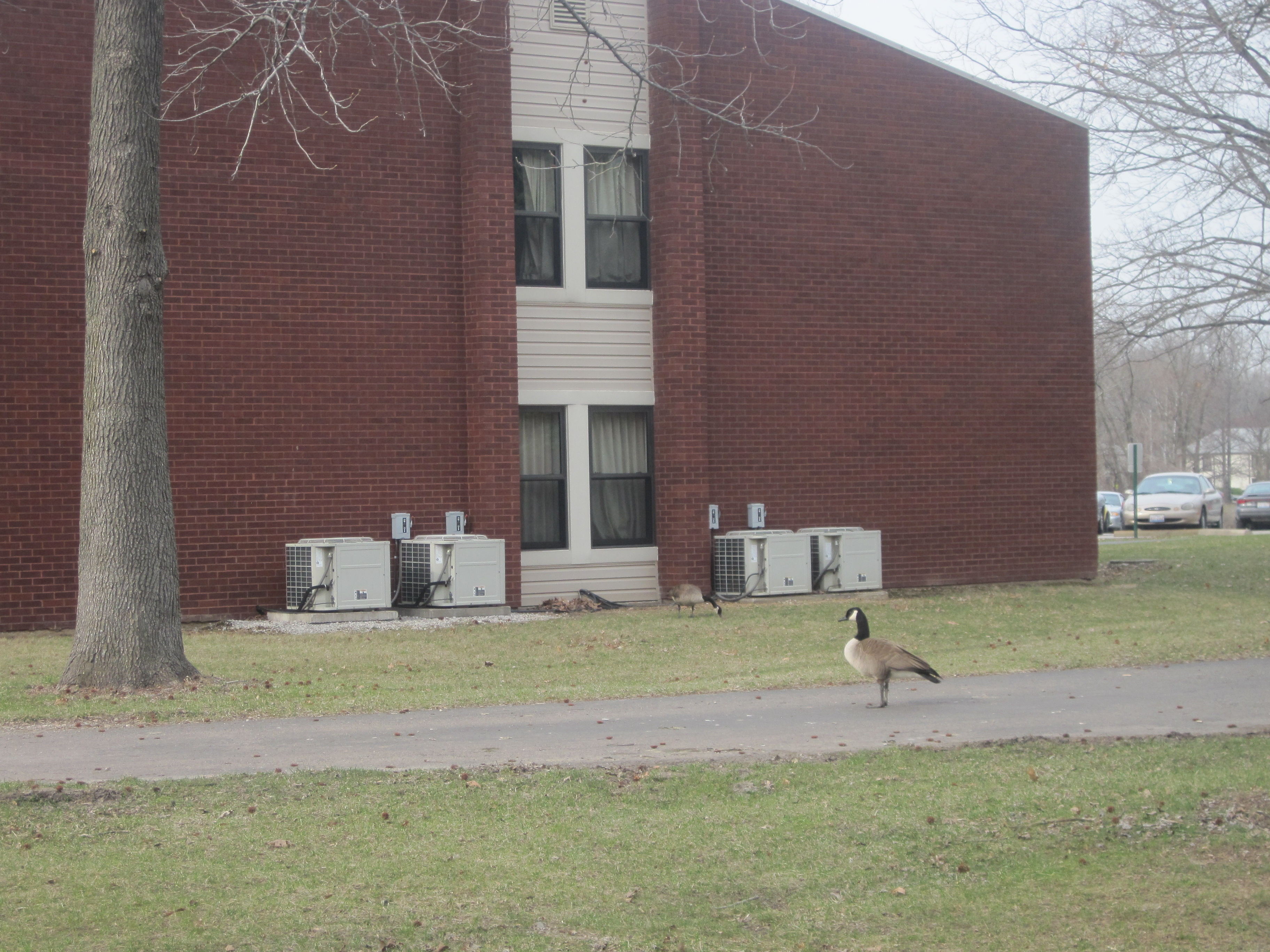
 I have derived a certain pleasure over the past few days shooting the geese on campus. But, unlike what you might be immediately led to believe, I wasn’t shooting to kill, but to save. The weapon was nothing other than my Canon Powershot camera that has always gone with me everywhere I went.
But with these set of geese, there is the story: it is said that in Spring, or as soon as the weather warms up, the birds on campus take a break from their playground of the lake and build nests in cosy places where they can lay their eggs and successfully incubate them for the required period of time. Good so far? Yes. Except that in the case of a couple of these larger than life geese with long strong necks, they had chosen the apartment right in front of mine to build their nest.
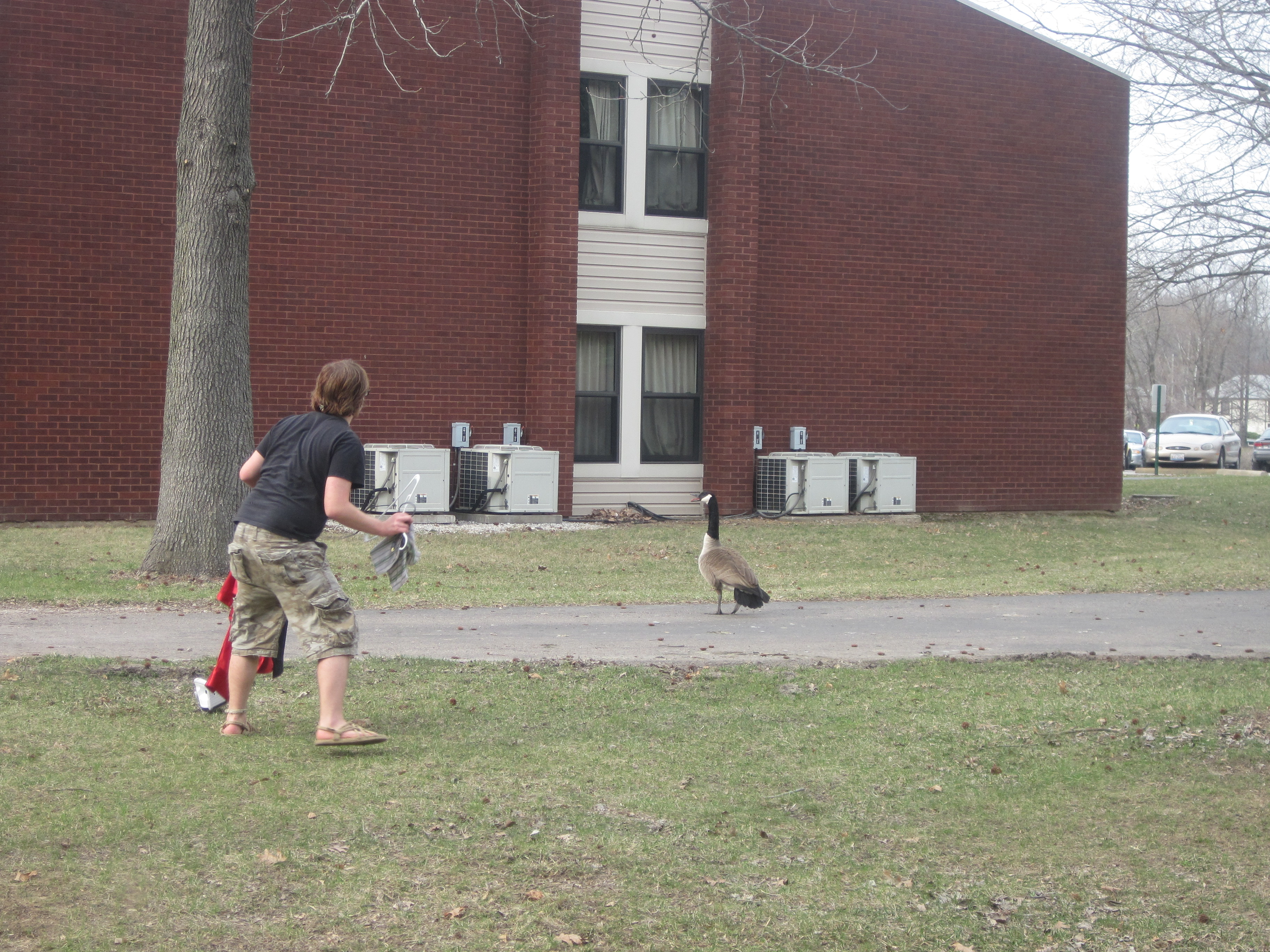
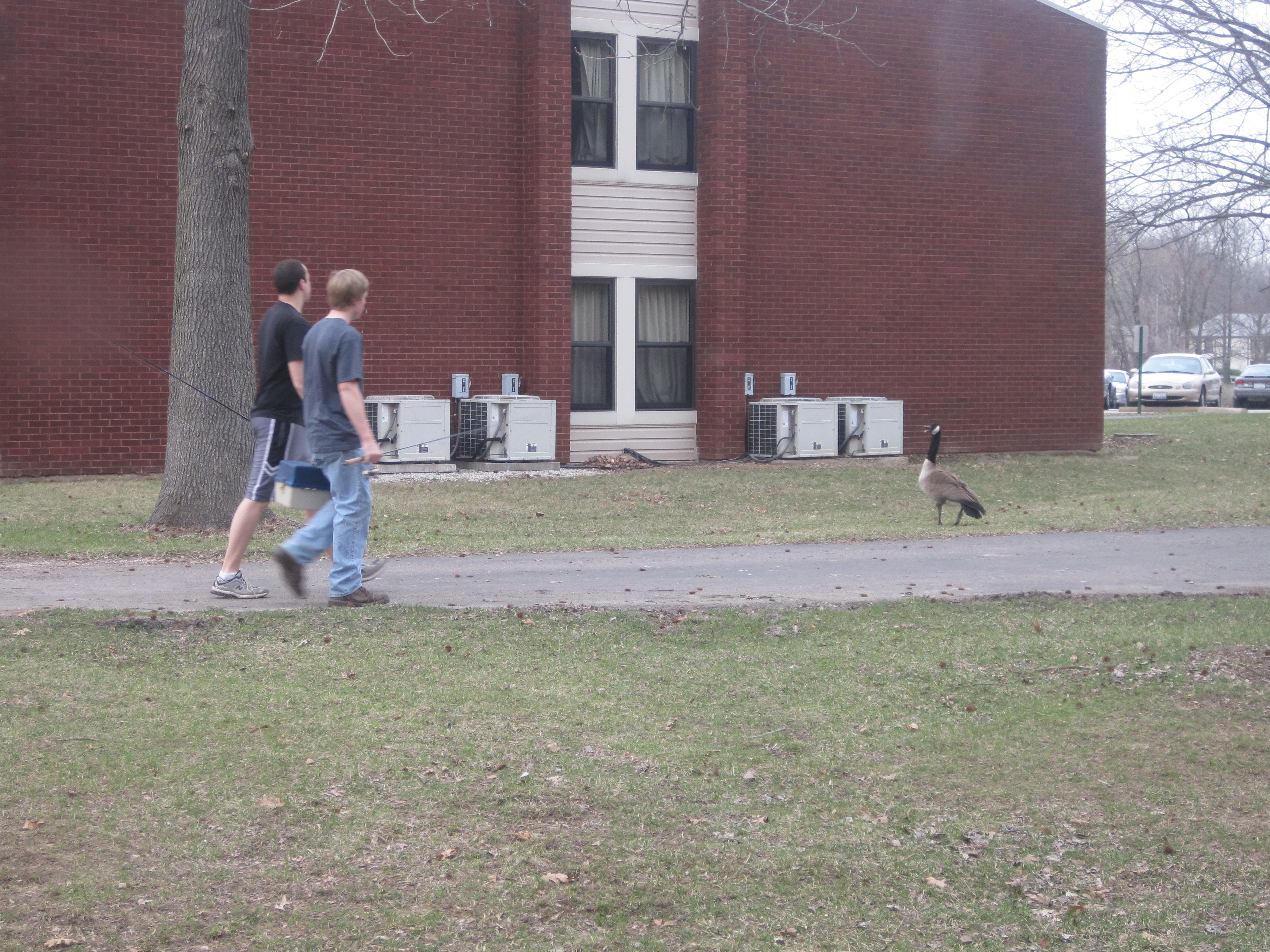
Now, the goose family system is very different from humans, or from chickens, for instance. Cocks – like many specimen of humans – will ignore the hen as soon as mating is done and fertilization is over with. But ss soon as the females build their nests and start laying, the gander takes up the unenviable task of defending the region from any intrusion of any kind and size, and they do this with all their energy not caring if they died. The first time I came up a notice on campus that read that I should be careful when walking through the grass areas because geese could be nesting and could attack me, I thought it was a joke. But after two near vicious attacks at my own apartment, I have had a re-think. The male goose (called the gander) doesn’t even give the pedestrian the benefit of a doubt. As long as it gets the impression that you could be walking close to its bride’s nest, it would attack you viciously with its wings and beak. Go figure. What if you didn’t know? Who cares. When you seen a large mass of feathers flying towards you with a menacing sound, you will want to run for it as fast as possible. They have been known to fly at cars and cyclers as well.
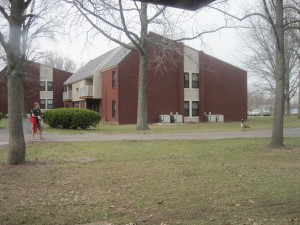
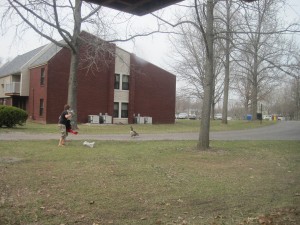
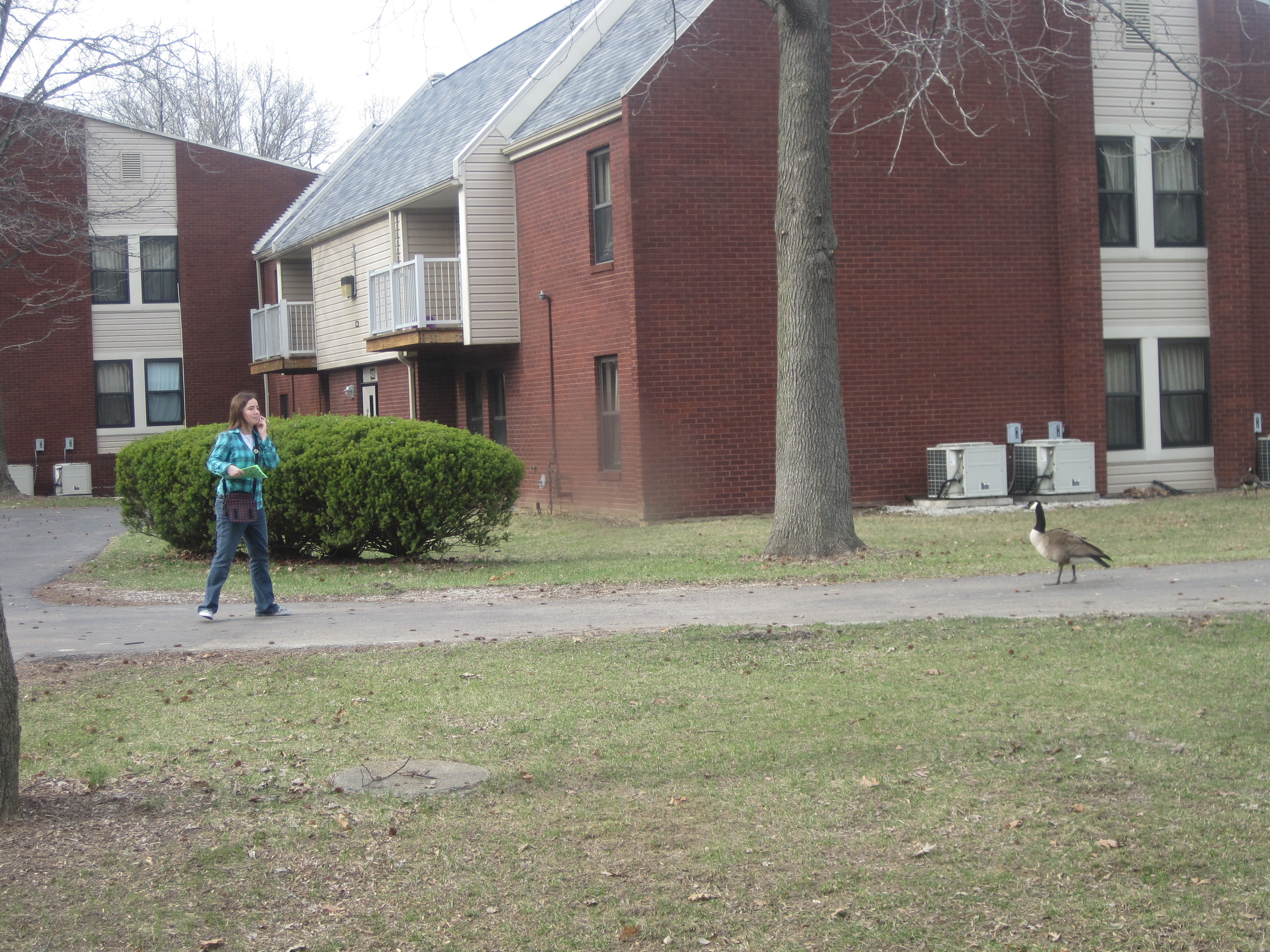
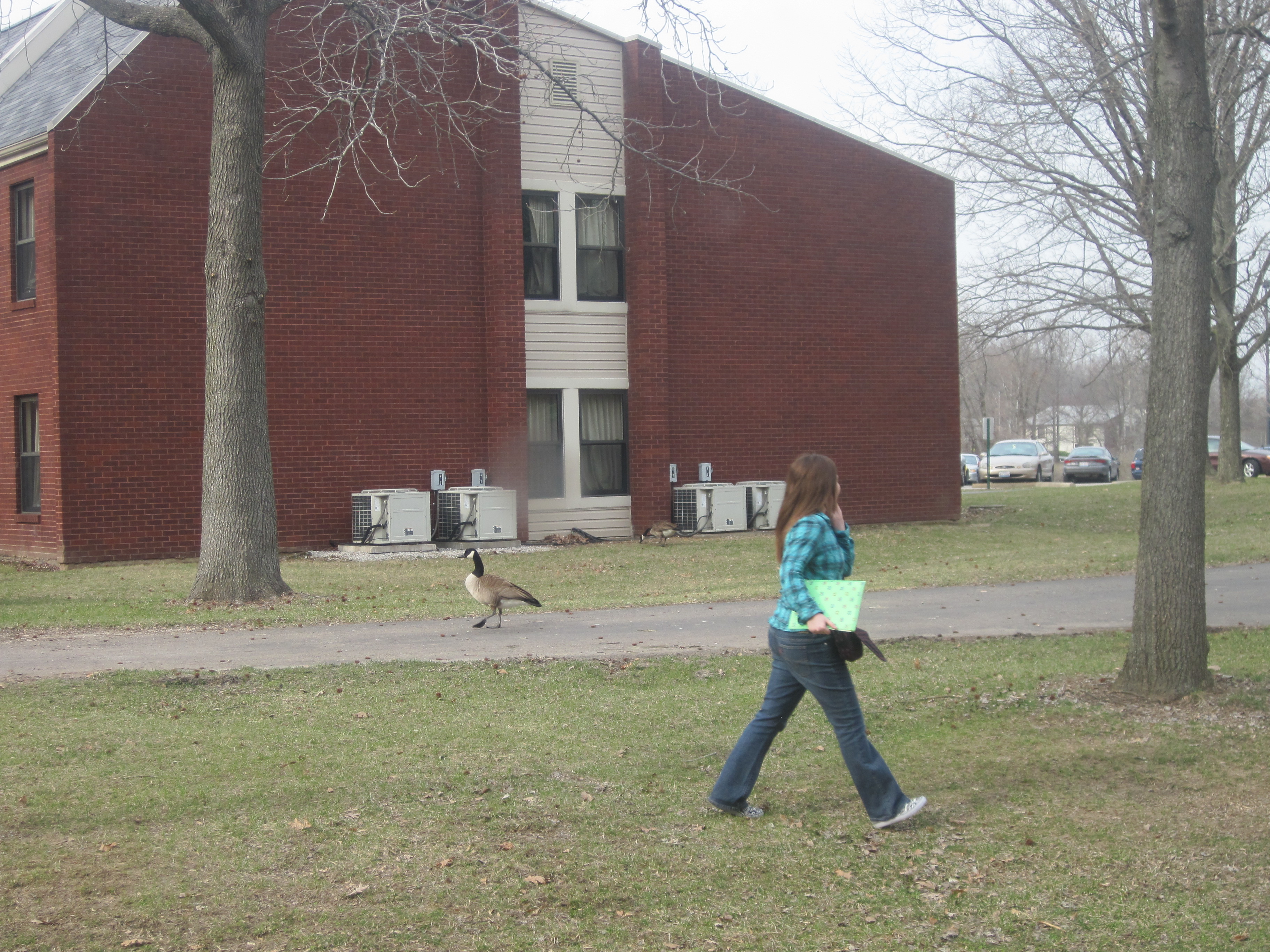
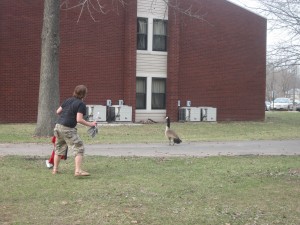 So throughout this week – having been lucky to have the nest right across my window – I have been taking pictures of people getting attacked by the birds, and the reactions were usually the same: shock and horror. The students would stand still for a second, waving their hands at the bird in order to send fear into them, and would discover that rather than turn back, the gander was advancing menacingly. They would run, or walk slowly away leaving the bird triumphant. And some times, for good measure, the birds flew right after them. In some way, you could say that it served many of the students right for being silly enough to ignore the notice passed round all apartments in Cougar Village that:
“the wildlife on campus is protected by the Federal Laws… and will be nesting during this season. They can be aggressive, so it’s best to keep off where they might have nests. If a goose attacks you unprovoked, contact University Housing Staff or the University Police.”
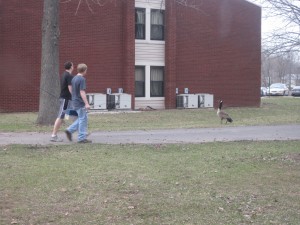 On the other hand, like my friend in Dolton insists, I am human and I have a right to walk by anywhere I want without fear of attack by animals. This is why I pay tuition. It shouldn’t be for the University to offer protection to animals and not for humans. Yes indeed, right? Imagine this 911 call: “Hello, is that the police? I have just been attacked by a vicious gander on my way into my apartment. Please come with an ambulance.” Yet you can’t deny that the animals indeed have a right to nest without interference by humans. After all, they have lived in this area all their lives before humans came to erect University and apartment buildings. When does it begin to be ludicrous?
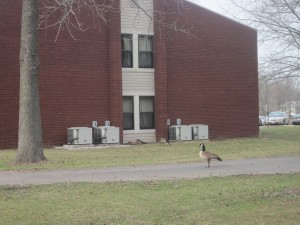 Today in the evening, Ben informed me that he heard that some folks had gone to remove the the geese’s eggs from the nest while the birds were away. I don’t know if this is true, or if it was done by the University in order to move them to a new location. I have however noticed that the two birds have returned to that same position again, perhaps to lay new eggs. But – perhaps to lend credence to Ben’s news – I’ve also noticed that the gander now paces around its usual spot with a dejected gait. Gone clearly are the wild strutting it was known for whenever people walked by. Now it just looks at everyone, sullen, without the slightest interest, or spirit. And I feel pity for him.
 I translated a poem for my Slovenian poet and musician from English into Yoruba a few weeks ago. It was a very short but humorous piece of work. I’ve also recorded it for him in my own voice.
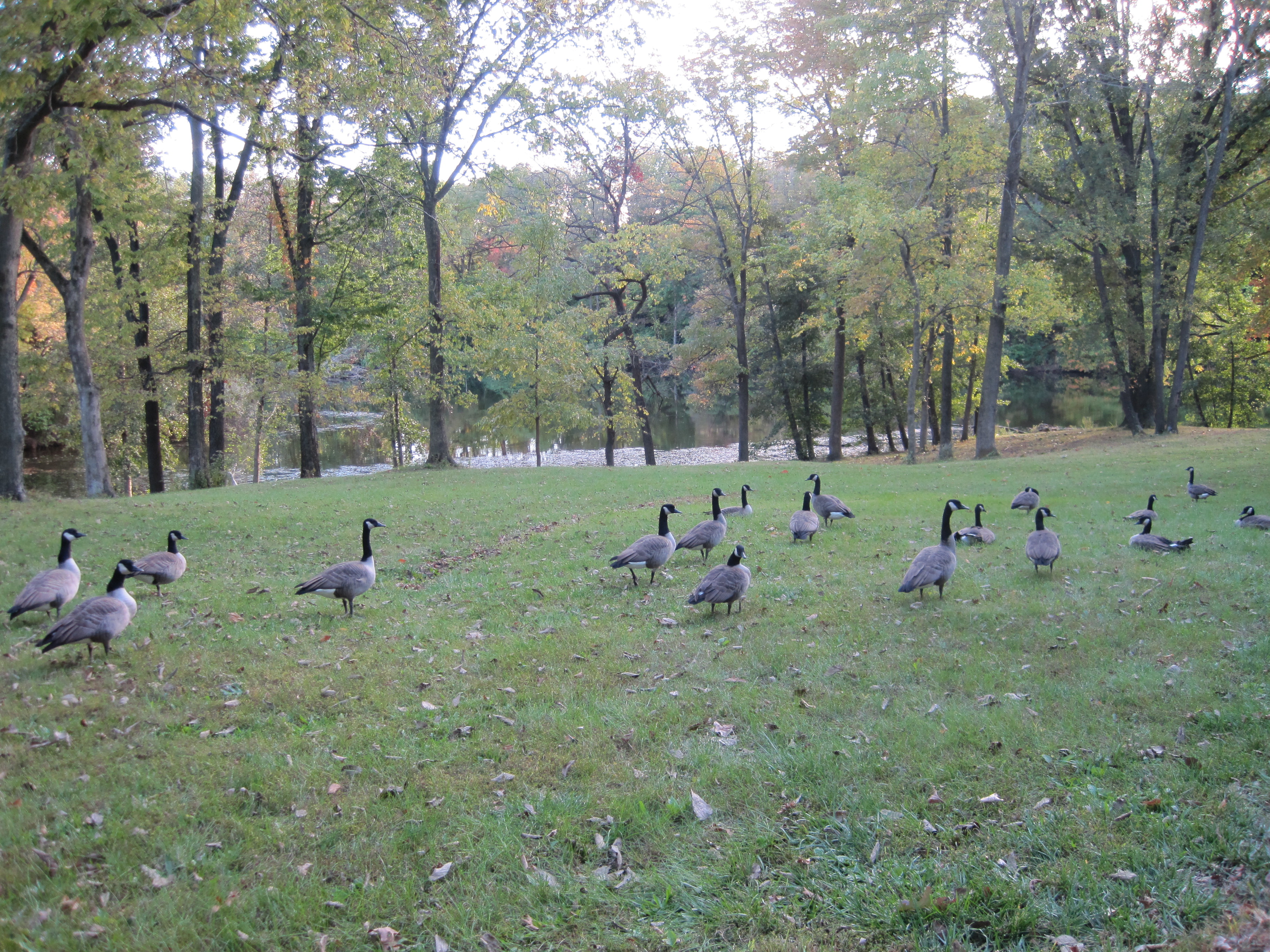 It was not long ago that I discovered that many people here wouldn’t really believe that I’d never seen animals in the wild until I came to the United States. (I saw a monkey, a chimp, a gorilla, a zebra, a lion, an elephant, a camel, a fox, and an ostrich for the first time in a public zoo of what later became my University in Ibadan. I was about eight years old then. I later saw some baboons in the wild when I went to Kenya in 2005, but before then, beside dogs, chicken, cats, cattle and sheep, most of the animals I’ve seen have been in confinement.) Cougar Village alone however has a large population of deer, geese, raccoons, cats and squirrels than I’ve ever seen anywhere, walking free without confinement. And the geese are wilder than any I’ve ever seen anywhere. One day in the winter, I saw a lonely fox walking by itself on the highway close to where humans might be found walking innocently on a lonely day. Maybe Cougar Village was the kind of jungle he meant!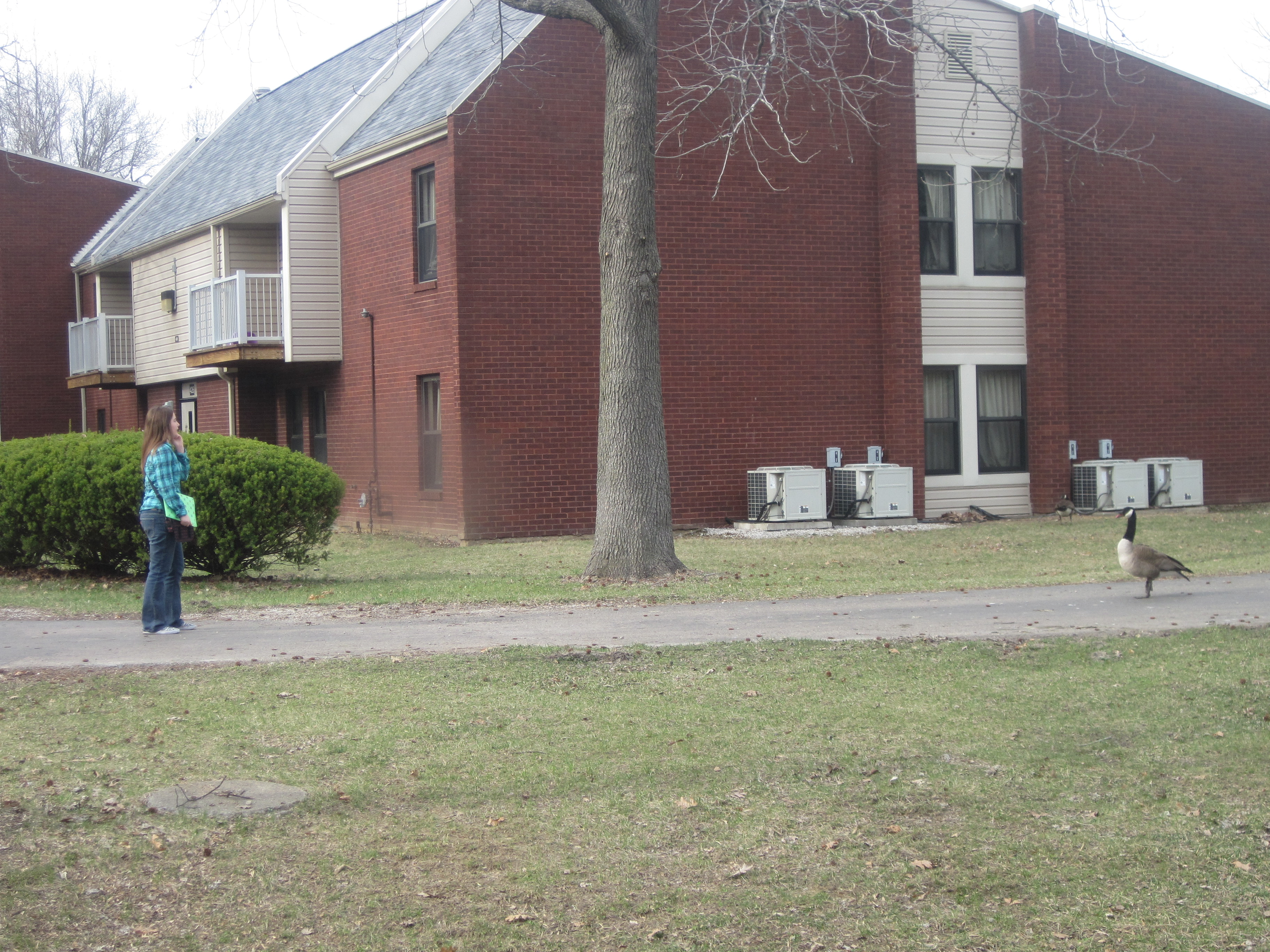
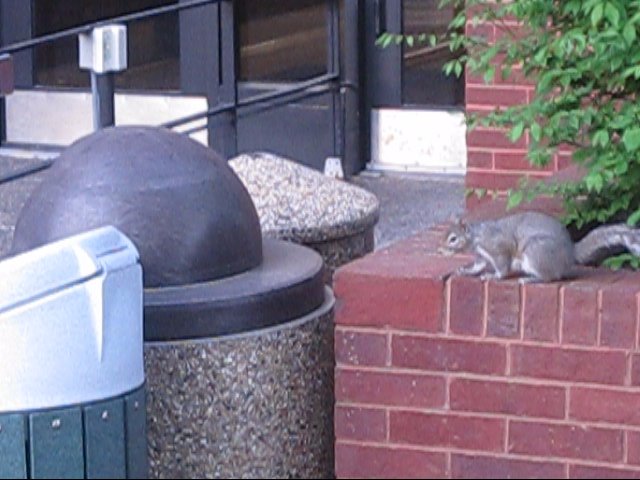
 I think of the animals. The squirrels behind and around my apartment have been coming out more incessantly nowadays to shop for food. Even for them, it is only a matter of time before the freezing cold, and the outpouring of snow will send them to perpetual hibernation. The herd of deer that I see every other day on my way to the University will also have the environment to deal with. The forest is naked of leaves, and only thin branches and stems stand there. They would most likely have to move to a different environment, except of course the University authorities declare a hunting season – which is already long overdue by now anyway, and allow interested parties to take the animals down.