Browsing the archives for the Travelling category.

Top Twenty Questions FLTAs Would Be Dying To Ask

Every time I start believing that I am sufficiently removed from my Fulbright experience to return to my anonymous student life, I get requests like this from readers like Darsh who want to know more about the FLTA experience in the United States. I’ve once written about what to expect in a one-year trip away from home, but here are a few more. As soon as you have passed the initial stages of being selected at your local country consulate, you are almost on your way to the United States.

1. How much is the monthly stipend? A: In 2009/2010, it was a little over $1000 per month. I hear that it also depends on where in the US you’re posted to. I was posted to Southern Illinois. f you are on the coast, you get a lot more (but then spend a lot more as well for food, and rent).

2. Is the stipend ever sufficient? A: Yes. With very prudent use, you would usually spend about half of the whole stipend monthly on food, housing and books. At the very worst case scenario, you would still be able to save about $300 every month.

3. Can relatives visit me from home? A: Technically, they can, but that is not what the program is about, so it is not encouraged. Believe me, the last thing you want is carrying the home baggage with you. But then, it’s up to you.

4. Can I date my students? A: No. Bad idea.

5. Can I date other students on campus? A: Yes.

6. If any of the people I date at #5 ever become my student in another semester, what should I do? A: I have no idea. But the fact that you know that such scenario is possible should make you re-think #5. You’ll find very many opportunities to meet other new people.

7. Will I need a mobile phone? A: Yes, but you don’t have to bring it along from your country.

8. Will I need a car? A: Not usually. You’d be able to get by without one on most campuses. Many FLTAs however often apply for, and obtain, a driver’s licence before they leave the US. It could be a worthwhile endeavour, so pursue it if you can.

9. How cold is a cold weather? A: Very cold. If you have never seen snow/experience winter before, chances are you will start needing to buy winter clothes and boots as soon as late October. Right now, it is 6 degrees Celsius.

10. Can I stay in the US after the program? A: No. There is a mandatory “return policy” which you’d sign on your way in. As soon as you’re done, you are required to head home first, before you do anything else. Many people return to the States for advanced degrees afterwards.

11. Tell me more about this “return policy”. A: Every grantee is obligated to spend two straight (consecutive) years in their home country after completing the Fulbright program. The aim of this clause is to make sure that the grantee returns home to contribute to the development of their country. If you do return to the US immediately after you return home after the FLTA, and spend a couple of years pursuing a degree, you will still need to eventually complete this mandatory 2 year home stay period before you’re ever allowed  to process any long-term immigration to the US later in life.

12. Do I have to live in campus housing during my Fulbright year? A: You don’t have to, but in my experience, campus housing gives you a chance to know a bit more about American campus experience. And if you’re lucky to have stayed in a highbrow student housing like we had in Edwardsville, you will have a fantastic experience. However, many FLTAs have found other housing arrangements downtown (or somewhere close to school) that are more affordable than the campus housing (sometimes through r00m sharing with other international students). This can work too, but you may lose out on much of the “executive” campus scholar experience.

13. Can I send money home? A: Why not? But in most cases (refer to #2 above), the money is barely anything. By the time you buy an iPod, a camera, and a few gifts to take home with you, you barely have anything left. And if you hope to return for advanced degrees, you might want to save as aggressively as you can.

14. What do I need to take along to be a successful teacher of my language? A: In my case, a few books, some movies, plenty traditional clothing, and an adventurous spirit. American students are curious and they’d appreciate your efforts. Dressing to class at least once a week in your native wears will send a message of cultural appreciation more visibly than one month of teaching. I also showed a couple of movies in class. Use YouTube. There are plenty there that you can use to illustrate any point that comes up during teaching.

15. Can I travel out of my state? A: You will travel, at least once during the program. The first travel takes place before your teaching starts: you will be taken to another state for the FLTA Orientation. And then, in December, you will have to attend the annual conference in Washington DC. This is a five-day event which will allow you to meet up with your fellow scholars, and visit parts of the nation’s capital. Aside from these mandated trips, you will also have the time during your year to visit any other place you want, as long as you do it during times where your presence is not physically needed in your place of primary assignment. If you’re in Illinois, you should try to visit Chicago or Springfield.


to be continued…

 

Dancing Through Brazil

Guest post by Luciene Souza Farias

Traveling has always been one of the great pleasures of my life. I have been to several different places, met incredible people, tasted awesome and terrible food… Oh, well, I guess life has been good! When asked to write about my traveling experiences, I felt very honored and worried at the same time. So, after some time deliberating, I decided to quickly write about three experiences I’ve had so far.

My first nice recollection of traveling to a place far from my hometown is from the age of six. My parents moved from the Northeast area of Brazil to the Southern area in search of a better life before I was born. For the first time, we would visit my relatives in the Northeast area and you can imagine by that how important this trip was. Three days by bus! Yes, three days! By the time, we lived in a slum and, as a consequence, money to travel was very short. Well, maybe that’s the reason this trip was so fantastic. As the bus crossed the country, I could realize for the first time how people had different accents, appearance, attitudes… Everything seemed impressive: The nauseating smell of sugar cane being burned and the gentle smell of wet dust after a soft rain; how the bus window was mildly warm because of the hot sun; how the moon seemed to follow the bus as it crossed the country. Oh, the ocean… I could never forget how crystal clear the water was and the sand… the sand was colorful when looked closer and white when observed at a distance. Wow! What an amazing mystery for a kid.

My second really cool trip happened when I was sixteen. I used to study in a public school in Sao Paulo and, because I was a good student (namely, a nerd), I won a trip to the South area of Brazil. Because this area is mainly occupied by German and Italian descendants, the whole place has a European aspect. Tudor houses, innovative public transportation, perfect gardens, and, yes, incredible traditional Italian food! Oh, well! What can I tell? Great days!

My third and last trip that I will share with you occurred this year at the age of twenty-six. After being selected to present a paper in a conference and received travel grants, I flew to Iowa City. What a neat place! While taking a walk, I saw sculpted animals on top of the buildings that made me remember of all the historical symbolisms men had given to each one of those animals: wisdom, strength, persistence… One word maybe the perfect one to express all I could see: lovely!

The other interesting thing I noticed is that the city merged with the university. People all over the place acted like if they were unified by one purpose: to discover; they breathed knowledge. I had a very distinctive kind of feeling while there. I was free and confined at the same time. Free to get to know everything I wanted and confined to walls made not only of old bricks, but also books and accusing minds. Oh, well! Everything smelled like knowledge. So exciting! Well, I am not a great writer, so I hope you were not bored to death! One last thought that it’s actually not mine but explains exactly why I like to travel is: “I think that travel comes from some deep urge to see the world, like the urge that brings up a worm in an Irish bog to see the moon when it is full” by Lord Dunsany.

Lucie is a friend and colleague from Brazil with an unexplainable craving for the ability to dance, and – obviously now – to travel as well. She also speaks Portuguese. Thank you Lucie! 

Watercolor Memories

The most pleasurable pleasures of my childhood were those I had moving around with father who was a broadcaster, record producer, culture researcher, and writer. There were many more which included haunts of the neighbourhood in Akobo where we lived in Ibadan (at one time West Africa’s largest city). There was a railway line that ran through the area about two miles from where our house was located. The blare of its horns was always piercing through the morning air. I remember the sense of awe and delight the first time I walked onto the tracks for the first time. We had just got back from school, and we walked, and ran, aimlessly around the area through bushes, paths, houses and dusty roads until the rail tracks showed up, then stretched in two directions away from view. I have encountered a few other moments in life where the simple pleasures of new discoveries made everything else seem insignificant, and with memory being the only consolation for their brief, fleeting existence.

I was eight, and father was driving to Akure in an old Isuzu. Hands on the wheel, and hungry, he asked me the excited son to feed him bread from the passenger’s seat since I had two hands free. There was another one with mother at the wheel driving somewhere, and insisting that drivers should never turn their heads back from the road. It was my duty to look out to find the right water bottle we had wanted to buy from many of those hanging out of the many shops we were driving around. Where are those days? Faces come in and out of that seemingly crowded childhood: Seye, the distant cousin who rode a bicycle, and later joined the military; Baba M who drove the brown Toyota van; Lanko Lanko who made bread a few houses away and who – from now distant memory – looked like the biggest woman I had ever seen. Iya Tobi was the one who pilfered grandmother’s kola nuts. Grandfather liked ludo. Grandmother liked singing, and storytelling, and gardening.

The best rationale I can muster for keeping a public journal of thoughts is so as to re-live the delights of a charming childhood and now an equally stimulating adult experience. It is not remarkable that I’m writing this now from a cozy comfort of a Chicago hotel, but there is also something pleasing in the deja vu smell of a new experience reminding of a forgotten past. One of the first water colour drawings I ever made were lost in a hotel drawer.

In Redneck Country*

The invitation from my friend for me to come along to Highlands – a town about twenty-five minutes away from Edwardsville – included a caveat that I would be entering a “redneck” zone. I immediately conjured up images of a rural and underdeveloped small town with no non-white person in sight, and everyone driving trucks with “NObama 2012” bumper stickers. The immediate second thought of course was that it was going to be a fun experience witnessing a county fair or a demolition derby for the very first time. I absolutely have to go see this, I said, and started looking for my camouflage fisherman hat.

I have now returned, and I am alive which must mean something (especially to those whose imagination of a “redneck” town includes a horde of black-hating, gun totting, motorbike riding people with tatoos all over their bodies who eat hamburgers, listen to Rush Limbaugh and watch Fox News). In actual fact, what constitute a small town is not really its ethnic homogeneity (even though that is certainly noticeable). What makes a small town a small town is the ordinariness of the way they look at the world, their down-to-earth-ness (as literally as you can interpret that), and the otherwise silly, playful ways in which they spend their leisure (and the seriousness with which they take it).

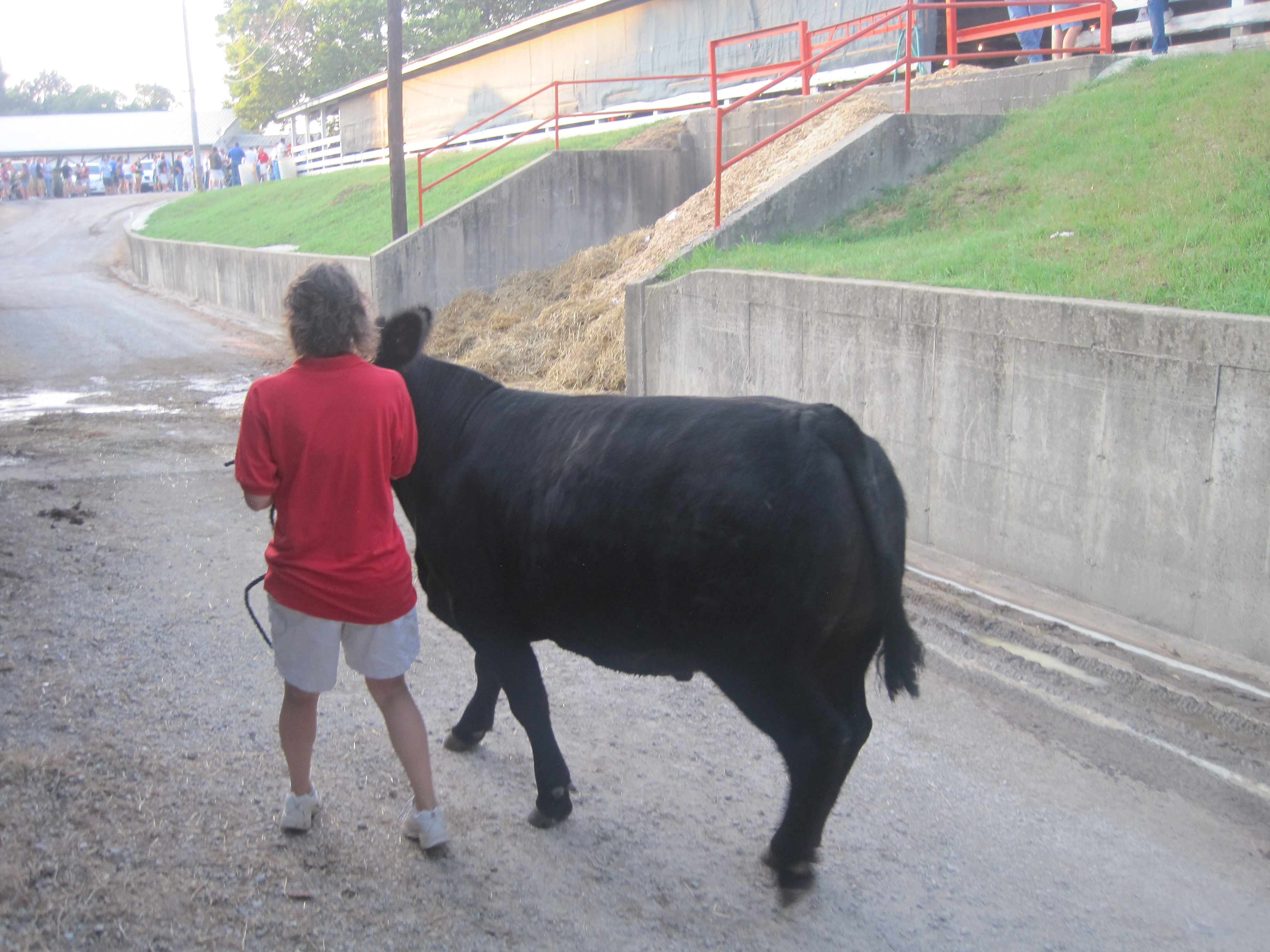
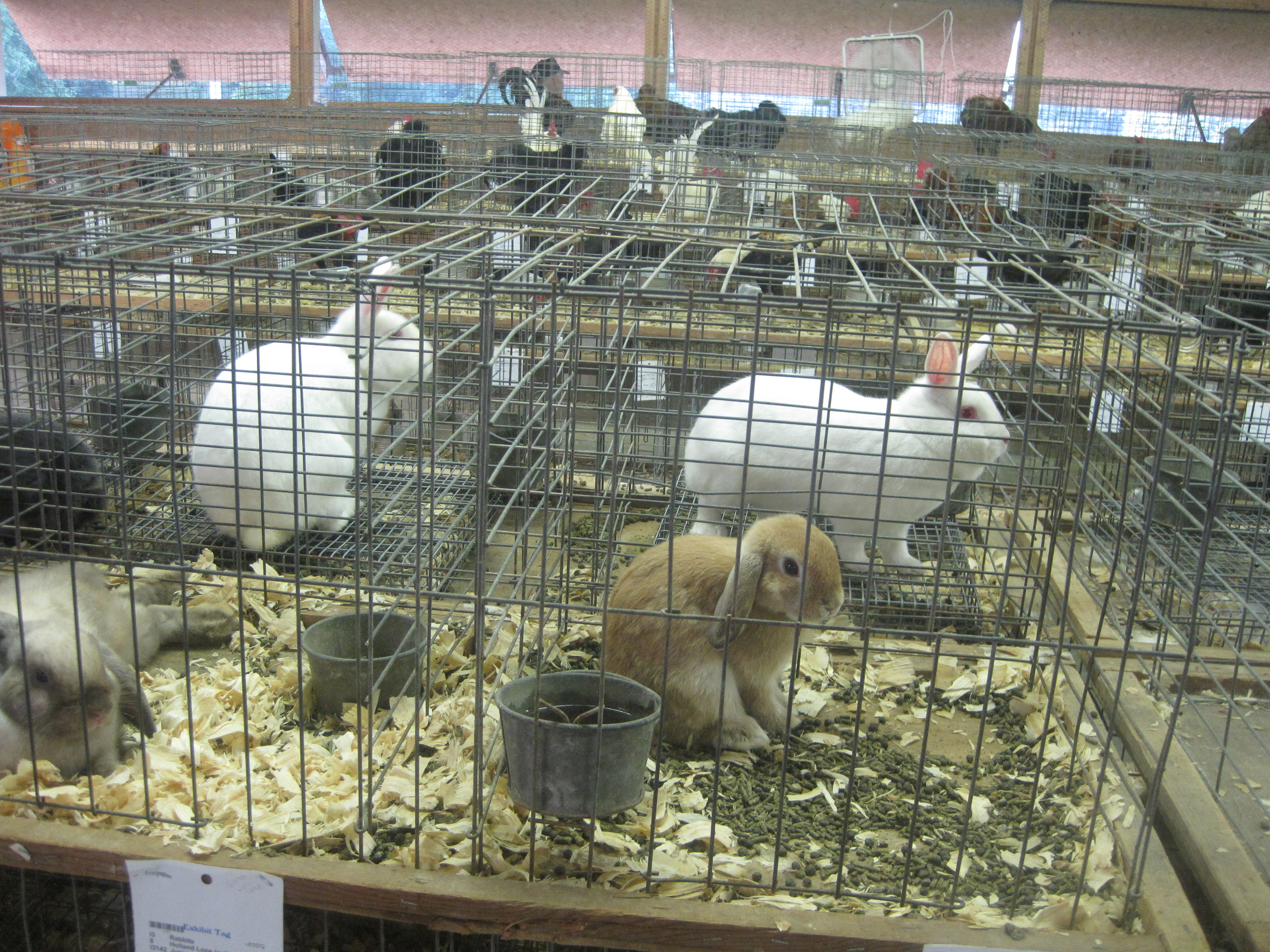
The county fair is an annual event, I’m told, and it includes a public auction of farm animals. The ceremony is graced by the distinguished presence of the year’s beauty queen of the town who stands gracefully with a tiara on her head beside the stall of the waiting animals. There are also live barns in the fair where if one chooses one could purchase of any of the animals. The cattle are extremely huge and in pretty colours. I saw a sheep wearing a military camouflage jacket. We also saw a hall full of rabbits all for sale for about $2 each. “Do you eat rabbits?” I asked Karla who immediately began to giggle. “No, I don’t.” She said “They’re pets. They’re cute.” Yea right! A few seconds later, the barn owner who had overheard us had a few more words to add. “Of course we eat rabbits. And more, we use parts of them for very many other things too. You know those pee sticks you use for pregnancy tests at home? They’re made from rabbit brains! Their eyes are used for glaucoma testing and the animals are also used to test beauty products before they are released to the market… Of course we eat them. We have about 1,200 of them in our farm at home.” Well, there you go.

There were roosters of various colours and kinds which reminded me of Chicken George in Alex Haley’s Roots. I have never seen so many different kinds of cocks in one place. (I have a different post coming up on this come later. There was something distinctly familiar about the smell of so many free-range roosters put together in one place, cackles, colours, and all. It comes from distant memories of my own childhood).

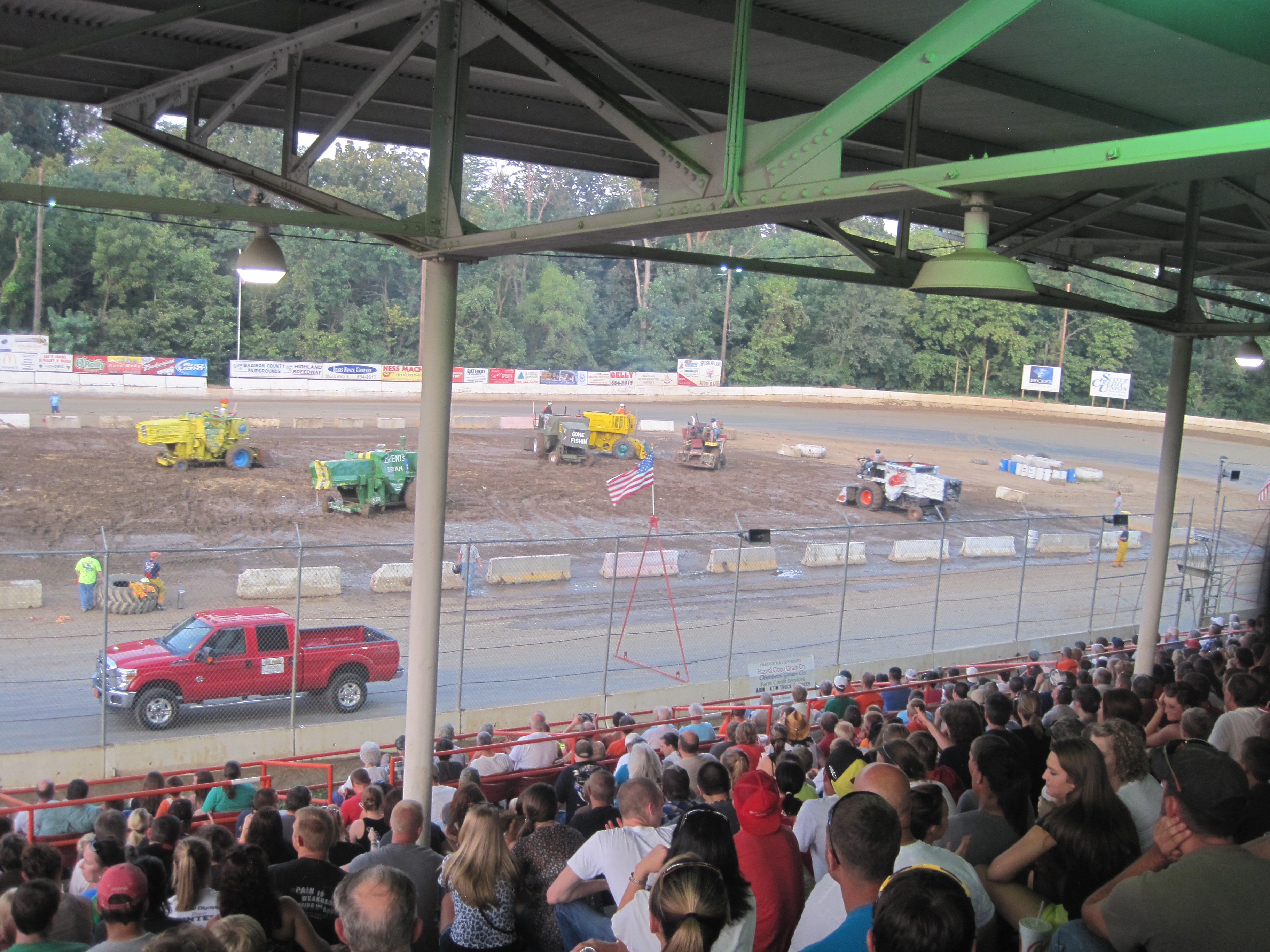
The demolition derby itself – the fair’s biggest attraction – took place in the arena surrounded by an anticipating crowd. Imagine the arena in Rome with gladiators in the ring. The gladiators in this case are trucks constructed specially for the occasion. The aim is to ram them into other competitors’ trucks as much as possible until there is only one functioning truck left in the arena. Think again of the WWF’s Royal Rumble of those days. By the time we arrived, one truck was already out of commission. The remaining five slugged it out in the mud for a while, and by the time we left, there were three of them left chasing each other around the muddy stage. I’m told that the grand event will take place today with even smaller vehicles still driven by real people, playing the same game. I guess the idea of building something that will eventually be crashed for the purpose of entertainment makes a whole lot of sense. From sitting in the stand and watching along with the intense excitement of fellow spectators, I can at least say that it has its thrilling moments.

All that remained was walking around the fair grounds, observing small town park entertainment, having a first taste of some new snacks (a corndog is a hotdog covered in corn bread and fried. A funnel cake is not a cake. It’s a fried sweet dough covered in icing sugar). In the end, I also discovered that I was not the only black person in a fair of many thousands of people. There was this other guy I saw at the auction close to the horse, but he was probably American.

_______

* I use the term advisedly. Wikipedia tells me that unless you are one yourself, it’s not a word you should use to refer to someone else.

Chicago Outdoors

The city hasn’t changed much since the last visit. Only the traveller has. The lake front remains in its deceptive calmness, with boats and geese competing for space and attention. On one street corner is a lone saxophonist playing for change. On the other side of the street is a group of barely clad black dancers showing off to impressive hip-hop beats. They have an audience. A few feet away is a gay advocacy group holding up cards and urging pedestrians to get on the move to legalize same-sex marriage in Illinois as it is being done everywhere else. (After all, Chicago used to be the third biggest city in the US and thus the next biggest place to gather for such protests).

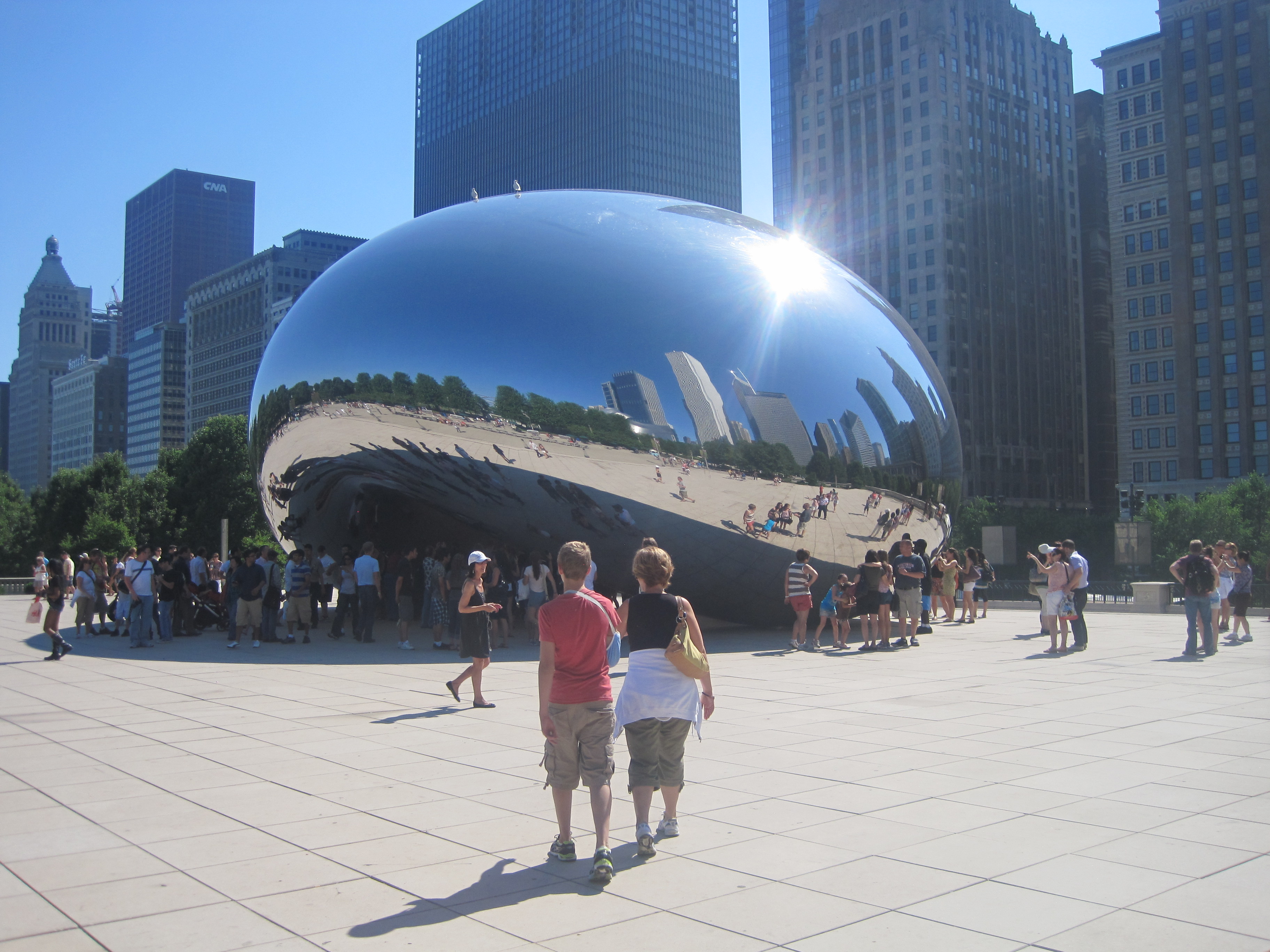
The other differences are conditional: a summer heat, a working fountain which – according to a guide – was said to have also been donated to America by France (just like the Statue of Liberty). The truth is less direct, of course. Wikipedia says the fountain was only designed by a Frenchman. The Bean of Chicago (actually called “Cloud Gate”) remained where it had always been, eluding contact on the first visit, and still impressive on contact. It’s made of stainless steel although everything else suggests otherwise. But of course, glass does not curve like that and would not have survived so much touch, knock and human contact, so there.

The Abraham Lincoln statue still sits in Grant’s Park, and the Ulyses Grant’s statue still stands at Lincoln Park. Chicago’s park humour. There are a few more: a homeless guy with a sign that says “Why lie. I (just) need a drink.”