Browsing the archives for the Soliloquy category.

The Third Winter

Browning tar, a rote of car zoom noises around my window. The sun sets in a distance, a lot earlier than before, to a now conditioned amazement. Afternoon and night share a neighbourly block on the street of a dying year. Tick, tock, the clock hand counts the moments again in memories of times gone before. At a different time but in a similar pose, time counted down. The geese quacked. The refrigerator hummed creaky tunes in the middle of night. Ice formed into layers of sweat balls around the glass, and everything else stayed still.

The world has not changed since then, or has it? Many months of movements follow each other in steps of ease, and texts, and work, and revolts. And here we are, another winter, another dark evening at four o’ clock. It is a short remove from those quiet times, just two years ago, in the sober remove of a rustic village, but here it is. A year winds down with the last paces of its easing rote, crank and all.


On Poetry as Science

One piece of prose floating from the fading memory I have from reading Czeslaw Milosz’s Visions from San Francisco Bay occasionally come back to haunt me in my still moments. It asks amidst a whole lot of other questions what the purpose of words are beyond their ability to convey meanings. In one recent interview with Stephen Colbert, Astrophysicist Neil deGrasse Tyson compares the inconsequentiality of our presence on this planet to that of a billion (and some) bacteria living in the walls of our intestines whose number is equal to almost three times the number of all human life that ever existed and died. Like those bacteria, he suggests, who live without the mental capability of understanding the dimension of their inconsequentiality when compared to six billion other intestines walking the earth (with the multibillion units of bacteria they carry in them), we may not possess the mental flexibility to understand our insignificance (along with our equally possible random relevance as evidenced by our current existence).

Milosz asks as if to himself what makes it so that words, in their utmost insignificance beyond immediate use, lends themselves to entendres, rhyme and poetry. Did there exist on some magical plane a predestination for the word “apple” to become the symbol of ultimate taboo, pleasure and sin? In which realm of serendipity did “gain” and “pain” acquire the paradox of their rhyming complementarity. Sure computers may not write poems now (and I have no doubt that this is false), but the lexical matrix of today’s world endows us with a gazillion ways of expressing thoughts in inventive ways. The order in which I have written the last couple of sentences in this post (with almost a 100% certainty) is an order in which these words have never ever been arranged and never will anymore by anyone else. There is something to that. The process of writing poetry, for me, taps into the science of this randomness. The art resides in the chance of success – that moment when meaning, form, and words meet at the tip of the writer’s hands. See below:

I balanced all, brought all to mind,

The years to come seemed waste of breath,

A waste of breath the years behind

In balance with this life, this death.

from W.B. Yeats’ An Irish Airman Foresees His Death

This concise beauty, and an underlying deceptive simplicity that wows, has always defined for me one of writing’s unreachable bars; the place where science, art and meaning collide with the earnest needs of the present.

A World In Intolerance

Saturday evening found me in a bar downtown Edwardsville for a quick drink. One particular conversation with a mere acquaintance present there with a few other friends eventually turned to discussion about careers, mine, and about what I would like to be doing as soon as I’m done with a Master’s degree. It then returned to him and what he was doing at the moment. He’s studying to be a health scientist and he would one day love to work on the African continent. “I would have gone to Ghana in the summer,” he said, “but I didn’t have the money”. “Great,” I replied. “I know a program called the Global Health Corps which sponsors interested health workers/scholars from the United States to parts of Africa in order to make a difference doing what they love. It’s fully funded, and it’s perhaps precisely what you need. As a matter of fact, my fiance lives in Uganda at the moment because of this program.” He was immediately enthusiastic for one second, and then stopped. “I can’t go to Uganda, Kola. They’d hang me there.”

It took me about two seconds, and then I got it. He is gay. This was my first time of hearing this admission directly from him. He was apparently already familiar with the laws in many states on the continent today demonizing that kind of difference. I recovered from my double-take and tried to assure him. “You’re a foreigner. Foreigners are usually more protected especially when they’re volunteering… Maybe your presence in local communities saving lives will be enough to help change minds… Or maybe you don’t have to wear the tag on your forehead…” No, he said. He doesn’t have anything to hide and would never live where he is forced to deny who he is. The conversation went on for a little while more with me asking a few more questions I’d always wanted to know from a self-declared homosexual: How long has he known? Has he ever kissed a girl and loved it? Has he ever had sex with a girl? etc It was surprisingly an open conversation without any awkward moments where the young man opened up with his fears, hope, dreams and pain at the kind of society that demonizes difference. I expressed my empathy to him, just a few seconds before I informed him that he wouldn’t be able to live in Nigeria either.

A few days ago, last week, a  new law was passed by Nigeria’s Senators penalizing “homosexual activity” for up to 14 years in jail, and up to 10 years for those who support, conduct or witness homosexual marriages and association. Many things make this law stupid, but this makes it curiously draconian: there has never been a clamour for homosexual union/marriage in Nigeria. If anything, the derisive societal attitude has been previously enough to keep those with same-sex attraction in the closet. Societal acceptance – if it ever happened – would have been a very big leap forward. Many pundits have already written about this, and the conversation about the scourge of this state-sanctioned intolerance has already taken centre stage in the media, which is good. Looking through the various arguments put forward by citizen for the support of this legislative measure has however convinced me of the long way that society still need to go to overcome intolerance.

Back to America, at around the same day, Congresswoman Michelle Bachman of the United States House of Representatives was telling a group of voters that she has no problems with homosexuals or lesbians getting married, as long as they get married to people of the opposite sex. Read it here. Here is the summary then: If you live in Nigeria or in the US as a gay person, you risk being criminalized except you get married – to the people you are not attracted to. If you live in Uganda, there’s one step further, you may be brutally murdered by a mob of intolerant activists (as was the case of the human right activist David Kato). There is much more to say about the hypocrisy of these expressions of sadistic intolerance, but I will end this post here – a minor contribution to the dialogue. There are a lot more we can do to bring peace to the world than spending time demonizing other people because they are different from us. A lot more things we can do with our conscientious energy.
Occupation Blues

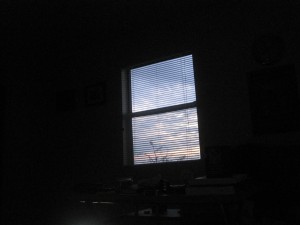
Open window peers into a blue evening through tiny louvre slits,

removed, it seems, from floods around the Nile and the Hudson,

Mississippi, Missouri and Victoria and other throbbing tributaries.


Open veins of revolt, serrated slivers of soul across the landscape

as far as eyes could see: a finger in the pupil of the surly present.

“Occupy this,” morning calls, blue with equal promises of dawn.


Across from me, Dawning.

Waking up to the soft silence of fall, there is a magic unspoken. Trees bob light heads in the kindness of the wind. Yellow leaves blow around a once lonely place. The ground lay spread on a terrace of rust. Through the solid glass where the traveller looks out into the backyard, the season floats in the air like a dream of a faraway land. The snap, crackle of dry broken stems could only break the silences. They rarely shake the shape of the morning out of the serene lure of its affection. Morning breaks into the rote of rust. It brings with it silence, crackles of dry slivers of life across the dawning day.