Browsing the archives for the Opinion category.

Coming Changes to KTravula.com

I have exciting news. In coming weeks, I will begin to effect a series of changes that will transform this blog from a personal platform of just one man’s thoughts on things to a more open collaborative blog of ideas from all over the world.

I have thought about this for a while now and have come to the realization that the personal nature of the travel experiences here has gradually run its course. For one, I do not travel as much as I used to nor do I hope to soon. There are very many responsibilities of different natures competing for attention. I also have a very demanding schedule of tasks at hand including personal work, a thesis, and other research projects for which I need to give my all. More than that, I am also convinced that there are very many new voices out there that could find good use for this means of expression.

The changes will be gradual and will lead eventually to a richer and fuller content for you dedicated readers. As at today on Alexa, KTravula.com was rated #113,258 in the United States and #393,557 in global ranking. We’re slowly catching up with Google, Facebook and Youtube who occupy positions #1, #2, and #3 respectively ;).  In less than two years, we also got a record 12 nominations for the Blog Awards. I couldn’t have done this without you. Now is the time to expand, and enrich the experience. We have got a few offers for non-intrusive ad links on the blog. If it works as planned then, I’ll be able to pay all contributors a little stipend. I will not stop writing, of course, but there will me a few new voices and I will retain my position as the editor-in-chief/publisher. So, watch this space.

PS: Interested travel writers/freelance writers who are interested in becoming regular or irregular contributors should send me a line at freelance@ktravula.com with ideas. I’m also looking for a voluntary website designer.

Orwell on The English People

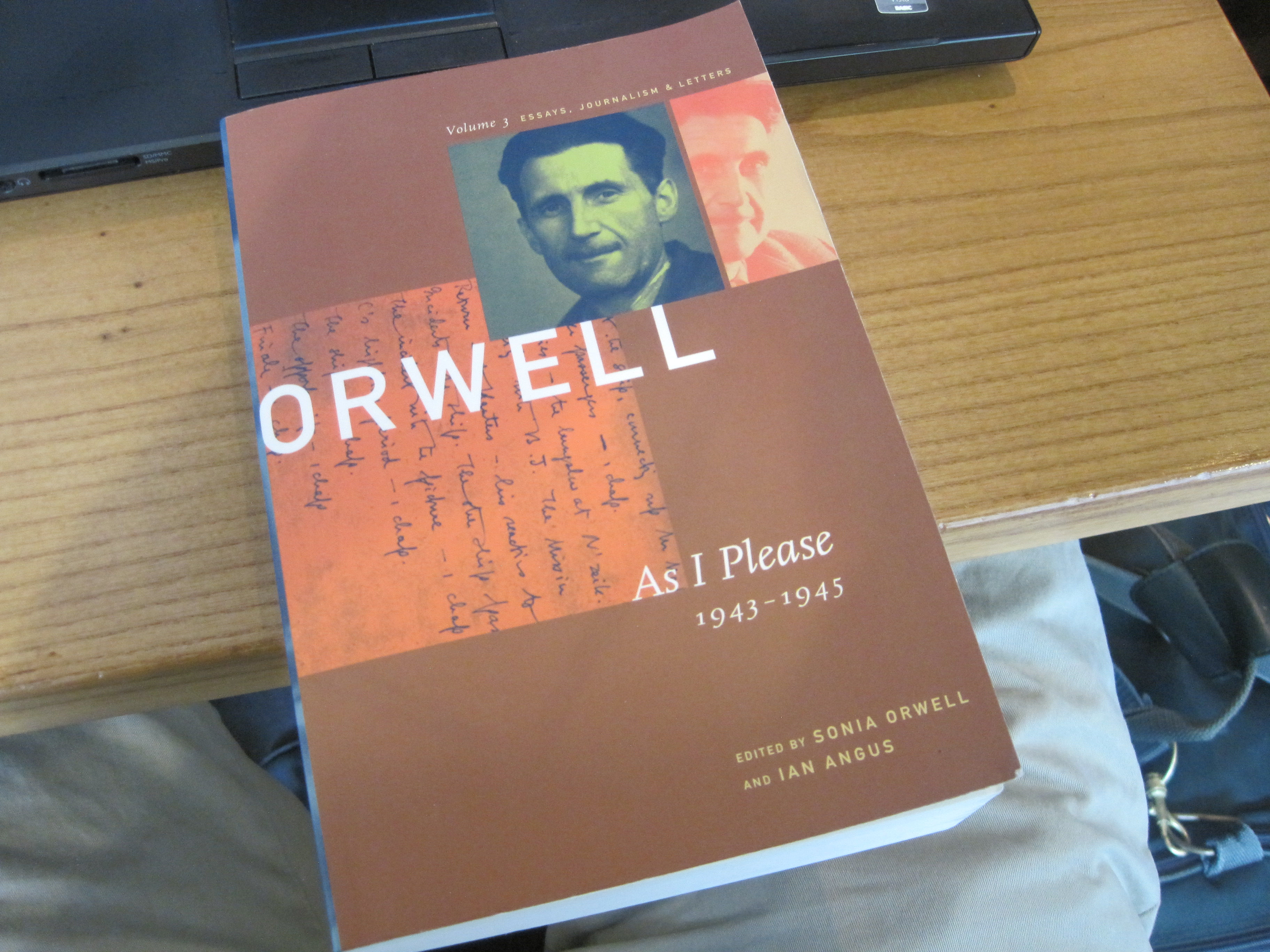
I am reading “As I Please”, a collection of essays written by George Orwell between  1943 and 1945 and edited by Sonia Orwell and Ian Angus. In the first essay titled The English People, the author explains some benefits and demerits of being an Englishman speaking English:

“But there are also great disadvantages, or at least great dangers, in speaking English as one’s native tongue. To begin with, as was pointed out earlier in this essay, the English are very poor linguists. Their own language is grammatically so simple that unless they have gone through the discipline of learning a foreign language in childhood, they are often quite unable to grasp what is meant by gender, person, and case. A completely illiterate Indian will pick up English far faster than a British soldier will pick up Hindustani.  Nearly five million Indians are literate in English and millions more speak it in a debased form. There are some tens of thousands of Indians who speak English as nearly as possible perfectly; yet the number of Englishmen speaking any Indian language perfectly would not amount to more than a few scores. But the great weakness of English is its capacity for debasement. Just because it is so easy to use, it is easy to use badly.

In the essay with parts that read like an epilogue to his earlier essay Politics and the English Language, Orwell complains about English being influenced by “American” pop culture words. Although written about six decades ago, it is fascinating how Orwell’s perception of the English life, language, and culture seems to remain as applicable now as it was then, even seeming applicable to other new post-colonial societies elsewhere.

Here is another quote:

“The temporary decadence of the English language is due, like so much else, to our anachronistic class system. “educated” English has grown anaemic because for long past it has not been reinvigorated from below. The people likeliest to use simple concrete language, and to think of metaphors that really call up a visual image, are those who are in contact with physical reality. a useful word like bottleneck, for instance, would e most likely to occur to someone used to dealing with conveyor belts: or again, the expressive military phrase to winkle out implies acquaintance both with winkles and with machine-gun nests. and the vitality of English depends on a steady supply of images of this kind. It follows that language, at any rate the english language, suffers when the educated classes lose touch with the manual workers. As things are at present, nearly every englishman, wheatever his origins, feels the working-class manner of speech, and even working-class idioms, to be inferior…”

An engaging read.

Nominated Again

The blogger would like to thank readers who nominated KTravula.com for the Best Travel Blog category in the on-going Nigerian Blog Awards 2011. You’re wonderful. To vote for this blog, go to this link, and choose KTravula in the Best Travel Blog category.

To Joplin and Back

Dear blog,

As you already know I was in Joplin, Missouri, this weekend as a volunteer with the Service International Organization to help give a hand to the reconstruction efforts in a city brutally wrecked by an EF-5 tornado. Service International – a non-profit volunteer organization based in St. Louis – has been in Joplin since after days of the tragedy that killed over 117 people and has been helping homeowners sort through their debris and generally provide manpower to all in need. The other volunteers we met there, like us, came from all parts of the country… from Arkansas, California, Ohio, Oklahoma, Chicago etc and from various fields of endeavour: students, military, professionals, executives etc. I met a Nigerian of Indian origin – an undergrad of a university in Arkansas who speaks Nigerian Pidgin as his only Nigerian language, and English, along with two Indian languages. He grew up in Ikeja.

This weekend, according to the director, had one of the highest turnouts of volunteers in the last couple of weeks. We were almost forty. As the week ended, most of us have now returned to our bases leaving only a handful of people to continue the work. (The centre still needs as many people as possible who want to give their time and energy in service.) Looking around the areas of the disaster, walking amidst the debris, it is hard not to see the helplessness of humanity in the face of tragedy, and life as little moment of grace. Red inkmarks on abandoned buildings show the number of people who died or are missing in there. We saw many of those. A whole expanse of land as far as eyes can see lay spread in ruins as if a big war has just ravaged it. The town got very badly gutted and the heart breaks looking at it.

According to reports, some people were picked out of their houses while some were killed while hiding out in supposed safe spots in their homes. I heard the story of a young boy of nine who was snatched from a moving van from the hands of his father by the storm. The father lost use of both hands but survived. The boy did not. There was another story of the workers of Walmart who went, as instructed, to hide in the freezer until the storm subsided. The freezer was taken up by the tornado and has not been found since, along with its occupants. The witness were two girls who had run towards it but didn’t make it there in time before they were shut out. It cannot be overstated that what pictures show of this wreckage is nothing compared to what it is when actually seen with eyes. It can only be imagined what it must have been like when it happened. And it all lasted barely thirty minutes.

The SI Relief Centre is located in a church premises with feeding and accommodation provided courtesy of donors, volunteers, the US Marines, the Red Cross, and many others. It welcomes as many more people as are interested in giving them a hand from now until their work is done, which won’t be in a while. The accommodation was comfortable and the daily interaction with other volunteers was a delight. On Friday night, we sat around a fire in the courtyard and told stories of what brought us to Joplin after introducing ourselves. Mine was that I was in a similar tornado that nearly got me killed, and I survived.

We spent Saturday on the field, working. The site was a farm owned by a man of about seventy-five whose whole property was leveled by the tornado. He didn’t speak much as he rode his cart around inspecting what we were doing. And what we were doing – simple as it sounds – was to separate wooden planks from the roofing sheets so that it would be easy to destroy or recycle as the case may be. There must have been about four houses torn down in the premises. We worked in groups on the wreckages from around nine when we arrived there until around five when we left. Sunday, after a short church service where we were feted as new comers, we had lunch and set out homewards. Others remained there to continue the afternoon shift until late into the evening. But even at that level of work – fixing one person’s property per day – it would still take years to rebuild all that has been destroyed in the town. Some volunteers have been coming there since the centre was set up. It is an impressive work that is being done there, and it could do with plenty more.

This post is getting long but I’ll tell you how I got that opening at the back of my t-shirt in the picture above. I had a long plank of wood that I had to toss in a pile. And like I did with the others before it, I threw it with two hands like a javelin. It usually would just fly over my head straight into the pile along with the rest. On this one, I had misjudged the length and the weight of the plank and its tail end landed on my then already bent back, grazing me roughly as it went into the pile like a missile. I touched it and saw how lucky I was. It had pierced opened not just my general issue orange shirt but also the black one that I wore underneath it, but my skin was safe. A good thing there was no nail there at the end of the plank. By the time we got home in the evening, we were all tired, yet energized by the fact that we had made someone very happy, and he did not have to pay us.

There are a few more things that I will tell you as soon as I can. For now, I should sleep. But this I know: it was a humbling, moving experience.

Sincerly,

Blogger.

(Photos by Mafoya Dossoumon)

Pondering Stereotypes

What do you think of when you hear the words “British”? Well, it depends on who you are, doesn’t it? I bet the French, the Irish, the Scots, and the Americans think of them differently than the Germans, South Africans, Indians and Nigerians do. Stiff upper lipped, stoic and unyielding. My first impression of Britain started and ended at the UK Border Agency counter at Heathrow Airport in London en route to Boston, and it wasn’t very heartwarming. Portrayals in Mel Gibson’s The Patriot and Braveheart didn’t help either, and if those were all I had, I’d have re-routed my plane flight to go through France. But then, there was Colin Firth in The King’s Speech that brought much humanity back to the name. And there is the delightful Queen. In any case, this post – which is merely supposed to explore my contact and thoughts with stereotypes has just merely started. I chose “British” as the first example in my head. Imagine if I’d chosen to start with “Jewish.”

Now, I have just listened to a nine minute video by Andy Borowitz, one of my best living comedians. His tweet feed was named the funniest of 2011 and he has provided the best commentary on every contemporary news since I’ve started reading him. He makes twitter a fun place to spend one’s day. So, back to the story. One day, I discovered that he was also a stand-up comedian. I’d always thought that it was hard to combine being funny in 140 characters to being funny in real life. He does both very well that now I can’t tell which one I like better. (Well, that was a lie. His tweets take the cake.) What was notable about him today that I discovered was that he is Jewish. Now it all makes perfect sense. See – and I’m not an aspie like my friend Clarissa – I sometimes tend to look for patterns, for no good reason. I discovered sometime ago that Jon Stewart was Jewish, and then I knew of Lewis Black, and then Larry King, then Jimmy Kimmel, and Jerry Seinfeld. The only other thing that connected them all was that they were funny, brilliant people. Then Woody Allen.

Now, a few steps back again. My favourite authors weren’t Jewish. They were Irish. George Bernard Shaw, James Joyce, Seamus Heaney, Jonathan Swift, Oscar Wilde, Samuel Becket, W.B. Yeats, (and Barack Obama 🙂 ). I had grown myself into the idea that the most brilliant authors/people had some Irish in them. Oh, and let me now forget George Carlin. So it was such a shock to find out that when it came to intelligently interrogating ideas through literature and the arts, the Irish were not just the ones out there, and were definitely not the funniest. Thinking about it now, I should have taken a hint from the fact that Albert Einstein and Richard Feynman also had Jewish ancestry. So where does that leave me? Nowhere, actually. Like I said in a much earlier post, the link between the Yoruba people of West Africa to the Middle East – as plausible as it sounds on the surface – leaves many questions than answers. And that’s fine. I’ll just watch the Daily Show, Jimmy Kimmel Live, read Borowitz Report and go watch Larry King (whose last name is actually Zieger) on his comedy tour. There is an interesting, notable pattern in the talent of those who carry the ethnic (if not the religious) identity into the public sphere.

And there ends my post on stereotypes. I’m sure this wasn’t what you were expecting, but I have a feeling that a sequel will come sometimes soon when I come up with the other recollections of contact with people based on expectations, observable patterns of behaviour, hearsay, and yes, stereotypes. And yes, my friend Clarissa, and my head of department are Jewish as well. Regarding that expectation of brilliance – if only through contact – now I have nowhere to hide, and no excuse.