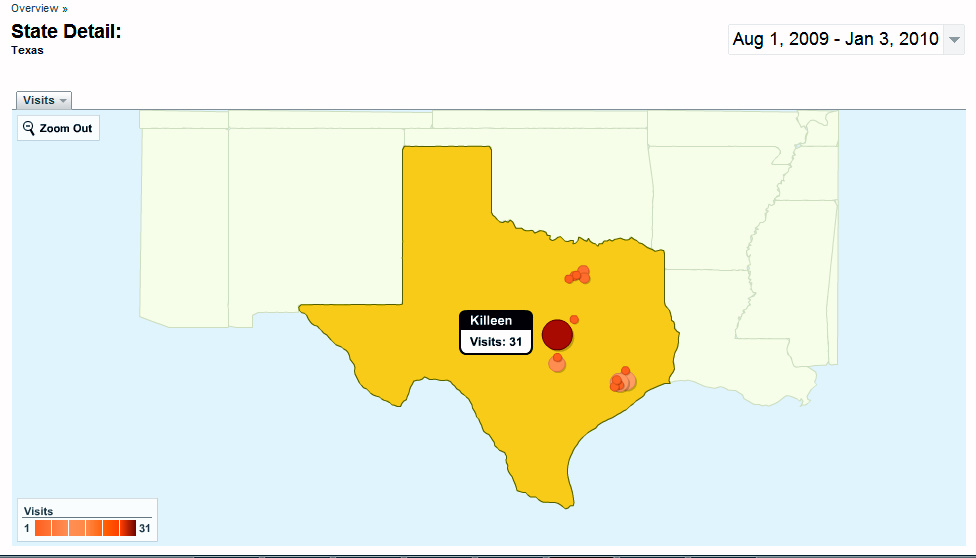
 There are many places that I may never get to visit on this one trip to the US because of schedule, finances and the constraints of time, as much as I would have loved. One of them is the state of Texas, which has however shown on my Google Analytics map as a place where not a few people have been reading this blog. So if my feet won’t get to the State of Texas, at least my words have reached there ahead of me. This post is dedicated to the readers in that state. My regards to Former Presidents George H. W. Bush, and George W. Bush. And to Governor Jeb who might one day become the nation’s President as well. Okay, I know that Governor Jeb lives in Florida, but that’s beside the point. (Click on the map to enlarge)
Browsing the archives for the Observations category.
What do the word “simian” and the name “Simeon” have in common, aside from a similar pronunciation? You guessed it – nothing at all, unless Simeon lives in the cage in a zoo or on a display plinth in a museum of extinct apes. If I were named Simeon, I would be very sad indeed if anyone were to laugh out loud every time they mentioned my name, especially if the person is a native speaker of English.
I remember my Kenya days, reclining under the mango trees on the grass lawns around the Margaret Thatcher Library on the campus of Moi University, Eldoret, discussing words and languages. All of us were guys, men, so the topic inevitably led to the risqué. All I wanted really was a chance to gather knowledge about the Kiswahili language to add to my vocabulary, and until then, everything was going smoothly. I would come out in the morning, lay on the grass while my informant, Ng’ash, a photographer (whose name also rhymed with nyash) did his work and dealt with my endless list of questions at the same time. After going through a list of over four hundred words in Kiswahili with him and his other equally fascinating and mischievous co-photographers in that spot of the campus, I found that ngozi meant “skin”, pole pole meant the same as pele pele (go gently), kiboko meant “buffalo” whose skin is used to make what we called koboko (the whip), Mungu meant “God” and jana meant the same as àná (Yoruba for “yesterday”), among many other amazing similarities. I also found out that kuma meant “vagina”, and that moto meant “hot”. The joke Ng’ash liked to make was that the first time a Kenyan found himself in Japan, he could not get his mind off the fact that the institution he was enrolled in was called the Kumamoto University. Kuma in Japanese is a popular name for children, meaning “bear”.
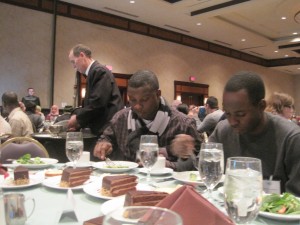
And so in Washington DC in December, I found myself on a dinner table with half a dozen Tanzanians who dared me to prove to them how much of Swahili I spoke. I did, starting with the everyday ordinary words. But they kept egging me on and I told them that I had actually learnt the private words first while I was in Kenya, and that I still remembered them even though I found a dinner table the least appropriate place to discuss such things. They would have none of it so I said, “I know that mbooro is for penis. Do you believe me now? I know that one for females but the point is proven, no?” The boys looked surprised, and the girls kept giggling mischievously, now resolved not to let me off until I gave voice to their body parts as well. It was an embarrassing almost awkward moment. But I did, and then shared the joke about the Japanese University. What else I found out afterwards was how easier to mention the word for privates in another person’s language. When asked to tell them what they were in my language, I could only tell them the word for penis. For vagina, I referred them to the Nigerian women in the hall, and as I correctly guessed, none of them took up the challenge to ask.
What I also learnt at the table was that the Nigerian name “Uche” in Tanzanian Swahili also meant the same as kuma, and that every time they heard the Nigerian name while watching a soccer game, they were giggling aloud not for the style of his dribble or the grace of his feet. Since I found out in Kenya in 2005 that Titi means breasts (as in matiti in Swahili), and “titties” in American English, I’ve always wondered what my name means in all the languages of the world if there was a way I could go on and find out. In American English, it means “a dark carbonated drink with a secret formula bottled in cans and bottles.” Not bad. What does it mean in Chinese, Malay, Emai, Nepali, Farsi, Akan, Ikaan, Uwu or Arabic? Maybe I should ask Reham about the Arabic part. I hope the meaning would not be too x-rated for her to tell me. I also remember one of my class sessions last semester when we were discussing colours. I had written the Yoruba ways of expressing colour on the board, and it included pupa for “red”, bulu for “blue”, funfun for “white” and dudu for “black” among many others. By the end of the class, I was told by the students why of all the colours we learnt that day, they would most likely remember dudu for a longer time to come. In American English (slangs), the word doo-doo refers to excreta, they said. Talking with my Swahili friend recently about these, she told me that dudu in Swahili also means “a large insect”, in addition to being the word now used to refer to the HIV/AIDS virus. Very nice. So now, although eniyan means “person” in Yoruba, all of a sudden, I am never going to refer to myself as an eniyan dudu ever again! Not in America, and definitely not in Kenya.
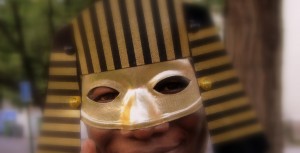
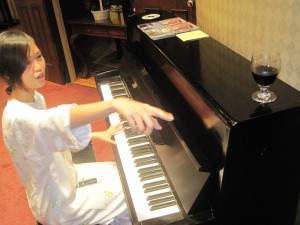
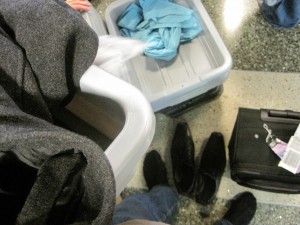
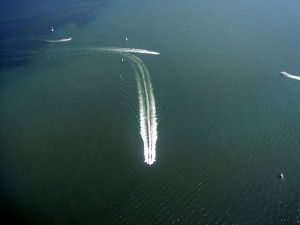
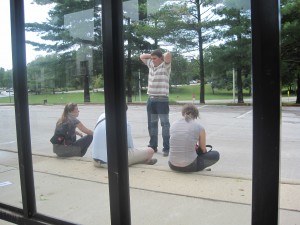
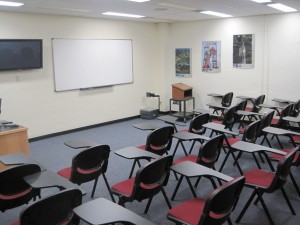

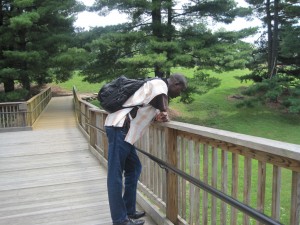
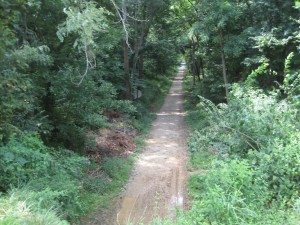


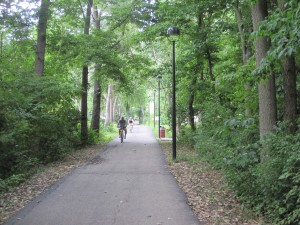

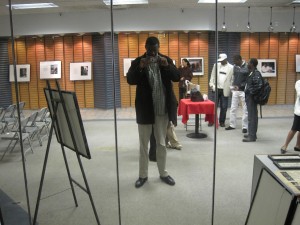
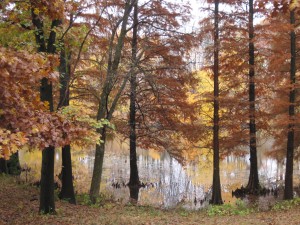

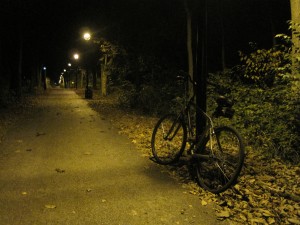

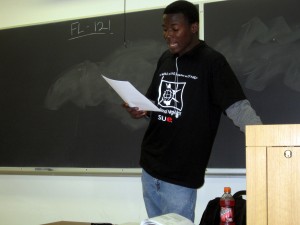
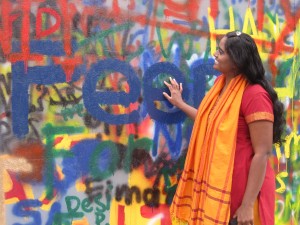
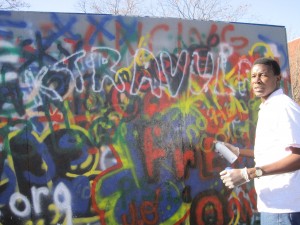
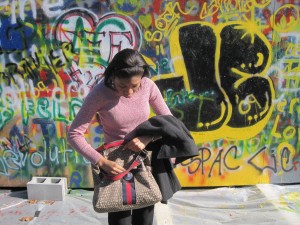
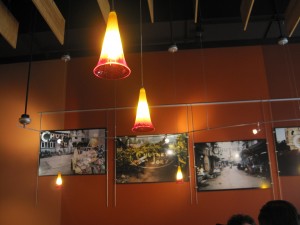
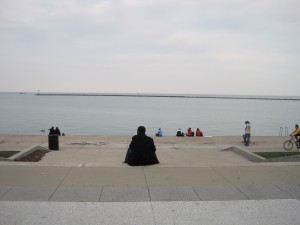
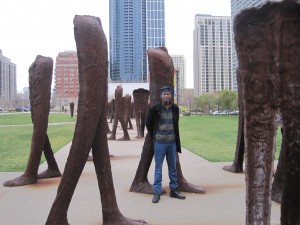
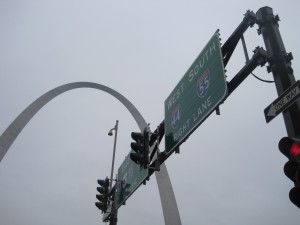
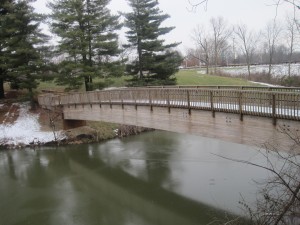
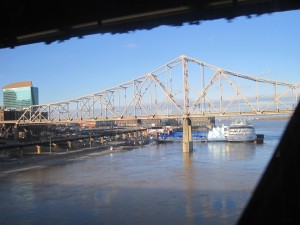
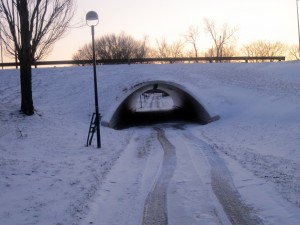
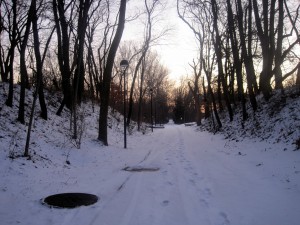 in all their 10 megapixels glory.
In lieu of promises of things I would do in the new year (which had, by this morning, included dropping the abbreviation LOL from my 2010 vocabulary, getting a better camera, making more savings, kicking my Papa John’s pizza eating habit, and drawing up new itineraries of new places to visit in the US), I now present my new year resolutions, which are in fact however resolutions from 2009, courtesy of my Canon Powershot SD 1200 IS camera. Some of the photos I’ve shared here before. Some not. For those interested in my photography, let’s catch up on Facebook. But note that I will not confirm friendship with people without profile pictures themselves, except we have known mutual friends. Sorry. :D.
With these, my 2009 is done at last. I may not have been the best Fulbright FLTA this year, but I sure had the most fun.
Enjoy.
(Move mouse over the photos to see their descriptions. Thank you for readership)
 You may want to read Ten Reasons To Be Thankful for 2009 here first before you continue.
10. That idiot who tried to blow up the plane is from Nigeria.
9. The healthcare system in Nigeria is still in a comatose mode. The president is unhealthy and can’t be treated within the country. There is no sadder reminder of the state of our healthcare.
8. Climate change is not waiting on the signatures of the world leaders. It is a grim reality.
7. The swine flu infected and killed so many people this year. And we’re still in December. It can always get a lot colder.
6. I did not get to write as much as I wanted. And read as much as I wanted.
5. We do not yet know how much nuclear weapons are in the world at the moment, or in whose hands they are. So, it is safe (no pun intended) to say that we’re not totally free yet.
4. I lost my Grandmother.
3. I didn’t have enough time or funds to go around as I wanted to.
2. I didn’t see the Avatar (yet), Old Dogs and Sherlock Holmes.
1. On the other hand, we’re now closer to 2012!
 10. The Nigerian guy who tried to take down an airplane in Detroit did not succeed.
9. The US Healthcare bill is passed, even though it still doesn’t include the public option, and many people say that it really is not all it promised to be at first. But hope is alive and well.
8. The climate talks at Coppenhagen, Denmark are over and many valid and important issues have been raised about the threat to the environment. It is not a perfect situation, and not all governments present have agreed. But we’re more conscious now. Head over here and here to see a picture of fellow Fulbighters protesting in front of the White House.
7. I didn’t catch the flu. It didn’t snow much in Edwardsville. Thank goodness. I think I’ll make it though the winter after all.
6. I got to write some more poems and prose than I did last year. My Short Story Behind the Door will be published next year in Africa Roar, an anthology.
5. Nobody launched a nuclear weapon this year, and thus we’re still alive.
4. I met old friends. I made new friends. I met new people. I had pounded yam in abundance, twice.
3. I travelled more this year than I did in a long while, I saw more cities, museums, monuments, memorials.
2. I saw Up In The Air, The Blind Side, This Is It, among many other interesting movies of the year.
1. We’ve survived it.