“I am Nigerian, not a terrorist. I do not kill people that are not from other parts of my country.” – from Politically Incorrect (January 1st 2010)
When I served the country Nigeria in the mandatory one-year National Youth Service in a little village close to the city of Jos in 2005, the state still had as its motto “The Home of Peace and Tourism” even though there was always a shadow of violence looming in the corner and in every conversation. In September 2001, four years before I arrived there, there was one of the bloodiest bouts of violence between the Hausa-Fulani “settlers” and “indigenes” of the state and when the smoke cleared, there were over a thousand people dead, home and businesses destroyed. In a few months, things always returned to normalcy but there was always the shadow of looming violence. Nobody knew when it would raise its ugly head or what its trigger would be. But it was always there.
Read Jos, a city torn apart a report by the Human Rights Watch in 2001
 In May 2004, a few months before I got my deployment papers to travel over 800km from my base to Plateau State, there was another bout of killings in Yelwa, the southern part of the state in which over 700 people died. There is a report of it here. In all of these cases, the failure of government has been the biggest cause of that much carnage. In all cases, the violence has spread and caused irreparable havoc before the agents of state showed up. And in some cases, when they eventually showed up, they took sides and went beyond their call and did some extra-judicial killings of their own. Of all the ills of a badly run government, the biggest most disappointing crime is to be found guilty of taking sides and complicating the already messed up situation and not bringing to justice the perpetrators of previous crimes.
While I was in Riyom, a short distance from the state capital of Jos, I lived in relative shelter from the political realities of the town, but only to the extent of actual violence that eventually took place in some other parts of the state even while I was there. I was not sheltered from the conversations and the anger. For many who lived in my parts of the state, the problem of the state was not only fuelled by religion, but also by a political and economic undertone. Who were the indigenes and who were the settlers. To most who had an opinion, the Hausa-Fulani cattle herders had come from the North to take over the land from the Plateau indigenes of a different tribe and way of life. Plateau state is one of Nigeria’s most linguistically and ethnically pluralized state, yet Hausa is a language spoken by all in addition to local languages. In Riyom where I lived, the language was Berom. Yet, they never saw themselves as Hausa-Fulani and always seemed to be fighting against a perceived dominance of the language and culture of the “settlers”.
 In Nigeria today, this issue is sadly one of the biggest threats to survival. Not just religion, but a politics of ethnic domination, mistrust and well, ignorance/arrogance. And because of that, a lush area of the nation that could as well have laid claim to being the best place to live in the country because of its climate, history and people is entangled in a burning fire with over three hundred people dead, mostly women and children in a reprisal attack. In an ideal federation, there should never be a limit on where one wants to live, as long as one can respect the rules of the land which are fair and just. The religious dimension to this crises is just as unfortunate as it is saddening. Yet, THERE IS NO GOD IN THAT VIOLENCE! If He is, then it is high time we removed him from all affairs of state because this is not one of his best public statements of eternal goodness. The case in Plateau state as well as many other volatile regions in the country – including many in the south as well -is the distrust that comes from ethnic affiliations. When it becomes tied to economic and political survival, hell is let loose – especially in the absence of a moderating influence of a trusted agent of state.
Today, I am enraged like everyone else wondering how we got here and wondering where we go from this cycle of violence. More than prayers for the family of victims, we need a more responsible and responsive government just as much as we need better education for all. And as deterrent, all culprits in the killings must be brought to book, and to justice. If international intervention is needed, let us have it. Those who kill fellow citizens do not deserve to live among us if they deserve to live at all. There is nothing that should stop Hausa-Fulani cattle herders from living and prospering in Jos or in any part of Plateau State, and neither should there be a threat to the practice of Christianity, Islam or any religion by any indigene of the state. What we should fight against is the threat of domination or force. The sky is big enough for birds to fly, as the proverb says. For years religions have lived alongside each other without any threat of violence. What has changed? Yes, politicians and the elite have exploited the differences to their own advantages even at the expense of lives and property of innocent women and children. Well, enough is enough!
On March 16, there will be a rally of Nigerian youths to remind the government why it matters that things are done properly. I cannot attend, but will be there in spirit. For once, I wish I could suggest that the rally takes place in Jos Plateau rather than in Abuja, at least in solidarity with the forces of good. In my case, I do intend to go back to the state when I’m back in Nigeria. I still have friends there, many of whom I’m still in touch with. I will be going with a big camera and I intend to visit new places that I didn’t get to see in my first visit. It is not just a huge sense of loss and sadness that moves me so, it is also a sense of disappointment, and such a wasted chance of nationhood as exemplified by Jos, formerly “the home of peace and tourism.” What’s more, there are hundreds of Youths deployed to the state now on the mandatory National Youth Service whose life is being put on the line without adequate security. The last time there was a crisis of this proportion, at least one member of the Youth Corp was killed for being in the wrong place at the wrong time. Shame! Shame! Well, that too has to change!
My last bout of this much outrage was at the Nigerian terrorist Umar Farouk, and it produced some deprecating politically-incorrect writings in which I had joked darkly: “I am a Nigerian, not a terrorist. I don’t kill people who are not from my part of the country.” Well, here is exactly what I meant at that time. And this is why the world at large needs to respond and direct attention to Jos, Nigeria NOW before it gets even more out of hand and we produce another international terrorist. The culture of impunity must stop and the killers be brought to book.
Read more on the news story on the BBC.
PS: Please never stop praying. And if you can, please send money to the Red Cross which is still organizing relief efforts for survivors and the wounded. It is a sad day for humanity. One more thing – for Nigerians in the United States, please badger the Western Union on Facebook and on Twitter until they make it free to send money from the United States to Jos during this trying period. They need to know how grave it is. They did it for Haiti, they did it for Chile. Now is the time to demand same for Jos which is as well a terrible humanitarian crisis situation. You can make requests by writing on the wall of their Facebook page, and sending a tweetline to make said request. Western Union has been known to respond to humanitarian needs around the world.
(Photos from the website of the Human Rights Watch and the Anglican Diocese of Jos. Warning: gruesome images!)
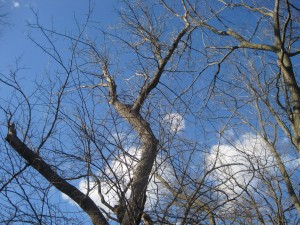
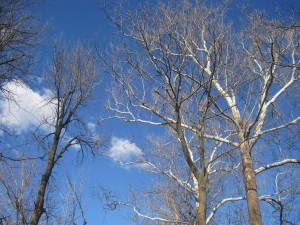
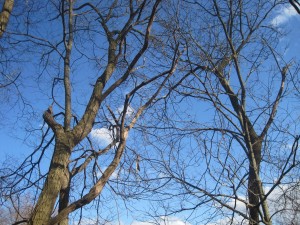
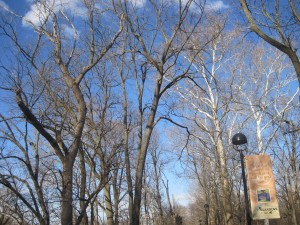 Spring has (un)officially begun where I am, and you can tell. You can tell from the energy of the geese, the rustle of leaves, the glare of the sun and the coolness of the wind. The trees haven’t got their leaves back, but from this change of weather, we know for sure that Spring is on its way. It is here. I went out yesterday and felt the glare of the sun. For the first time in months, I saw so many people outside. At the lake behind my residence, there were at least two people fishing because the lake is not frozen anymore. It now runs like a fresh spring. It is beautiful. But, it is still fifteen degrees celcius. In Nigeria that is the temperature at Christmas. I told someone that and he laughed uncontrollably. Yes, it is hot for you Americans.