Browsing the archives for the Observations category.

Three Worrying Things

1. According to some reports, about 700 people were arrested yesterday for their role in the Occupy Wall Street protests. Many have also been pepper-sprayed by the NY police or attacked just for participating in the protests that has now spread to many states and has received endorsement from many activists.

2. An American-born terrorist (so-called because of his not yet disclosed links to the Fort Hood shootings and the Underwear Bomber of 1999) has been assassinated in Yemen through a direct order from the current Administration. Repeat: He is an American, the first in recent memory that has been denied the due process of law before any allegations against him has been proven. Most of what has been proven about this man is that he engaged in hate rhetoric.

3. Salman Rushdie, a writer known for his brilliant prose as well as for the number of years he spent underground being protected from a draconian death sentence placed on him by an Islamic (police) state has just gone on television to defend the extrajudicial killing of the man referenced in #2. On Bill Maher’s show last Friday, he opined that when someone has been accused of treason, they lose a certain percentage of their rights (and can therefore be killed without being brought to trial).

Worrying times!

The Blood Bank: Two Years After…

I’m happy to inform you that two years after I reported a discriminatory practice in blood donation by the Red Cross on our campus, the situation has been remedied, at least on campus. I walked up there with a friend today, as I’ve done for the last two years, to check their list of exemptions. Nothing in there mentions “Nigeria”, or “sexual contact” as it did the last time, although – now more understandably – people who have travelled to “malaria-prone” zones of the world are required to wait for about three years before donating blood. The science and the common sense are now finally catching up with the other.

Update: On the other hand, the Red Cross website still has the following under its eligibility criteria, under the topic of HIV:

You are at risk for getting infected if you: … were born in, or lived in, Cameroon, Central African Republic, Chad, Congo, Equatorial Guinea,Gabon, Niger, or Nigeria, since 1977… had sex with anyone who, since 1977, was born in or lived in any of these countries… (http://www.redcrossblood.org/donating-blood/eligibility-requirements/eligibility-criteria-alphabetical-listing).

Could someone please inform the Red Cross that you are at risk of getting HIV if you live anywhere on the surface of the earth today and you do things that put you at risk?


Facing Mississippi

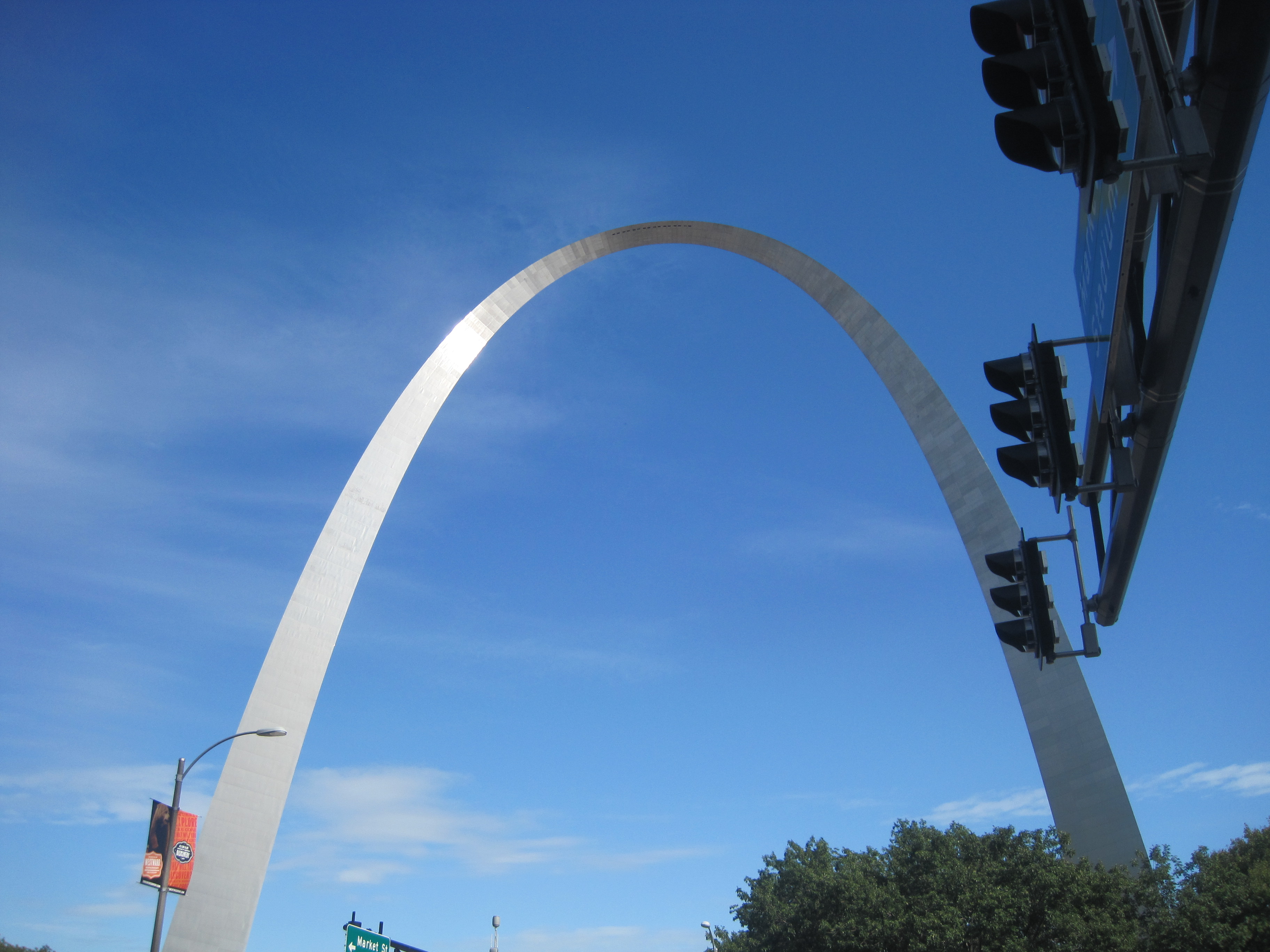
Under the banner of the Gateway Arch, the tallest monument in the country, his body perfectly aligned as a human compass, he ponders.

Here ahead is east where the sun rises. Washington DC lay ahead, as well as New York, Boston, Connecticut, Rhode Island and all those other early states where settling pilgrims first set foot from across the Atlantic and where Irene caused some damage a few weeks ago. Here where he stands was a frontier. To think that all the country was in space are ended right here by the banks of the river. Then came the Louisiana Purchase that gave the country a new lease of life and a chance for the whole of the body of land for a country. Lewis and Clark stood here with boats and tools as they set forth to discover the source of the river, and what else lay out west.

It is easy to ponder what would have happened if another country began from right here which spoke only French. Even without that, all the language influences remain in the town names all around here: Edwardsville, Maryville, Fayetteville, Collinsville, Louisville, Carlinville, Belleville, Taylorville, Greenville, Catonsville, Merrillville, Vermontville, Danville, Warrenville, Romeoville, Pinckneyville, Nashville, Shelbyville, Jacksonville, Lawrenceville, Naperville, Libertyville, Higginsville, Aullville, Boonville, Wentzville, Noblesville and the very many dozen -villes dotting this area and the Mid-western landscape.

On the last frontier at Arizona, Nevada, Texas and California (which, in this position, would be behind him) was of course the other country whose language was mainly Spanish. What is exceptional, in the end, is the way the circumstances were turned to an advantage, and the luck of being able to forge one country that occupies a distinct geographical space.

Standing here, facing Mississippi, even without the positioning of the sun, the moving waters carrying debris from everywhere, left to right, point to the direction of the south. That’s where Katrina went.

Here Comes Trouble

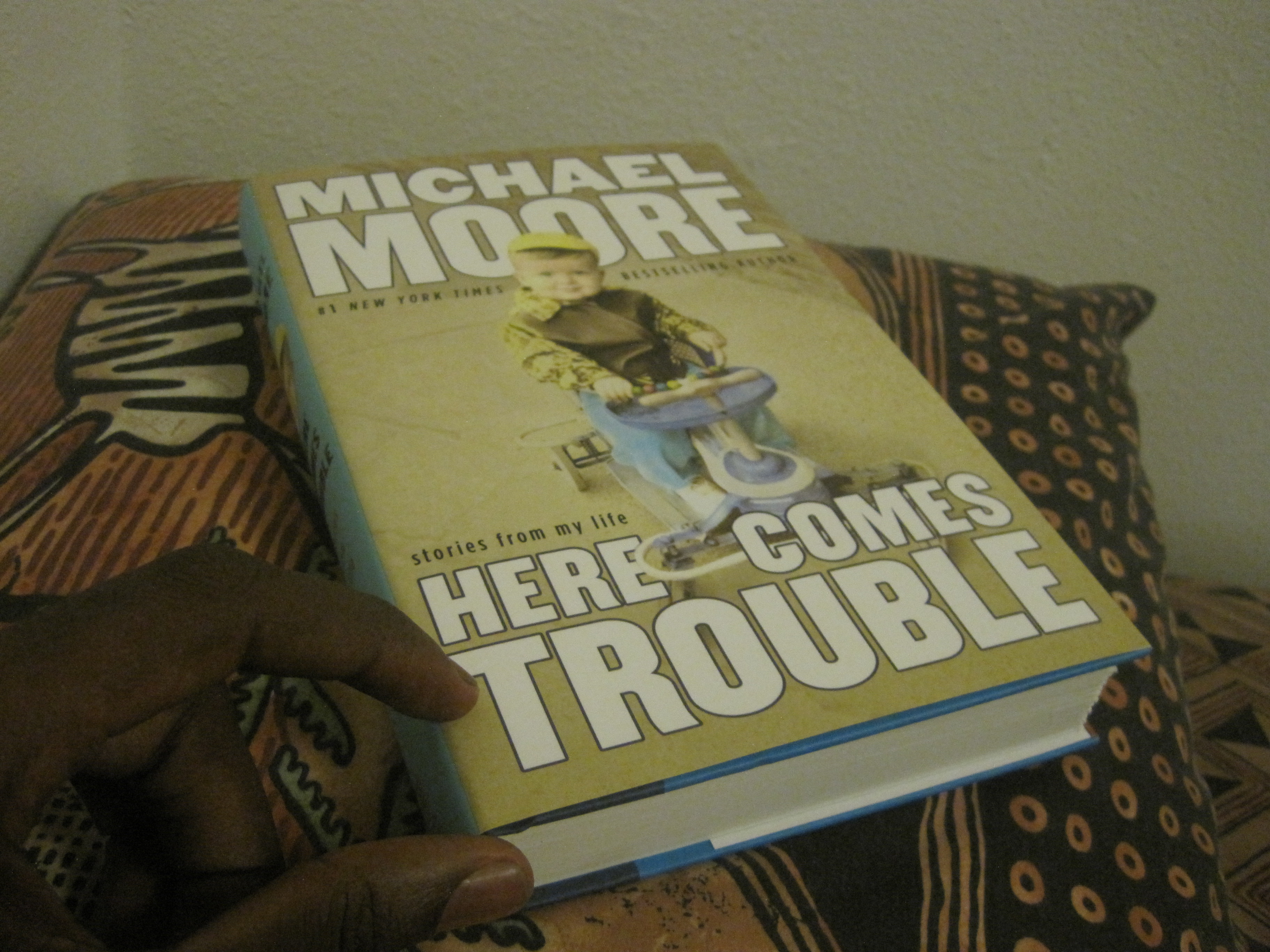
Michael Moore’s new autobiography follows the sometimes ordinary, sometimes extraordinary, life of one of America’s most controversial commentators. His movie Fahrenheit 9/11 is the highest grossing documentary of all time. Aptly titled Here Comes Trouble because of the perception of the author and movie maker during the first few years of the George W. Bush administration and his war in Iraq. He describes in great detail and with sufficient personal reflection what it felt like to criticize the administration on live television during his first Oscar win acceptance speech, and the turbulence of his life after he became public enemy number one.

The memoir-writing style of American writers (mostly public figures) has often amazed me in their ordinariness. No attempt at lyricism or any special verbal sophistication. Just facts, told sometimes with a flourish, and with humour. Not much with any real attempt at literary brilliance. This commentary of mine is ironic, of course, because the straight-forwardness of the narrative makes it a fun and light-hearted read. But it ends there. I’ll remember the facts in the book more than the beauty of how the facts were told. In short, it doesn’t challenge me even though the recollection surely delights. I’m sure this makes some sense.

Michael Moore is a controversial figure, and holding his book with me around campus has already got me a few stares. We no longer live in a George Bush America but it is still fascinating the kind of response his name elicits. A few minutes ago, a student saw it on my desk and asks what I thought could be a tricky question: “So you like Michael Moore, eh?” “I like his work,” I replied. It seems like the safest answer to give given the circumstance. As the book shows, he is however a man bold enough to take risks, and who because of those risks – and some other coincidences in life – has lived a truly remarkable life.

Come September!

I resumed school as an undergraduate in September 2000. Sometime in early 2001, I took my first creative writing class in the department of English under a very brilliant professor (now author of several books). One of the first tasks he gave us in class was to write a piece of creative short fiction which we would eventually come to discuss with the whole class sometime before the end of the semester. I was barely twenty, and was just beginning to develop some of my political and literary sensibilities, so my first attempt at fiction was a combination of both in order to make a satiric point. The story was titled Sam’s Tragedy. It was a story of a fictional feud between two women, and the tragic way in which they exacted vengeance on each other mostly at the expense of the clearly incompetent husband.

A few months after I finished with the class with an excellent grade, I expanded the work into a play of the same name. This time however, the characters became less fictive and more resembling of real life characters in world politics. There was a Sadman, a Sam and a Chinese character whose name I’ve forgotten now. Sam was an oppressive landlord and Sadman was a neighbour – his nemesis – who also had his very disgusting attributes. The play – a quite anarchistic experiment – ended with an explosion that took with it all of Sadman and much of Sam’s very famed real estate in the neighbourhood. This must have been around June or July of 2001. I showed it to a few friends, explained a few of the conspiracy theories fueling my creativity, and expressed the desire to put more work into it until it became something more worthy of the stage. On the afternoon of September 11th of that year when I was called frantically to the tv viewing room of my hall of residence to watch the two airplanes crashing into the World Trade Centre, one of the things I remember my friend asking me about was “How much of this feeds into your gloomy prediction, Mr. Playwright?”

It was a sad day, one of the most horrible I’d ever witnessed. Human beings were having to choose between burning to death in a building and leaping down to their deaths hundreds of feet below. I remember feeling very confused about the extent of my own creative condoning of a sudden chaotic intervention in world affairs which had now come to pass, and the real life implication of a tragedy brought about by people far more sinister in motives than my fledgling creative mind. For many years afterwards, I read lines from the play occasionally and wondered if it was still relevant – first because the doom it predicted had already happened in a far more sinister way than the absurdist play could have predicted, and secondly because I grew increasingly discontented with my own playwriting abilities. America had fascinated me from then as I got increasingly removed from an ivory tower bubble that treated it like an isolated entity incapable of emotions. The movie 9/11 – the only movie I know that showed tv footage of the first plane hitting the building – gave distinct humanity to the residents of New York, particularly the brave fire-fighters that went up the stairs of both buildings as workers and other victims made their way out.

The world changed after September 2001, and so did I, slowly, and now here I am. Ten years after, it is hard to think back to that September evening in Ibadan without feeling just as overwhelmed as I did then seeing so much destruction the worst I had ever seen outside hollywood movies. Thankfully, the world has learnt some good lessons since then. Some of the evil political players of the days before and after the attack have become irrelevant, and some of the perpetrators have already been brought to justice. We will hopefully have all learnt to work for a world where such an attack and the responses to it would have become unnecessary. As for me, I have stopped pursuing a career in playwriting but will one day take a look at that script and see which part of it can still be salvaged. Not much, I’m guessing, especially since I can’t say for certain in what part of my room in Ibadan the script is now gathering dust.

It has been a very bumpy decade and I wonder if our obligation to the coming one might as well be to do everything in our power to never stop talking civilly to one another.