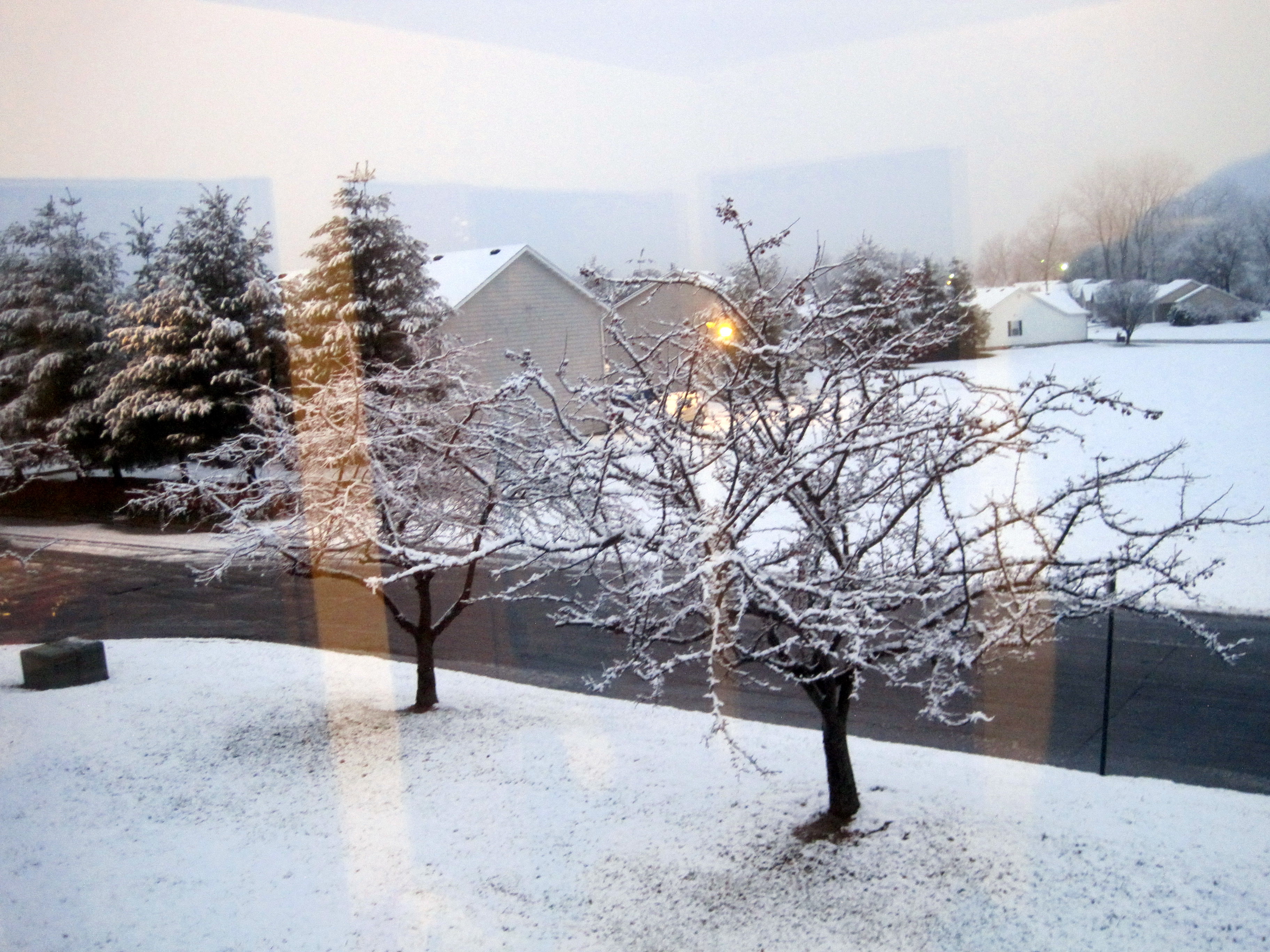

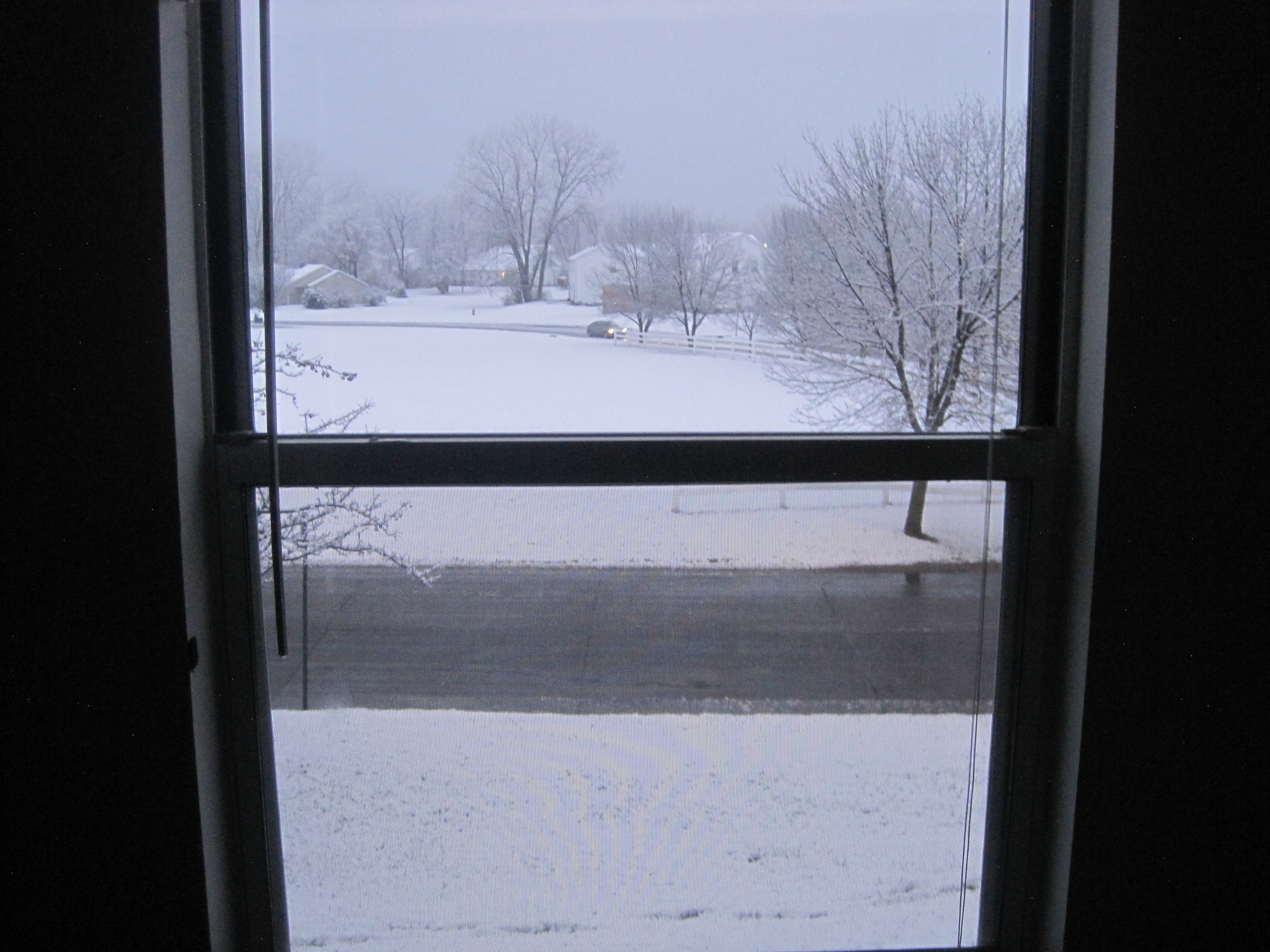
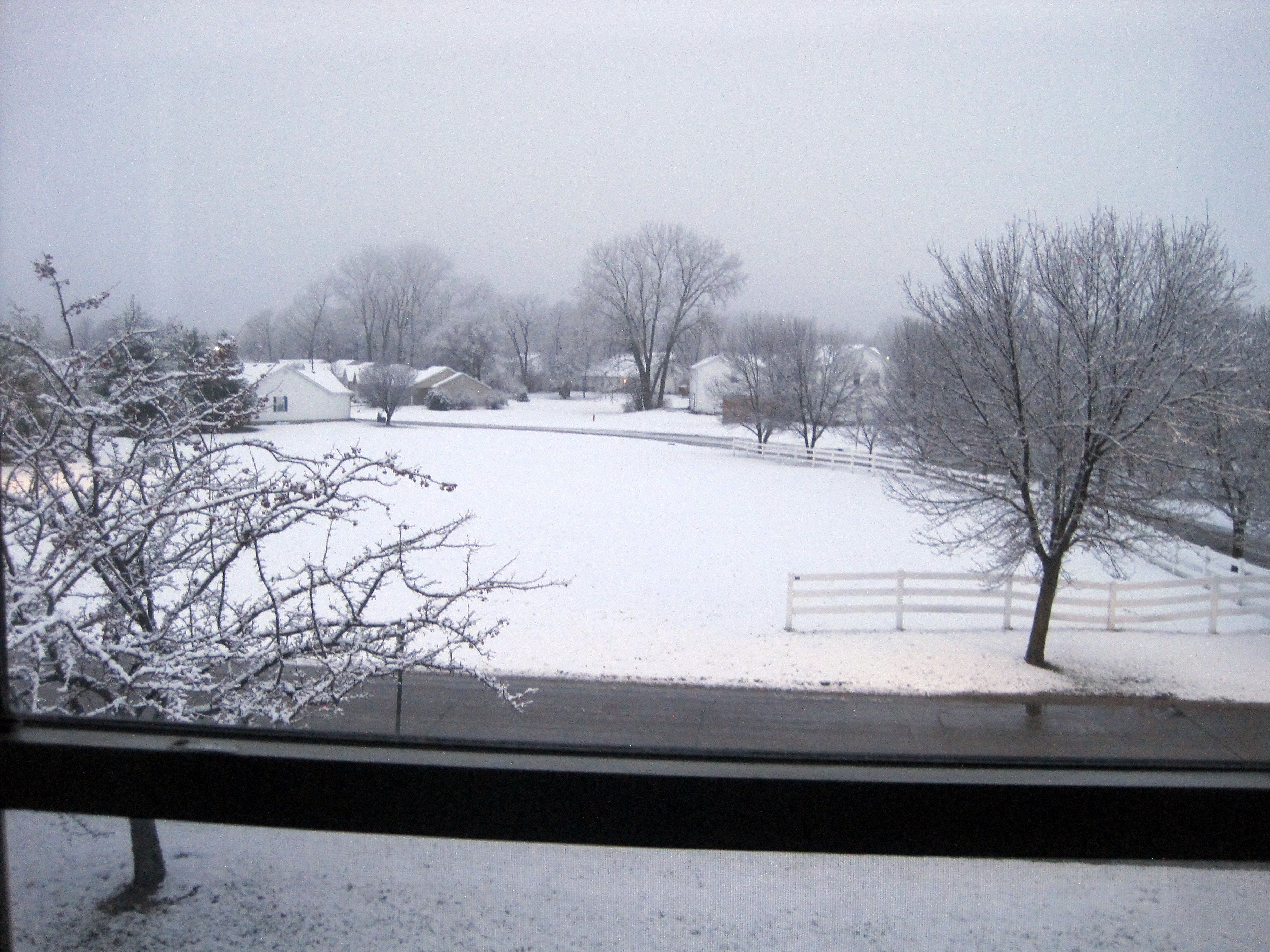
 Two days late still, but, yes! Winter is here.
Browsing the archives for the Observations category.
Out of a need to save lives in Nigeria today comes this new idea called the One Percent Project. Nigeria, a country of over 160 million people, still gets by with a crippling healthcare system and a large portion of its population without access to adequate emergency care. 25% of maternal mortality today is due to unavailability of blood. The current blood donation and distribution system is poorly regulated and coordinated. Hospital based blood collection leads to a highly inefficient and fragmented system.
The recent UN bomb blast in Abuja is a case in point. Within minutes of the attack, the National Hospital in Abuja ran out of blood and many patients lay there, waiting to die. A bleeding trauma patient is said to need more than 100 units of blood. Blood usage today is growing at 3 times the national population growth and there is no other known substitute for human blood. The Nigerian Ministry of Health estimates that 10% of HIV/AIDS infections in the country were caused by the use of unsafe blood. That is: 1 in 10 HIV positive people in Nigeria were infected because of unsafe blood transfusion.
 The One Percent Project seeks to bridge this gap between blood donors and recipients. It is estimated that if one percent of all Nigerians (1.6 million people) will be willing to give blood when needed, much of the problem will be solved and over 13,500 lives of pregnant women and thousand others in need will be saved. With a need of about 1.5 million to 2 million pints of blood annually, the project hopes to recruit young voluntary non-remunerated blood donors. These donors will only have to sign up with One Percent, and share their location in the country. This information is then shared – as need be – with the National Blood Transfusion Service in Nigeria, and other hospitals, at their moment of need. With a database of 1.6 million people, there hopes to be at least one person near every emergency around the country who will show up when called upon to fulfil his/her pledge to donate blood when needed.
I’m involved in this project (along with a few other dedicated health professionals) and very passionate about its success. You should be too. If one percent of Nigerians to donate blood (3 times a year for women and 4 times a year for men), the problem is virtually solved. If you are reading this and you are a young Nigerian between the age of 17 and 65, or you have lived in the country for more than five years, please take a moment to complete this survey right now. It will take about five minutes. Then check out the website foronepercent.org. Follow the organization’s twitter account to get updates on the project and hear about blood drives coming near you. The organization also needs an army of volunteers to get the project working from the ground up in Nigeria. If we all will sign up to be called upon whenever a hospital near us needs blood to save lives, and we will heed that call, we can make a difference, one volunteer at a time.
(Please share this post on your networks)
Browning tar, a rote of car zoom noises around my window. The sun sets in a distance, a lot earlier than before, to a now conditioned amazement. Afternoon and night share a neighbourly block on the street of a dying year. Tick, tock, the clock hand counts the moments again in memories of times gone before. At a different time but in a similar pose, time counted down. The geese quacked. The refrigerator hummed creaky tunes in the middle of night. Ice formed into layers of sweat balls around the glass, and everything else stayed still.
The world has not changed since then, or has it? Many months of movements follow each other in steps of ease, and texts, and work, and revolts. And here we are, another winter, another dark evening at four o’ clock. It is a short remove from those quiet times, just two years ago, in the sober remove of a rustic village, but here it is. A year winds down with the last paces of its easing rote, crank and all.
My presentation in class on Wednesday was my last in this Master’s program (baring a thesis defense, of course). It focused on a hypothetical lesson plan for second language teaching in a foreign country. One of the advantages of such assignment that allows for creativity is the chance it gives the student to make conjectures on things that may actually become future research areas. I am a teacher of English language in a high school in Kigali, Rwanda. That country emerged just a few years ago from a brutal civil war that tore the country into many ethnic parts. It has now adopted a policy of English language (over French and Kinyarwanda) in order to forge a more united country free of a colonial past, and with a view to a more globalized future.
What problem does such a job pose for both the student and the teacher, even beyond the usual problems of language acquisition? Socio-cultural attitudes of parents still hung up on ethnic and cultural identities and resistant to change? Government bureaucracy and a typical political gamesmanship that might deny funding for much of the initial experimentation that could amount in success? A problem of communication between teacher and student? (It’s hard enough for students to be learning a new language. If the teacher offering guidance for such teaching does not even share the linguistic identity of the students, the baggage of his “otherness” might be a little hard to overcome). What else? There are actually far more positives to the experiment, one of which is the delight of sharing cultural similarities and differences while at the same time sharing the knowledge of a connecting international language. Cultural exchange is after all always an learning stimulant.
I have good memories of my first major teaching experiences in the Nigerian middlebelt as a Youth Corper. Students delighted in their ability to communicate in Hausa and Berom even in our English classes. It was a battle that I struggled with all through the year, frustrated that the purpose of English education is defeated when students choose instead to resort to local codes at every moment of convenience. Other linguists working in the area of Second Language Acquisition have argued that there are positives in this model of acquisition where the pressure to always be right is taken off the shoulder of students and they are allowed to subconsciously acquire the second language. The problem in the application was the reluctance of the students themselves to even try since their mother tongues provided an easy alternative. (But then, a prominent educational research in Nigeria, particularly the Ife Six-Year Primary Project of 1989, showed that students taught in their mother tongues performed better in learning other subjects).
I find Second Language Acquisition extremely fascinating, and the prospect of teaching English in another country equally enticing. Rwanda presents a fascinating example of such intervention because it combines education with social work. A country willing to ditch a dividing legacy of multilingualism for a second foreign language presents a fascinating study. One of the best rewards for teaching – as I have realized from my years of involvement – is not just in the knowledge that the teacher brings into the class, but the ones he takes out of his interactions with his students. I believe that in the next century, the language of the world will not be this English language as we know it, of course, but something richer, encompassing the form and world-view of all the peoples through which it has passed. There is something to enjoy in the process of bringing that to existence.
One piece of prose floating from the fading memory I have from reading Czeslaw Milosz’s Visions from San Francisco Bay occasionally come back to haunt me in my still moments. It asks amidst a whole lot of other questions what the purpose of words are beyond their ability to convey meanings. In one recent interview with Stephen Colbert, Astrophysicist Neil deGrasse Tyson compares the inconsequentiality of our presence on this planet to that of a billion (and some) bacteria living in the walls of our intestines whose number is equal to almost three times the number of all human life that ever existed and died. Like those bacteria, he suggests, who live without the mental capability of understanding the dimension of their inconsequentiality when compared to six billion other intestines walking the earth (with the multibillion units of bacteria they carry in them), we may not possess the mental flexibility to understand our insignificance (along with our equally possible random relevance as evidenced by our current existence).
Milosz asks as if to himself what makes it so that words, in their utmost insignificance beyond immediate use, lends themselves to entendres, rhyme and poetry. Did there exist on some magical plane a predestination for the word “apple” to become the symbol of ultimate taboo, pleasure and sin? In which realm of serendipity did “gain” and “pain” acquire the paradox of their rhyming complementarity. Sure computers may not write poems now (and I have no doubt that this is false), but the lexical matrix of today’s world endows us with a gazillion ways of expressing thoughts in inventive ways. The order in which I have written the last couple of sentences in this post (with almost a 100% certainty) is an order in which these words have never ever been arranged and never will anymore by anyone else. There is something to that. The process of writing poetry, for me, taps into the science of this randomness. The art resides in the chance of success – that moment when meaning, form, and words meet at the tip of the writer’s hands. See below:
I balanced all, brought all to mind,
The years to come seemed waste of breath,
A waste of breath the years behind
In balance with this life, this death.
from W.B. Yeats’ An Irish Airman Foresees His Death
This concise beauty, and an underlying deceptive simplicity that wows, has always defined for me one of writing’s unreachable bars; the place where science, art and meaning collide with the earnest needs of the present.