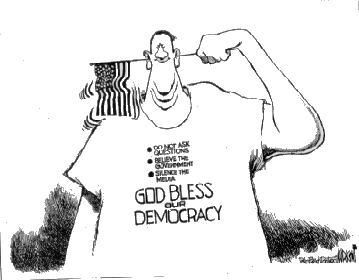
There is this weird notion that Americans are exceptional among peoples. It is one of the oft-repeated catch-phrases one would most likely find among politicians these days. Something like “unlike our president who believes that we’re just like every other country, I believe that as Americans, we are exceptional.” I have paraphrased Republican presidential candidate Mitt Romney, but he’s not alone. Heard repeated again and again, it often begins to sound something like this, between two children on a playground: “My daddy will beat the hell out of your daddy!”
 Here is a problem though: the vapid mantra has been taken so seriously by many citizens that a leading politician now thinks that it is something with which to impugn the credibility of an opponent. “Hear that America, he thinks that you’re human like everyone else. I, however, believe that you’re supermen. You’ve always been.” Before this post is accused of being anti-American, let me give a few more examples of these delusions of exceptionalism as I’ve found them all around the world:
- Nigeria is the giant of Africa (said to a tone/attitude of superiority derived from nothing else than the fact that one in five persons on the continent today is a Nigerian or that the country has produced some of the continent’s most accomplished citizens.)
- We are the chosen people (an oft-repeated phase associated with Judaism and Jewish identity. According to the bible, this conviction could be traced to hundred of wars and pogroms in the bible led by the leaders of the nation-states acting on direction of God. It is also a source of immense national pride).
- A ji sebi oyo laa ri… (a saying from the Oyo people in Nigeria, translated fully as “Oyo is known only to be emulated. Oyo never emulates anyone.”)
- We’re the superior race (from Adolf Hitler and the Third Reich)
- Arab Exceptionalism (“a phase that prescribes that Arab nations are immune to economic modernization and democratization, or that these concepts form part of the ‘clash'”)
- Polygamy is an integral part of our culture/Homosexuality is not a part of our culture. (One of the many vacuous polemics that surface around the African continent whenever any of those issues are raised in public discourse).
- “Rang de Basanthi” (Hindi: “Colour it saffron” – a badge of nationalism, pride and racial exceptionalism among Indians to the exclusion of everyone else).
- Once you go black, you never go back (A disgusting racial aphorism. Use google.)
- I’m a man: that’s what we do/Don’t tell me what to do/What do you expect? (Gender exceptionalism?)

There are many more across different world cultures that I have come across but now forgotten. A thing common to all of them is the belief in a particular world outlook accepted as superior and as defining of the people who hold onto them. American exceptionalism, of course, falls into the same category as all of those above, and it is the reason for this post. The concept is usually defined this way: “Here is a country exceptional in its creation and survival, as well as its role in world affairs.” It is usually bonded with a demand for indemnity from all accountability. “Can’t you see? I’m American!” American television personality Chris Matthews, in debunking the Republican “slight” of anti-American exceptionalism on President Obama, often uses this defence: “Can’t you see? Didn’t you listen to the man’s election speech? He said that only in America was his story possible. President Obama himself is a product of American exceptionalism. Look at where he came from and where he is now…”
Where Chris Matthews got it wrong however is the better end of the same spectrum of Mitt Romney underhanded sneakiness. While America is really no more exceptional among other countries of the world with less colourful starting histories or world presence nor its people any more important than people in more obscure parts of the world, it is also not exceptionally unique just because a bi-racial young man from a poor home and a single mother could become its president after a long history of slavery. I agree however that these make for a very spectacular (albeit empty) polemics. There are a few more examples of such exceptionalism: Mother Theresa moving from Albania to live in India in service of the world’s poor, or Susane Wenger – an Austrian woman, who spent all of her creative life in the groves of Oshogbo learning and teaching art and spirituality (and in dying there become one of the forest’s eternal goddesses).
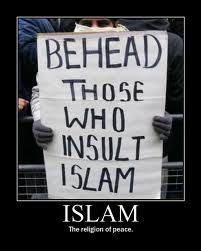
The undeniable fact is that humans will always thrive wherever they find themselves. The story of Steve Jobs making it out of an almost hopeless beginning to become an accomplished entrepreneur could equally have happened elsewhere (perhaps with much less flair). The son of a carpenter from a victimized culture becoming the most famous, venerated, victim of capital punishment (by crucifixion) is as much a story of Jewish exceptionalism as is the story of a black African from post-colonial Kenya making it through the ropes to become a PhD holder in the United States a case of Kenyan/African exceptionalism, as is the story of a previously obscure princess from a repressive patriarchal culture growing up in the world’s ugliest war finding herself, due to a series of coincidences, as the queen of a large empire on which the sun never set – a case of British exceptionalism. Here’s Brazilian exceptionalism: defy all odds of a third world/developing country and win gold in (almost) every World Cup in which your country participates.
My conclusion here – as might by now be clear – is that there either is something of a human exceptionalism – defined by great success in spite of all odds – common to every culture and people on the face of the earth, or there is no such thing as exceptionalism, and we’re all just as unique as we are different. Nationalism and patriotic/religious credos are usually more disingenuous than the words in which they are couched tell us, and they have not always led to an improvement on the condition of human well-being. Politicians should therefore find something more stimulating to spend their time talking about, as should all blindly-following fanatics.
 Two of my photos (not pictured) will feature this month at the Edwardsville Art Centre’s “Two Juried Art Competition” taking place between February 17 to March 16, 2012. Sometime this evening, I wrote an artist statement to accompany the work. It’s a short treatise on my motivation, and on the theme of movement.