Browsing the archives for the Prose category.

“Like Listening To An Aunt” | Sefi Atta’s Tribute to Buchi Emecheta

The first time I met Buchi Emecheta in person was in 2005, just after my debut novel Everything Good Will Come was published. I had contacted her through an old college mate, Kadija George, to ask for an endorsement, which she very kindly agreed to give. To paraphrase her endorsement, she wrote that reading my novel was like listening to an old friend talk about Lagos.
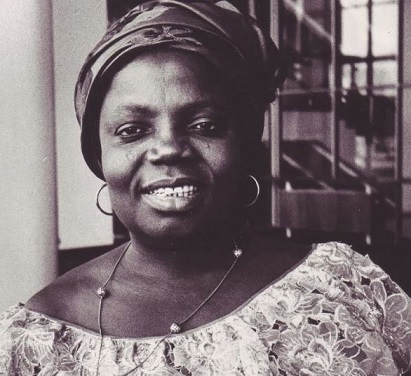
That was the same year she was awarded an OBE for her contribution to literature, and Kadija organised a celebratory dinner at a Caribbean restaurant in North London, to which I was invited. At the restaurant, she signed a copy of her book Head Above Water for me, with a message: “To Sefi, good luck with your publication, love from Auntie Buchi”. I read an excerpt from the book at today’s memorial event, not just because it’s autographed, but because it’s a testimony of what it means to be a writing mother, and because it’s good storytelling: entertaining and informative, guileless and revealing, intimate, and rendered in the meandering fashion of Igbo oral history, which, by the way, bears some resemblance to that of the American South, where I’m based most of the year.

Anyway, that evening at the restaurant, I found Buchi Emecheta pensive. I imagined she was aware of her achievements and was proud of them: all the novels, plays and children’s books she’d written, the family she had raised, and the obstacles she’d had to overcome. People often mention the burning of her first manuscript, but the daily grind of being a mother to young children, while getting a university degree and writing, was hard enough.

I know this. I have one child, a daughter, much beloved, but I didn’t think I would be capable of giving her the attention she deserved if I had more. I was thirty-three when I started writing full time and she was three. I was working on Everything Good Will Come and had more stories to tell. I wanted to go back to school to get a Master of Fine Arts in creative writing. My husband, Gbóyèga Ransome-Kútì, a doctor, got a job in Mississippi, of all places, and we had just moved there. Before the move, I had worked as a Chartered Accountant and Certified Public Accountant. Following the move, I was not legally allowed to work in the United States until I had found an employer to sponsor my work visa. I was in two minds about living in Mississippi but Gbóyèga quite liked his job. He was supportive of my writing, to the extent that he would cook while I wrote, and thankfully, on the issue of children, we were both on the same page.

Buchi Emecheta often said she saw her books as children. I don’t look at mine that way. My daughter is my child, and my books are my work, though the time I spent writing them did take away from time I could have spent with her. She is graduating from college this year, after a four-year degree. At twenty-two, she is the same age Buchi Emecheta was when she had five children and was studying sociology at London University, and writing. So, to me, Buchi Emecheta was a child bride, child mother and child divorcee, who would later become a renowned writer published in journals such as Granta and the New Statesman, with television scripts produced by the BBC and Granada. And even though one of my first interviews in Nigeria, as a published writer, was titled “Sefi Atta following in the footsteps of Buchi Emecheta”, or something to that effect, my path has been quite different from hers. However, like most Nigerian women writers, we’ve had similar preoccupations with girlhood, womanhood and motherhood, with marriage and religion. For some of us, I would add the death of relatives and the state of being African overseas.

When Buchi Emecheta writes about missing her late father, so I have missed mine. When she writes about her children walking around in wet nappies, I admit, I was sometimes too busy writing to notice my daughter’s diapers needed to be changed. When she writes about racist or xenophobic employers and colleagues in London, I remember my experiences as an accountant in London and New York. She recounts details of difficult relationships with editors and agents; I can recall one or two. She takes a swipe at Enoch Powell; I immediately think of Trump.

What I find most interesting about her works are the paradoxes – of forging ahead from one generation to the next, yet returning to old positions; of her ability to be naïve and insightful at the same time. And judging from her autobiography, what sets her apart from most Nigerian women writers of her time, and mine, is that she was incredibly resourceful, industrious and tenacious. For a self-described small woman, Buchi Emecheta had enormous strength. She could also be stubborn. In Head Above Water, she tells us how she constantly defied people who tried to patronise or diminish her, and how she was reluctant to be labelled by anyone, feminists included. In a book titled In Their Own Voices, a collection of interviews with African women writers, edited by Adeola James, she expressed her frustration about feminists she encountered in the West, who took centre stage at conferences and overlooked her views.

Twelve years ago, when I met her, feminism was a lot more unpopular than it is now, and although I proudly called myself a feminist back then, whenever I was asked, I was reluctant to be labelled a feminist writer because my stories weren’t always in line with feminist narratives. Besides, if you’ve experienced conflicts solely because you’re a girl or a woman, and you write about them, that doesn’t mean you’re a feminist. It just means you’re female.

I was forty-one when I met Buchi Emecheta. I’m fifty-three now. These days, feminism is more mainstream, and commodified, and celebrity-driven. In fact, if you’re an actress announcing your next film, or a singer releasing your latest album, it helps to declare that you’re a feminist, even if you might face some backlash.

I must confess that although I still call myself a feminist whenever I’m asked, I’ve never seriously studied feminist thought. I’ve read about notable feminists like Simone de Beauvoir and Germaine Greer. I’ve read bell hooks’ works because they appeal to me and speak to my experience in America. I’ve also read academic books on Nigerian and African women writers, but that’s about it. Now, I have met, online and in person, Nigerian academics who have written about feminism, such as Mọlará Ògúndípẹ̀-Leslie, Amina Mama and Oyèrónkẹ́ Oyèyẹmí, but I am yet to read their works, or any scholarly works that address the penkelemesis – the peculiar messes – that Nigerian women find themselves in. I think it is necessary to educate yourself on feminist ideas, and to live up to feminist ideals, if you call yourself a feminist; otherwise, it’s rather like saying you’re a born-again Christian. Every other Christian in Nigeria is born-again. They’re usually versed in the Bible, I’ll give them that – though I might quarrel with their interpretations of it and question whether they live up to Christian ideals. I mention Christianity not to be perverse. It was a foreign imposition we now readily embrace, so maybe there’s hope for feminism.

Like Buchi Emecheta, I don’t want to be labelled by any word that excludes my experiences, and, to be honest, I no longer think it’s necessary to call a woman a feminist simply because she has common sense and uses it. When you expect and demand equality and fairness, that’s all you’re doing: using your common sense.

But I digress. The point is, Buchi Emecheta’s works were my introduction to Nigerian feminist ideas. I understood her ambivalence about Western feminism and welcomed her calls for unity amongst women. In Head Above Water, she expressed her disappointment at women who resented her whenever she made progress. To piggyback off bell hooks’ term, in a tribalistic capitalist patriarchal culture like ours, women who claim to be pro-women are not always pro women they regard as competition. It’s the same between men, except they don’t profess to be pro-men. They just are.

Buchi Emecheta didn’t seem to regard other Nigerian women writers as threats to her success. Flora Nwapa, in In Their Own Voices, referred to her as a friend. On a separate note, she didn’t appear to be prejudiced against Nigerians of other ethnic groups, either. Her works suggest she honoured Igbo culture without idealising it, and opposed tribalism even after she faced it. She apparently responded to racism the same way, which I don’t understand. It takes a lot of grace to resist retaliating to prejudice. I’m still working on it.

For me, reading Buchi Emecheta is like listening to an aunt, a busy aunt who makes time to tell you her story. You almost hear her saying, “This happened and then this happened. Wait, wait. I haven’t finished. Don’t cry for me. Don’t get angry yet. Listen to what I have to say and learn from it.” You take your cue from her on how to react. There were sections in Head Above Water where I was sad for her, but she lightened them with humour. There were other sections in which I was angry on her behalf, but she didn’t allow my anger to last. It wasn’t until I reached the end of the book that my emotions overwhelmed me. But, according to her, that was how she coped with hers. She didn’t have time to dwell on them.

In fact, Buchi Emecheta is – and I use the word “is” deliberately: I often talk about deceased writers as if they’re still alive – she is the aunt in your family who stands out. The one who has done something to offend the sensibility of others, and when you find out what it is, you wonder what the fuss is about because she was just being herself, or speaking her mind. She’s really not a troublemaker. She might even be shy and insecure, as Buchi Emecheta says she was. But if you cross her path and she’s fed up with playing nice . . .

You observe her in action. You occasionally worry about her. Then, one day, she’s no longer around and you realise what she meant to you. The options she gave you. But it’s too late to tell her how much you admired her.

Last year, I emailed Kadija to ask if she could put me in contact with Buchi Emecheta again. I wanted to use a quote from her novel The Joys of Motherhood in one of my own, Made in Nigeria. My novel has a section in which a Nigerian professor teaches Joys, and Ama Ata Aidoo’s Our Sister Killjoy, to Mississippi college students, as I had done. Kadija got in touch with Buchi Emecheta’s son, Sylvester Onwordi. I had no idea whether she herself was approached, but I was given the permission I needed.

Afterwards, I have to admit that, for a moment, I hoped she would be around when the novel was published. I was afraid she might not be. I hadn’t seen her since we met at the restaurant. I reach out to writers I admire for professional reasons. I’m not one to cosy up to them. I prefer to respect their privacy and space. I’d heard she had some health challenges, but I didn’t want to pry.

Then in January this year, Kadija sent me the email saying she had died, and I was sad, partly because we no longer had an opportunity to celebrate her in person. It was our responsibility to do so and our loss that we didn’t. When we fail to honour our literary heroines, or stop honouring them, we lose as a group. As Nigerian mothers would say to children who don’t listen, “You are not doing anyone but yourself.”

Buchi Emecheta’s work is done and will continue to resonate. She has plenty of admirers in readers and writers who choose to walk their own paths. Her biography demonstrates that the most powerful thing a woman writer can do, regardless of what is going on, is to keep speaking her mind and producing work for as long as she possibly can.

She did just that, and in doing so, exposed the tribe, unashamedly, to strangers, which probably displeased some of our literary heroes, who at the time were more concerned with attacking imperialism, colonialism, military regimes and corrupt governments. She may also have offended the strangers themselves, by putting them in their place face to face and revealing what she thought about them in her books. But you don’t get the impression that her intention was to offend. Instead you get the impression she was merely trying to take control of her own story, the narrative of her life, and write her way out of her lot. However, if traditional Igbo beliefs on fate are correct, perhaps all she could do was give it her best attempt and leave it up to younger writers to carry on her legacy.

I am one of them. At the age of thirty-three, with a three-year-old child and two professional qualifications in accountancy, I found myself in Mississippi, without a job, and wrote my way out. I didn’t know Buchi Emecheta well personally. I learnt about her through her works. I appreciate the example she set by being prolific, her individuality and honesty. Perhaps I’ve got the wrong idea about her, and I still don’t know if she was aware I’d asked to use a quote from her novel, but of my final statement I have no doubt. I am glad I wrote about her novel in mine.

_____

An abridged version of this write-up was read at the Tribute to Buchi Emecheta which held at Terra Kulture on Saturday, March 25, 2017
_____
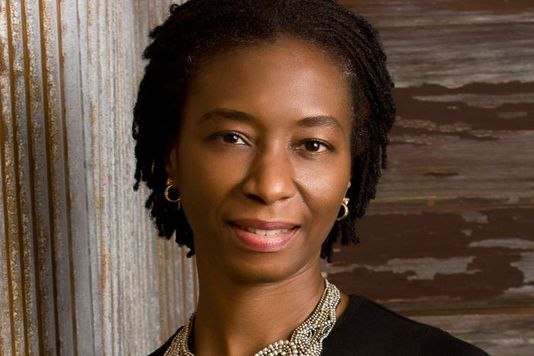
SEFI ATTA was born in Lagos, Nigeria, in 1964 and currently divides her time between the United States, England and Nigeria. She qualified as a Chartered Accountant in England, a Certified Public Accountant in the United States, and holds a Master of Fine Arts in Creative Writing. She is the author of Everything Good Will Come, Swallow, News from Home, A Bit of Difference and Sefi Atta: Selected Plays. Atta has received several literary awards, including the 2006 Wọlé Ṣóyínká Prize for Literature in Africa and the 2009 Noma Award for Publishing in Africa.  

Author’s Facebook page
Visit the author’s website
Follow her on Twitter @Sefi_Atta
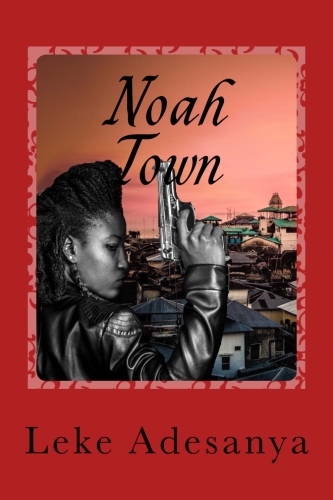
Excerpts from Noah Town by Leke Adesanya

bookcoverimageIf you ever come to Noah Town, you’ll probably arrive by coach. The long buses come off interstate  trunk roads from far and near, from smaller towns and villages were dreams of making it in the big city still has its allure.  The buses pour out streams of young men and women  hourly at almost a clockwork rate. They come with their dreams and aspirations, their bags and little savings. They are drawn to a metropolis where the street lights never go off and there is money to be made with beautiful bodies, willing hands or daring minds.   I know them. I was once like them.

Your coach should come to a stop at the terminal on Main Street, just at the beginning of the two mile stretch of long dual rows of hardware stores, fashion stores and business offices.  As you disembark , in the mornings, you might hear the dull drone of street sweeper trucks vacuuming the road. A soft feminine voice will welcome you to Noah Town over the terminal’s public address system , advising you to mind your luggage.

Touts may accost you, offering to help you get a cheaper hotel or unlicensed taxi , some with the intent  to unburden you of your few valuables. You would be better off strolling to the Visitor Centre to book a cab or walk a bit farther down the road to catch a local bus ride. Or maybe someone, perhaps a relative or friend has arranged to pick you up.  

Whatever are your options on arrival, you wouldn’t help but notice two old grey storey buildings situated almost opposite each other. Their Brazilian architecture with mock Roman marble columns  add a air of gravitas that make them stand out amid melange of functional matchbox shaped buildings. They are the two big banks of Noah Town.

Scores of men with crew cuts in blue or black suits march in confident strides  in and out of the two grand old buildings. On the right, if you are coming from the Terminus, next to the divisional police office is the local branch of National Bank.  And on the left,  behind a fibre glass  fountain cast of an elephant pumping water out of its trunk, is  the local land bank owned by former loan shark now turned legit financier, Mr Barido Freeman. Everybody calls him Barry.

He is reputed to be very influential. I have had occasion to meet him myself, informally of course, and I found him intimidating.  He owns a significant portion of the businesses and real estate in Noah Town. Sixty years old and not looking a day younger, Barry is big boned and tall, slightly balding but still working that regal look. What was left of his receding hairline, he grew into big white halo with brown dusts.

When you are told by your guide that he started out as an immigrant with nothing on him but a knapsack slung across his shoulder, you would probably be impressed too by what he has made of himself.  You would think, if he can, maybe you can. He is the stuff of which legends are made.

Barry manages to keep his family out of the tabloids.  Although he has never married , he had a love child, twenty years old Norah whose mother has been out of the picture since like forever.  Norah, I have heard, was worth her weight in trouble and then some. Twice expelled from expensive boarding schools abroad where Barry had hidden her, she eventually dropped out, called it quits and came back home.

Barry got her an office in the family business and engaged  Cuba, an ex-cop as her  bodyguard, mainly to keep her out of trouble. Cuba used to be an ambitious police officer on the rise till one day he shot a teenage kid playing with a toy gun and the top brass threw him under the bus. Taking care of Norah was a better paying job however and he intended to keep it forever. A shrewd guy, he kept Norah out of trouble mainly by making sure Barry never heard of it.  

A major challenge for Cuba on job was handling Nora’s long list of hangers-on, most of whom were willing to get whatever Nora requests of them even if it were illegal.  Prominent in that clique was Vera, her BFF and confidant.  Vera used to be a bartender at a night club on Boardwalk, Noah Town’s entertainment district, where she met Norah and the two hit it off.

Like any street hustler, Vera knew she had found a winning lottery ticket with Norah. How did I get involved with this clique?  Stay with me, I was going to explain.

Vera and I once dated, very briefly. Vera also happens to have a twin brother called Jude. Jude and I, we go way back to the time we were still hungry backpackers just come off a bus on Main Street. That was a life time ago, of course.

Jude and I are now business partners, we run a little taxi operation that is thriving very well, thank you very much. Nothing fancy, just a dozen old cars in great working condition and a long list of repeat loyal patrons.

We started out as two unlicensed cab drivers willing to work all night in what was then the notorious Boardwalk. Later we formed a partnership, got licensed and started adding more cars and drivers. We evolved into an effective relationship; he handles the drivers’ scheduling and getting of corporate customers while I take care of the back office and car maintenance issues.  

Once two guys have had a big fight and then gotten over it, they tend to bond well.  That was what happened to Jude and I. I could implicitly trust him to have my back, at least until the events I am narrating to you now started.

One ordinary Tuesday, Jude dropped by at lunch to inform me that we have an inquiry from a prospective investor. Barry – yeah, that Barry – wanted to buy out our little operation. Could I look at our books and come up with a working valuation, just in case this turned out to be a real deal?

Sure, I replied. I acted all cool about it though I was very, very excited.  I mean if the price is right, like five times annual revenues, surely why not?  But then he clarified.  What he really wanted to know was, at what price was I willing to cash out. They wanted to buy me out and let Jude run the operation.

By the way, by then, he was hanging out a  lot with Norah . And I was worried about her Daddy. Barry was like the king of Noah Town and rumour had it, he might or might not have had mob ties. If you don’t cooperate with his type, there was the unspoken threat that he might not be pleased. This was scary to me.  I don’t want to end up drowning in the Noah Lagoon like some overconfident yokel who dared above his match. And since I love the feel of fresh cash stacks in my palm like the next guy, I felt I had better play along.  

I doubled my calculated asking price, asked for not half but all of five times annual revenues. We shook hands over that and he said I should give him some time to iron it out with his principal, Barry. I started to look at Jude funny from then on. But I am getting ahead of myself.

I started to daydream of the day I’ll get to seat with Jude, Norah & co. , and firm up the terms of sale. I knew what I would do with the money when it hits my account. I would take a long holiday first, to somewhere far from Noah Town. I have earned it. I’ll go somewhere where it is cold in summer. Maybe I could learn to ski in middle age, who knows?  

Those were my thoughts until a Saturday, some days later, when I picked up a copy of the local evening tabloid and read the headline, “Barry’s Girl Kidnapped”. I had a premonition that, after that event, things wouldn’t turn out exactly as planned.

____

Blurb

It was meant to be a safe job. They  fake a kidnap of the millionaire’s daughter, collect the ransom and share it with her. But then things started to go wrong. As the body count continues to rise, Tony finds himself in the cross-hairs of a deadly gang as he tries to save his best friend’s widow.

Links

Available on Okada Books :

http://www.okadabooks.com/book/about/noah_town/12419

Available on Kindle ;

https://www.amazon.co.uk/dp/B01MG4KELQ

The Nigerian Prize For Literature 2016: The Judges’ Report

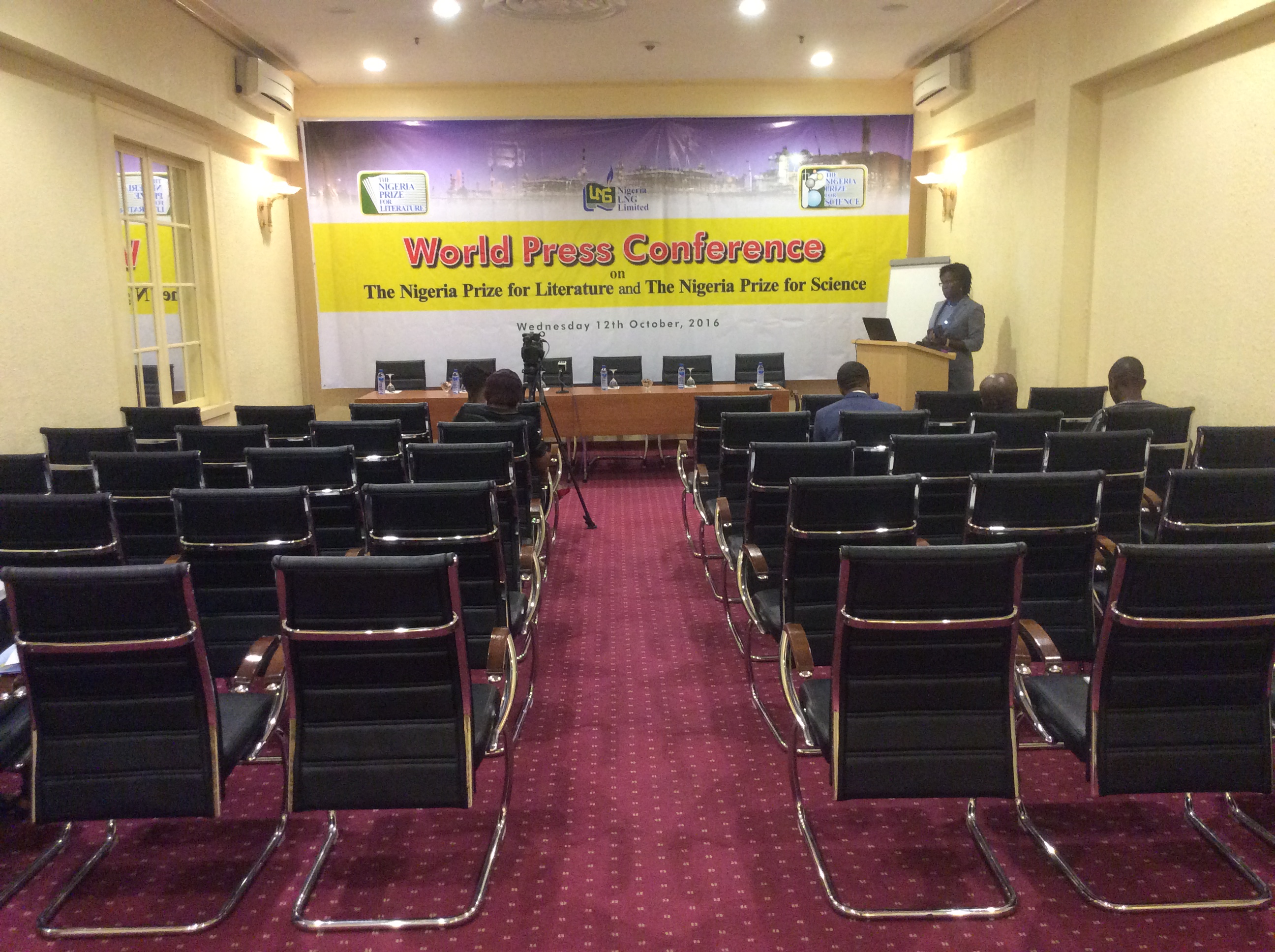
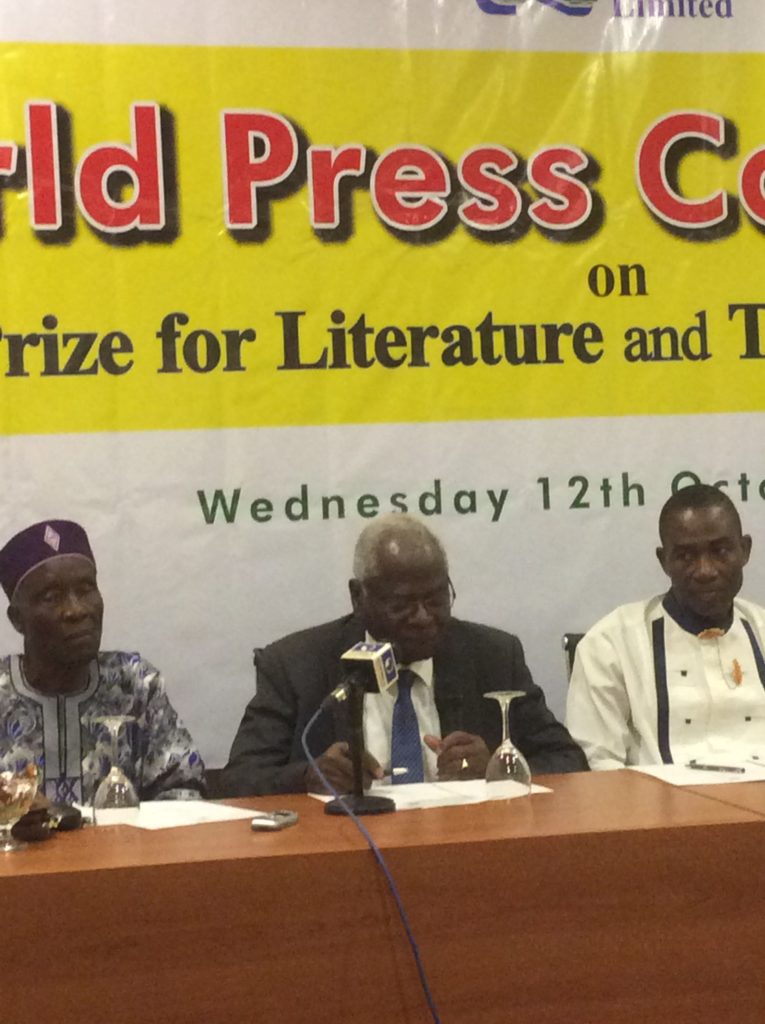
Editor’s note: Today, at Sheraton Hotel, Ikẹjà, Lagos, the winner of the 2016 Nigeria Prize for Literature was announced as Abubakar Adam Ibrahim for his novel Season of Crimson Blossoms (Parressia, 2015) and for the “competent manner in which Ibrahim demonstrated the execution of his work.” Here is the full speech given by Emeritus Professor Ayọ̀ Bánjọ, the Chairman of the Advisory Board for the Prize, on the justification for the prize, and other commentary on the whole judging process.

_____________

image

__________

GENERAL COMMENTS ABOUT THE 2016 COMPETITION BY PROFESSOR AYỌ BÁNJỌ

The Nigeria Prize for Literature is an annual competition which awards annual prizes to winning entries in the literary genres of Prose Fiction, Drama, Poetry and Children’s Literature on a rotational basis.

This year, the genre in focus is Prose Fiction. The following advertised rules were applied during the process of short listing and selecting the winning entry.  

Eligibility: The competition is open to all Nigerians anywhere in the world. This does not mean that writing about other peoples and cultures in a foreign setting is acceptable.

Relevance should be interpreted as consistency with the goals and aspirations of the Nigerian nation and its peoples – specifically, respect for their traditions and their identity as Africans.

Publishing: The prize is meant to encourage local publishing and book distribution, among other goals. Books published outside the country are eligible for entry. Only properly published texts are acceptable. However, efficient editing and good presentation of text are considered essential parts of publishing and are taken into account during the process of evaluation. The quality of the language is important, and errors of style and grammar are  considered major blemishes; these errors may not pass as typographical errors.

Genre: for this year’s competition, a basic distinction is drawn between fiction – that is imaginative prose which may incorporate factual materials and non-fiction like history, biography and sociological tracts which sometimes feature in the submissions for the competition.

This year’s completion has attracted a strong field with such high quality that even without this current shortlist of 3 books there would have still been a winner.

image

COMMENTS ON SHORTLIST OF THREE BOOKS

All the three shortlisted texts cover a wide range of urgent societal and cultural issues such as the status of women in a patriarchal society, the education of youths, the search for identity, the danger of youth unemployment, corruption, insurgency, religious hypocrisy, migration, broken homes and single parenthood and attendant impact on women and children who are usually at the receiving end of most of these problems.

  • Chika Unigwe’s Night Dancer, tells the familiar story of the continuing marginalization of women in Igbo society. The author shows a strong awareness of this context by  the flavoring of the narrative with linguistic and cultural insertions. The novel tells the story of Mma, a young woman’s anguished search for her roots from the opening of the novel when she feels that she has been denied by her mother, until she gradually discovers that her mother had been deeply hurt by both her matrimonial and maiden families. In the course of Mma’s adventures in excavating her identity and her mother’s past, she is predictably confronted by the same cultural inhibitions that her mother had rebelled against. Mma’s own denunciation of those traditions and her belated adulation of a mother she had despised at the beginning of the novel is a slow and painful process of discovering the truth of her family background, and a radical change in her perception and understanding of this background. All this is aimed at validating Unigwe’s passionate call for the extension of the frontiers of women’s space in society.
  • Elnathan John’s Born on a Tuesday is a book about contemporary Northern Nigerian Society as seen through the eyes of a young man. The narrative is told from within a deviant community seen through the first person consciousness of street boys, popularly described as al-majiri. Virtually abandoned by parents and community the  young boy, who tells the story in his own words, finds his survival through a brotherhood of other street boys. Their small outcast community is exploited by politicians and the brutally victimized as scapegoats by law enforcement agencies.  They inevitably patronized and taken over by leaders of religious sects and become a source of recruitment terrorist groups. One of the strong points of the novel is its insight into the social mechanisms that lead to national crisis and terrorism or the social processes that give rise to religious fundamentalism and political hypocrisy, corruption and exploitation.
  • Abubakar Adam Ibrahim’s Season of Crimson Blossoms is a very skillful and sympathetic narrative handling of a most psychologically and emotionally painful between an aging widow, who seeks release from her culturally imposed sexual repression, and a young outcast leader of a group of “weed” – i.e. hard drug – dealers who are ready thugs for politicians. In the background as immediately cause of the widow’s troubles, is the violent history of ethnic hatred and conflicts in Jos, placed within the larger context of contemporary Nigerian history with its complex and sometimes violent intertwining of politics, religion and culture. The novel moves from its evocative and passionate first sentence through a web of anxious moments to a tragic and painful conclusion with hardly a moment of respite.  All through its projects through is main action, the implications of certain key social issues for younger audience – key issues such as early marriage, drug abuse and impact of relationships on human action. It is a novel whose narrow domestic action has wider universal relevance beyond its relevance for its immediate setting.

On behalf of the advisory board of the Nigeria Prize for Literature and of the judges and international consultant, I have the pleasure of announcing as the winner of this year’s entry, Season of Crimson Blossoms by Abubakar Adam Ibrahim.

________

The award ceremony will take place early next year.

“Never Look An American In the Eye”

In my last book review, I lamented the dearth of travel writing books by African authors. I have since been scolded for failing to reference a number of other old and new works that tackle the subject matter, so I’m currently looking for Isaac Delano’s The Soul of Nigeria, Babatunde Shadeko’s The Magic Land of Nigeria, Noo Saro Wiwa’s Transwonderland, and Eavesdropping, a collection of essays and travelogues in America by Deji Haastrup.

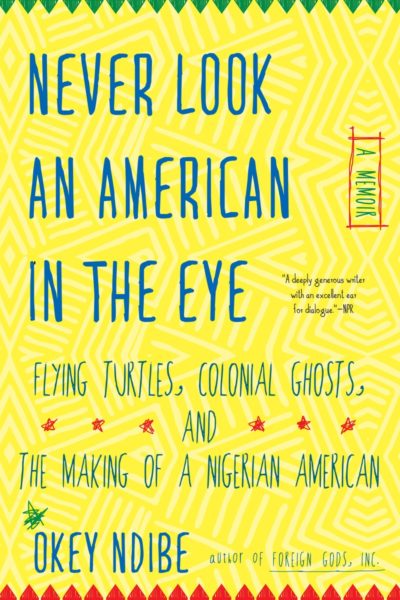
But one of the example works I pointed to as examples of contemporary works detailing honest and intimate travel experiences of travel was Okey Ndibe’s Never Look An American In the Eye (Soho Press. October, 2016). I have now finished reading a review copy of the work and I can say that it was a thoroughly delightful experience. Having lived in America for a while myself, I am always interested in reading accounts of others who have lived in the country, experienced in ways similar to or different from mine. But with this book, except that both of us had entered the United States for the first time at twenty-eight years old, the experiences could not be any dissimilar, which added a lot of excitement to its reading.

okey

Out October 11, 2016

The title comes from a piece of advice given to the author by his uncle in the village. He, the uncle, not having experienced America in any other way except from the plot of Westerns shown on Nigerian screens where eye contact was the ostensible cause of major conflicts that resulted in lots of gunfire, decided that his nephew on the way to America needed such a good prep. As we know now, from our experience with Americans, the opposite turns out to be true. This leads to a number of awkward, interesting, and hilarious scenarios, one including contact with law-enforcement.

The book is a collection of connected stories about the author’s life in Nigeria and his migration to America. Okey Ndibe is currently a columnist for a number of Nigerian publications. He is also the author of two well-received novels Arrows of Rain (2000) and Foreign Gods Inc (2014). He had arrived in the United States first as a maiden editor of a new international magazine, in the late eighties, before he achieved these later successes, but during which time he was already an accomplished reporter for a major Nigerian publication. In the US, after his stint as an editor, he became a student, and later, a reluctant but ultimately appreciative citizen. The book covers all these periods in his life with tales that paint the picture of an individual with an expansive curiosity and a healthy sense of humour towards misfortunes and uncertainties. The stories follow each other in an unsual order which was slightly disorientating, but ultimately successful in pushing the story forward towards a fitting end. Read to find out why.

As a memoir, it’s an engaging work filled with optimism, written in a style that is neither pretentiously grand nor mindlessly plain. As literature, it is clever in its deceiving simplicity. As travel writing, it is a welcome addition to a trove of like-minded works by Africans traveling around the world. It is a work accessible without being insipid, serious without being morose, and honest without being overexposing or patronising. The handling of his contact and relationships with legends of African literature Wọlé Ṣóyínká and Chinua Achebe deserves credit for its normalcy and honesty. We see them both as humans, chasing human pursuits, and vulnerable to human frailties and human disappointments.

It balances an important narrative about migration, culture, disappointments, love, and restlessness with an outlook that is both sunny and measured. I don’t want to say “circumspect” because that presupposes an unwillingness to take risks. What the work is is the opening of doors into a time in the life of its author which also coincides with a significant time in the life of a country he was leaving behind and the one he eventually adopts. There was no risk to be taken or avoided as far as the writing goes. The story needed to be told well, and it was.

___

The hardcover is 224 pages long, but doesn’t feel like it. The book will be released on October 11, 2016 and can be pre-ordered here. I will be speaking with the author in a public Book Chat in the next Aké Festival in Abẹ́òkuta this November. If you’re in the area, do drop by to hear him answer a number of questions I’m deliberately keeping away from this review :). Go buy/pre-order the book.

A Diligent Retelling: Reading Teju Cole’s Essay Collection

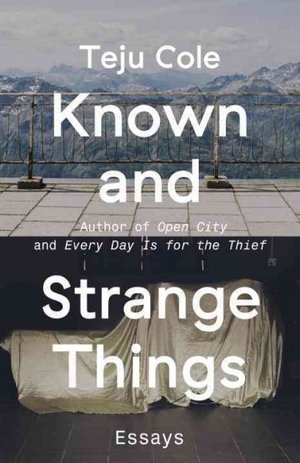
KnownAndStrangeI’ve been reading Tẹjú Cole’s Known and Strange Things among other commitments. The book is a collection of published and unpublished essays by the acclaimed author of Open City and Everyday is for the Thief, two books noted for their essay-like forms that brilliantly blur the lines between travel writing and fiction. As a travel blogger, I can relate. He also follows in the tradition of many other writers famous for documenting their travel adventures in their literary output. The book is a compact curation of his own writing journey from many publications in which a number of them had first appeared.

In one of the essays in the book, Cole famously follows James Baldwin to a city in Switzerland in order to re-live that writer’s experience in the sixties while he was working on Go Tell it on the Mountain and to reflect on what may have changed over the course of time. In another, he documents his meeting with V.S. Naipaul in New York, being awed by him but not too much as not to be aware of the man’s occasional condescension that comes out at unexpected moments. “He speaks so well,” Naipaul says of the African author and we glimpse from the skill of retelling that it wasn’t that much of a compliment. In An African Caesar, the author does a nuanced review of a theatre presentation by the Royal Shakespeare Company at the Brooklyn Academy of Music, but doing it against the background of other ironies and coincidences riding on the lives of Shakespeare, Caesar, Abraham Lincoln, and the all-black cast.

In the preface, Cole pays homage to one of his (and my) favourite tongue-twisters from Yorùbá (“Ọ̀pọ̀lọpọ̀ ọ̀pọ̀lọ́ ni kò mọ̀ pé ọ̀pọ̀lọpọ̀ ènìyàn l’ọ́pọlọ l’ọ́pọ̀lọpọ̀”) to illustrate his rootedness in his home culture properly balanced with his accommodation of other cultures and values. In another part of the chapter he expounds this more clearly:

“There’s no world in which I would surrender the intimidating beauty of Yoruba-language poetry for, say, Shakespeare’s sonnets, or one in which I’d prefer chamber orchestras playing baroque music to the koras of Mali. I’m happy to own all of it. This carefree confidence is, in part, the gift of time… I feel little alienation in museums, full though they are of other people’s ancestors… I am not an interloper when I look at a Rembrandt portrait. I care for them more than some white people do, just as some white people care more for aspects of African art than I do…”

The tongue-twister was, impressively, left un-italicized as have typically been the case in most books published abroad. It was, however, not properly tone-marked as Yorùbá words usually ought, and as I did above. Neither were any Yorùbá names referenced in the work. My initial assumption is that this is the publisher’s error, typically paying less attention to proper diacritical marking on non-English words. But elsewhere in the book (Furtwängler, Tété-Michel Kpomassie, Florian Höllerer, Tomas Tranströmer, Galápagos, etc) names belonging to other people in accented/tonal languages were properly accented with no eyebrows raised. Here, my initial elation at the central featuring of Yorùbá in this work was greatly punctured, and now awaiting sacrificial appeasement and repair. In 2016, we should no longer be apologetic about insisting on proper writing of African languages in literature. The writer, certainly, at this height of his literary career, stands in a great position to influence this change.

tejuMy favourite essay in the work yet is an essay titled Unnamed Lake which is a stream-of-consciousness-type narrative on the complexity of perception, art, and the role of memory. It is one I’ll also read again for its layered presentation that offers new gem each time. I like it also for its use of mixed metaphors from French/Algeria (Derrida) to Germany (Wilhelm Furtwängler), from Australia (the Adnyamathanha people) to Nigeria (Major Patrirck Chukwuman Kaduna Nzeogwu), from Bangladesh to Hiroshima (President Truman). The other essays more grounded in recognizable reality of the author’s work history: reviews (Wangechi Mutu), polemics (The White Saviour Industrial Complex), satire (In Place of Thought), and interview (A Conversation with Aleksandar Hemon), etc, are equally enchanting, and serve a purpose of providing a wide appraisal of Teju Cole’s worldview.

What are essays good for? Setting an agenda, making a point, codifying for a coming generation thoughts, ideas, arguments, and questions plaguing a specific time? Mr. Cole’s collection touch on many of these as a timely intervention not just for identifying his own outlook on the world – though this is relevant – but also for leaving a mark identifying this place and this time as his point of visiting. Like a traveler in the desert on the way to somewhere else choosing for a while to make artistry from the sand under his feet not only to delight himself (and how discomfiting would that be in a scorching desert?) but also to amaze overhead flyers and future visitors to the place with his own creative interpretation of what he had experienced.

In that way, essays are not that different from memoirs, which tap into memory and creative writing to attempt an understanding of the past through the narrative lens, except that they tell more than they show, opening to us directly the thoughts and opinions of the writer. What we take away is more than knowledge of the subjects and places we walked through with the writer, but also something about the writer himself. Known and Strange Things tell us that the brilliant Teju Cole is curious in his approach to life, attentive things that connect us with those who have gone before, of different colors, cultures and tongues, and diligent in his retelling of (or at least his arguments about) what makes them memorable or relevant, allowing us to walk in his shoes page by page. That makes the book an engaging, and important, read.

____

Photo credit: TheGuardian.com