Browsing the archives for the Prose category.

Decolonizing Innovation | Speech at Sussex

By Kola Tubosun

 Being the text of a talk delivered at the Black History Month event at the University of Sussex on Wednesday, October 10, 2019
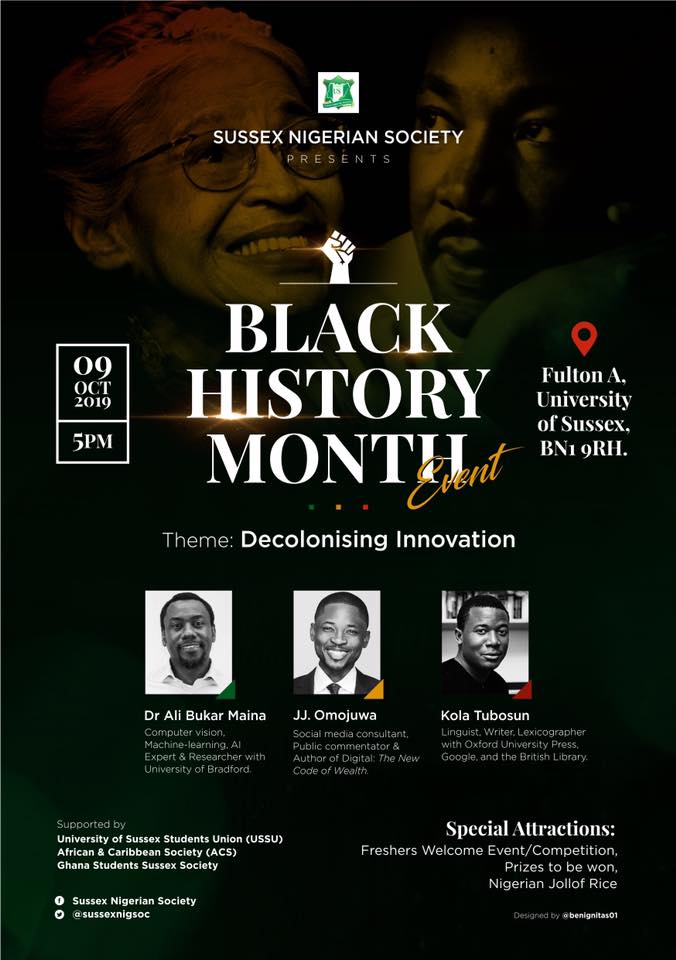
One of the things I remember while growing up in Ìbàdàn was that almost every technological item in the house was made in China. I knew this because it was written there: “Made in China.” It was hard to avoid. You just needed to look a bit under the item, or around it, and the sign was there: “Made in China.” I know this hasn’t changed as much today because a couple of weeks ago, my son, who is now almost six, asked me, “Is everything made in China?” He must have been observing too.

But it was not just electronic items that I associated with a particular place. I remember the razor blades we used — probably the same ones we still use in Nigeria — were made in Czechoslovakia. Well now, the country no longer exists, so it will now likely be written as “Made in Czech Republic”, but the association persisted long enough in my mind that I could not associate razor blades with any other place than Czechoslovakia, a country I could not place on the map, nor even properly spell if not for the razor blade.

Later as an adult, I would know of other places where technological or mechanical tools were manufactured. We learnt of Japan, and later Korea. Actually, today, many tools and items have become synonymous with those countries where they’re made. My mechanic would often say “This is Original! It’s not China. It’s Korea!” and I would automatically know what he means to say. When I visited Seoul in January of 2018, I discovered for the first time that Kia and Hyundai were made by the same company. I learnt that Honda and Hyundai were made in different countries (Japan and Korea respectively), and that Daewoo and Samsung were Korean companies, and not Japanese. Yes, I’m not very versatile in automotive news, but it was gratifying to find out that — after all — not everything was made in China.

When personal computers came to use in the late nineties and early 2000s, for some reason, the perception around their provenance was not Asian. Yes, intellectually, we could understand that the hardware was likely made in Asian spaces, but the idea of personal computers, made prominent by their software — this time Windows — was American. We associated it with Bill Gates and his company, Microsoft. And so another level of association took place and spread as the use of PCs themselves spread around the place. This phenomenon also conditioned how we reacted to the capabilities of these devices: they were American tools, and so they provided the user with an access one would expect for an American user. It made sense.

This was why when I got my first Personal Computer, in my second year of university, around 2002, I understood — or let me say surrendered to — the idea that it could only type in English. Whenever any word was used that was not in English, or that the computer did not recognize, it underlined it with a red wriggly line. It was easy to excuse as ‘normal’ and expected. The PC was an American invention and so there was nothing to complain about. After all, it could do other things like play Prince of Persia, a game about castles, Mullahs, and princesses. It could also play Fifa 98, a simulated soccer game that got our endorphins rushing whenever we had free time to indulge in it. It could play Chess, a game invented in India at around the 6th Century AD and perfected in Europe. In short, it did the ‘expected’ things.

But I was not satisfied, though there was nothing I could do about it. When I started working on my final year project, which was called The Multilingual Dictionary of Yorùbá Names, I complained but ultimately accepted that the computer couldn’t properly tonemark the names I was compiling in the proper way. When my professor gave us homework to translate technical terms in electrical engineering or mechanical engineering into our local languages, I turned mine in with the Yorùbá terms written in the Latin script without the tone markings that properly disambiguates the words. He probably didn’t notice, nor care — again, we used the same computers, so he was familiar with the obstacles — but it distured me. I was not satisfied.

It was the same dissatisfaction I would feel when Twitter, in 2011, announced that they were opening the platform for translation into many world languages but excluded any African languages from the list. It was the same way I would feel realizing that Siri, that automated computer voice on the iPhone and iPad existed in Swedish (~10.5 million speakers), Norweigian (~4.32 million speakers), and Danish languages (~5.5 million speakers) but not in Yorùbá (with over 40 million speakers). It is the same disappointment I would feel reading Nigerian writers write in English with proper attention to the diacritics of foreign words like French or German or Swedish, but total disregard for words in their own language in the same text. 

In all, there seemed to be a perception that things were only meant to be in English, meant to be in a European language to be proper. When I used to teach English in a high school in Nigeria, a colleague of mine — ironically also a graduate of linguistics — said it was ‘unprofessional’ to speak Yorùbá, or any Nigerian language among members of staff while in school. I asked him if he’d feel the same way if the language being spoken among the staff was French or Spanish. He said ‘No, that is different.’ I couldn’t see the difference at all. In Kenya, students and teachers are allowed to speak any Kenyan language, along with English, while in school, and there is nothing wrong with it. In Wales, schools now exist where Welsh is used as a medium of instruction. Why, after fifty nine years of so-called independence from Britain do we still need our educational system to reflect British ideas of propriety, British sensibilities, or British manner of speaking?

When the Nigerian English accent on Google was launched in July, the responses were mixed, as is usual for most things in Nigeria. But some of the negative comments were curious because they were not based on whether the voice mispronounced things or any other objective disagreement. They hated it because it was a “Nigerian” voice. Someone tweeted something to the effect of “Why do I have to listen to a ‘local’ voice for Christ’s sake?” And there were others who said something like “Why do I want to hear a voice that sounds like mine?” So, in all, there seems to exist, even if not in the majority, a part of our society that resists anything that actually empowers us to be ourselves, or to see ourselves reflected in technology. I have seen journalists speak with taxi and Uber drivers, who actually use the voice every day, and are grateful that they have a computer voice that can correctly pronounce “Lekki-Epe Expressway” or “Ajọ́sẹ̀ Adéògún Street” or “Okokomaiko”. These are incremental ways in which we are decolonizing technology.

But innovation itself, as today’s topic suggests, is what needs decolonizing, which is a more fundamental dimension. Why, for instance, are students denied access to universities because of a lack of a ‘credit’ grade in English? Yes, the answer is because English is the primary means of teaching in our universities. But why is this so? Why is this one of the things we have accepted without question? Could it be that we can never pass down knowledge of complex ideas in education unless it is in English? This cannot be the case. Imagine Albert Einstein, who spoke German as a first language, and who may not have left Germany had Hitler not taken over, being denied access to a university education because of his lack of English competence! Education and knowledge, for some reason, have been conflated with English language competence, which it should not be. Kia, Hyundai, Samsung, Sony, etc, and even the makers of the razor blade we still continue to import in Nigeria are proof that it is not the language you speak that determines your future, but the knowledge with which you deploy the language, and the use to which that knowledge is put.

So, today, there is a Nigerian English accent on Google Assistant and Maps. Other Nigerian languages might follow. Twitter tried to create a Yorùbá language platform. At YorubaName.com, we created a free tonemarking software which can be used to properly write/type the language on your computer and on the internet. And at TTSYoruba.com, in 2016, we created the first text-to-speech application for Yorùbá. These are very few in the resources that would be needed to empower the African to use technology. I mean, you still can’t use an ATM in Nigeria today in any Nigerian language, so there’s still a long way to go. 

But using technology that has been brought to use from the outside — even in our own language — is not enough. Not by far. We need to be able to think —using our own native knowledge — to create tools that can not only empower us and solve our problems, but also solve the world’s problems. Someone sat down and invented a car. Someone invented companies that make more fuel-efficient cars, and electric cars, and the radio, and computers. They come from different language and cultural backgrounds, but the common thing with all of them is the spirit of innovation, and the absence of a limit placed on them just because of their first language. It doesn’t matter that the creator of Kia or Honda do not speak English nor does it matter that the person buying the car does not speak Korean or Japanese. How do we get to this stage with our own ideas? One way, of course, is to stop limiting ourselves and our imagination. 

When we no longer create needless obstacles for ourselves, either in the form of language discrimination in education or politics, then the change can truly begin. My obsession only happens to be language and technology and literature, and ways to decolonize them as much as possible, providing opportunities for our inner selves to thrive. There are still so many other ways in which we can achieve freedom from the constraints we put on ourselves, using other skills and competencies. I am glad to be able to do mine with the skills I have. And, sometimes, that’s all one can ask for.

I thank you for your time.

On Memory, Identity, and Home: On Tope Folarin’s “A Particular Kind of Black Man”

Tọ́pẹ́ Fọlárìn’s debut novel A Particular Kind of Black Man, previously titled The Proximity of Distance, was very easy to read. Crisp sentences and accessible language. The novel, which is a kind of meditation on identity, memory, and the definition of home, continues the conversation started with his two previous short stories Miracle (2013) and Genesis (2016), both nominated for the prestigious Caine Prize for African Writing (the former winning the top prize in 2013). The writer is fascinated with this subject — many would say because he has lived it — telling me in an interview after his first short story was shortlisted that “I’d love to inaugurate—or at least continue—a conversation about identity, and how we all share an essential desire to ‘place’ people.”

This is a fair place to begin, and — as he stubbornly, inexplicably, continues to insist — the best point from which to interrogate this book. This context was not always welcomed in the past.

The novel begins, like Genesis did, with “the elderly white woman with frizzled gray hair” who looked at a young black boy in Utah and dangled to him what she thought was hope: the chance to serve her in heaven. This, as the boy, Túndé Akíntọ́lá, realized later, was taken from Mormon teachings that reserved a place in heaven “if you’re a good boy here on earth” for black children only as servants to the white ones. From there, it takes the reader deeper into the life of the child, his family, and the mental health issues that affected his mother, endangered his father’s life, traumatized his childhood innocence as the firstborn son, and eventually broke his parents’ marriage.

Those who have read Genesis are already familiar with this part of the character’s story. What follows, what is new, and what moves the novel forward is an exploration of the character’s own journey, maturity, and memory. And of his father, and mother, and the sacrifices made to give children a good and decent life in a new environment. Túndé’s father had a thick accent which he attributes to the many setbacks he had at work. At some point, he bought an ice cream truck with which to make ends meet. Túndé saw the truck instead as his chance to become popular within an all-white neighbourhood, a dream that also faced eventual setback.

The novel journeys through these moments and others, with affection and honesty, loss and longing. It also examines how we judge what is real and what is merely imagined, while leading us sometimes to experience it ourselves. The character, for instance, began at some point to experience something he called “double memory” where he started becoming unsure of his own sense of recall. How much can we rely on our own memories, and even things we have seen and touched, if it continues to change? In the book, this explains why the character began to set things down, for his own sanity, so he can tell the truth apart from what his mind is making up. But it also becomes the author’s literary trick to carry us along on this narrative unreliability, cleverly deployed in a show-than-tell style. When Túndé tells us earlier in the book about his younger brother, Táyọ̀’s, easy break from the family, from their stern but loving father, when he insisted on staying back in a city while the rest of the family moved on to another vicinity, and we find out later that it may not have been totally true, we discover that we may have become victim to this same deficit, or trick, of recollection that bedeviled the character — deployed to keep us on our toes, keep us from pretending to know more than is shown to us.

But by bringing the novel back into the conversation around the Caine Prize and the alleged controversy around the Fọlárìn’s heritage when he was first shortlisted for the Prize (for the record, I was attentive to that particular process, and any insinuation — if at all — that the author wasn’t “African enough” was not by any notable critic as was alleged in this review at the LA Review of Books. Maybe internet trolls, at best), Fọlárìn wants us to look at him anew and give him his due as just an authentic African as any. It is not necessary; no work of art will do that anyway. He is African in every way one can possibly be an African — and in every way the Caine Prize describes it for the purpose of their prize. It was never in doubt, and we did not need the novel to realize it.

What the work does — if he had allowed us to enjoy it on its own merit — is show us one person’s story, and journey, through an immigrant experience he did not choose nor have much of a say in, to a place of peace and satisfaction — or some closure. The question of the extent of fiction in the work has been rendered moot by his tacit embrace of the label, if only as a point of departure. (Sana Goyal’s aforementioned review calls it “an autobiographical coming-of-age, immigrant novel”), perhaps in the traditions set by Angelou and Ṣóyínká and other memoirists. The category does not diminish the work, but it doesn’t totally capture it either.

There’s a way in which parts of the book remind me of Bassey Ikpi’s recent book which nods to a similar idea of the unreliable narrator challenged by bipolar or schizophrenic disorder. Even Ikpi’s title I’m Telling the Truth But I’m Lying makes an explicit case for a wary consumer. Where Fọlárìn’s work differs — more than just the label (one is called a “novel” while the other is called “essays”) — is that the exploration of mental illness in the latter exists as a running thread under layers of other family issues than a most dominant narrative. This is arguable of course. Both are different explorations of life as a Nigerian in an all-white environment, and in America — not always the same thing.

A Particular Kind of Black Man is an immigrant story. It is a coming of age autobiography. It is a story of love and forgiveness and a search for home. It is both a public testament to survival and discovery as a personal record of the journey that took him there. It is also a well-written book, raw at times, and moving. Its tender and thoughtful meditation on displacement, loss, memory, and belonging is universal, as is its exposure of the pain of finding home in a new place. For many people — and it was for me as well — the novel is also a kind of tragedy. Not just for Túndé and his brother this time, but for their parents. This review will not do enough in capturing the pain and vulnerability of how lives get irrevocably changed by migrating to a new place; the effect on marriage, on personal growth, on the sense of self. In that way, the most memorable character, in the end, was his mom — in what she struggled through, and survived — if only barely — with the scars and losses that came with it.

The angle of the quest for personal faith, brilliantly recounted in Miracle, was notably absent in this book — and it was never quite promised — but it might be just as well. In the place of this or other examples of Túndé’s wandering towards what is true, we have family — his distant grandmother’s voice on the phone — and a romantic encounter, both adding a tender element to the journey that took him from Utah through Texas to Lagos, and through his own mind and doubts, to a place where home finds him, or — we’d rather believe — he finds himself.

___

A Particular Kind of Black Man was published in August 2019 by Simon & Schuster. Get it on Amazon.

Thoughts on “Freshwater”

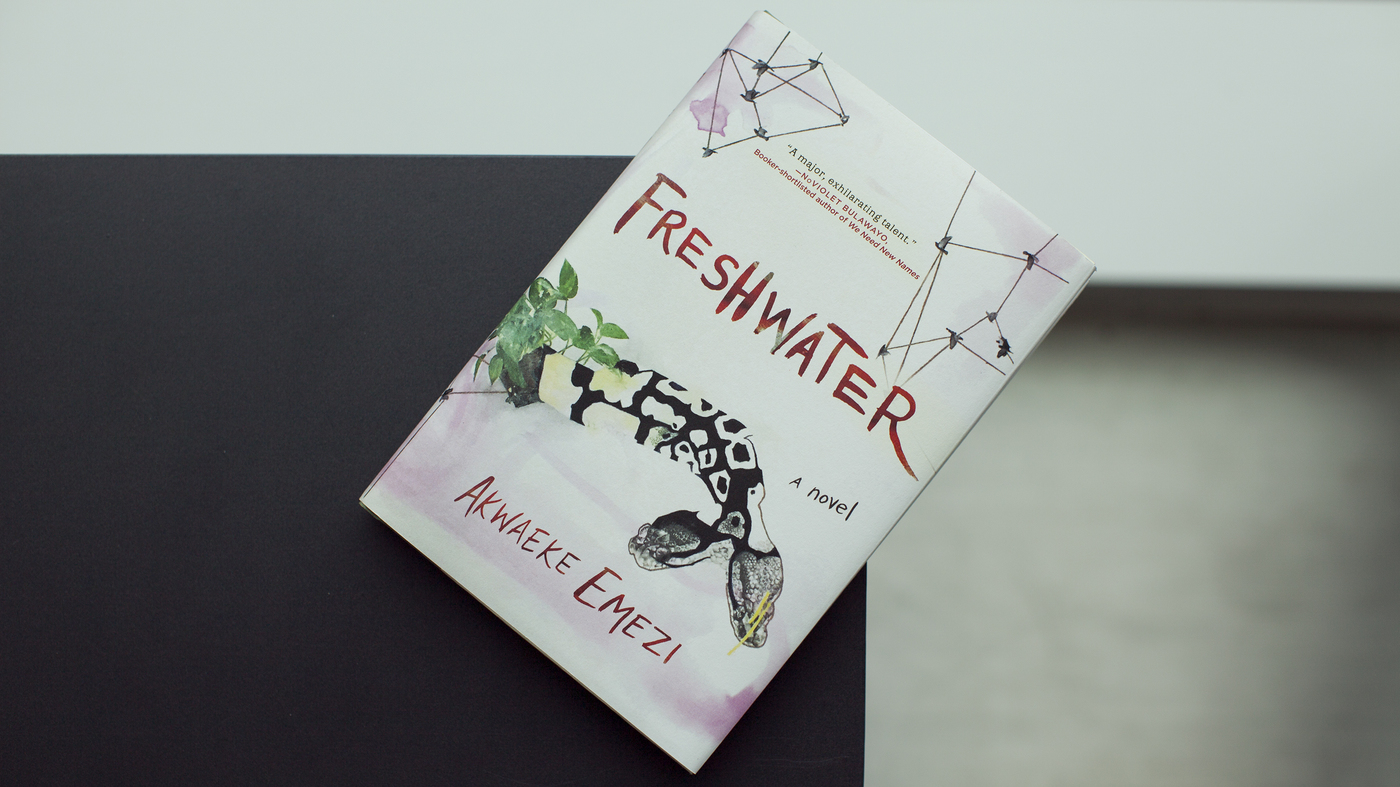
I have just finished reading Akwaeke Emezi’s powerful debut, Freshwater. Its premise – a novel-length story of an ọgbanje child and its/her/their* experience of the human and spirit world – was one we had needed for a long time since Chinua Achebe gave us the character Ezinma in Things Fall Apart, described as ọgbanje because she was the first of ten children that did not die at birth. In Yorùbá, they are called àbíkú children, and have been subjects of many works of poetry and fiction. Having such a contemporary story based on the real-life story of someone we know makes it doubly intriguing for a novel, with potentials and pitfalls.

Freshwater by Akwaeke Emezi.

This novel, which takes place this time in the modern era of emails, tennis courts, airplanes, condoms, and surgeries, tells the story of an ọgbanje child called the egg of the python: akwa-eke (also ‘the Ada’ – first girl child; also ‘the child of Ala’), whose life begins to get interesting after a night of trauma releases to her reality many spirits she had carried with her since birth. “Interesting” is a curious word to use to describe what happens, but only because the writing successfully immerses the reader in the trauma of her circumstances while simultaneously offering some measure of distance through a multiplicity of voices, all belonging to different entities through which the spirits that control her body chose to express their personalities. Their primary aim is to destroy the body and pull her spirit back to where they came from, but failing that, settling to ‘protect’ her through a series of attack and defense mechanisms that turn the life of such a carrier into one of wild and tumultuous adventure.

“When we were first placed inside her, with these humans, the odds were that the Ada would survive. It was, in retrospect, a very low bar to set. She did not die, yes, but she was not guarded, she was violated, so far as we were concerned, they failed. This is why we have never regretted stepping in, whether as ourself or the beastself. Show us someone, anyone, who could have saved her better.” (Kindle LOC 2411)

I have never read any other book like it. Not in the way the author introduces us to the many characters that live within one person. Not in the way she carries us along with her on a rollercoaster of spiritual and physical experiences that would have been hard to describe in any other way. Not many novels exist in which there are so many characters, but few people. It is a testament to the author’s gift and talent that we are never confused at each turn.

What makes the book important, however, is not just the fact of its existence, its impressive narrative style which combines Nigerian pidgin lingo, Igbo, and standard English, and the intimate exploration of what being an ọgbanje means in a modern time. A month before the book was released, the author penned a complementary essay in The Cut in which she describes her transition across realities, from woman to “a spirit customizing its vessel to reflect its nature.” She was not just becoming non-woman by removing the body part that reminded her every month of the nature of which body it inhabited, she was also freeing herself from the prison of categorization: a transition that isn’t from one gender to the other, but from body to spirit. Serving as complementary features the way that Binyavanga Wainaina’s essay I am a Homosexual, Mom complements his memoir One Day I Will Write About This Place like a lost final chapter,  Emezi’s essay fits the novel like a necessary coda, bringing an important conversation to the fore about how transitioning and attendant medical procedures aren’t really such an ‘unAfrican’ phenomenon after all, but had only been spoken of in that light because we had suppressed the voices that could otherwise explain to us the things we knew all along.

“The first madness was that we were born, that they stuffed a god into a bag of skin.” Kindle LOC 278

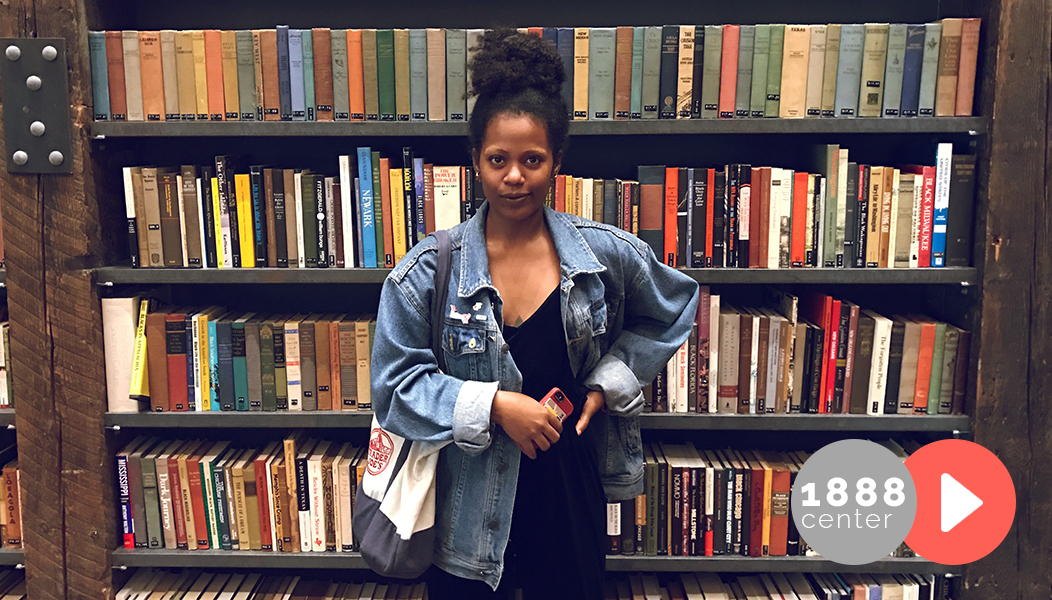
Akwaeke Emezi.
(Photo from http://1888.center)

The novel works on many levels: as a memoir, a coming of age story, a journey to self of a young girl of Igbo and Tamil descent trying to find her way in the world; as a fictional exploration of trauma, mental illness, family issues, and sexual/gender identity; and as an inevitably anthropological material on the study of the ọgbanje phenomenon and its many manifestations, with an intimate portrayal of challenges, heartbreaks, and opportunities. All the earlier works we had read about the phenomenon had treated the issue in a distant mythical way, removed from relatable experiences. While I was in Korea in January, a student of African literature asked whether the ọgbanje/àbíkú experience was ‘real’ and something that still happened. He had read about it from Chinua Achebe. I was glad to refer him to Emezi’s personal essay, and novel, on the subject. With Freshwater, the phenomenon became flesh.

Besides the subject matter, I was also very heartened to read a Nigerian novel in which the Nigerian language words (in this case, Igbo words) are written with appropriate diacritics. Ọgbanje wasn’t written as ogbanje, or with italics, as Chinua Achebe did in 1948. Other Igbo words and expressions like Asụghara, Lẹshi, Nzọpụta, Ịlaghachị, among others, were written with adequate respect for the writing conventions (I have discussed my thought on this pervasive deficiency in contemporary African writing in past essays (see 1, 2, 3), but particularly in this recent talk given in Korea about the subject). If we care enough to put diacritics on French, German, Swedish (etc) names in our English prose, there’s no need why we shouldn’t do them for African languages as well.

“When you name something, it comes into existence – did you know that?” Kindle LOC 816

Emezi has written an important book that is also a delight to read, in spite of (if not also because of) the trauma and challenges that make the writing necessary in the first place. Highly recommended.

__

* Note on Pronouns. As those already familiar with Emezi’s work will note, she insists that she’s not a woman, though she answers to both ‘she’/’her’ (as is seen on her web bio), and ‘they’ (as will be seen throughout the novel, and as she’d once mentioned online as a preference). Her bio, for a long time, quotes her as living ‘in liminal spaces’. I believe that she has also not entered the book for any women’s prize for this purpose, which makes sense in light of how she represents herself in public and how she has experienced the world as an ọgbanje. One of the things that intrigued me greatly in the book is how each voice comes across as an authentic self of the character, even when they all live within the same body. So here, using ‘they’ makes enormous sense, and not confusing in a way that it has been when other trans people (especially in the United States) have used it. This is said not to disparage other trans people and the way they represent themselves but to credit this particular work with illuminating the issue in a way that makes it a little more relatable.


Buchi Emecheta Foundation and Omenela Press created to Preserve a Legacy

With Odafe Atógun and Ayọ̀bámi Adébáyọ̀

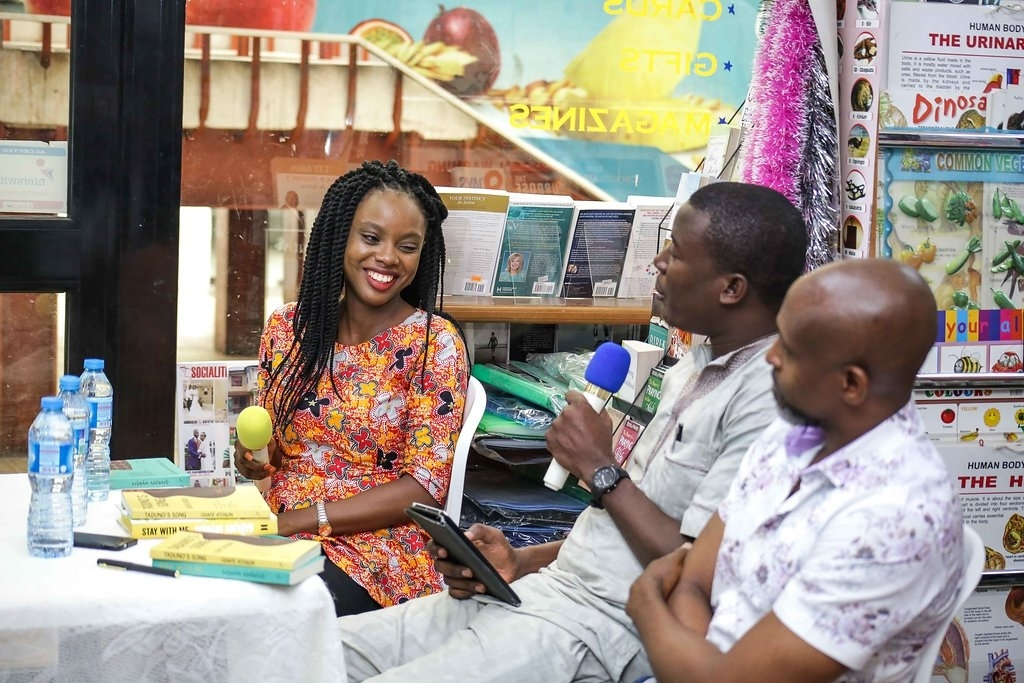
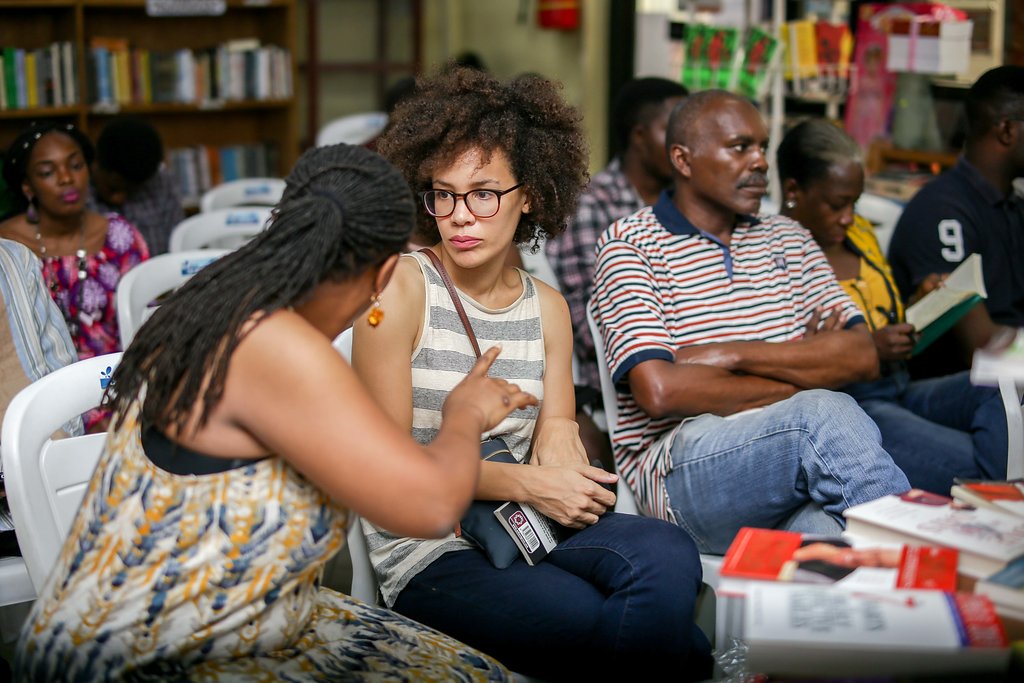
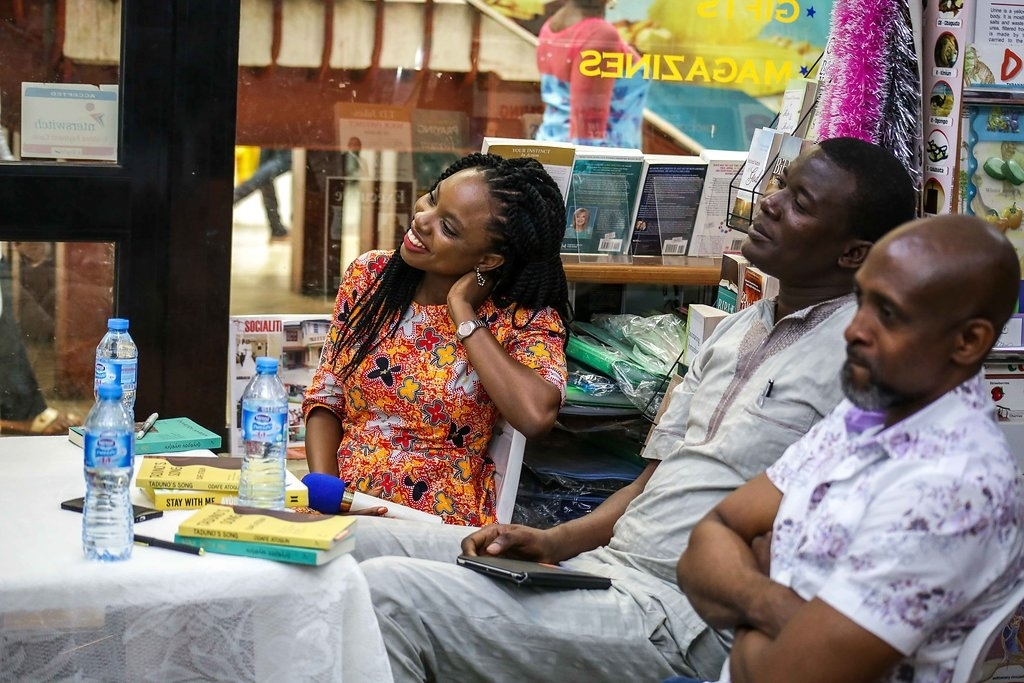
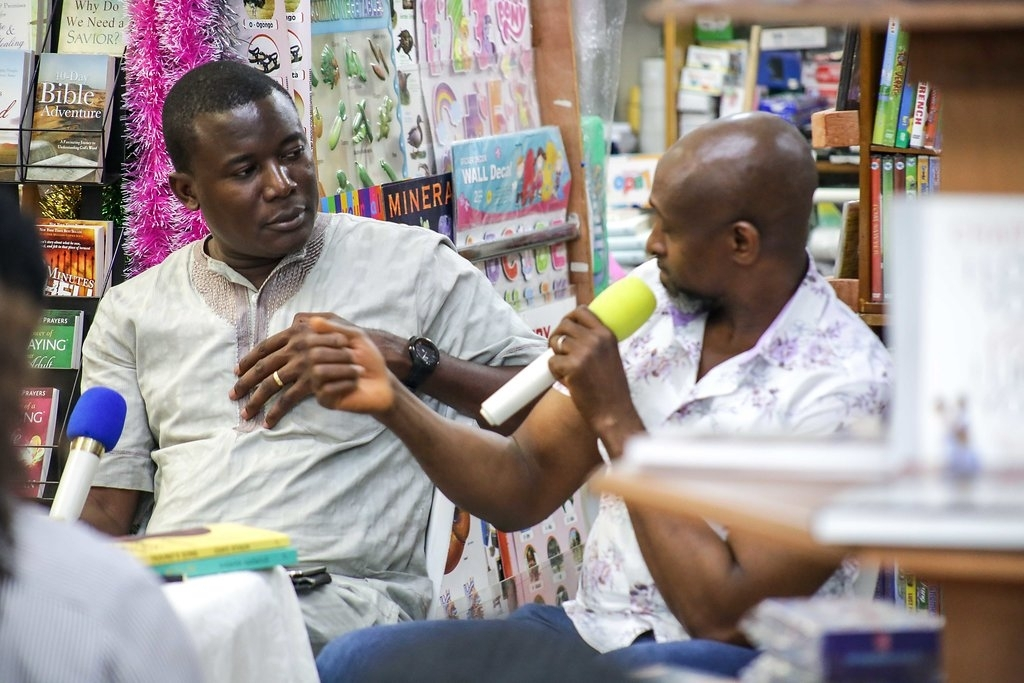
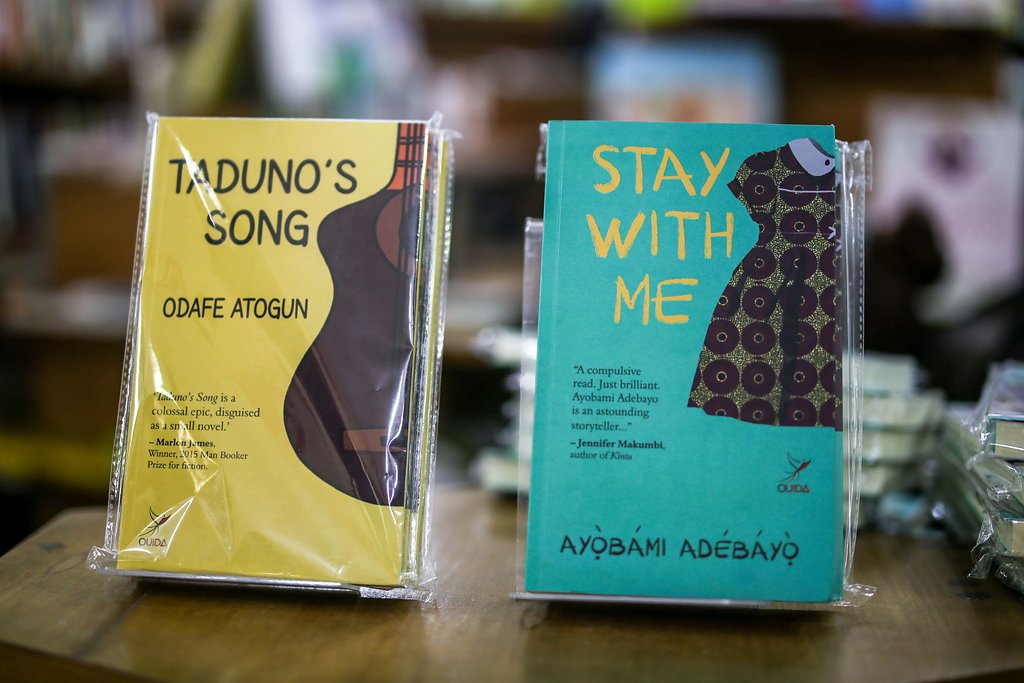
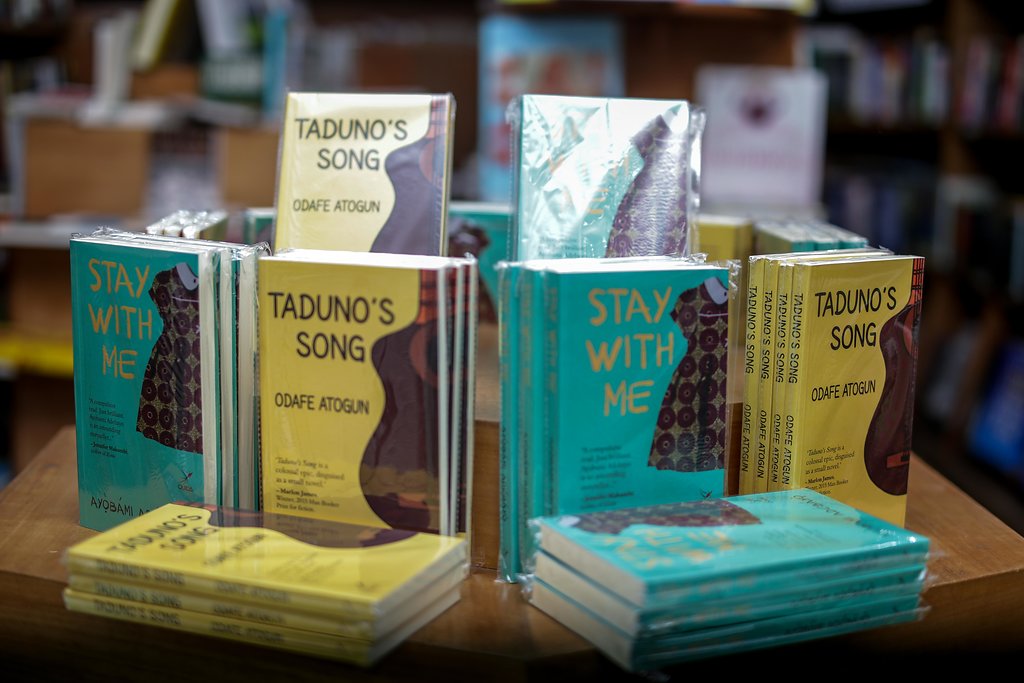
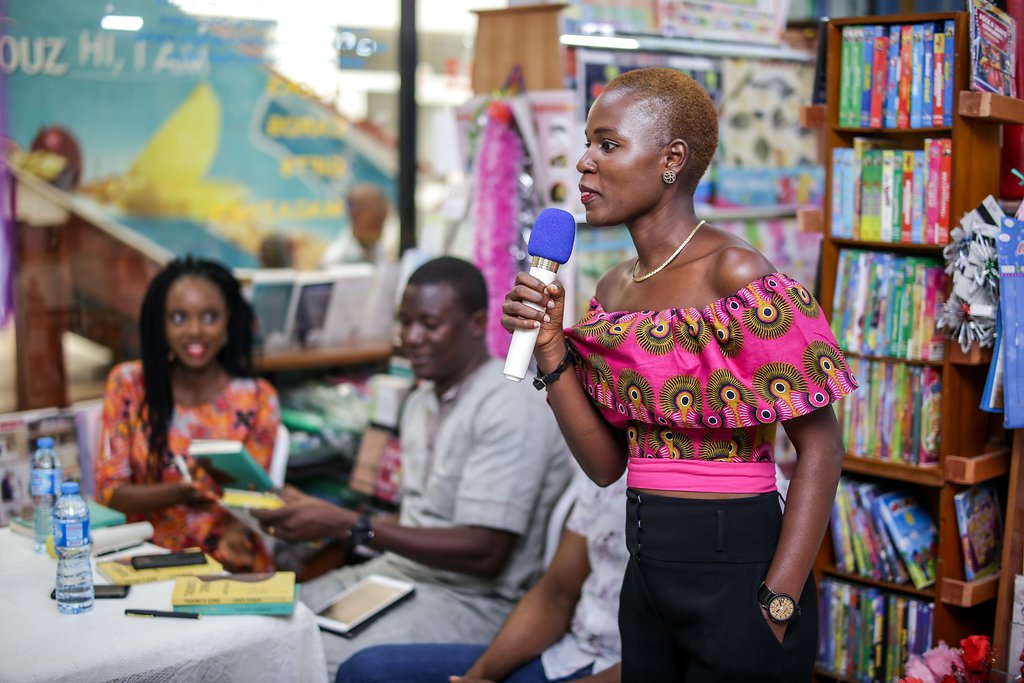
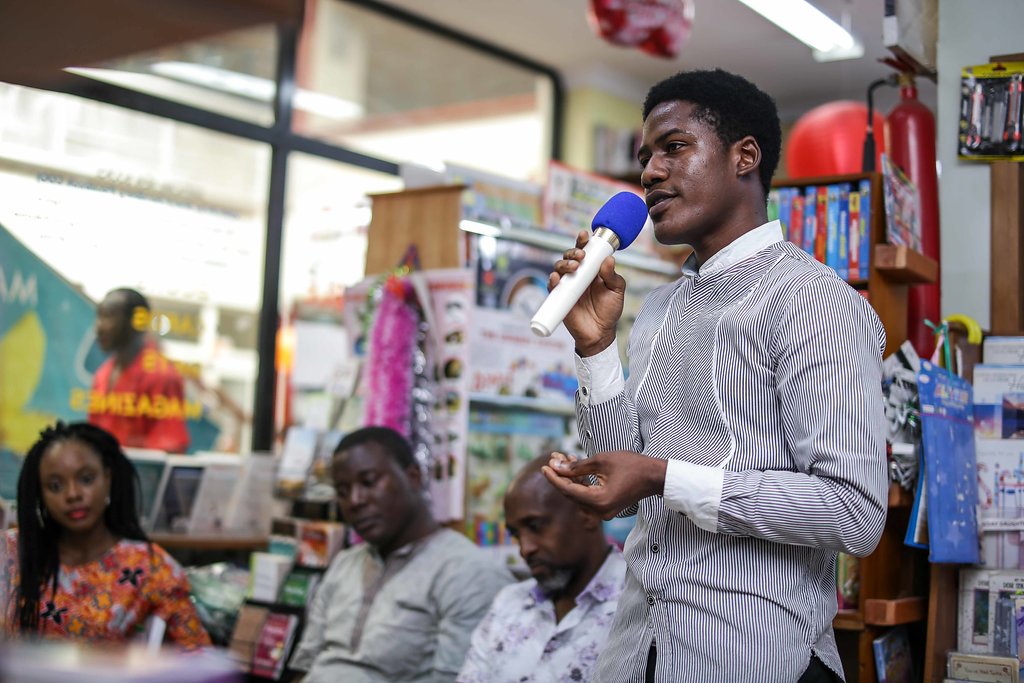
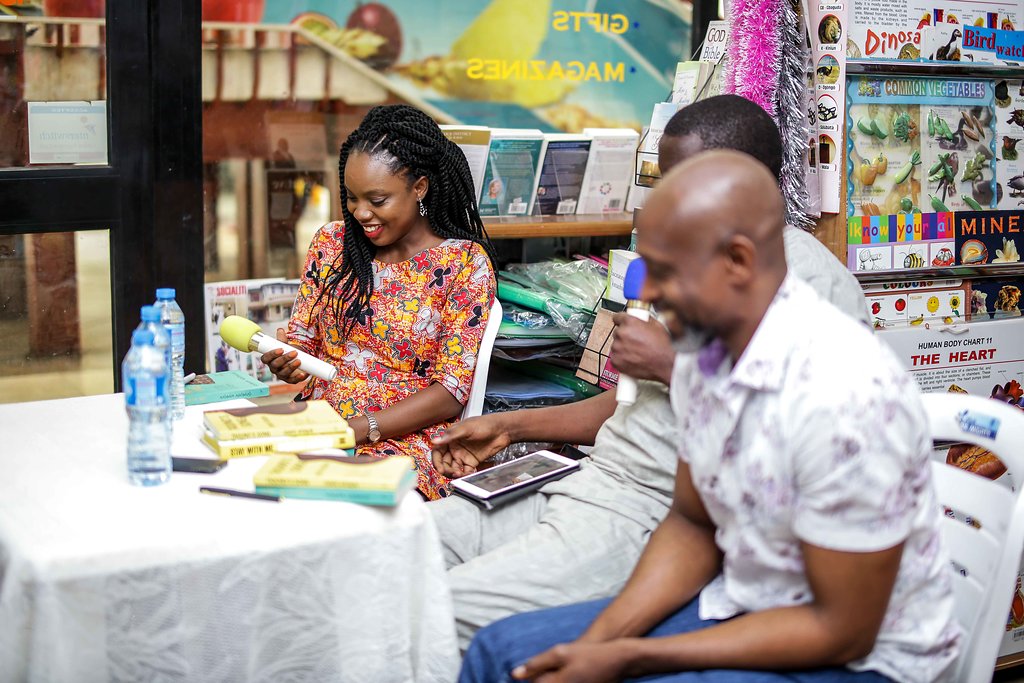
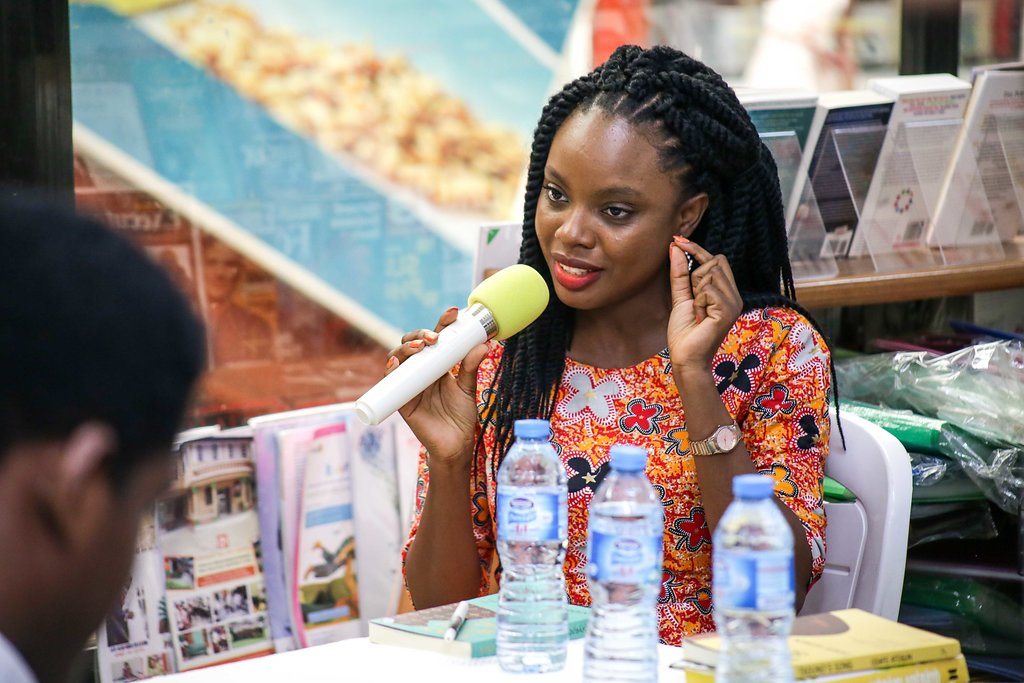
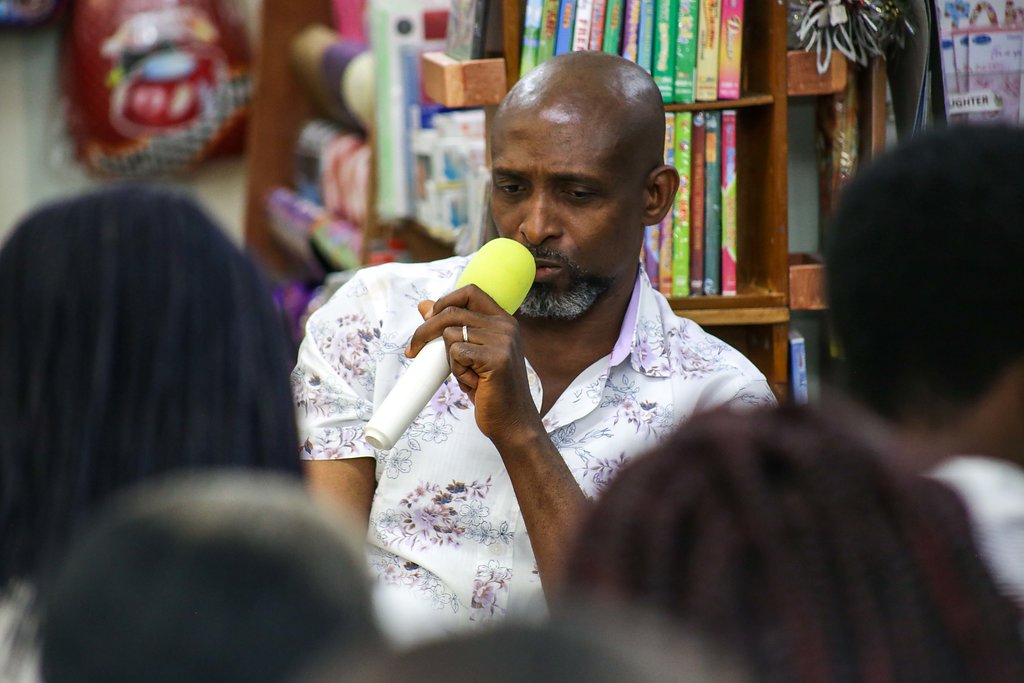
On Sunday, May 14, 2017, I hosted a book chat with two debut authors Odafe Atógun and Ayọ̀bámi Adébáyọ̀. It was organised by Ouida Books, the Nigerian publisher of their two novels Taduno’s Song and Stay With Me respectively. They also share a publisher in the UK and in the US.

Atogún is a full-time writer who was born in Lokoja and studied Journalism in Lagos while Adébáyọ̀, though born in Lagos, has lived in Ilé-Ifẹ̀ and Iléṣà where her novel was set. I have enjoyed reading the two books, which deal with love against the background of a social upheaval.  They have a number of other similarities and many differences. For a start, Atógun’s book mixes elements of fantasy and magical realism with into the plot while Adébáyọ̀’s book goes the route of traditional plot, though with a twist on the narrative style and direction in time.

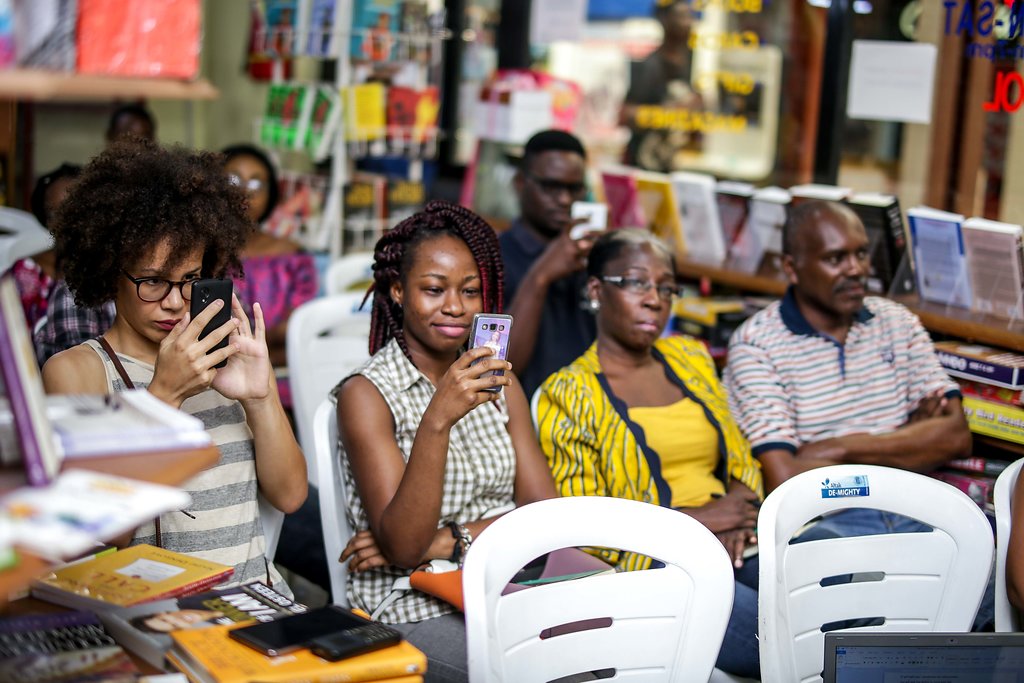
This is not a review of the novels. That will come later. But I enjoyed talking to both authors who are also smart and lovable human beings. I look forward to sharing more thoughts on the books in coming days. The event was held at Patabah Bookstore on Adéníran Ògúnsànyà street, Súrùlérè, with a full house of attendees.