Browsing the archives for the Guest Post category.

Ibadan Jazz Forum and the Riffs of Remembrance

 (Celebrating Black History Month, 2022) 

by Niyi  Osundare
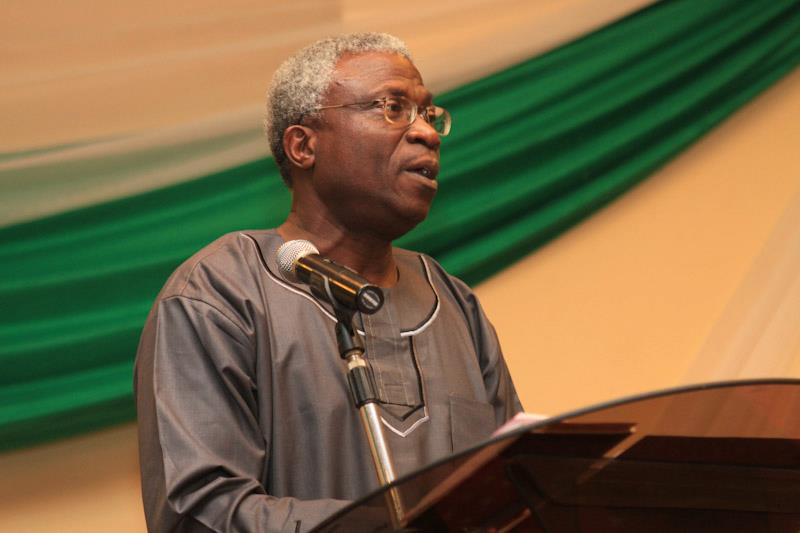
Professor Níyì Ọ̀ṣúndáre.

Thank you very much for inviting me to keynote the dialogue segment of this year’s edition of your Black History Month activities. As someone who has been with you and has been privileged to participate in some of your activities from the very beginning, I have come to appreciate the dreams which necessitated the inauguration of the Ìbàdàn Jazz Forum, the visionary acumen that has characterized its idealism, and the modes and methods of its operations over the years. For daring to dream in a world in which such an act is constantly sidelined by blatant realism, for standing for the cultivation, defence, and projection of lasting values in a country overwhelmed by cynical materialism and instant gratification; to enter a plea for Culture in an age of philistinism, the Ìbàdàn Jazz Forum (IJF) has succeeded in pointing a way to the future by leading us towards the apprehension of the inevitable connection between the past and the present.

The Black History Month and the Ìbàdàn Jazz Forum are products of the same initiative. On a more specific note, it could be said that the latter grew out of the global ferment of the former. Hence the similarity between their mission: the imperative of Memory, the necessity of Remembrance, and the need to bring both to bear on the present in the much-needed effort to re-shape the future. Primary to both initiatives is the task of repossessing our history by taking control of our own narrative; for, it is a universally acknowledged fact that whoever controls your history will end up controlling your destiny by shaping to their own interest and design not only your memory but the memory of you by others. For many centuries, this was the case with Africa where the enslaver and the colonizer were the ones who wrote the history of their exploits as well as that of the objects of their exploitation.

As Chinua Achebe once observed, the hunter’s story of the hunt will always be different from that of the antelope. So, when we gather here every year for the celebration of Black History Month, what the IJF is asking us to do is to repossess our narrative, tell our own story in our own way and in our own voice, and doing this without forgetting how the Black story connects inextricably with the universal human story, and the mutual seepage between the two. From Olaudah Equiano to Frederick Douglass; from Harriet Jacobs to Sojourner Truth whose powerful “slave narratives” focused human conscience on the inhumanity of slavery and the slave trade, to relatively more contemporary writers such as Achebe, Soyinka, Toni Morrison, W.E.B. Du Bois, and Edward Kamau Brathwaite, a strong un-ignorable articulacy has come to the telling of the Black story. A “race” once spoken for, or on behalf of, or spoken against has reclaimed the I-Paradigm of the Human discourse and the ability to say “I am”. The retrieval of the Black person’s agency is way up on the Black Liberation agenda. But this instance of self-determination, cultural re-affirmation, and epistemological re-configuration has not come without opposition from those who have always been at the commanding heights of the power hierarchy. These are the people for whom an old, by now offenceless terminology called critical race theory has recently become a spine-chilling bogeyman. Long denied, blissfully neglected, cleverly negated truths and ideas whose restoration is considered threatening to an unjust status quo, are currently under assault, especially in the United States where acts of curricular cleansing, shelf-clearing, and book-banning are happening at a pace and with partisan political ferocity that would have done brave credit to the Spanish Inquisition.

But this world, our world, is moving on, undeterred, though at differential speeds by its constituent parts. Central to our concern as we gather for this year’s Black History Month events is the velocity (or lack thereof) of the progress of Africa, our continent, currently in the grip of three debilitating afflictions: the global COVID pandemic, centuries-old poverty, degradation,  and underdevelopment, the resurgent plague of political instability as evident in the current spate of terrorism and military coup de’tat. Humanity’s oldest continent remains the world’s poorest and most miserable, marginalized, despised, and zeroed out. As I have soberly put it in my forthcoming book of essays, it takes an awful lot of courage to own up to being an African today. The last time that sorrowful confession invaded my thoughts, I was hard at work on the sixth movement of Midlife, a volume of poems that marked the attainment of that existential milestone clearly proclaimed by the title of the book. Let me appeal for your patience as I poach a long and sombre excerpt from that book of verse:

                      Midlife

now Africa, beholding you full-length, from shoulders

baked strong by your Black sun;

my hands towards the sky, feet towards the sea,

I ask you these with the urgency of a courier

with a live coal in his running palm:

The skeletal song of Zinjanthropus,

was it a lie?

The awesome ruins of Zimbabwe,

were they fiction?

The bronze marvels of Benin, of Ife

were they a lie?

Is the Nile really a fickle tear

down the cheeks of unmemorable sands?

The geometry of your idioms, the algebra of your proverbs,

were they sad calculations of a pagan mouth?

My question, Africa, is a sickle, seeking

Ripening laughters in your deepening sorrows

                    *

Giving, always giving,

scorched by the Desert, blanched by the Sea

bankrupted by the Sun, indebted by the Moon,

robbed of your tongue, bereft of your name

Giving, always giving

ebony springboard for giants of crimson heights

Giving, always giving

my memory is the thrashing majesty of the Congo

its dark, dark waters fleeced by scarlet fingers

its shoals unfinned, its saddled sands

listening earlessly to the mortgaged murmurs

of ravished ores

giving, always giving

the tall lyric of the forests

the talkative womb of the soil

the mountain’s high-shouldered swagger

pawned, then quartered, by purple cabals.

The elephant’s ivory is a tale of prowling guns,

the crocodile mourns its hide on the feet

of trampling gods

Giving, always giving,

fiery dawns once wore you like a robe, oh Congo,

soft, warm, gracious like the cotton laughter

of Lumumbashi,

the Niger, the Volta, the Benguela

bathe the rippling hem of your luminous garment

the sky was your loom, April’s elephant grass

your needle with a hundred eyes;

your thread was the lofty spool of the eagle,

the chalky string of the egret in the dusty shuttle

of meticulous harmattans

And now noon

With the sun so young in the centre of the sky,

That robe is a den of dripping fragments

awaiting the suturing temper of a new, unfailing Thunder

                      *

My question, Africa, is a sickle, seeking

Ripening laughters in your deepening sorrows

                       *

           Midlife

on a continent so ancient and so infant

crawling, grey, in the scarlet dust of twilight horsemen,

ravished by the gun, crimsoned by ample-robed

natives and their swaggering fangs;

our sun so black with crying hopes,

wounded by the boundless appetite of hyena rulers

Shorter every inch by our tower of dreams,

Their eyes smugly sitting in the blind pit

Of their funeral stomachs;

eunuch between the moons, their claws

gore-deep in assassinated wombs;

they whose fathers, whose fathers’ fathers

emptied whole epochs into slaving galleons

have pledged once more the eulogy of the chain,

their hearts crammed with rums, fickle mirrors,

and other gifts unremittingly Greek.

A knee-eyed sun shouts from the middle                 

of a drifting sky:

     Who will cure Africa’s swollen foot

     Of its Atlantic ulcer?

My question, Africa, is a sickle, seeking

ripening laughters in your deepening sorrows .

                        (from Midlife, 1993)

                    *

Here is a poet-patriot’s quarrel with his continent. A song of pain and anguish, of patriotic anger, of lingering doubts and desperate deliberativeness, as evident in these words from the ‘Foreline’ of the volume:

Past forty now, the riddling kola of life ripening, ripening in my mouth,. . . . Taller too, able to look the giant in the face, able to ask Africa a few sunny questions about her dormant dawn. Able to ask the world how many wasted nights really make up a single day.

These ‘questions’ which engaged my consciousness at midlife are there, still there, now over three decades on, some of the old problems have even surged into more intractable mutations, with Africa frequently dismissed as basket case and the epicenter of global problems. But a “stubborn hope” (Viva Dennis Brutus!) keeps sharpening my machete as I cut a path through Africa’s jungle of problems and promises. Those promises have always been there, but we all know that promises do not a continent make. Needed as a matter of urgency: a new grid of positive values, informed, competent and ethical governance, a sound educational base that puts ignorance to flight and keeps us abreast of the velocity of a fast-moving world and its digital imperative, an end to our dependent, cargo mentality that has turned us into blind, gluttonous consumers of the products of other people’s imagination and labour in our abject posturing as “importers and manufacturer’s representatives”, instead of being “manufacturers” ourselves, a stronger belief in ourselves and our infinite possibilities.  

 These are some of the ideas behind the significance of the Black History Month and Ìbàdàn Jazz Forum, its noble offshoot and local companion. Over these many years, the IJF has shown us the primacy of ideas and their ability to change the world by creating an intellectual and socio-cultural community that prides itself on its ability to think different, feel different,  and act different. Not even the countless debacles of Nigeria, one of the most chaotic and wickedly misgoverned countries in the world, have been able to put a clog in the wheels of their progress. On the contrary, the IJC has ceaselessly highlighted the problems of Nigeria and the Black world, and the ways of turning those problems into possibilities. The overriding purpose of the Black History Month and the Ìbàdàn Jazz Club is to get us to know that we are actually more than we think we are. To come to this awareness, we need to pay more attention to History and its dual cohorts of Memory and Remembrance. The future belongs to those who remember the past and its storehouse of wisdom and folly, and are therefore able to think hard and make informed choices. Like Black History Month, Ìbàdàn Jazz Forum is there to make sure that we do not forget. Like jazz, that music genre from which it derives its name, the riffs are many and unsilenced-able; the wind is its chariot; it is a seed that grows everywhere it touches a good soil. Like that seed, Jazz has taught us the boundless possibilities of the creative spirit, its regenerative transgressivity, its constant striving at doing it differently, doing it new, its unfathomable Soul and sinuous swagger, that proverbial resilience that has enabled its progression from “nigger-noise to state-of-the-art”. What better way to end this piece, then, than the chanting of this brief oríkì  of Jazz and its profoundly complex biography:


JAZZ

(from ‘nigger noise’ to state-of-the-art)

Once

offspring of a tattered trumpet

rescued from a rusty dump

by the restless fingers of toil-

encumbered hands;

animated by a new wind,

powered by a strange metallic thunder

which rocks the eaves of slumbering ears

once

shuffling accent of seedy lanes

and dreams long deferred

in the blue memory of prisoned voices…

Now

horn of well-hoofed stars

lulling purple chambers

with riffs of syncopated silence

saxy splash of running garlands

adulations which surprise the song….

The stone once rejected by the master builder,

is it really now the cornerstone of the glittering house?

Let’s jazz it up then. Let’s jazz it real good. Happy Black History Month!

Ìbàdàn                          

Níyì Ọ̀ṣúndáre

Feb. 14, 2022
Questions on Food: Ingredient, Recipes and Cultures

Guest post by Ọlábísí Abọ́dúnrìn

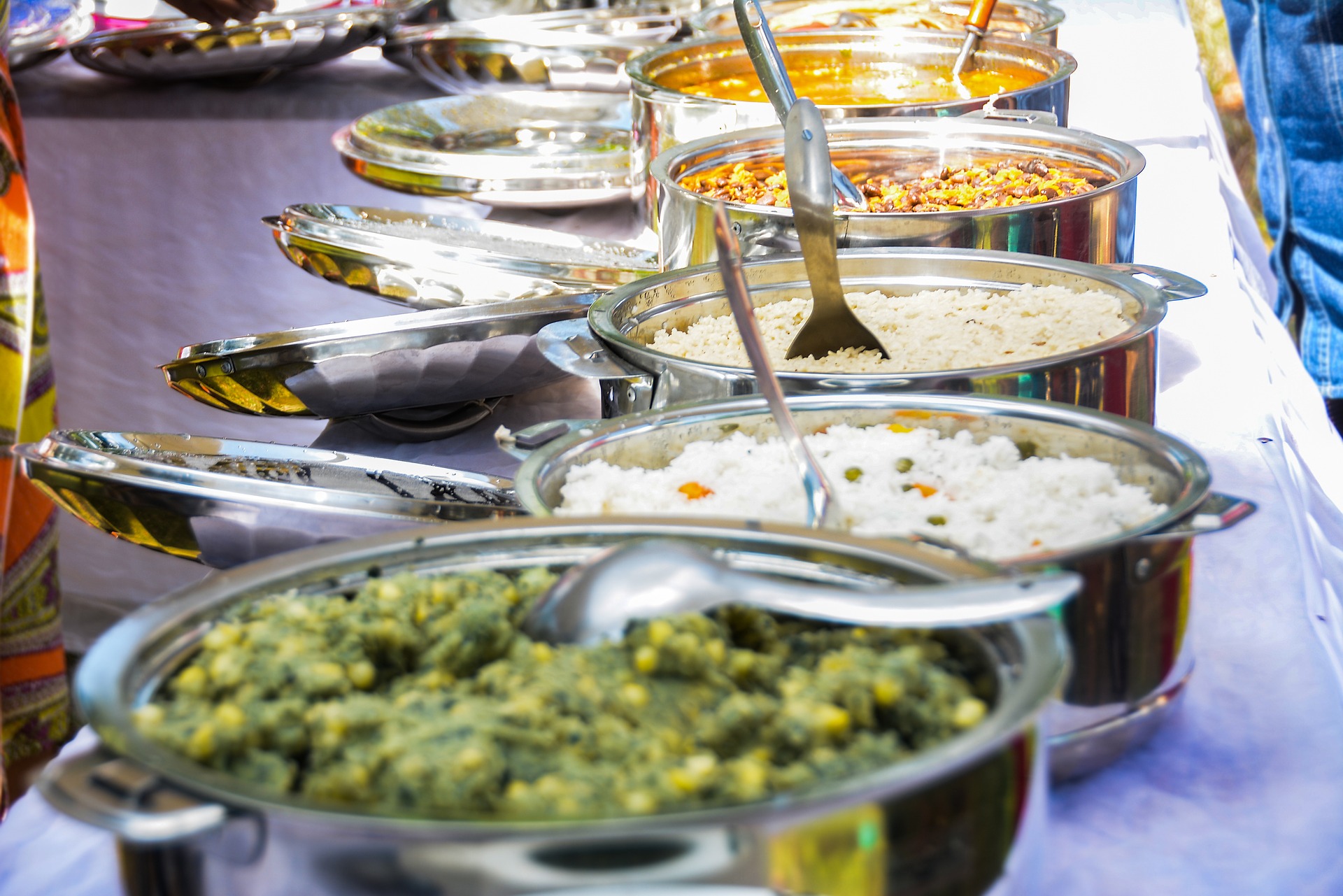
Like the rapper, Nasir Jones, there are many things I wonder about in life: who made up words? Who made up numbers? What kind of spell is mankind under? Just like  Nasir Jones was curious, and so am I. And of course the origin of French Kiss. I mean, who was the first to go, “yeah, we should do that,” you know. Don’t you ever ponder these things?… Anyway, I digress. Food – that’s my current muse. Practical, artful food, and a million inquiries proceeding from the subject. What constitutes food taste/preference? How is it that two different groups, given the same resources, would likely produce different results? Who first decided that certain things, like mushrooms, for instance, are edible? And how were poisonous items discovered – did someone have to die first?

Well, I know this has been addressed almost everywhere, so let us maybe consider protocols duly observed. Africa is not a single country. That’s it, that’s the tweet! There are 54 sovereign countries and thousands of ethnicities; all set up with individual languages and cultures. In Nigeria, for instance, there are reportedly between 250 and 400 ethnicities. Of these, single out the Yorubas as a case in point and you will find over 30 sub-groups with several regional dialects; some unintelligible to others… So many distinct identities to tap from! Now, imagine if we apply this range of diversity to food… With so many unexplored cuisines there can be a different one every day of the week!

One tourism outfit praised an aspect of Africa’s appeal saying, “… You can meet people whose way of life has not changed in centuries.” Although meant well, such a  notion can promote misguided imaginations of a continent stuck in primitive ways; including her culinary practices. Ironically, the “primitive ways” seem to have been more profitable in terms of health implications. Because it would appear that some African food only became less healthy over time as this article suggests: “West Africans ate far more vegetables and much less meat in the past, today their diet is heavier in meats, salt, and fats.” There is a lot in the African kitchen that is misplaced, given the 21st century dietary standards. Perhaps this is one of the reasons why many indigenous recipes are still considered a mystery beyond their African border. For one, we will have to consider health and dietary guidelines. There is simply insufficient information relating to recipe precision and nutrition value of African dishes. Sure there have been changes in cooking methods from past generations; only perhaps not in the expected direction. 

This presents the question of how to make African food more accessible globally. I cannot, for example, imagine an American eating ẹ̀bà and ẹ̀gúsí with ògúnfe daily; not even for the heaviest meal of the day. But my forefathers ate it for breakfast, and frankly, so do I sometimes! Then, there is the question of where to draw the line in this recipe adoption business. The Italian ambassador to the UK has had to intervene in the international pizza crisis. I wonder what will be his reaction to the Nigerian favourite, plantain pizza. (Hey, I had nothing to do with that recipe; I am not a fan of plantain meals myself.) Look, I do believe recipe swaps and food fusion can be achieved without gross misconduct. We could call it “Modern African”, but I can think of at least 2 groups that may – for separate reasons perhaps – find the phrase offensive; one of which is this writer who is wary of cosmopolitan cuisine. Then, of course, there are the guardians of culture who work tirelessly to keep the borders of African heritage in place. It may be easier to make a case to the former. Note that this would by no means be the first international food programme. Food has always crossed borders. Consider okra, which originated in Africa but is used differently in the American South than among the Ibos of West Africa. No one fries Okra there. Jambalaya too is said to have originated from Africa. Watermelon is everywhere now, but it first came from Africa. The point is, the world can eat what we eat. 

So,  what should be the baseline of food sharing – ingredient, recipe or culture? On the ingredient level, it is how much or less of the ingredient constitutes the meal authenticity; while the recipe level determines how much deviation is permissible. Of course, the chef gets a reasonable tweaking license. On the culture level, however, the stakes are higher as with a winner takes all sort of situation. They eat with their hands; you do the same. They sit on the floor… Get the point? And here comes the question of the moment: when is any of it cultural appropriation? The thing is, if we are to make African food accessible at a scale similar to the Chinese or Italian for instance, concessions must be made. It is give and take. The British seem to know the trick – keep it simple. Fish and chips. (Or steal an entire country’s repertoire. Because Indian food is basically British food.)

The world can take more, and the motherland certainly can give it. With platforms like DishAfrik taking up the cause to herald home-grown recipes, we can take the African kitchen to the World. Perhaps we may also introduce her more intimately to self. Because even within Africa, many know little of cuisines from other regions. Some people have only eaten from their tribe.  You can support the DishAfrik fundraising campaign here. While they may not be able to end the Jollof Wars (not sure anyone can), they sure can facilitate a thriving community for the African culinary experience. 

___

Olabisi Abodunrin does not write for a living. This is how she has so far, avoided the woes and horror of this world. But alas! her best ideas remain unheard.

Ten Years and the Reflections of A Prodigal

Guest post by Ìbùkún Babárìndé

Congratulations to those of you- young, male, Nigerian, and travelling alone, who were able to reach your destinations with(out) molestations, after flying out of Lagos airport in the wake of that failed underwear bombing of December 25, 2009.?

O ye travellers of hope, I hope you have all found your dreams, did you find home, did you find love, did you find happiness? This is a moment of reflection for us, I am one of you. I think we need to gather somewhere and celebrate a decade of surviving what was to become hostile treatment for young Nigerians travelling in the west.

As I write, I recollect all the fears and apprehension that followed the tragedy of young Umar Farouk Abdulmutallab, and the recrimination that was unleashed on innocent young travellers from Nigeria by border forces across the world.  My own maiden flight was slated for the middle of January 2010, just 3 weeks after the near-tragic incident that involved a bomb on a plane. Those who believe that the USA and the western governments took undue advantage of the incident to heighten security vetting and high-handedness towards travellers from a certain part of the world may not be wrong, as we became legitimate targets for extra checks in frontiers across the world.

I was freshly 29, at a turning point in my life, a make or break moment, a moment that I made one of the most difficult choices. I chose to leave my father’s home, and headed out to the foreign land.

H:\Pictures\Ibukun 2009.jpg
Taken in 2009.
(credit: Fèyíṣọlá Babárìndé. Telford, 2010)

I was coming to the UK to start my master’s degree. But the marks of ‘slaves’ were all written on my passport…. ‘no recourse to public funds’, ‘restricted work’, má j’ata, má jẹ iyọ̀, and many other repressive immigration controls on the unsuspecting prodigal son. But unlike the biblical prodigal son, I did not go away with any inheritance to squander, I had less than £100 in my pocket, and owó onírú, owó aláta, owó alájẹṣẹ́kù paid the bulk of the cost… but like the real prodigal son, I went away from home, joyfully.

Before my flight, I had taken all additional precautions, booked a direct flight- avoided ‘Amsterdam’, the bad boy had connected a targeted flight via Schiphol airport. The scheduled landing time at Heathrow must be during the daytime, such that even if I was delayed in London, my onward journey to Wolverhampton would still happen during the day.

I made sure I had ‘no goatee’, no mustache, I identified as a Christian, from the south — it was necessary at the time in order to survive. So I thought I would be no easy target for any overzealous Islamophobic- steroid charged security operative. On the morning of my flight, I was briefly pulled aside to be interviewed by two middle-aged white operatives in Lagos airport before I was allowed to board, that should be it, I have been cleared — I thought, but I was wrong.

The flight itself was safe, and full of anxiety. I was waiting to meet my wife — we had just been married for less than 4 months before the affairs of this world separated us — I became home, she had become exiled. As planned, she was to collect the ‘JJC’ in London, and we would move to the midlands, where we would live for the next decade or so.

I left Lagos around 10am, it was around 33′ C, and London was waiting for me already blanketed by heaps of snow. Snow was something I had only seen in movies. London was in sub-zero temperature, and freezing. So I prayed that our plane would be able to land without diversion, as we were warned that many flights had been cancelled in previous days. 

As the plane was landing, I felt coldness creeping up my spine, clearly all my preparation for the cold had proved unhelpful. I was already wearing two pairs of socks, before I left Lagos. To keep warm, I reached for the fairly used unlined ‘Ògùnpa-gbà-mí-ọyẹ́-dé’ jacket that I bought at Dùgbẹ̀ market. My fine boy shoes, I was told were no use for the wintering London.

We landed safely, and I followed the signs towards the bagging area. In one of my luggage bags was gari, ẹ̀wà, irú woro (which had a tipper load of sea sands in it), èlùbọ́, gala, and other women things that I had bought for Fèyíṣọlá at Alẹ́shinlọ́yẹ́ market in Ibadan.

In the other bag, I had some mainframe movie CDs. ‘They will certainly be reminding me of home,’ I had assured myself. Then in 2009, YouTube was still in its infancy, and had not been populated by Nollywood-advert invested contents. I had copies of some Nigerian books too, there was a feeling that I was going to be gone for a very long time, and I had to prepare for them days. I had some Ọ̀ṣúndáres, Akeem Làsísì’s Ìrèmọ̀jé, some copies of my own ‘failed anthology’, some Fálétí’s works, and some other copyright infringed photocopied books. Amazon and Netflix have reversed all these worries today’s maiden travellers.

So I got my luggage, and I headed out into the hands of my new set of friends.  I had met a party of them in Lagos, but to be faced with another security men in London… I was waived into a little huddle of fellow young travellers, at this point we were not all Nigerians in that holding, but we were all single travellers. I was taken in for checks… of course I was punctuating them with my ‘pardon’, ‘pardon me’, ‘and excuse me please’ (s), which would become part of my hurriedly developed survival phonetics in the Un-queenly many regional-accented spoken English language that I would later be exposed to, particularly in the black countries of the west midlands.

I was left in a room, with no shirt on, the machines came up to my chest- I knew they would find nothing. No powders, no tuberculosis, no typhoid- there was no ebola then (thank goodness), and no bombs. 

Outside the room, I heard chatters, I could hardly understand what was been said, then footsteps fainted away from the door to the room, and everything fell silent for an eternity.

After some 45minutes, it dawned on me that I have been abandoned in the room. I waited for no further instructions, I dressed myself up, and I was posing for what I truly believed was a camera as if to tell them that I was already yielding myself to the 11th commandment (‘do they own will’)… I was no international security threat to nobody, I was just a young Nigerian happening to be travelling alone after a failed bomb attack on a plane. 

I later understood what had happened to me that evening, the poor immigration staff had been understaffed, and I was not properly handed over, I must have arrived mid-shift change. 

I pulled myself and my luggage out into a narrow corridor, I approached a table at the other end of the corridor, and I asked whether I could leave. Yes…yes…yes… someone said to me. And I stepped into the arrival lobby, even within the foyer, the winter breeze was already lapping up my face.

Fèyíṣọla was already waiting for me, and she was wondering and fearing the worst. There was a possibility of being refused entry, the whole process of delay, checks, and the disappearance of the security/immigration staff took almost 3 hours. We had no time for hugs and kisses, I was herded like a sheep towards the car park by the invisible winter-rod, and we headed north. 

The following months were very cold, it was my very first ever winter experience. The days were very short, I was going to bed with the setting of the sun, and over-sleeping, waiting to wake with sunrise that never happened in the morning. I became bitter with the elements, particularly with the sun, I angrily wrote in a poem about the sun… ‘do not rise today,/ if you will not make me warm’… I nearly became clinically depressed. I contemplated going back home.

Every day of the last 10 years, I have remembered the words of Ìyá Àyọ̀ká- as she is fondly called by the name of one of my sisters. ‘Please do not forget home, I hope to see you again’ 

Her words had reverberated in my head as I drove myself from Ibadan to Lagos on the morning of my departure. I have since made several other return flights to and from Nigeria in the last 10 years, the feelings of my first flight and the words of my mum always return to me on each occasion. Though the definition of both home and exile has changed for me, there is a part of me that now (sadly) sees exile in every thought of the place that used to be home, and there is another part of me that sees new home in my exile.

H:\Pictures\Ibukun 2020.jpg
Selfie. (September, 2019)

There is no way I could explain my new philosophies to Ìyá-Àyọ̀ká — It will never help. I have joined myself with foreigners, all in the name of citizenship integration. All the things I should never eat, nor drink have become regulars at every dinner, and I know that I have changed and become different.

My muse left me at the depth of my depression. This is one reason for which I must return. I have failed to see any inspiration in the burgundy of autumn leaves, the white winter fields only depress me, and the sun-shined summer’s meadows would not compare with the poetry of Bẹẹrẹ, or with melodies of Bódìjà market. 

______

Ìbùkún Babárìndé, author of Running Splash of Rust and Gold (poetry; Kraftgriot, 2008), writes this as a reflection to commemorate the 10th anniversary of his ‘exile’ in England.

Exploring the Luxor Museum

by Adrienne Chamberlain


In a land where the last remaining structures of the ancient world still stand, you might think that modern museums pale in comparison. However, the marvels of Egypt do not stop at the pyramids, tombs, and temples found across the country. In fact, plenty of the nation’s ancient, fascinating history is preserved in its museums, from excavated sarcophagi down to remarkable ancient relics. In fact, the country’s museums tend to be filled to the brim with thousands of these wonders, but such is not the case with Luxor Museum.

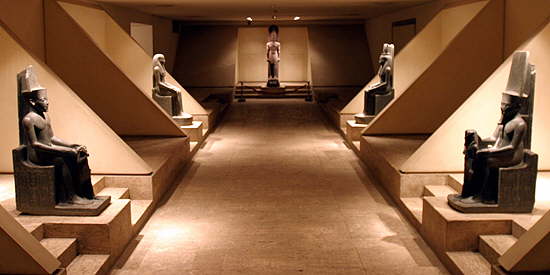
Standing on a corniche overlooking the west bank of the Nile River, the Luxor Museum was established in 1975 by the Egyptian Ministry of Culture. The two-story windowless building is only a fraction of the size of the country’s biggest museum in Cairo, but that’s okay — the Luxor Museum takes pride in the quality of its collection, rather than its quantity.

Image Source: EgyptianMuseums.net

Egypt Today notes that some of the best antiquities inside are the preserved mummies of Ramses II and Ahmose I. These are displayed without their wrappings in one of the museum’s newer wings. The first is regarded as the greatest and most celebrated pharaoh of the New Kingdom, while the second was the founder of the Eighteenth Dynasty. Both are located in a section dedicated to the New Kingdom, which marked a great period of imperial power for the country.

Image Source: EgyptianMuseums.net

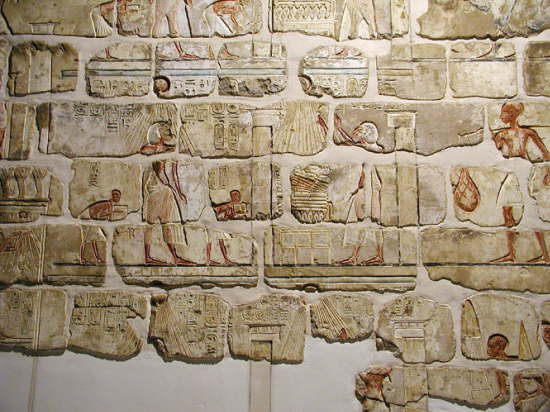
Another of the museum’s main features, this time located on the upper floor, is a reconstructed wall made up of 283 sandstone blocks from the Karnak temple built for Amenhotep IV. The wall illustrates residential and royal scenes as well as solar Jubilee scenes from the first Sed festival. This is a priceless exhibit, as very little of the actual temple remains in modern times.

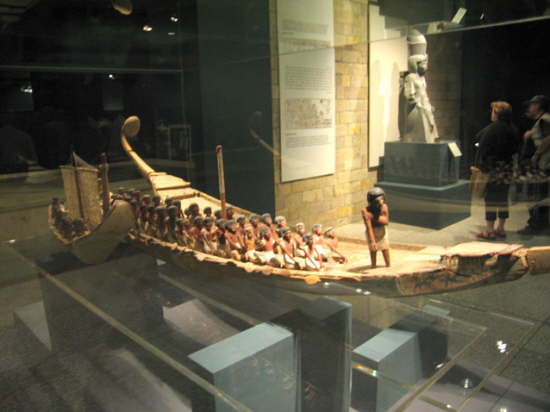
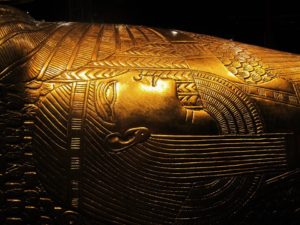
Some other of the museum’s highlights are the artifacts that have been gathered from the tomb of King Tutankhamun. Model boats, sandals, arrows, and figures of servants once decorated the area surrounding his resting place. Because ancient pharaohs believed in the afterlife and kept their most prized belongings close to their burial site in preparation, this is a major part of the museum.

Image Source: EgyptianMuseums.net

Indeed, the scale of the burial site was a major factor in the discovery of Tutankhamun’s tomb in 1922, which received worldwide media attention. It sparked a newfound interest in Ancient Egypt, a fascination that has stood the test of time. Egypt’s rich history is reflected in a wide array of modern media across the world. For instance, the fantastical film Gods of Egypt heavily draws inspiration from Ancient Egypt and even deviates from actual history in favor of creative interpretation. A more traditional depiction can be seen in a slew of video games, particularly in a collection of Egyptian-themed titles on Slingo Slots. Games like Cleopatra’s Riches, Temple of Tut, and Temple of Iris are a nod to the actual ancient history of Egypt. Though there are a few creative liberties, the images featured are more or less based on Egypt’s past — much of which resembles the surviving remnants of the ancient world housed in the Luxor Museum.

Recently, the Luxor Museum celebrated the 96th anniversary of the discovery of Tutankhamun’s tomb, acknowledging the event as a turning point in the country’s tourism and the world’s interest in it.

Fortunately, you don’t have to fly all the way to Egypt to catch a glimpse of its many relics. If you somehow find yourself in Turin, Italy, and are interested to know more about Egypt’s ancient past, you can also pay a visit to the wonderful Museo Egizio.

—-

Adrienne Chamberlain is a history enthusiast who is particularly interested in the mysteries of the ancient world. She mainly travels to see ancient structures (or at least what’s left of them) for herself. She’s already been to Egypt several times.

Seeing Nigeria: 7 Days in Kano

Guest post by Ọmọ́túndé Kàsálí

Exactly three months ago, in the afternoon of 1 July 2018, I set out from my home in Surulere, Lagos for a hotel in Sabon Gari, Kano. I was going on a one-week holiday to the prominent northern city to experience the North. Born and raised in Lagos, I did not see much of Nigeria beyond Lagos while growing up, except in my geography schoolbooks. However, these books interested me so greatly in the places and peoples of Nigeria, that from school on, I have always yearned to see the country in its vastness and diversity.

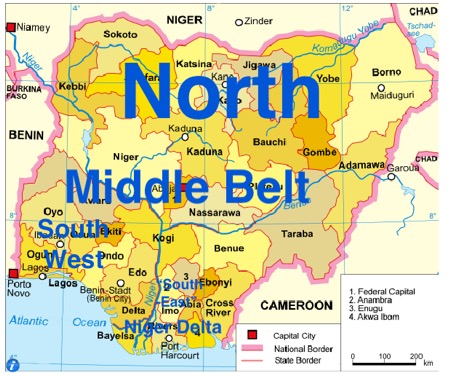
Much later, I made a concrete plan to fulfill this yearning – while bearing in mind my limited finances, my little free time, transport difficulties, security concerns, and my sparse countrywide connections. The plan was that I would visit a centre of the other major regions of the country beside the South-West, my home-region. And with time and luck, this plan began to materialize. I was posted to Imo State in the “South-East” for my Youth Service and lived in Owerri for the Year. During the time, I twice visited Port-Harcourt in the Niger Delta, just a 45-minutes’ drive from Owerri – first for a literary conference, and second on a visit to a relative.

My Nigeria plan

Thereafter, my next region of interest was the Middle Belt and centre of interest in it Jos. Recently, having saved enough money for the trip and a holiday opportunity arisen, I finalized plans to visit Jos. I booked my flight ticket a month before my departure date, and got an accommodation offer from a friend, who is from Jos, maintains a residence there, but lives in Lagos. Then, sadly, a week to my scheduled departure, terror was visited on Plateau State, including Jos. On June 23 and 24, against the backdrop of the herders-farmers crisis, suspected herders gruesomely attacked 15 farming communities, leading to the deaths of 233 persons, the displacement of over 11,500 persons, and the desertion of over 40 villages.

Subsequently, a dusk-to-dawn curfew was imposed, extensive security measures announced, my trip to Jos deferred, and my holiday destination changed to Kano, which was the central city in my now-next region of interest, the North. Accordingly, I rerouted my flight ticket and booked a budget hotel. Sad thoughts about Jos would interrupt painfully, as I prepared for Kano.

At the Muritala Mohammed Airport, I boarded my Arik Air plane at past 7pm, and a little later, the flight – originally with a departure time of 3:05pm, which was then shockingly rescheduled three times on the very day of departure, and finally fixed at 6:45pm – eventually started for Kano at about 7:30pm.

I slept through the flight, and awoke around 9pm as we landed at Mallam Aminu Kano Airport. As I walked out of it, I noticed the glaring contrasts to its Lagos counterpart: serene halls, mellow lights, and no hassles. However, at its taxi park, I was taken aback by the ridiculously high flat-rate fare of ₦4,000 for a trip into the city – for a 15-minute drive to my hotel! The drivers justified it as an offset against high levies imposed on them by Federal authorities – which seemed plausible, given the general notoriety of Nigerian government institutions for exploitation. There was no Uber or Taxify in Kano, nor any other transport alternative in sight. Walking was not a sensible option, as it would entail an hour journey in the dark night of a strange city. Eventually, I bargained with a driver, and we agreed to a fare half the flat-rate.

On the journey into the city, the lights became brighter, the atmosphere more vibrant and my anticipation greater – which all climaxed as we pulled up before my hotel. The building was decorated with lights, there was music in the air, merrymaking all around, and a file of young women opposite the hotel. In it, I checked in and was led to my room, which I did not like but would get by with. Most light bulbs did not work, so did the little fridge, the TV was defective, so was a power socket, the music from the bar was too loud, water ran on and off in the toilet, and it was not potable. I had booked the room online, where it appeared a decent bargain, and now felt some regret about it. Nonetheless, I settled in, phoned my close friend, made a journal entry, and went to bed.

I slept in and got out of bed around 9am, and prepared for the day. Before setting out, I got some general information about Kano on Google, Wikipedia and TripAdvisor, and I had a phone conversation with a friend, who was born and grew up in Kano, and now lives in Lagos. She offered some tips on places to visit, things to do, and how to conduct oneself.

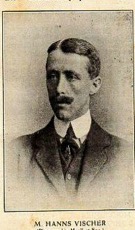
The first of my sights was the Gidan Dan Hausa (translated “Home of the son of the Hausas). It’s an over 250-year-old building, which became Kano’s first colonial residence in 1908, when Hanns Vischer, a British Educational Officer moved into it – his wife Isabella would join him in 1912. At the Gidan Dan Hausa, Vischer taught the English language and imparted western education to students drawn from 11 Northern provinces, including young princes of the Kano emirate. He was well-respected and -accepted, for his knowledge of Kanoan culture, his ability to speak Hausa, and his skilfulness at combining Islamic and western education – such that he was conferred the title of Dan Hausa (Son of the Hausas). He is said to have laid the foundation for modern education in the North.

Gidan Dan Hausa

 Hanns Vischer

Now a museum, the Gidan Dan Hausa presents a permanent exhibition of Vischer’s life in Kano, and the history of the city itself. I arrived its premises around noon and walked through a vast garden towards its ancient gates, where a notice forbade photographing. At the entrance, a guide described the historical building in rapid Hausa to a group of schoolchildren. I entered the building, paid the visit fee, and joined a tour group, which, as I later learned through introductions, comprised 3 Youth Corps members, and a student – Ahmad, whom I would later have more to do with. We were shown various articles of interest and informed on their importance for subjects including: the Vischers’ ways and works; Islamic and Western education in Kano; and Hausa-Fulani relationship, the Kano Emirate’s power, the culture of Kano, as well as their histories.

Having concluded my visit, I proceeded to my next planned sight, which was coincidentally Ahmad’s too: The Emir’s Palace. About 500 metres away, we set off for it together in conversation. Ahmad told me he was Fulani, from Abuja, studying in Zaria, on a visit at a relative’s in Kano, and had for a day been in Lagos. I replied in kind, and revealed that it was my first time in the North, which visibly interested him. He asked about my experience in Kano thus far – as I did his in Lagos when he visited – and offered further travel tips for the North. He then described it in its distinctness to the South, and we talked about this. He criticized the largely conservative outlook of the North, but admired the prominence of Northern culture in the North, especially the Hausa language – suggesting a contrast to the decline of Southern cultures and languages in the South. I sadly acknowledged it.

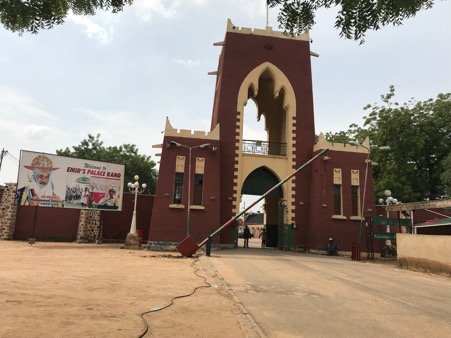
Gate of the Emir’s Palace

At the Emir’s Palace, we were denied entry, ostensibly for not having an appointment with the Emir, and advised to get permission at the opposite Emirate Council building – while locals entered freely into the Palace, apparently for any reasons but an appointment with the Emir. Likewise, at the Emirate Council, we were denied the permission, ostensibly for security reasons, and advised to visit the nearby Gidan Makama Museum – which was my next planned sight anyway – for an alternative experience of the Kano Emirate. Ahmad believed we were so treated because we were not traditionally dressed, but in T-shirts and jeans, and he further railed at the conservativeness of the North. He then took his leave of me for a personal errand, and I bade him goodbye and proceeded to the Gidan Makama.

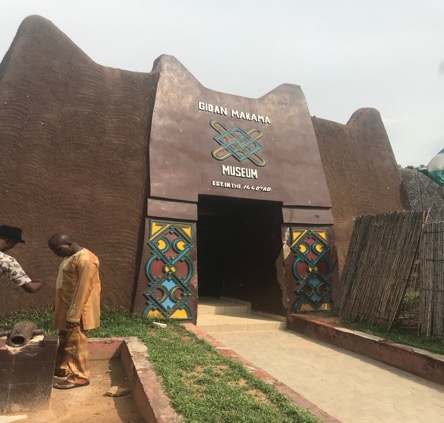
Built in 1442 as the residence of the Makama of Kano – a high-ranking Emirate aristocrat, the Gidan Makama is an ancient beauty of Hausa architecture. Shortly after its erection, it served as the temporary palace of the Emir; and in 1903, following the British invasion of Kano, it served as the residence of the then-chief commissioner of the Northern Nigeria Frederick Lugard. Now a museum and a national monument, the Gidan Makama, in its 11 galleries, contains materials, artefacts and pictures representing the heritage of Kano.

Gidan Makama

Inside Gidan Makama

At its gate, a man offered to be my guide at a small fee. For about 30 minutes, he led me through the museum, while he described its contents and their backgrounds: the colonial British capture of Kano, the traditional architecture of Kano, Islam in Kano, the Fulani Emirate dynasty, the ways of Kanoans, important historical and contemporary figures from Kano, the Durbar, the long history of commerce in Kano, and so on. Later, a large group of university students arrived on an excursion, and my guide excused himself to attend to them. I lingered in the museum, going over articles and taking pictures, and left shortly.

I lunched at the Kano Club to a World Cup match, and strolled by its lawn in the cool of late afternoon to tennis practices by adolescents. By evening, I was back in my hotel room, having visited almost half of my planned sights already on my first day-out in Kano.

So, the next day, I lingered in my hotel room, and set out late in the morning. My first destination was the Dala Hill. I had some difficulty finding a Keke, as tricycles were called, at the Keke-stop. I describe the stop as such, not as a bus-stop, for during my time in Kano, I found Kekes to be the dominant mode of public transport, and transit buses were a rare sight – in-fact, I came upon only one throughout my journeys. Hence, Keke-stops, not bus-stops.

Painted yellow, the Kekes were like a swarm of yellow ants crawling the streets of Kano. Though, compared to Lagos, Keke transport in Kano was better conducted: The rider’s seat sits only the rider; the left opening by the passengers’ seat is barricaded to prevent passengers from boarding from, or alighting onto, the side of traffic; and the business is free and private – no park rackets and destination restrictions.

Kekes

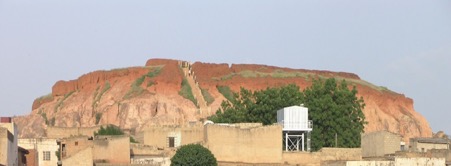
So, at the Keke-stop, on my way to the Dala Hill, a rider finally agrees to take me, upon my indicating an image of it – so legendary was it. Rising over 500 metres, and covering around 10,000 m2, the Dala Hill is the mythical birthplace of Kano. The first settlers in the city are believed to have lived in the Hill. Reportedly, present-day Kano was known as Dala up to the 16th century. According to legend, Dala was a hunter and the eponymous founder of the Dala community and the great grandfather of Barbushe, the high priest to the ancient Hausa god, Tsumburbura. Not anymore a place of worship, the Dala Hill remains a vital natural heritage of Kano, supposedly under the protection of the Kano History and Culture Bureau – on paper only, as I would later see.

Dala Hill

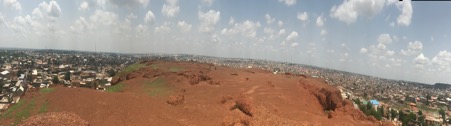
Kano, from Dala Hill

I found myself the only visitor that afternoon at the Dala Hill. I ascended it by the built concrete stairs, unshapely and unrailed, onto its wide flat top. Surrounding it well into the distance was the city of Kano. For a moment, I took in the spectacular landscape of the sprawling city; and for the next, the neglected features of the bare hilltop. A goat grazed,

and odd-looking acts went on in the crevices. Briefly, I photographed and filmed the city view, and descended the Hill into the local community, bringing my shortened 15-minutes visit to a quick end. I navigated the community, and later, hailed a Keke for the Ado Bayero Mall.

The mall, named after the Kano’s longest-serving Emir, sat set apart on its vast premises in the heart of the city. At the entrance, I submitted myself to security check and went in.

For some time, I wandered the mall, window-shopping, looking into gift stores for souvenirs, checking out the cinema, and enquiring about local dishes in the restaurants. I contemplated seeing a Hausa film about to show in the cinema, but decided against it, for my Hausa language skills entailed only a few words which I had learned in Hausa classes in school and seldom used until this trip. Instead, I settled into a restaurant which ironically, like the others, served no local dishes but fancy foreign foods. I ordered some Lebanese food and orange juice, and ate and relaxed to a  World Cup match. Following the first-half, I returned to the hotel, ending my day-out.

The next day, the fourth day of my holiday week in the city, I took a break from sightseeing and did not to go out, for I was feeling tired from the outings, and had visited all but one of my planned sights anyway. Incidentally, late in the morning, an hour-long heavy windy rain fell, such as one would never expect in the famously hot North. Indeed, the sun had been scorching hot since I got here, as it would be when it appeared moments after the rain.

In any case, it was the rainy season and had been raining for days in Lagos before I left it.

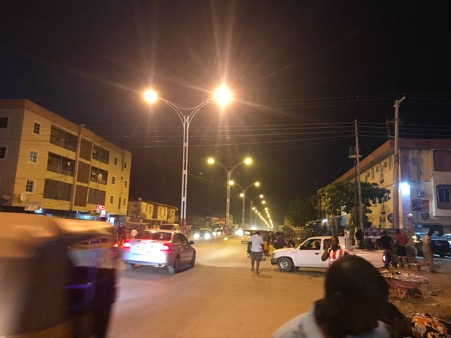
Later in the afternoon, I went into the neighbourhood to search for a restaurant to lunch in. It was my first time walking Sabon Gari. Laid out into streets with names like Yorùbá Road, Ibo Road, Ibadan Street, and Aba Road, and with churches on quite a number of them, Sabon Gari is predominantly inhabited by Southerners. Translated “new town”, it has historically been set apart for non-Hausa-Fulanis, and, sadly, has been the site of past religious and ethnic clashes between Southerners and Northerners. I would later learn that Sabon Garis exist in several Northern cities, like Kaduna and Zaria, where however they have become of mixed habitation. I hope this one does one day.

A Sabon-Gari street, at night

I eventually find a decent restaurant. My order, amala with egusi, is taken in Yorùbá language, and served. And I proceeded to devour my lunch. I emerged from the restaurant, with a half-empty bottle of water, which I give to a street-kid who immediately approached me. During my time in the city, the sight of groups of street-kids was a highly disturbing and very common phenomenon.

My last sight was the Kurmi Market, which I visited first on my fifth day, and returned to on my sixth. The market was founded in 1463 by then-Emir Muhammad Rumfa as a regional centre for Trans-Saharan trade, now extends over 16 hectares, and is regarded as both one of the largest and one of the oldest markets in Africa. The Keke rider, who took me to it and with whom I conversed about it, informed me about its major commodities: textiles, artefacts, leather materials, traditional jewellery, etc. I told him I would like some textiles and jewellery as gifts, and he dropped me off in that area of the market. I walked down a narrow passage flanked by rows of cavernous stalls, which I surveyed, and whose keepers beckoned, as I passed. Ultimately, I buy, for myself and friends, a leather bag, bead necklace, and Sassauci caps –  for more of which I returned the next day.

My seventh day in Kano, my last day, was departure day. Yet again, my Arik Air flight was delayed by two hours, and rescheduled to depart at 6:25pm. I made a mental note to avoid the airline in the future, as I left for the airport. I arrived in time, checked in, bought some Kilishi, and proceeded to the boarding area. Our plane arrived around 7:30pm, then quickly began boarding, and finally departed around 8:15pm, following some rain.

Mid-flight, I imagined our plane flying over Jos and thought about the possible events happening there then, after the previous week’s horror. I looked down from the window but saw plain darkness, and hoped for justice and peace for Jos, and looked forward still to visiting it in the future (sadly, there were recent reports of violence there). For a moment though, I reflected over the striking contrasts in two prominent cities of an incredibly complex Nigeria: death and destruction in Jos, and peace and liveliness in Kano. Today however, Nigeria’s national day, which also marks the one-year anniversary of my return to it after a few years away, I remain optimistic about the future of Nigeria despite its colossal challenges, and I am proud to be Nigerian.

_____

Omotunde Kasali (@OmotundeKasali) is a consulate official living in Lagos.