Lola Shoneyin (Secret Lives of Baba Segi’s Wives) and Toni Kan (Nights of the Creaking Bed) will, on February 15, head a public discussion on writing sex, sexuality, and morality. Find the details below:

Browsing the archives for the Art category.
Lola Shoneyin (Secret Lives of Baba Segi’s Wives) and Toni Kan (Nights of the Creaking Bed) will, on February 15, head a public discussion on writing sex, sexuality, and morality. Find the details below:
The British Council today announced details of the 2nd edition of the Lagos Theatre Festival, the largest ever outdoor theatre festival to take place in the city which will run from 28 February to 2 March 2014. Part theatrical experience, part real life and part city journey, the festival will transform historic Freedom Park, a public space born out of the ruins of a colonial prison and reconstructed to preserve the history and cultural heritage of Nigeria.
Look Left Look Right, a Multi award-winning interactive theatre company based in the UK will premiere their new production Make We Waka a collaboration with Nigerian performers that invites the audience to take part in an intimate promenade performance, exploring the hidden corners of the space. Using an audio guide, participants will delve into the world of the Park and the stories it has to tell.
In this golden oldie, Eddie Grant (a Guyanese British musician) sings a whole pop song in Yoruba. I’d like to know when the record was made. Enjoy
One of the artists whose work are being exhibited in the exhibition hall at Terra Kulture this week is Dennis Osadebe. His three paintings currently on display explore more than just the range of colours and ideas, but a depth that traps the wandering eye.
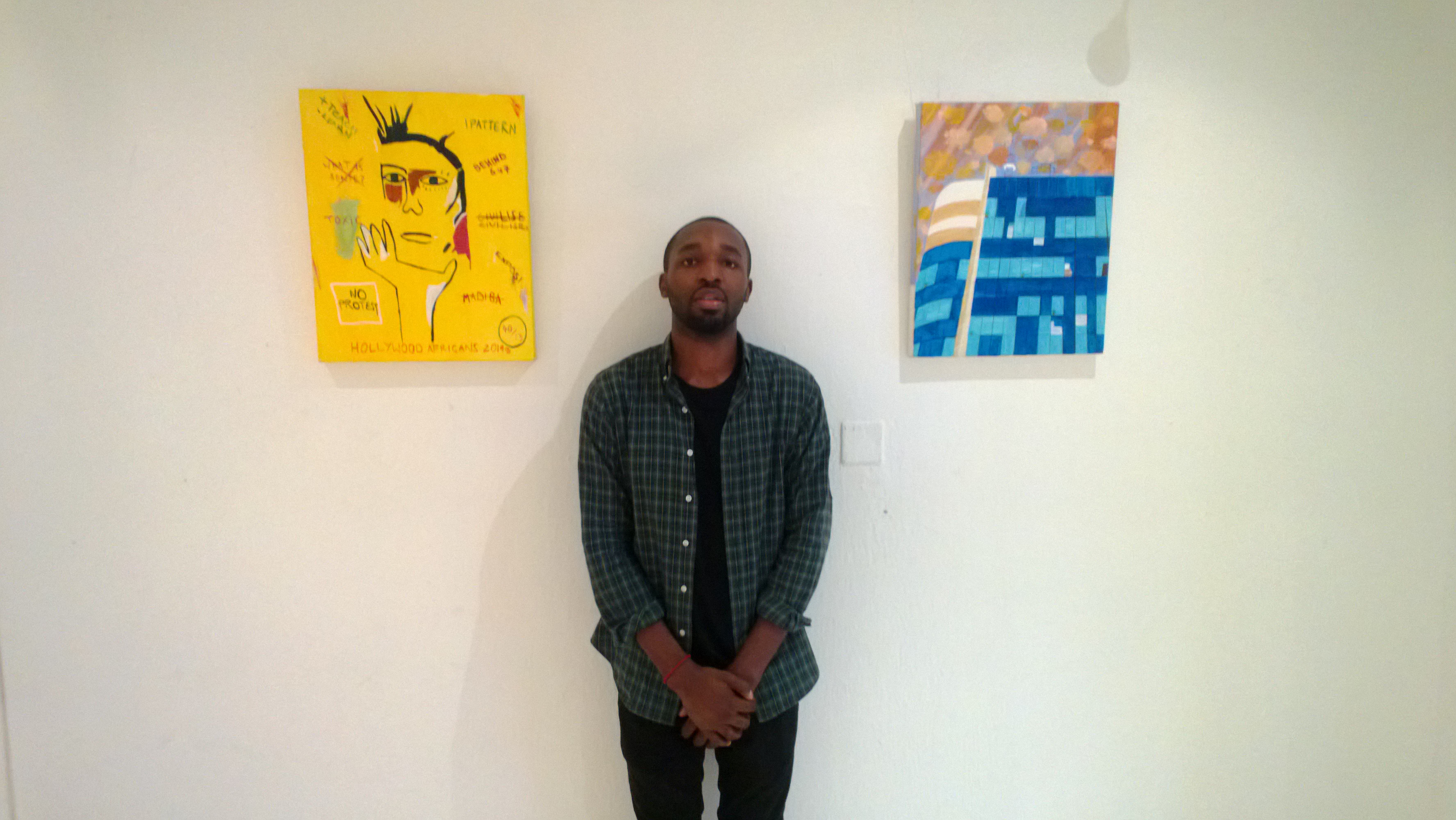 Depicted here are two of them, along with the artist. The first is titled Hollywood Africans 2014 inspired, he said, by the work of Jean-Michel Basquiat and the need for social commentary and intervention; while the other is titled Oko Building, a metaphor on Nigeria.
The exhibition titled “Culture Shock”, featuring works of many other artists, will be open until Tuesday, 7th January, 2014. Terra Kulture is on Tiamiyu Savage, Victoria Island, Lagos.
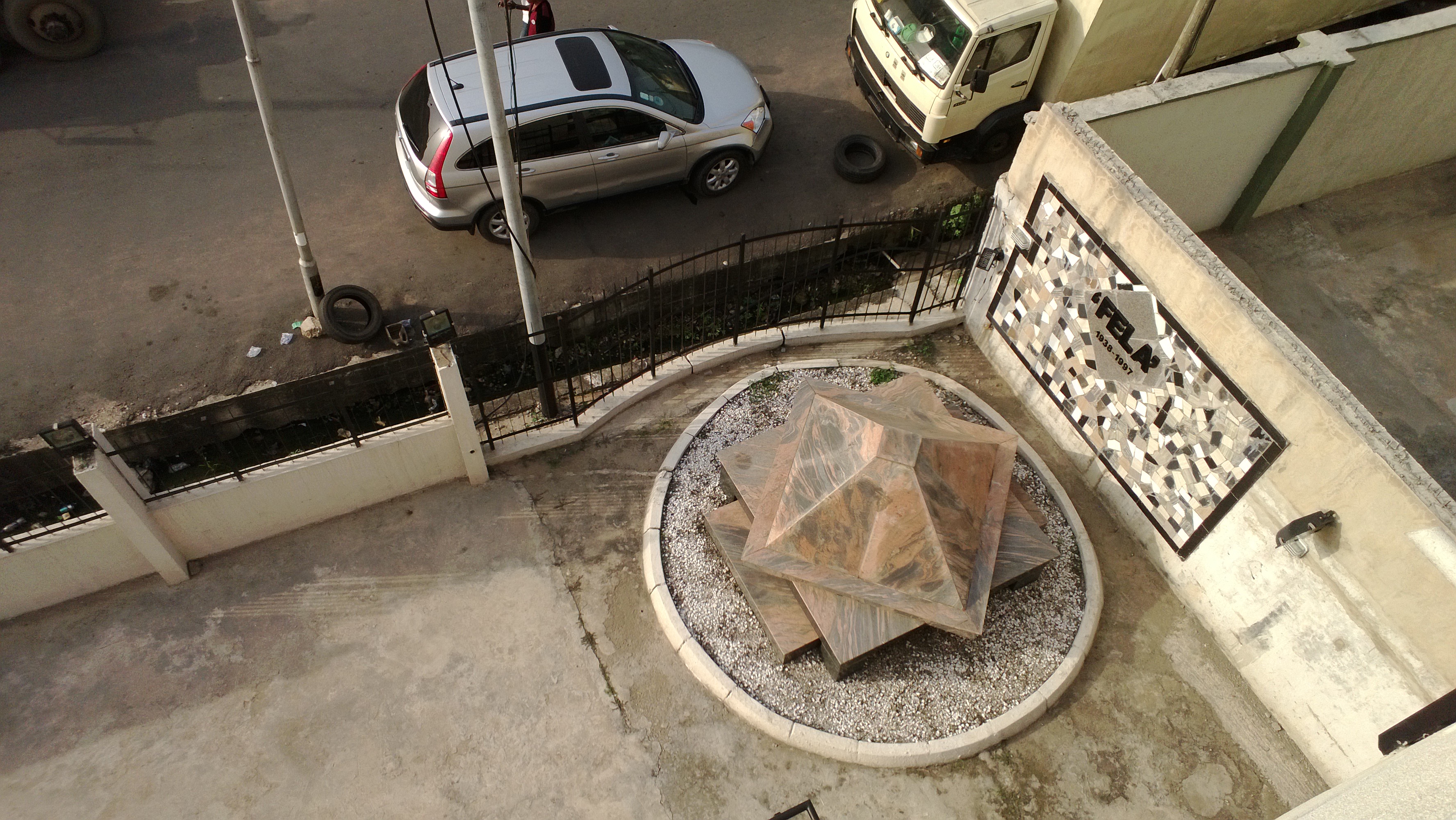 A heavy feeling in the breeze of a Lagos morning, an idea. A long overdue visit to Fela Anikulapo’s old house (and resting place) on Gbemisola Street Ikeja, now called the “Kalakuta Museum”. The project is funded by the Lagos State government and the family of the legendary musician. Ensconced in the otherwise sleepy street of Tinuade Street which itself branches off the famous Allen Avenue, there lay the house visible to all passers-by. White. In front of it, by the left corner of the fence, covered only by a curved gate made with thin iron bars, is the sarcophagus under which lay the Afrobeat Legend himself. Inside the fence, there are a few spray-painted messages about him, the most notable of which is the word “Abami” written in long but thin yellow ink. That was what Fela called himself: the strange one.
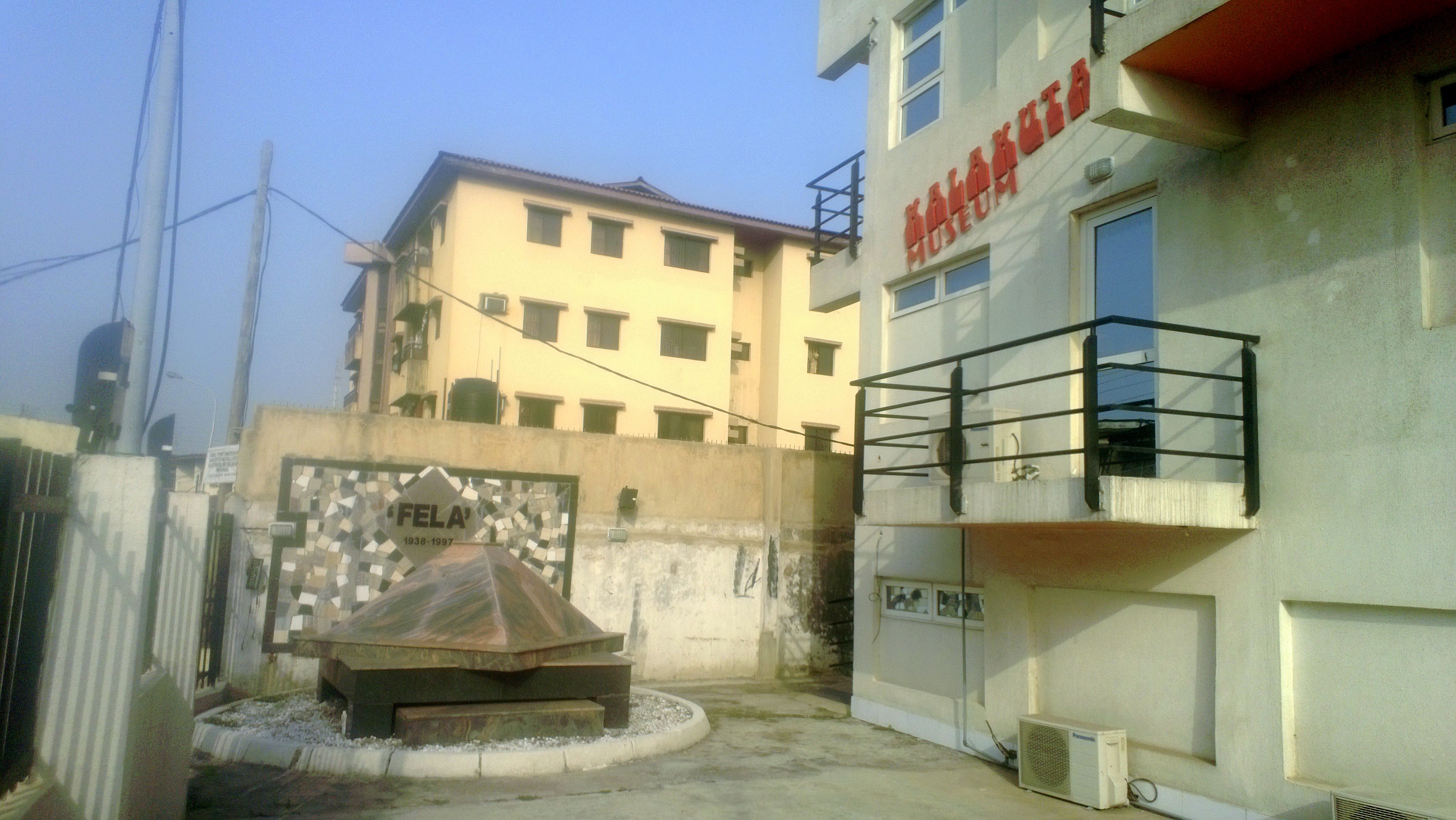
I’ve never been here before – not when the legend himself was alive and held court in the building said to house hundreds of people on each day of the year. I was a young boy growing up in Ibadan, and hearing legendary stories of him from the news and from many first-hand witnesses. Not when he died in 1997 either and the house played host to thousands upon thousands of visitors who came to watch him lowered into the ground. I had just left secondary school and had neither the incentive nor the means to move to Lagos to watch the events. It was relayed on the television however, with over a million people visiting the Tafawa Balewa Square on the Lagos Island to watch his body lie in state.
Today, I pay my last respects, more than sixteen years later.
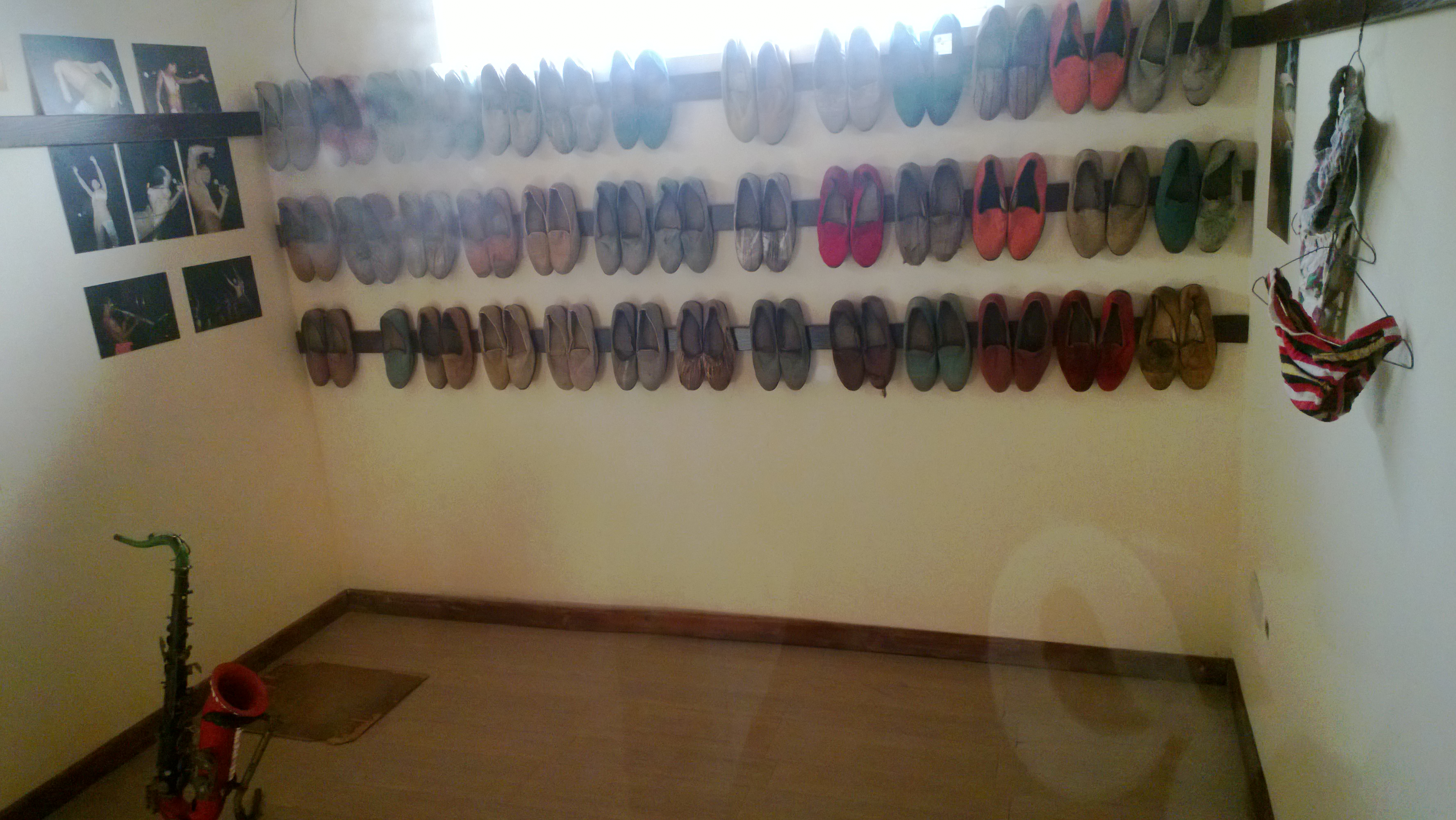 On entering the house, Fela’s own bedroom stared from behind a transparent glass. His bed lay on the floor covered with coloured sheets. His fancy and distinctly embroidered shirts are hung together on the right and left. An old rusty saxophone is in the centre. The sun shone in through the curtain slits. There are a few other personal effects: a ghana-must-go bag, a small table fan, a globe, a stool on which a few books (including, believe it or not, the holy bible) are stacked, as are a few plaques and awards he received during his lifetime. One was from MTV Base, in 1996. Far away on the top floor of the house, a voice keeps singing. I find out later to whom it belongs. A young man over thirty, working on his computer. He doesn’t mind that I have been looking around the premises. He answers a few questions I have about the history of the museum and when it will eventually be open to the public. He goes back upstairs to work.
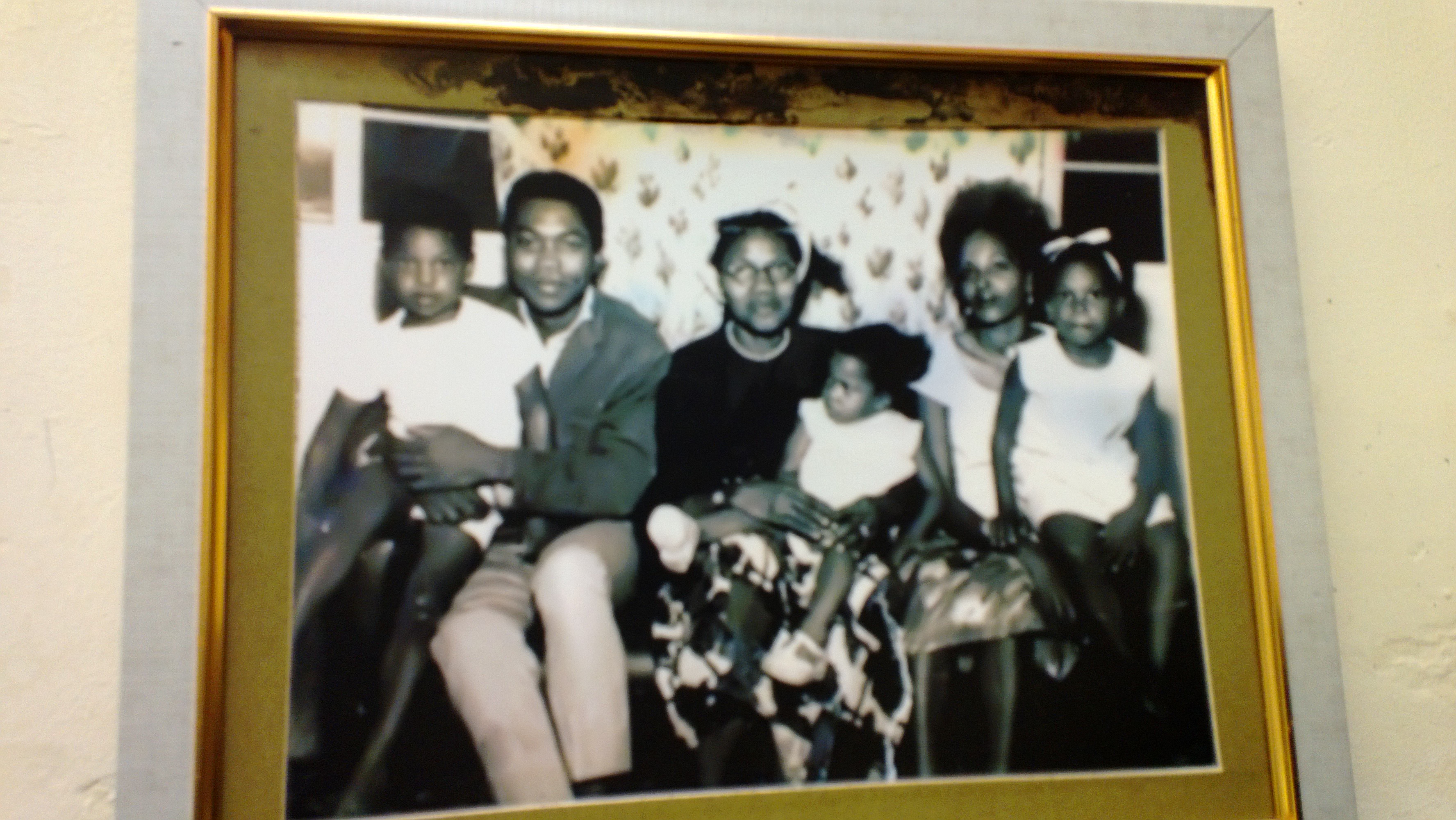
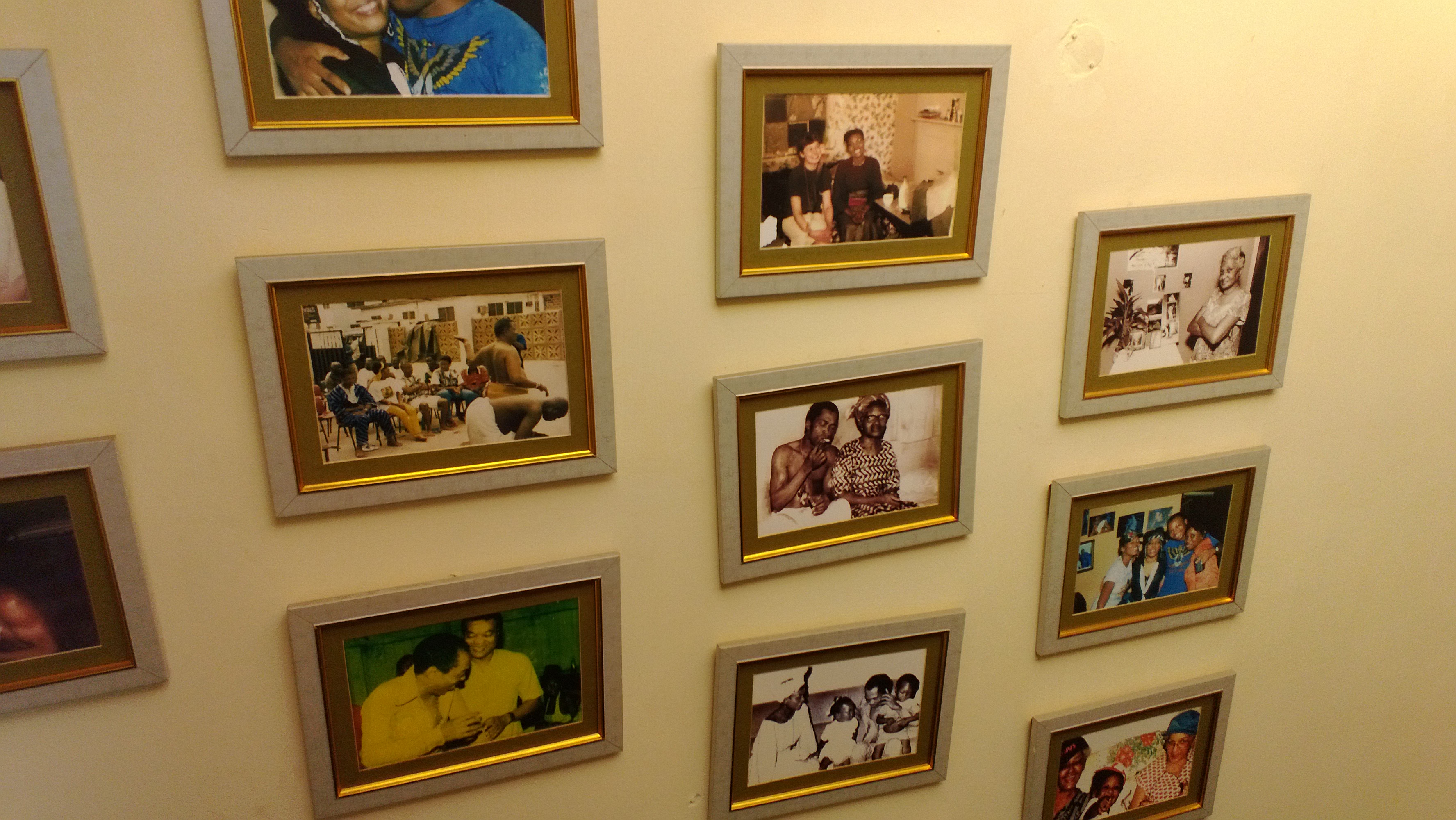
 On the walls of each level of the three-storey building are pictures of the Kutis: Yeni, Seun, Femi, Fela, Mrs. Funmilayo, Olikoye, in different stages of their lives. There is the iconic photo of Fela smoking a joint beside his mother. There is another in a jovial momemt with his brother Olikoye. Most of these photos have already been published before, but a few haven’t. There is one with young Femi on his father’s leg, Mrs. Funmilayo Kuti looking young and delightfully pretty. Not the strong, militant, image we’ve had of her.
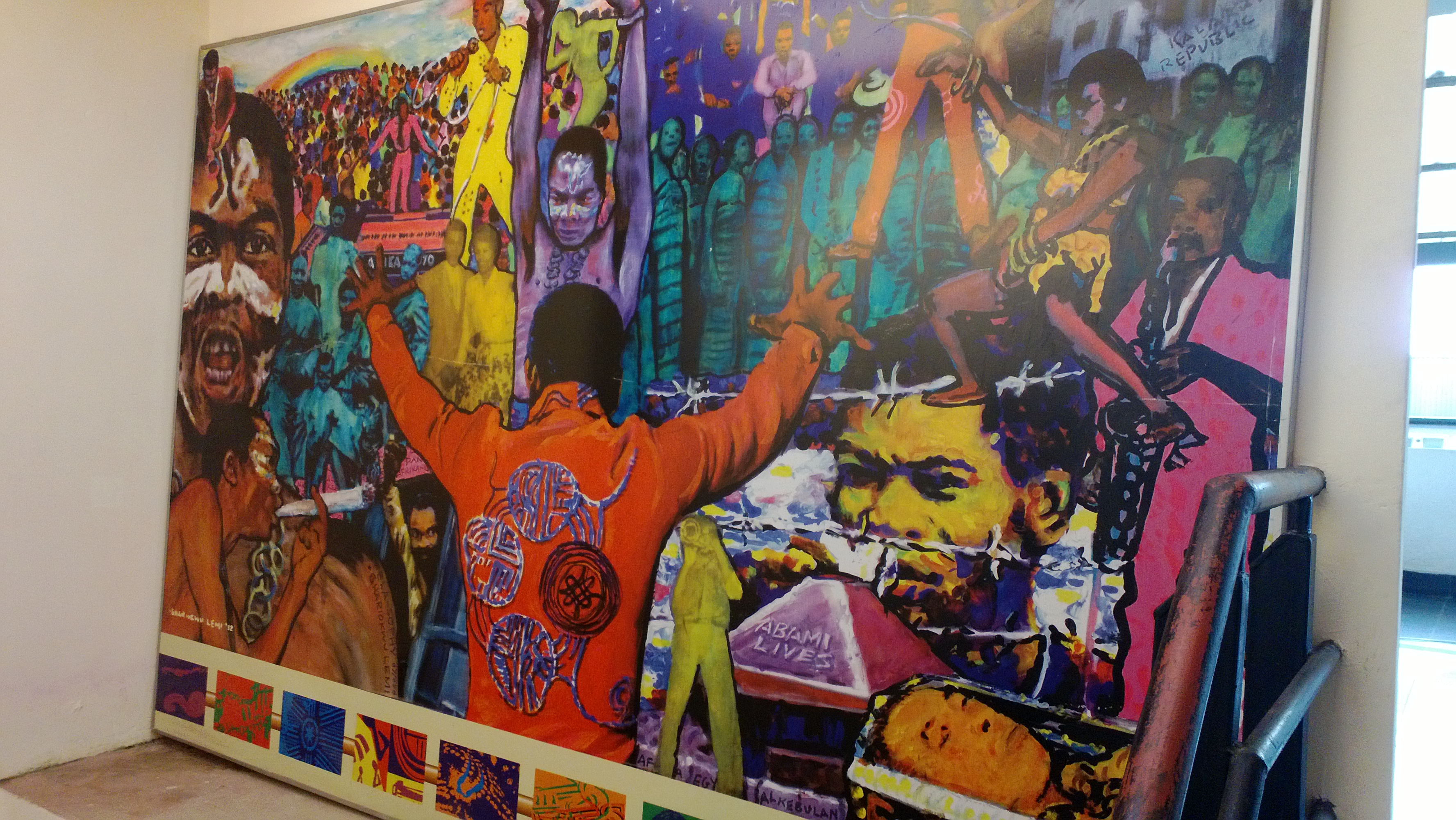
For a newcomer to this place, it is a treasure trove of memories and history. There are a number of recent pictures of young children, which one suspects are those of grand children. Many of the other rooms around the house – all of which are locked – have a number of other historical items relating to him: newspaper cuttings of new stories about Fela’s life, graffiti paintings notably by Lemi Ghariokwu, large murals of Fela himself, and other memorabilia from his musical past: broken drums, string-less guitars, rusty saxophones, shoes and underpants.
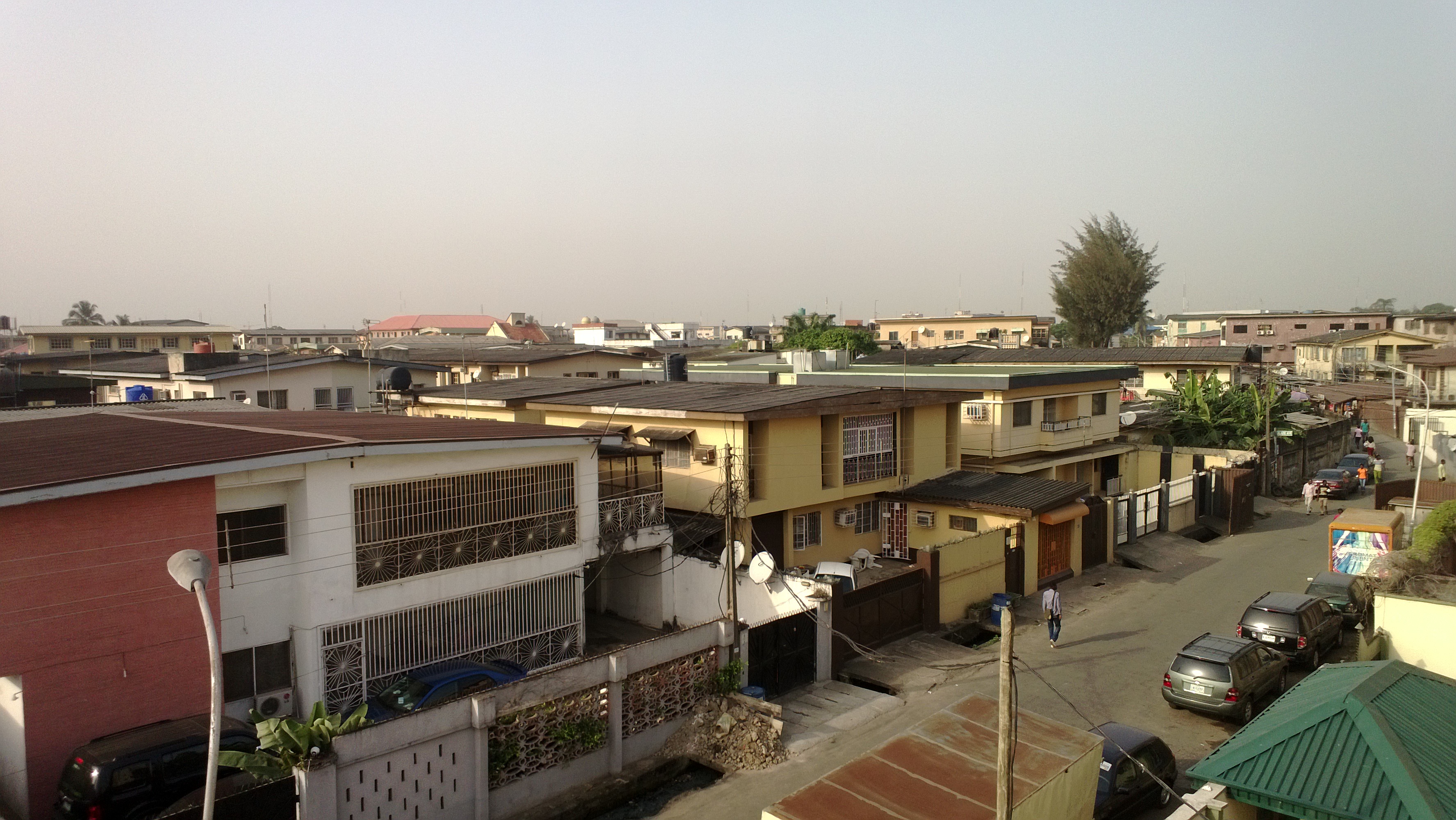 If one lived here while Fela held court, I imagine the rowdy creative energy that must attend the living quarters on each level in the building – from the basement which houses a room where a number of musical instruments are stored, visible to the eye through the glass door, to the topmost floor where a mini bar and an open verandah gives the visitor a vantage outlook on the Ikeja surburbs in that early morning. Fela occupied the first room on the landing, a sight that conjures so many images of the man either rehearsing a new hit song on the saxophone, or conducting one of his numerous sexual getaways with the Kalakuta queens. It is all here, right now empty of habitation but full of a rich tapestry of history – real and imagined. If spirits of dead ancestors never really leave their former abodes, the history of this place holds so much as to keep the man who made it a famous abode loitering nearby, hovering as he must, over the creative remains of his artistic space.
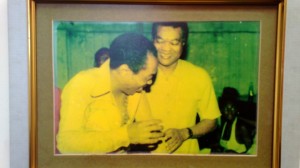
For me, heavy with a certain melancholy, and imagination, it is enough to have made the trip. Here lies a man whose work, fame, and life struggles continue to define what it is to be an African, a Nigerian, and a creative entity, in today’s world. Here is a family whose history includes struggles against the British to struggles against African royalty, and ignorance, and later to struggles against the injustice of military rule as well as cultural imperialism. The broken musical instruments hanging around the museum today appear like a metaphor for the conspicuous absence of the principal, but the lives that stare from the walls around the house, and the pictures themselves, tell that life goes on, and always will. It is of a certain pleasure to have lived in the same country as these, and that thought goes with me, heavy on the mind, as I leave.
___________
More Pictures on Instagram. Also, more about the Kalakuta Museum from this piece by Dami Ajayi. And this.