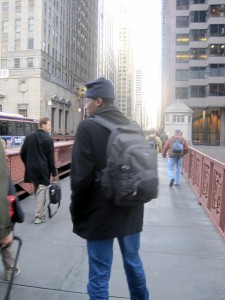

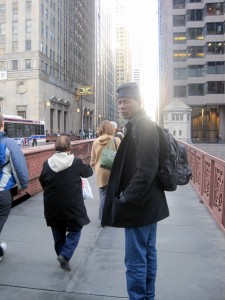
- Indian guys with ear pads and who don’t smile back.
- Freezing fingers.
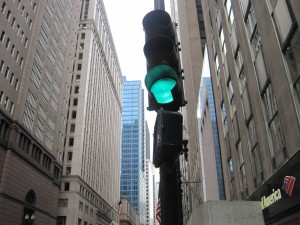
- Uniformed Chauffeurs in front of really tall buildings.
- Two second eye contact.
- Puerto Rican Salvation Army volunteer who doesn’t get annoyed when he insists that he’s not from Mexico.
- Busy-looking pedestrians with carry-ons, heading nowhere, heading somewhere.
- African-American Salvation Army volunteers who dance, who ring bells, who sing while selling two dollar leaflets.
- Tall building that block the morning sun.
- Two jokes from a street vendor:
- 1. “Here’s the secret to playing golf: Wear two socks just in case you get a hole in one.” Ah-ha!
- 2. “Q: What’s Beethoven’s favourite fruit? A: Banananana.”
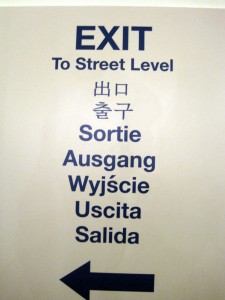
- An Art Institute with endless exit corridors that lead into one another.
- An art institute with exits that pass through a gift shop.
- Museum officials who speak French.
- Bennigans Grill and Tavern with 15 mins waiting time.
- Senseless arguments on the differences in champagne and white sparkling wine.
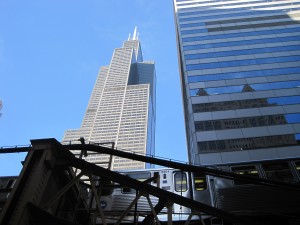
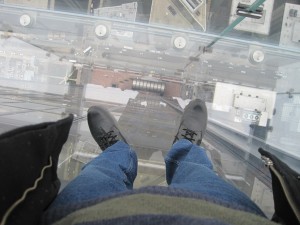
- Exhilaration on the Sky Deck overlooking the famous city.
- Problematic calculations on tipping.
- Slow Africans at traffic go lights.
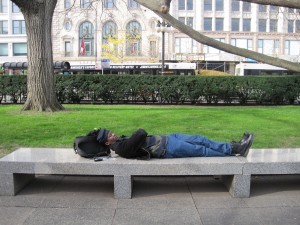
- Grant Park.
- Traffic lights.
- Tourists with the slowest feet.
- Impatient Africans at traffic stop lights.
- A city that never stops demanding.
- The Magnificent Mile.
- Cold Wind
- Fast-moving feet.
- Pedestrians that keep walking even when the sign says “stop”.
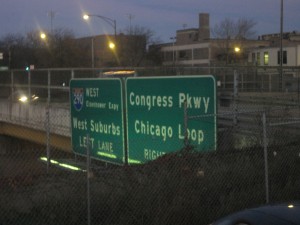
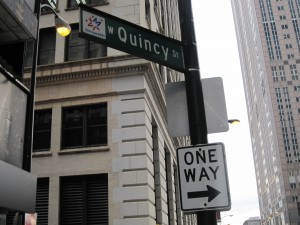
- Road signs that read “West” when it means to read “East”.
- White working-class women with iPods earplugs who text while crossing the road.
- Tax on food purchased at restaurants which doesn’t include tips.
- Waitresses who smile.
- Old white men who don’t acknowledge greeting nods.
- Old black men who seek eye contact.
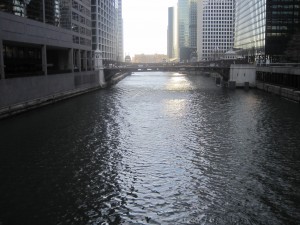
It’s Chicago, the windy city. It’s Chi-town, birthplace of Hillary Clinton in the land of Lincoln.
It is Chicago, a city on the Michigan Lake. It’s Chi-town, home of the president. A city of lights and lightening warmth. A city that sleeps with its eyes wide open.
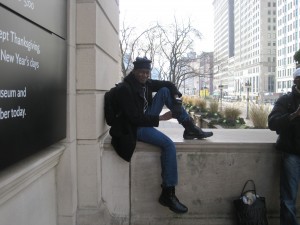
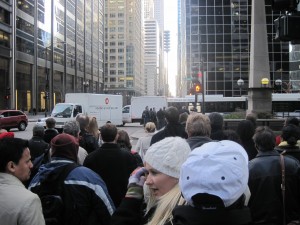 The four of us who left our little sleepy town yesterday have now landed safely in the bosom of the Windy City. The journey from St. Louis to Chicago only took five long hours on a double decked megabus that offered a beautiful view of the pitch blackness of the road and only a little compensation of little street and vehicle lights. A journey during the day might have given a little more to rejoice for as far as road sight-seeing is concerned. It was something to be thankful for however that it provided a few pockets of sleeping time for us who had spent an earlier part of the evening riding in a private van all the way from Edwardsville. The bus which left the St. Louis Union Station pulled over at the Chicago Union Station a few minutes after six this morning, and we the travellers stepped into the cold wind with gigantic buildings blocking our view of the beautiful morning sky.
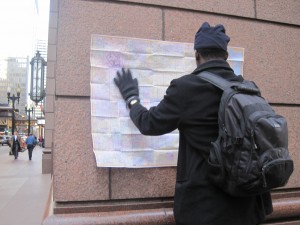
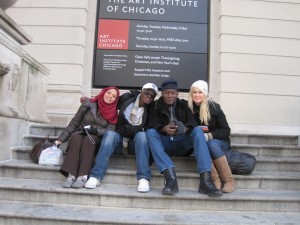
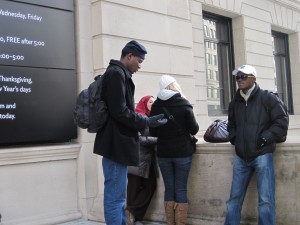
 We are Reham, Audrey, Mafoya and I: two males, two females; three Africans and one French; two Fulbrighters and two International students; two and a half speakers of French, one of Arabic and one and a half of Yoruba; one moslem, an atheist, one Christian and one composite. In short, a United Nations of sorts. We have so far visited a few fun places, and as I lay here typing after a long day, I don’t know just where to start. The day had definitely been fulfilling, from getting lost on the streets, to getting shoved within a crowd of busy pedestrians going and coming without a discernible pattern of intentions. From becoming the centre of attention on the corner of a busy street because of a heady insistence to consult the large city map right there to the long, pleasant ride up into the Sky Deck observation area of the Sears (Willie’s) Tower to get an aerial view of the whole city, and to learn more of the very much cultural import of this city that has defined America in more ways than one. From a long walk on Adam’s street coming from the magnificent Sear’s Towers to the enchanting awesome experience of the corridors of the Art Institute of Chicago – an experience of a lifetime that requires a long post of its own. From sitting at Starbucks on an early Friday morning observing people getting their morning beverage ritual to returning home tired at night to this five star hostel that had put up no big public sign of its name and had got us a bit wandering. From the ups and downs of this exhilarating day, here we are, bushed from a day on a town that never stops demanding, yet bubbly with a kind of sweet miserableness.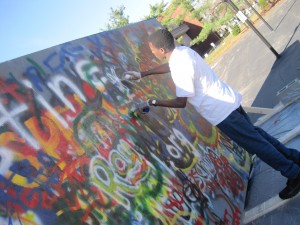
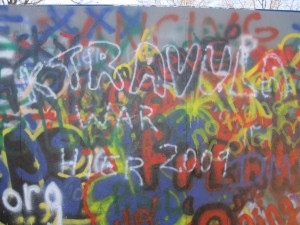
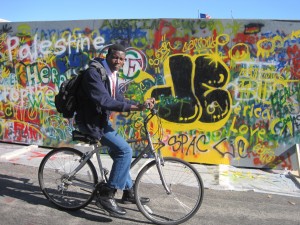
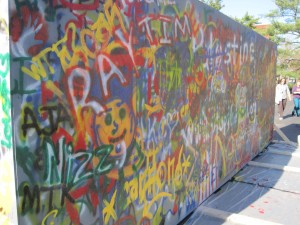
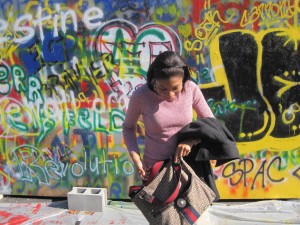
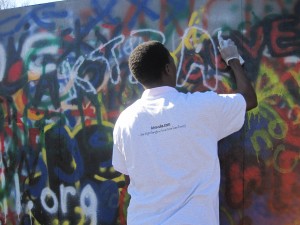
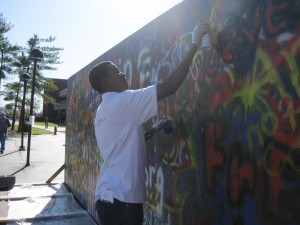
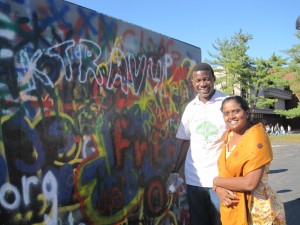

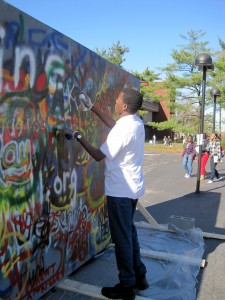
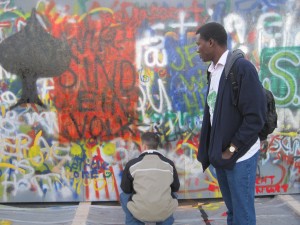
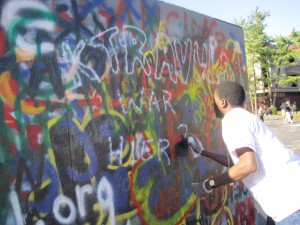 Today, after a spell of indecision and procrastination, I finally got the spray paint and headed to the Wall to make it mine. It didn’t take too long, and it wasn’t too hard. And in the end, I didn’t get any more creative than I already got before. As none of the readers of the last post gave me sufficient ideas, and I never successfully resolved my language conflict, I ended up writing it in German, in the shortest possible way as allowed by the thinning white paint.
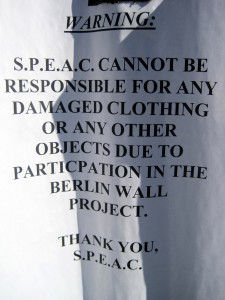
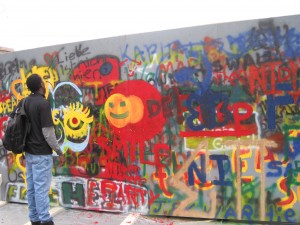 And so today marks the twentieth year of the demolition of the Berlin Wall in Germany. To commemorate it on campus, the German arm of the Foreign Languages Department in which I work have unveiled a public art exhibition featuring texts, artworks, pictures, history, (German) music, and most notably a miniature replica of the old Wall. Constructed with wood, and strategically placed at a publicly accessible spot on campus, the “wall” already randomly graffitied stands today both as a reminder of the historic day, as well as the ingenuity of the Department of Foreign Languages, especially of Belinda Carstens – the head of the department who is also a professor of German. Along with the chance to take pictures with the “wall”, students have been encouraged to spray-paint the wall and decorate it with their own graffitis as they see fit, just like was done with the real Wall in those days by angry Berliners and rebels who wanted it torn down. Needless to say, the over twenty feet long wall is already a notable piece of attraction on campus, and will be till the end of the week.
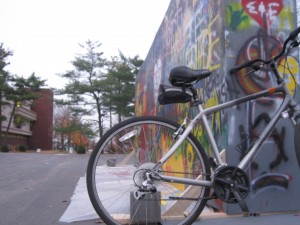 But amidst my excitement to be here at this moment in time, here’s a dilemma I face: I can’t yet figure what I want to write on this wall. Prof Doug Simms of the deparment had taken his time today to draw on it a sickle and a hammer (the old symbol of communism) turned upside down, like it was on the old wall, according to him. A few of the other graffitis on this “wall” reflect each painter’s own sensibilities, and not always related to the politics of the Wall itself. So here I am, thinking (or asking YOU, as the case may be) that when I go back there tomorrow with a brush and paint in hand, what other creative texts or symbols (in any language) should I be writing on this remade wall from twenty years ago beside the obvious personal statement in my mind at this moment which simply reads, in German: “ktravula war hier“?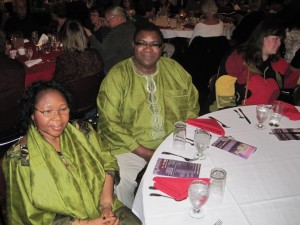
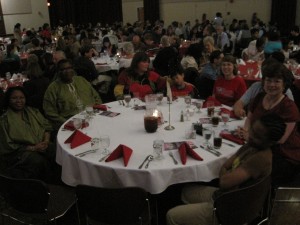
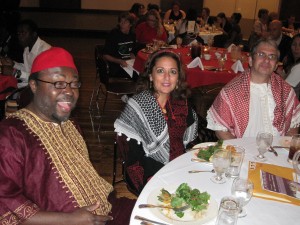
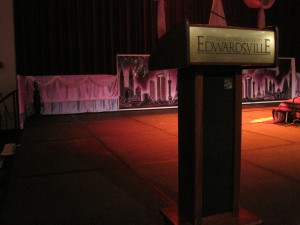
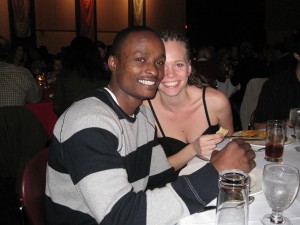
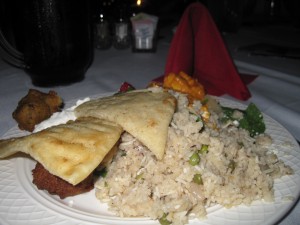

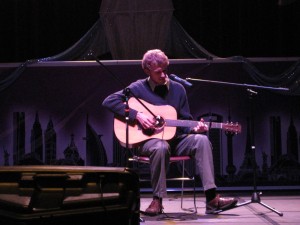
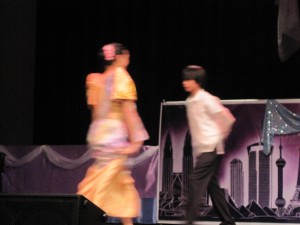
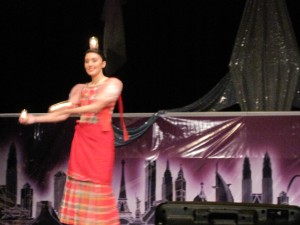
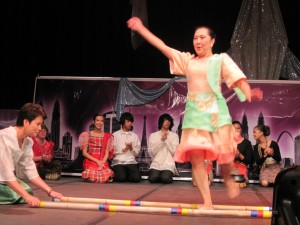
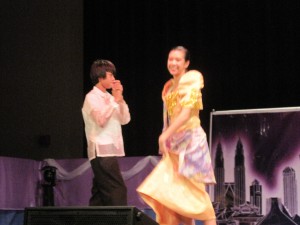
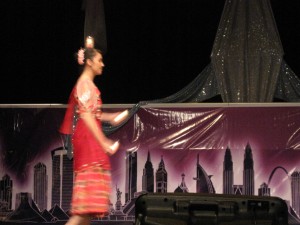

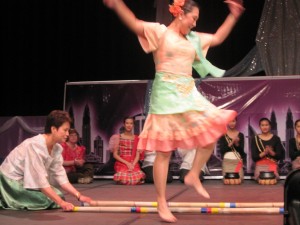
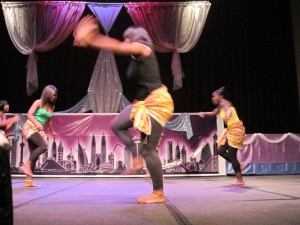
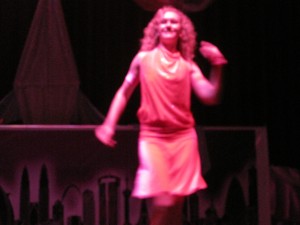
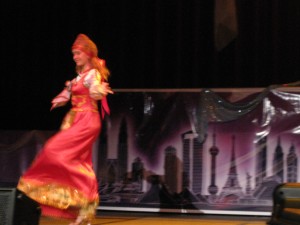
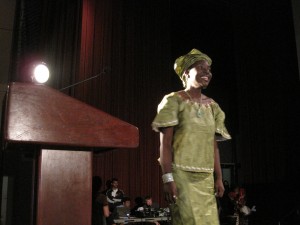
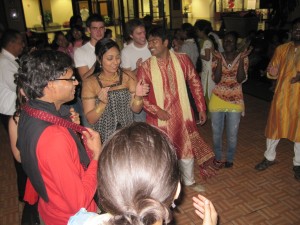 Here are the final set of photos taken at the International Night celebration of cultures here on campus. It’s an annual event featuring drama, songs, dance and food from different parts of the world. Visitors also came from different parts of the country for the event that has become famous for its diversity. The roll call of countries featured either in the programme’s activities, food menu, or the guest list of where the visitors came from includes but is not limited to Nigeria, Israel, Egypt, Iran, Benin, Cameroon, Ghana, Ivory Coast, Germany, France, India, Kenya, Palestine, Phillipines, Nepal, England, Spain and Turkey.