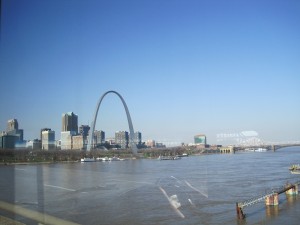
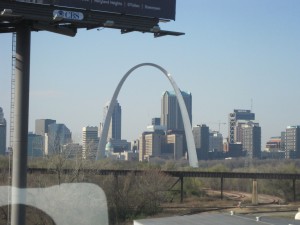
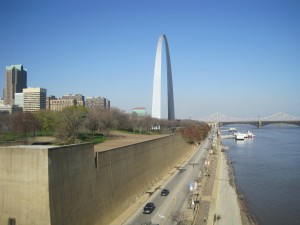
 A little after we left Cahokia on Saturday, we headed to the St. Louis to visit the state of Missouri’s most famous landmark – the St. Louis Gateway Arch, also called the “Gateway to the West” because of its place in history as the spot where the first expedition to the Western part of the United States began. It is an integral part of the Jefferson National Expansion Memorial and it is the iconic image of St. Louis, Missouri. I’d always wished to go to this monument, right up to the top, even in my supposed fear of heights, but on Saturday, I got my wish.
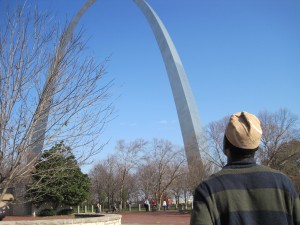
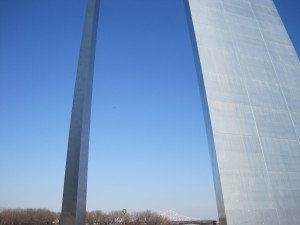
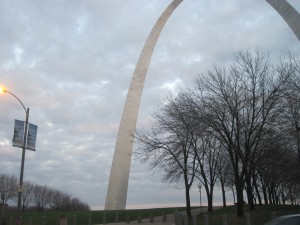
 The St. Louis Arch is located along the Mississippi river and close to the road bridges that connect the states of Illinois and Missouri. It is called the Gateway to the West because of the role it played when officers Louis and Clark set out on the orders of then President Thomas Jefferson to discover what lay further west of the country via the Mississippi river, once considered the longest river in the world. The Arch, an architectural wonder made out of cement and stainless steel, has always been the most visible monument in the state, and it’s considered the tallest monument in the United States at 630feet. It is visible in most if not all parts of the city.
The most fun part of the trip, of course, was going up to the top of the steel structure to look down at an expanse of the city’s land. A trip to a tall monument is never complete without a journey up to its summit. In this case, the lift was a little box that accommodated only five people, and took four minutes to get to the top. The first question in my mind had always been: how does an elevator work in such a steel structure as one curved as an arch? My question was answered amidst bouts of claustrophobia. It moved up the arch, quite logically, in an arched form, slowly until it reached the top while giving those in the small elevator a view of the steps as we went up. Apparently, it is also possible to ascend it by way of one’s feet, though I don’t know how long that would have taken. In any case, the stairs were closed to the public, and I don’t know how long it’d been like that.

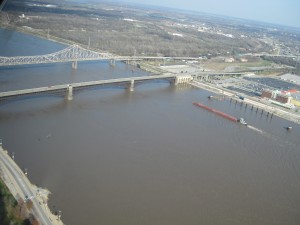
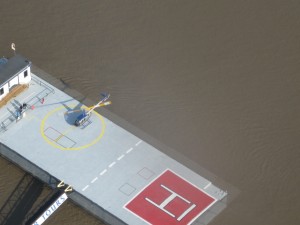
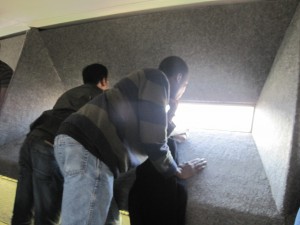
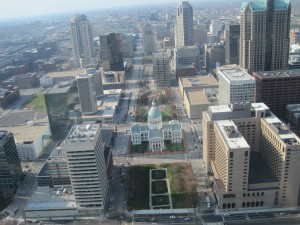 At the top, we got off and walked up the flight of a few steps into the observatory itself where we were able to look down out of a series of windows. Even though it didn’t shake with the wind that must have been blowing outside, and even though there had never been a terrorist or vandalism attack on the monument that could have given me given me fright of death or falling, I felt a little afraid looking into the river from over six hundred feet above the earth. What if? There was a helicopter landing pad nearby where one landed and shortly took off. From afar, I could see that it was a tourist helicopter – for hire – and not a police one, so I wasn’t immediately relieved from my anxiety. If anything had happened while we were up there, I’d probably be long dead before landing on the pavement below, except I was lucky to have been blown by a strong wind right into the Mississippi river.
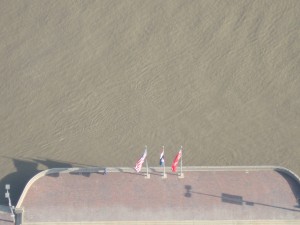
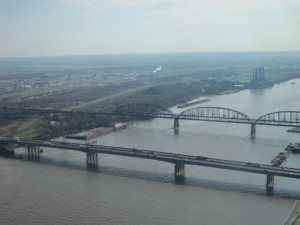
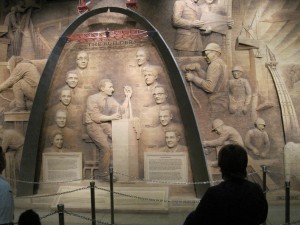
 But we were lucky, Reham and I. There were no attacks, and the uniformed officers on the observation deck with us didn’t have any work to do while we were up there than to pace up and down observing everyone as they did so. When we got enough of our shots up there, we went back down the same way we came, this time faster. It is always easier coming down in an elevator than going up. We then went around the gift shop, and later into the theatre within the complex, to see a documentary movie about the expedition of Louis and Clark, also eponymously titled, before going into the museum where we saw even more of the Native-American history. The famous expedition of officers Meriwether Lewis and William Clark did more than open up the American West to European civilization. It also served as the beginning of the great incursion of European settlers into a part of the country never before inhabited by people other than the indigenous Native Americans (also called the American Indians). The expedition achieved the main purpose of mapping the area, discovering the path of the Mississippi, and conveying to the native Indians that the land no longer belonged to them but to the white men – the real beginning of their gradual decimation.
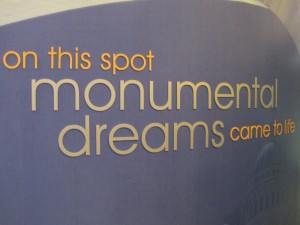
The Arch has been called “A Monument to Dreams” perhaps because of its architectural pace-setting significance. Standing beside its base, scratching one’s name on its stainless steel where hundreds of names from all over the world have littered, looking down from its top or seeing it at night from any of the spots in St. Louis, it is definitely a wonder to behold. But at the end of the excursion, Reham remarked to me while we sat in the hall with a cup of coffee each in our hands, “If we hadn’t gone to Chicago, K, this would have been so impressive.” and I nodded in immediate unexplainable agreement. And even though I had enjoyed myself in some way, and was glad to have ticked the St. Louis Arch off my list of to-visit places, with enough souvenir and museum gift items to show for, the visit just happened to have lacked a certain kind of ktravula excitement. It could be from lack of adequate sleep the previous night. Nevertheless, I am glad that I went.
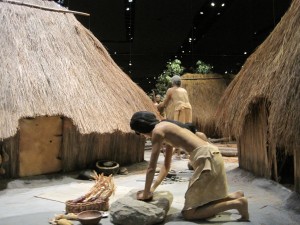
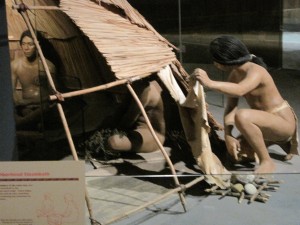
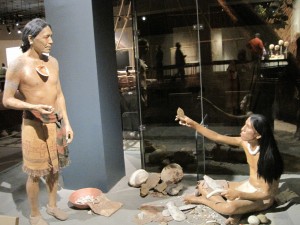
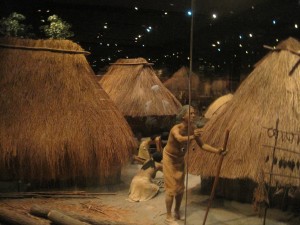 Occupying over 2,200 acres of land space near Collinsville, Illinois, is an old Native-American settlement called Cahokia. It was so named after a tribe of indigenous and ingenuous native people who occupied the spot thousands of years ago and built a city that was at a time bigger than the city of London. Today, due to a reason not yet fully discovered and reconstructed, the city of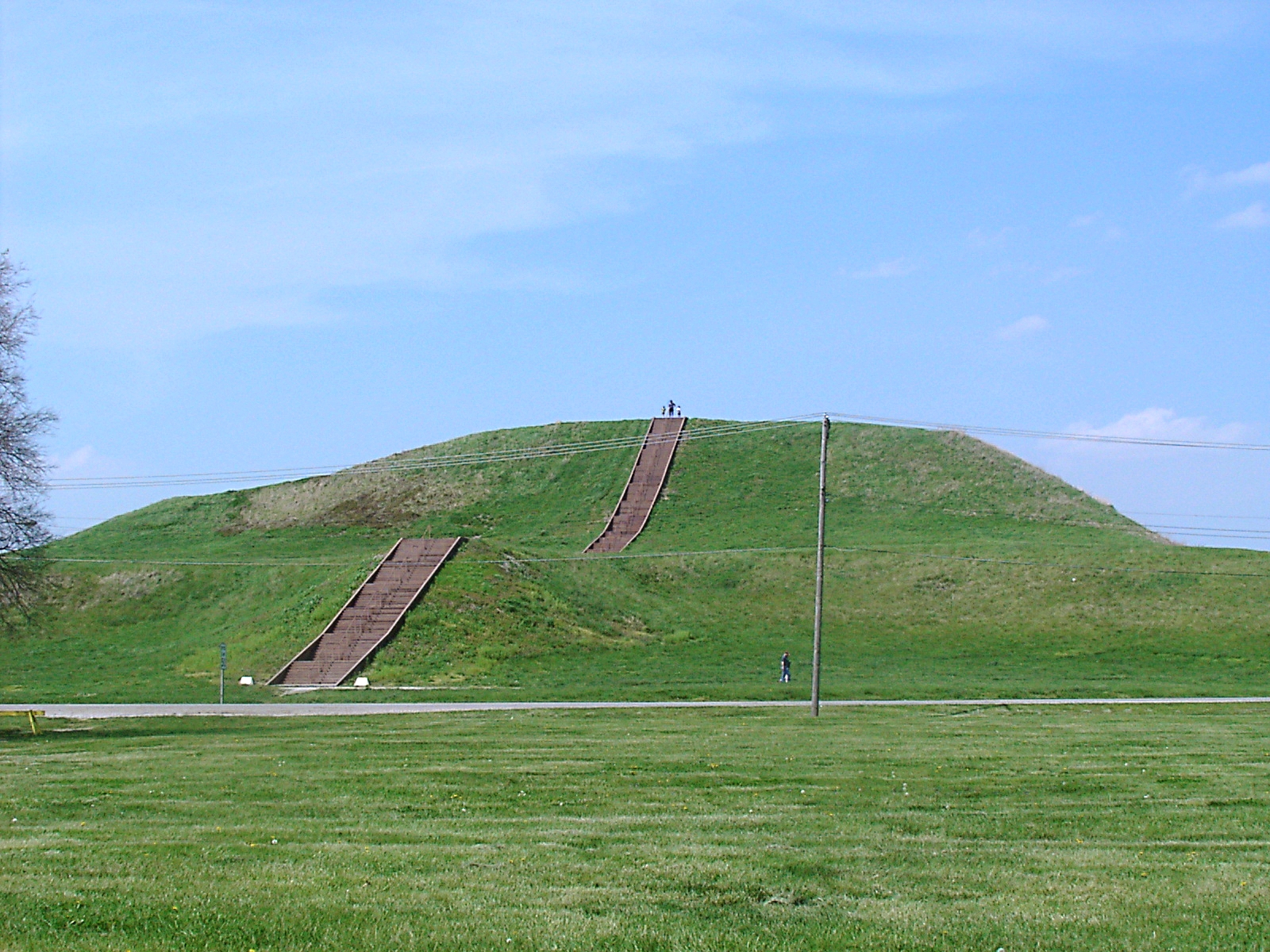
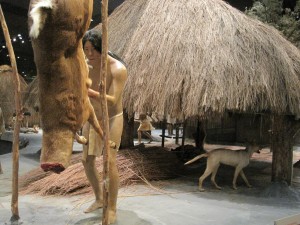
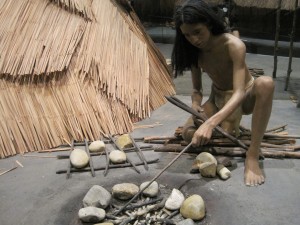
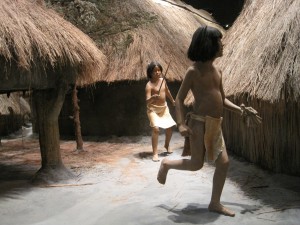
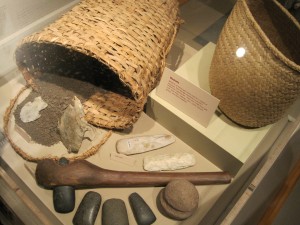 The site is basically an expanse of land with many mounds – or let’s say man-made hills. Excavations done there over the years have produced evidence that archeologists have used to learn all they now know about the place, their tools, their clothings, their burial practices and their system of government.
 Another most thrilling discovery I made was this: a spinning toy belonging to old Cahokia which was made of a little round wheel and a short thread that runs through it. It worked like this: with a little spin by one of the two hands that hold the thread on each side, the wheel rolled on for a while, and when the user pulled the thread apart, the wheel spins by itself clockwise, anti-clockwise, and then clockwise again in perpetuity as long as the user kept pulling the thread apart in either directions. Those who grew up in rural, or at least fun and playful neighbourhoods, in Western Nigeria would remember the same replica which was fashioned with the cap of soda bottles made flat and punctured with two holes. Check out the picture to the right and tell me if you see a difference. Holding it in my hand today brought back a cold thrill of an almost forgotten past. And yet, here I was Cahokia, and not in Akobò.
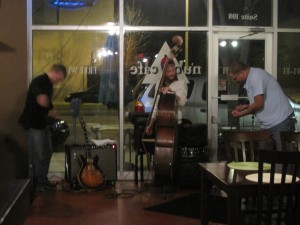
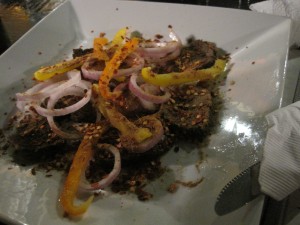
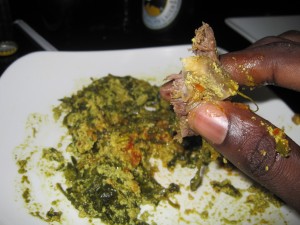
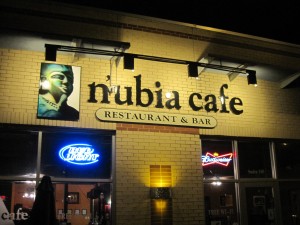 And so tonight after a drought of three months and more, I arrived home, and in heaven, with all but the seventy welcoming virgins, of course. It started as a jest and mild daring that we would drive down to St. Louis to check out the “African” restaurants. I had had a few apples and was just hoping to go to bed but the trip proved a little too tempting to pass, so we – Mafoya the Beninoise, Ben the American and I the traveller hopped in the car and drove to St. Louis, seeking a place called “Nubia Cafe.” The name did not suggest anything other than African so believed that I was going to at least find something to my taste, just like I did in the Indian restaurant in Chicago. At least it was peppery (read spicy) enough to my African tongue.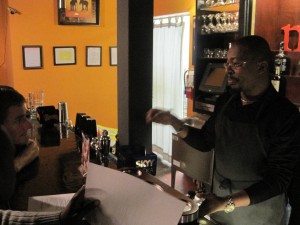
 HOW LONG HAVE YOU BEEN HERE?
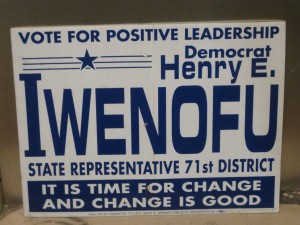
 There is a little board sign beside the counter bearing his name. “I contested in the last election for a council seat.” He said. “I didn’t win, but I got some votes.”
 DO YOU SERVE PALM WINE?
 Drinks: Tusker beer from Kenya (Comments: none)
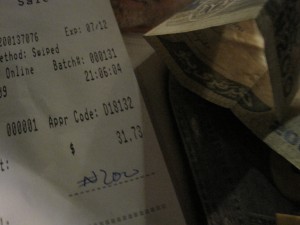 The other woman who had welcomed us in with a smile turned out to be from Tennessee, and she found the whole show we had put up to be very amusing. She was going to find it a lot more amusing when, as it was time for us to pay and head back to Edwardsville, I looked at the bill and had a very bright idea. Since I’ve been in the US, I’ve been gradually initiated into the tipping culture and found a certain joy in leaving little change for the people who had made effort (don’t tell me it’s their job) to provide good quality service. So to show my appreciation tonight, I looked into my purse and brought out the crispiest – well, not necessarily the crispiest – of my Nigerian currency notes. It was a two hundred. I had brought the Nigerian currency notes along to the States only to show my students (and some of them have actually “won” a few of them for keeps while answering questions in class), and for other unexplainable reasons, but as I looked at the space for tips on the bill, I could think of nothing more appropriate to give back to this long range traveller like me than a small piece of home.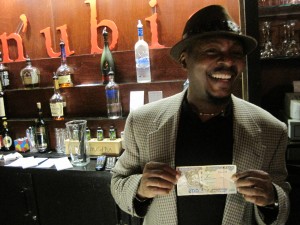
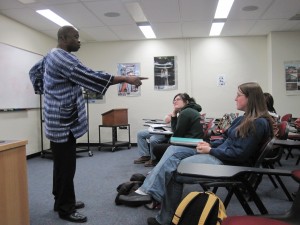
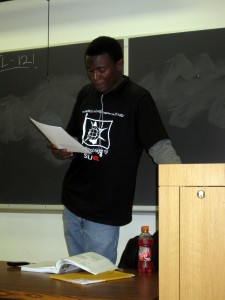 From then on of course, they troubled me to come to class with poems both from my father, and some from myself, and I warned them with apologies that if they were to listen to the poetry of this man in original Yoruba, the music would probably be the only thing they’d be able to enjoy, and nothing else. They agreed, and said that I’d been dishonest to have held out on them for so long a time while they told me many things about themselves. I felt guilty, went to my apartment and printed out stuff that I always kept for my own amusement, and we spent the next class listening to me read from some of the poems I had written, some from long ago, and some from recently. I also read for the first time in public, an English translation of my father’s famous love poems which I had done in 2002, and they were thrilled. One person asked if the poems were written for my mother, and I answered in truth that we like to believe so, even though the fact is that they were written long before both of them were supposed to have met. I guess that’s for him to explain.