 Come one, come all.
@Oyefolak, you’re highly welcome too. If you can make it up here in time from North Carolina, I will consider giving you a ride back home on my bike.
😉
Browsing the archives for the adventures category.
Come one, come all.
@Oyefolak, you’re highly welcome too. If you can make it up here in time from North Carolina, I will consider giving you a ride back home on my bike.
😉
 Most students tended to make hasty generalizations from what they read. The book A Mouth Sweeter Than Salt had very many interesting stories from the perspective of the then young and uneducated Toyin Falola and his upbringing, but most who read it tended to think that his story was true for everyone else, e.g. people not remembering their date of birth. This happened last semester as well. Maybe we should bring Chimamanda back.
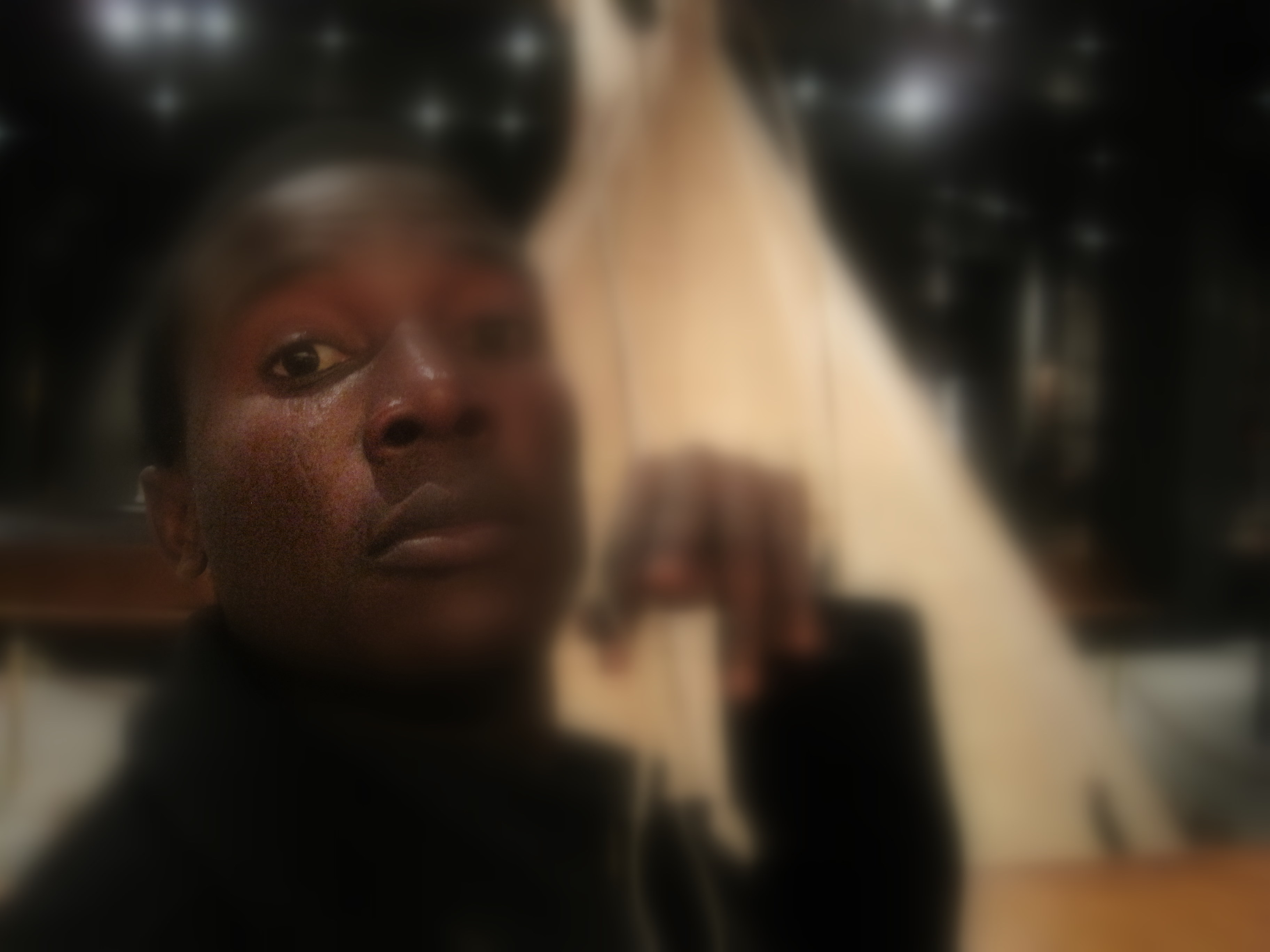 I looked in the mirror this evening and found out that I am good-looking. This doesn’t happen often. I am either in too crappy a mood to appreciate what the mirror reflects to me, or the mirror isn’t clear enough, because of mist or some imaginary dent, to give me anything substantial. Let’s just say that we had just never agreed in a long while. Today, everything changed. Heck, I even noticed a growth on my chin that haven’t always been that impressive. Is it because of the winter? A few months ago, in Nigeria, I could almost count every one of these wiry strands. Now, that has become an impossibility. In any case, sometime this evening, I found myself in front of my bathroom mirror and I noticed a few old and new things about my now good-looking winter-adapting still boyishly hirsute face.
One of the most prominent was a lone vertical mark on the right side of my face. It used to be a scar and it has been there since I was seven, or eight–I no longer remember–but I remember the incident that brought it up there. How could I forget it? It’s a long personal story, but it can be summarized in the following words: an otherwise crazy curious experiment in traditional science.
Earlier in one lone week out of the now many blurry ones in my childhood memory, my father had unknowingly satisfied too much of my recurring curiosity by telling me how he got the tribal marks on his own face. He was born in the early forties when it was still acceptable and admirable for parents from his side of Yorùbáland to scarify the faces of their children as markers of culture, tribe, social standing or just plain beauty. Well, beauty as decided by the eyes of the beholder! I had looked at his face that evening, perhaps even touched his hirsute cheeks too, and found the three pairs of horizontal marks there quite fascinating. How in the world, I wondered, could those scars made by a probing knife of the professional traditional scarifier remain on the face of his victim for that length of time? I had not the slightest idea, and I asked him.
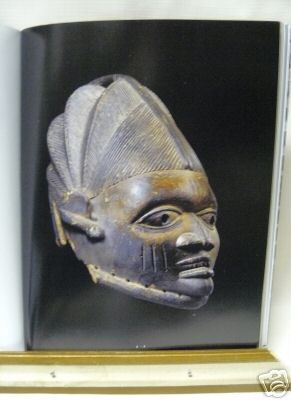 In those days, he said, the men who made the marks had a secret black paste/potion which they applied to the wound on the baby’s face while it was still fresh, to make the wound heal, and to make the marks truly stand out when it eventually healed. It was the effect of the dark paste/potion, he said, that ensured that the wounds never returned to the same nice state as the other parts of the bearer’s face. Thus explained the deep permanent marks on the faces of the very many grown people of his generation that I had met until then.
For days after I discovered this secret, I remained in utmost sleepless fascination, not just about the level of pain it must cause the newborn who must endure the ordeal, the cruelty of the adults who must hold them down at just a few months old to get them scarified for the rest of their lives in the hands of a trusted man with a knife, nor about the resentment the children must feel when they grow up and decide that they never liked those marks on their faces in the first place, but about the possibilities of putting to test the newly gained knowledge I had obtained. I believed my father, but I wanted to see it for myself how this worked. I expressed my thoughts aloud and he responded in a very mischievous and to me quite unsettling jest, asking whether I would prefer for him to call the local scarifier immediately to come and mark my face “for beauty” even though I was already past the required age. I shouted NO, and quickly fled.
But the fascination remained.
So one day while in my primary school, which was not too far from the house, something led to another in class and I had a really rough fight with one of my classmates over something that could as well have been as trivial as speaking “vernacular” in the classroom or reporting same to the teacher. I suddenly saw his hand in a flash towards my cheek. It was all he could grab so he scratched me as hard as he could, and I felt a deep searing pain. A few seconds later, I touched my face and saw a vertical stripe of blood on my hands. Then a few drops began to trickle onto my shirt. It was painful and I let the boy go. But it was also a brief moment of epiphany.
Instead of continuing with the fight which I could by now have won if only for the moral upper hand of rage, I bailed, and everyone stared at me, wondering what was happening. I ran homewards as fast as I could towards the storeroom where mother kept the charcoal fired up to put in the oven she used to make cakes and bread, with blood still dripping from my face. What I did in those fleeting moments of pain and panic was grind the few charcoal chalks into soluble powder, and apply it to my bleeding face.
Thinking about it now, I almost can’t believe the extent of my little daredevilry and stupidity, because if my grandmother had caught me there, she would definitely have panicked, and I would definitely have received some serious spanking. Now satisfied with the experiment, I grimaced in pain but smiled in satisfaction, and waited. The line had been drawn, no pun intended, and the traditional science had been put to test. My father could either be proven wrong and the scar would disappear eventually, or he could be right and I could now have a tribal mark of my own making.
Looking at that lone vertical stripe on the right side of my face today, I could only smile. It used to be a really prominent one. Now it’s just an almost indistinguishable scar, but it’s there alright, visible at the right angle to the source of light.
While applying for the Fulbright programme early last year, I wrote an account of this experience in my application to illustrate one of my first personal intimations with some of Yorùbá cultural practices, and only just hoped for some laughter when the board eventually got to read it. It was to my surprise on the big day of the interview when the board begged that the light be switched on in the room so that they could properly see the scar on my face. The anecdote had apparently made a memorable impression. I was giggling and grinning like an eight-year-old child as I let them bend and angle my face to get a better look. And while one of them huddled close almost hand-tracing the line on my face, I myself wondered why and how I could have been such an enfant terrible willing to put his own self on the line for such a curious experiment.
My face now bears one lone mark that wasn’t there since birth. But unlike that of many Yoruba people now wishing that they could erase theirs, or at least that they had got a choice in the matter in the beginning as they really should have, mine is worn with a certain pride.
Maybe I was really that terrible as a child, now atoning for those sins through the huge torment of the writing gene. The stripe on my face may be a fine reference point to some precocious point in my interesting history, but the real truth is that secretly, I really really just wanted to prove my father wrong.
Image Credits: http://www.vub.ac.be/BIBLIO/nieuwenhuysen/african-art/images/sothebys2008yoruba.JPG
 One thing I never quite understood when I first landed here was the extent of choice available to the shopper. Why, I wondered, were there sooooo many things to buy. My first attempt to buy toothpaste almost ended in a disaster when I stood there in the aisle for minutes trying to decide if I preferred Colgate Total Advanced Whitening, Colgate Total Advanced Fresh, Colgate Total Advanced Clean or Colgate Whitening Oxygen Bubbles, which are real Colgate products for your information. (Read the entry here). How do these people make their choice, I had wondered, and concluded within myself that they didn’t really put their mind to it. They probably just went into the store, picked one out of a hundred beckoning choices, and left. I have discovered how wrong I was in that assumption. A few days before Christmas, Papa Rudy and I had gone to shop for groceries and his wife had stressed more than three times on the phone that what we had to buy for food was small red beans. SMALL RED, she stressed, and I wondered what difference it could make to make such a distinction. When we got to the aisle for vegetables, I found out why. There were green beans, red beans, small red, canned green, baked beans, baked beans in chilli, etc. We got her the small red, but when I ate it later as part of the dinner, I still couldn’t tell what was different about it than the other kind of beans I’d eaten before, so I decided that maybe it was a good idea that women did the cooking in the homes because I could never imagine the kind of argument that might have ensued all night if he had done the cooking with his own preferable choice of beans. For sure, she wouldn’t have liked it.
 In the olden days when I used to go shopping at Walmart and Aldi with Reham the Egyptian, I never quite understood why she spent so much time shopping. The pattern always repeated itself: she would agree with me, nodding to my every word right before entering the store, that “at around 5.25pm, we must both be done shopping, and must proceed to check-out no matter what we’re doing, do you understand? The bus to campus is scheduled to be here at 5.30pm and I will hate to miss it. We’re clear, right? Look at your watch, it’s 4.30pm right now,” and she would say “Yes, yes, I understand.” By a quarter to six, when the bus would have long left, leaving us behind, I would be sitting at the exit door, angry and out of my wits, wondering why in the world I had to deserve that kind of torture. She would come out later and say “Oh I’m sorry. What do you want me to do when I couldn’t find what I wanted?” Couldn’t she have just asked an attendant? No, she would rather look at everything, spending quality time to decide if she wanted the extra large, jumbo size or the family size, among many other variables. Hmmm… I don’t have to tell you why it’s been such a long time since we both went out shopping anymore. 🙂
 But being such a brisk shopper has not altogether being without its disadvantages for me as well. The first time I made such a brisk purchase was at the Reagan Airport in Washington DC, and I was lucky because it was just for gum – Orbit, I believe. I never even knew until then that there were so many kinds of flavour. I took the one that looked the finest, and regretted it afterwards because it was also the harshest in the mouth, and I had bought three. But I can’t blame brisk shopping for that, since it isn’t possible to have a taste of it beforehand anyway. So far, let me just say that I believe in my guts when it comes to making a choice out of a horde of beckoning options. I may sometimes regret it – as was the case with the impostor potatoes, or the winter jacket I got at Khol’s that almost didn’t fit me again when I got back home – but mostly, I’ve had much success. Even if not, I’d still take that over missing the bus and keeping myself in the harsh evening cold for far longer than necessary.
Take that Reham! 😉 🙂 :D.
How are you today? I hope you are fine. I’m not so cheerful today. My arm hurts from the immunization injection I took last week. I’m bored from waiting for the long weekend to end, and I’m too lazy to get out of bed to make dinner. But that’s beside the point. I have always wanted to write you a letter.
From the last news I got from home yesterday, you and your little brother have finally left Ibadan for Lagos with your mum to face the new realities of life. I have used those big words “realities of life” just so that you know that the life in Lagos is not going to be as fun, colourful or adventurous as it would have been if you had stayed with your grandma in Ibadan. Or what do you think? In Lagos, you will be sheltered, you will spend most of your time indoors taking care of Oyin with whom I’m told you haven’t been getting along well most of the time. That’s no fun. When I was your age, I had already formed a mental map of the neighbourhood in which I lived, and I always managed to sneak out of the house to explore when no one was looking. It got me some spanking many times, but I always did it again. It was mad fun. It also helped that my parents were both working so I stayed most of those times with my grandmother. I can’t tell you how nice that was. But you had the chance since last year, didn’t you? You have stayed with your grandma for how many months now, along with Oyin. Did you enjoy it? I bet you do. She can be doting and relaxed when it comes to her grand children. With us growing up, everything fun and permissive was considered “indulgent”, and we weren’t supposed to do them. Until lately, she never even believed that anyone not older than eighteen should own a mobile phone. Yea, she’s strict like that. She’s changed a lot now though – things that come with growing up – yet I bet that if you eavesdrop on her conversation with your mum occasionally, you’d hear them argue about the most appropriate length of a woman’s skirt.
Since you returned from Ireland last year, coming to Nigeria for the first time, I have been really worried about you and your little brother, wondering how you would cope in a country that still grapples with the problems of electricity. I bet coming to Nigeria was your first time of seeing a power cut that lasted more than two minutes. How did you take that? Oh I remember, your mum told me that you looked at her and asked her to “put the light back on”, as if she was the one who took it out in the first place. Aww, so cute. By now, you are probably used to it, which might be a good thing. You are going to be a strong, rugged Nigerian man, not surprised by power outage nor shocked by an absent president. I bet it’s even the least of your problems. I remember that on June 22 or so in 1990 when the Orkar Coup took place in Lagos, the only memorable feeling I had was exhilaration. I didn’t know who Orkar was, but the excitement in the air all around our school tickled my brain beyond description. Work stopped, and everyone talked in low tones. There was an energy that I can’t describe. And when my father stormed into the school compound demanding that the school released his children to him or provide the signature of the school’s proprietress on a document taking absolute responsibility for our safety, and accepting all liability in the event of any mishap on anyone of us his children, I was giddy. She released us immediately, and we went home in daddy’s car, one of the few times he left work to pick us up from school. We had roasted corn, and ice cream – that one that is scooped into a cone and eat out of it. Yea, I still remember.
My point here is that I acknowledge the fact that you may not care about politics or everything going on around you except to the extent of their providing you with excitement. But why Lagos? That state is too fast, my young man. You need serenity in your life at this point in time. You need adventure, and I’m afraid that you might be exposed to too much of the grim realities of Nigeria before you’re sufficiently capable of reacting to them in the most playful, adventurous, and deeply reflective way. I may be wrong. In any case, take time out of your day to have fun. Do not, I repeat do not, spend your day in front of the television. It is bad for you. Go out and play with the sand. Get dirty. Your mum will wash the clothes, don’t worry. Play with flowers. Build sand castles like I did with Laitan when we were younger. We would later find grasshoppers and put them in the castle, watching them through the perspex glass ceiling, observing their process of discovering that they had been trapped. Now that I think about it, I realize that it must have be frustrating to those little insects. Build fake stoves, plant corn and potatoes in your own garden at the back of the house like we did back then. Get out of the house often and get lost in the streets. Walk for kilometres and return. Let your parents get worried and look for you everywhere, and let them find you. They might hit you involuntarily though if you stay too long, but don’t let that discourage you. Don’t listen to everything they say while angry. And do not believe them all the time. This is the best education you can have. Have you seen a masquerade yet? Have you taken a swim in the river? Have you stolen a bite out of some of your grandma’s delicious muffins as they lay on the table, or unscrewed your dad’s radio set just to see what makes it work inside? If not, you have a whole lot more to learn.
 Your mother won’t tell you this, but when we were younger, we used to steal entrance into my father’s (your grandfather’s) blue Isuzu car whenever he didn’t go out with it. I was the youngest then, although Laitan had been born. She was never around, and I don’t know why. We didn’t have the key to the car but the doors were always open so we’d open it and get in. Actually, one person would get in, release the hand break, put the gear in neutral position and smile as the car went forward the slope towards the compound gate, then hit the brake as soon as it got close to the fence. The rest of us would then push the car back to its initial position, and some other person would get in to repeat the process. It was fun, but they never allowed me to do the driving. I always did the pushing. I think they stopped including me in the game when one day after church service, before anyone got out of the church building, I ran to the car, sat at the driver’s seat, released the gear into neutral and watch the car lurch forward on the long slope of the church’s parking lot that led out towards a sea of people. The problem was, I didn’t know which of the pedals on the ground was the brake. It took some random luck, and a few vigilant men on the road whom I had now almost run over with the already fast moving car to stop me. They must have seen me from afar and figured that I didn’t know what I was doing, so they gathered in front of the car and stopped it with the force of their strength. My heart was in my mouth. I was sweating, and I felt a very sorry. I had done the inconceivable, and I would get some serious punishment later in the day as a result. But I had driven a car, and it felt good. Your mum should remember some of this details if you ask her. But here’s my warning: you don’t have to go to that length to have fun, and besides, you don’t have to do what I have done. That won’t be original. Take liberty with your own ideas, and let me return home to meet you and we can share ideas. Our first meeting should be memorable indeed. I heard that you have really grown, and don’t look like a four year old. Do you still remember what I look like from the photos in your mum’s albums?
My regards to Oyin and your parents, and to your other cousin Jolaade as well. I will write you again when I have the time.
I am your Uncle KT, now at Edwardsville.
PS: Do you speak Yoruba by now? I hope you do. What an irony it is that when I was your age, I was busy getting pummeled by those Ghanaian teachers in my school who believed that it was a taboo to speak my local language within the premises of the school. Like they used to say to us back then in class whenever they were angry, I say “Wasia” to them now too. 🙂 And I still don’t know what it means. I only know that it’s not an English expression, and it wasn’t nice.
