My first intimation with Scotland beyond the picture of men in “skirts” in glossy magazines must be in the movie “Rundown” where a Scottish pilot kept saying “There are bills on the grind” when he meant that there were bulls on the ground. And then there was Craig Fergusson and a few other guys whose accents just keep you glued to the television because you can’t get enough. In this guest post, my friend and blog commenter Bukola Olawuwo writes about her experience in Aberdeen, Scotland’s third most populous city. It has an estimated population of 210,400 citizens. Enjoy.
___________________________________________
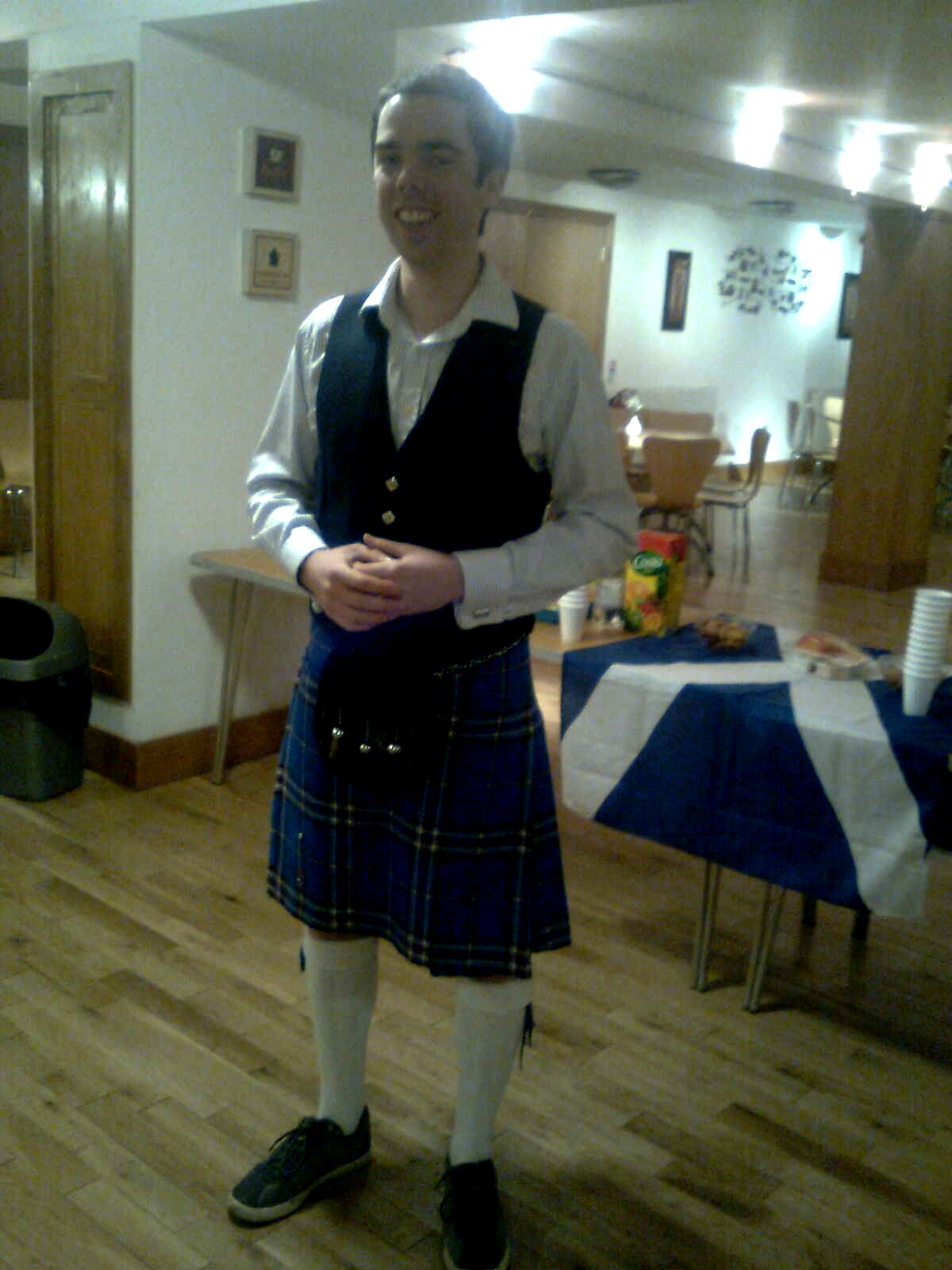 I always had a good laugh in the months before my arrival in Aberdeen when I informed people that I was going to Scotland. Isn’t that the place where men wear skirts? They’d say. I laughed in part because it was funny and because although I knew that men wouldn’t be running around all day in skirts, I too thought of it as “the place where men wear skirts”
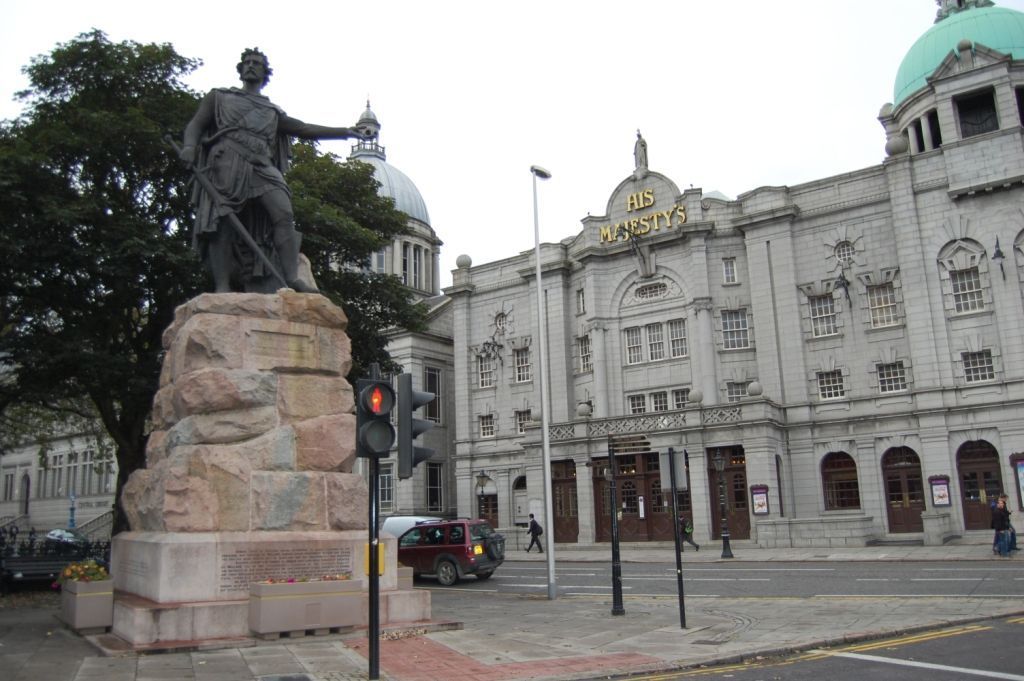
It was not the skirt-clad men that grabbed my attention on my arrival though. It was the colours – or lack thereof. Every building was the same colour. Grey. My first thought was that there was a law against paints in this city. I would later learn that many of the city’s buildings constructed between the 18th and 2oth century were built with granite sourced from the city’s Rubislaw Quarry which is also said to have produced granite for paving streets in London. This earned the city the moniker the Granite City.
Of course, new, painted buildings have sprung up but these are few and far between, creating the impression that all Aberdeen buildings are the same. I for one will never forget the confusion that my inability to differentiate one building from another caused in my first few weeks here. I got lost so many times that I lost count. And I’m clueless with maps, so there goes…
 Since I can’t read a map to save my life, I had to depend on people. This was another induction into the city. I found that the Aberdonian accent is a complex one, depending on the indigene’s particular area of origin. It is characterised by harsh R’s and of course there’s Doric. Doric is the local dialect/accent spoken in Aberdeen city and county. It is a variation of English but an advisory warning would probably read “interpreter needed”! My friends and I have had fun trying to decode some of the words amidst thanksgiving that none of our tutors has the acute version of the accent – that wouldn’t have been fun. A personal favourite is the word sorry which if spelled the way it is pronounced could be either “sorree” or “sorrai”, with extra emphasis on the ‘r’. Whereabouts are you going would be “far aboots are ye gaun”; no equals “nae”; house equals “hoose”…and I thought I’d be the one with an accent!
Behind the interesting accents are an equally interesting people. Aberdonians and indeed Scotsmen are very proud; of their culture and heritage. Such is their pride in their region that many are agitating for an independent Scotland; independence that is, from the collective known as the United Kingdom. This pride sometimes makes me feel a pang of shame at the new generation of Nigerian parents who proudly announce that their children don’t speak their native dialect or youths who refuse to wear African fabric. Yes, the men really wear kilts but only for ceremonial purposes and trust me, it takes either national pride or utter madness to wear a kilt in a temperature of minus 16 degrees celsius!
 And madness is how the weather feels at times. We’re up North you see, so we have a customised version of the cold that’s a common feature of Scotland – an extremely colder version. And there’s the rain which never pours compared to what we get back home but is a fixture, regardless of the season. I once remarked to someone that I was living for the summer, couldn’t wait to feel warm again. She smiled at me and said “oh summer. In Aberdeen, we rock our sunshades and jackets simultaneously”. Oh well, I’ll survive.
Key to my survival here are the numerous African and Asian shops. They cater to the needs of people like me who’re sceptical about experimenting with food and those who just want to give themselves a treat from ‘home’. I have tried some Scottish food though, my favourite being Pea and Ham soup. My reason for liking it wouldn’t be far from the fact that it tastes a lot like gbegiri with strips of meat in it; only this one is eaten on its own, not with some heavenly amala…(sigh). Haggis, a dish made from sheep’s innards is another favourite. I hear the younger generation don’t quite like it because of the ingredients used and a peculiar traditional method of preparation. Me? I grew up eating delicacies like shaki, ponmo and roundabout – of course I love it! 🙂
 Seven months, snow, freezing February and lots of delicious haggis later, I can tell you that my story about Aberdeen has changed – to a large extent. When the day comes that we do not get four different seasons in one day, I just might love it but since the likelihood of that happening is almost zilch, I’ll just say, it’s a lovely place to be or as we say here, nae bad at all 🙂
___________________________________
Bukola is studying for her masters in Corporate Communication and Public Affairs at the Robert Gordon University Aberdeen. Previous guestposts can be found here.
Thank you very much Bukola. A lovely postcard from KTravula.com is coming your way.