Browsing the archives for the adventures category.

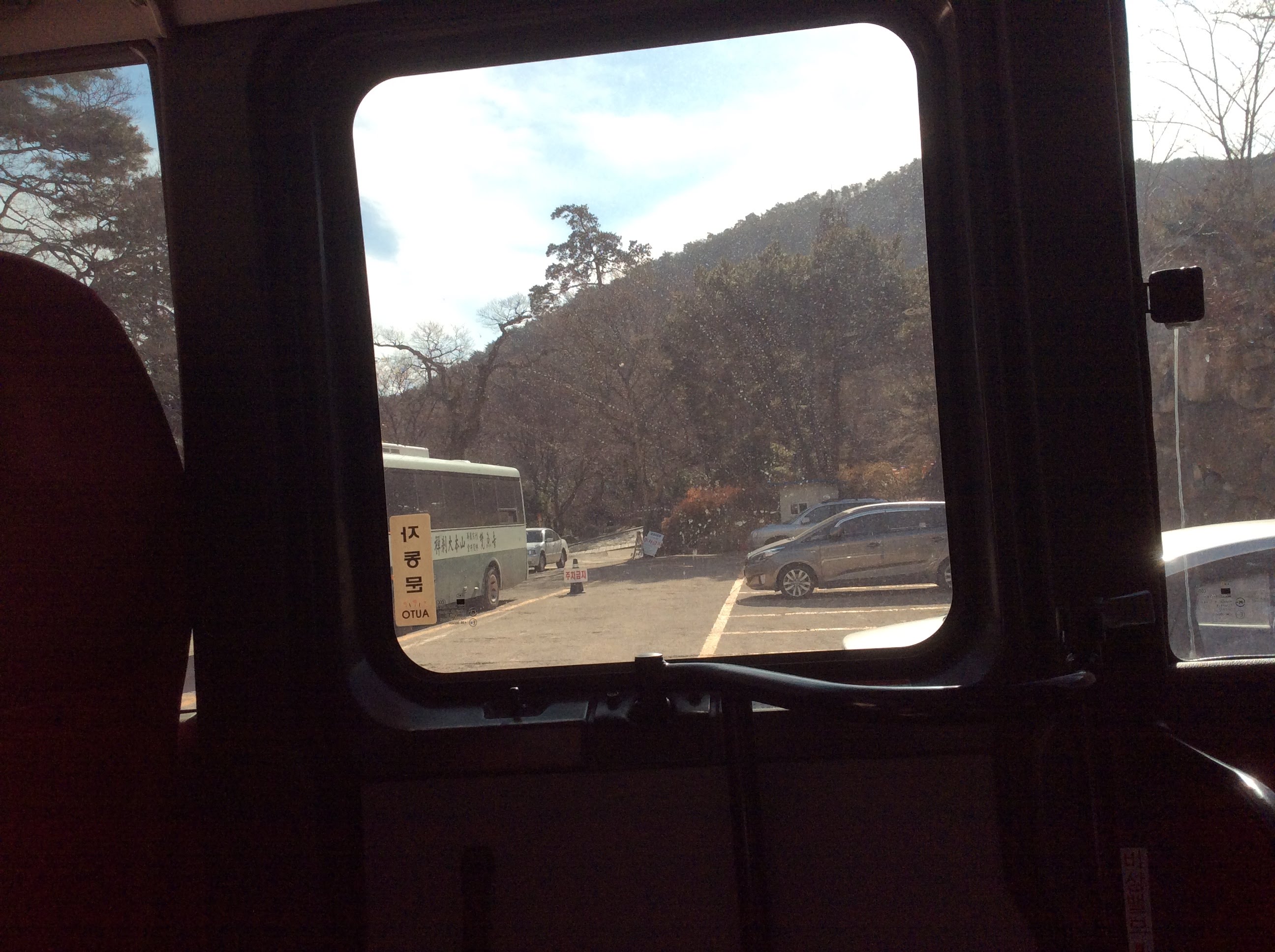
Lunch At Beomosa

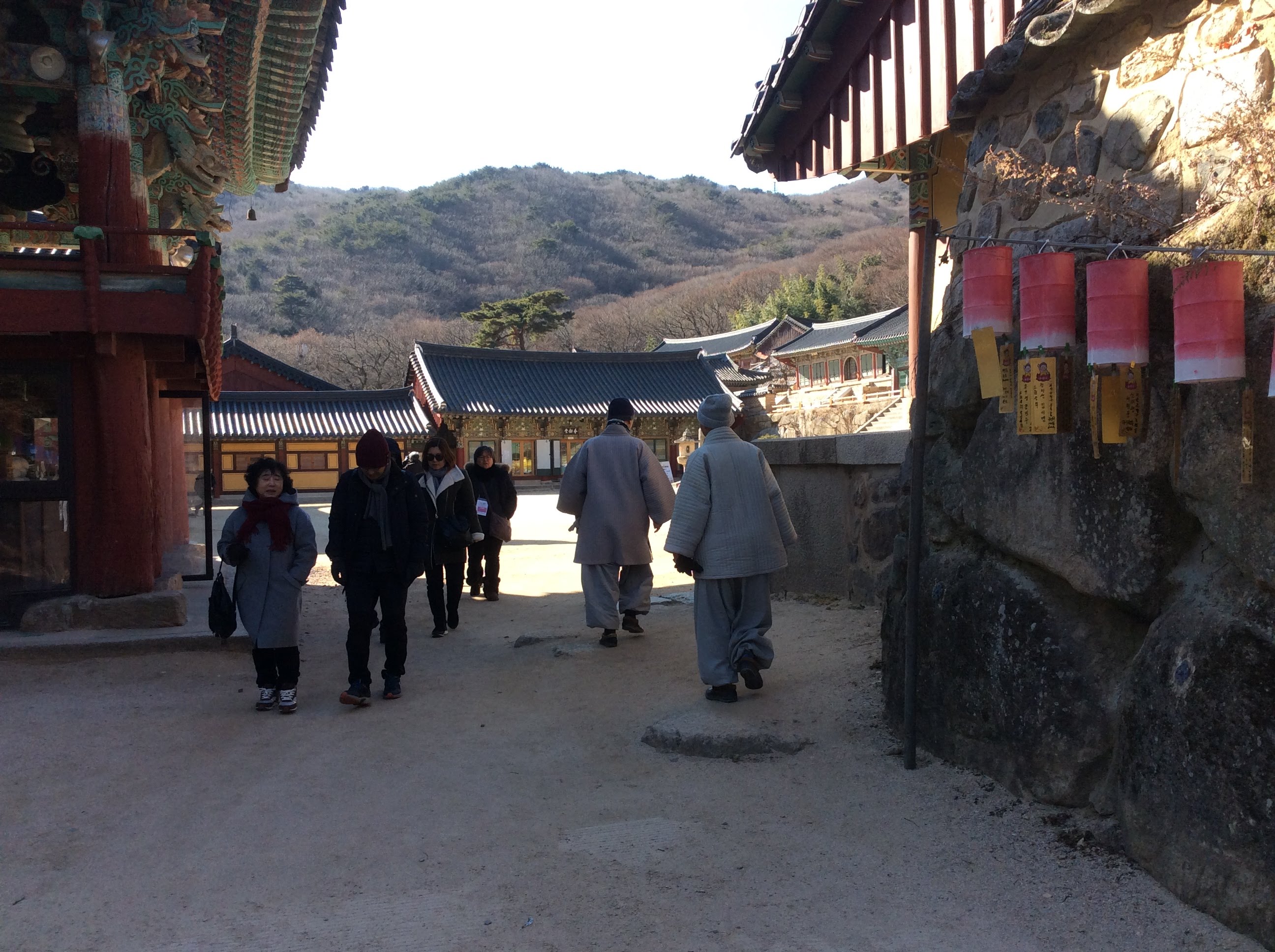
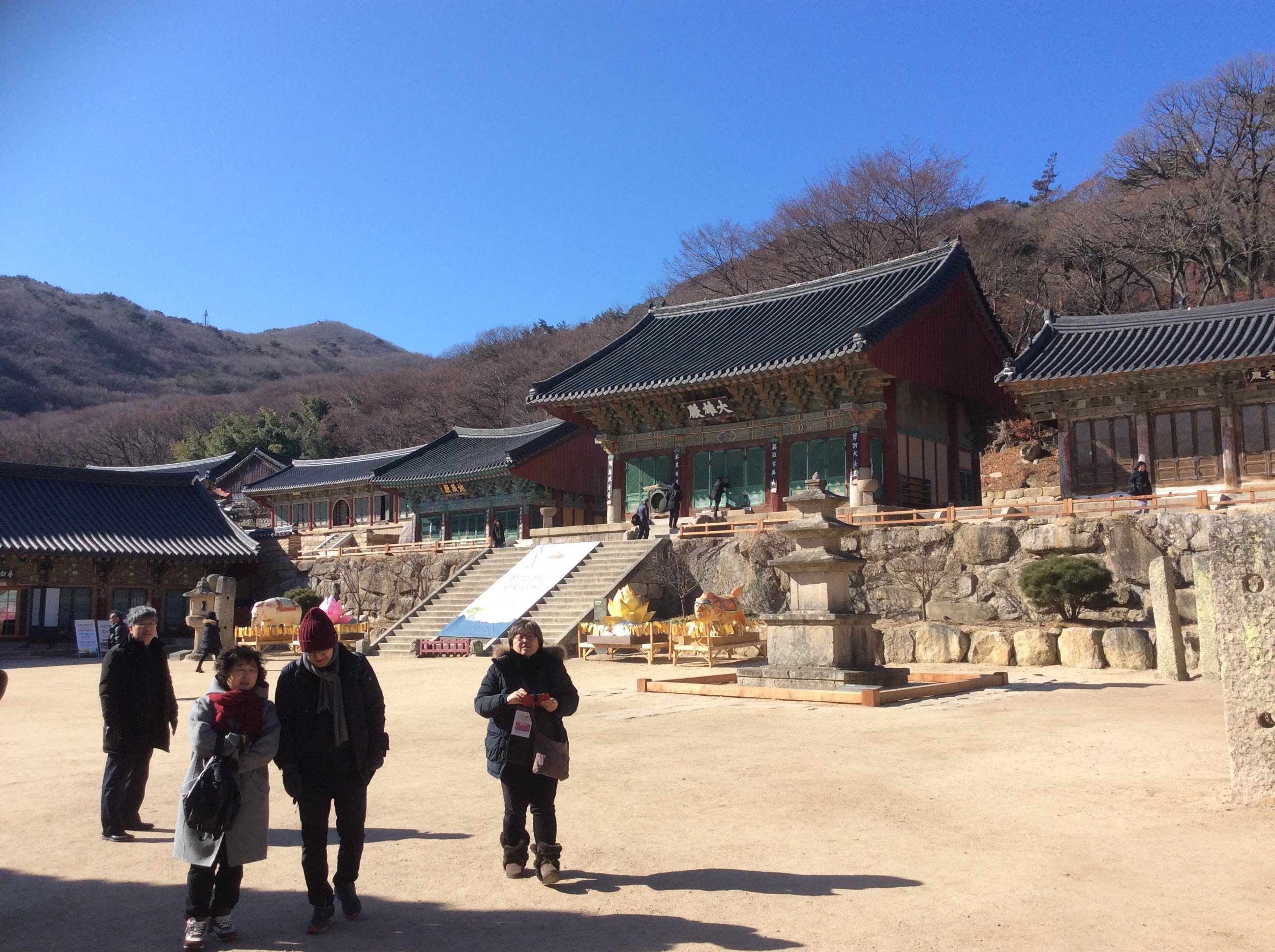
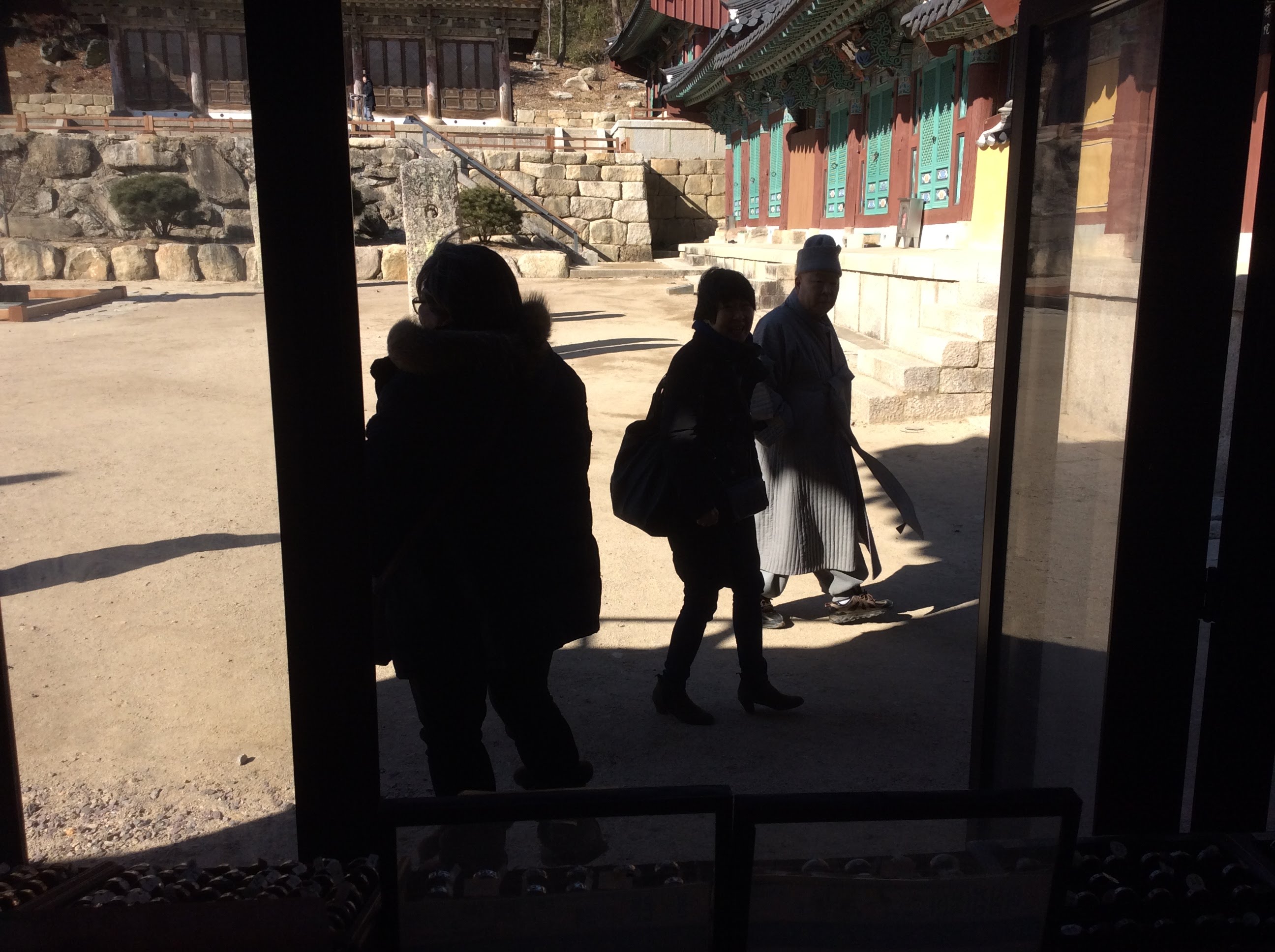
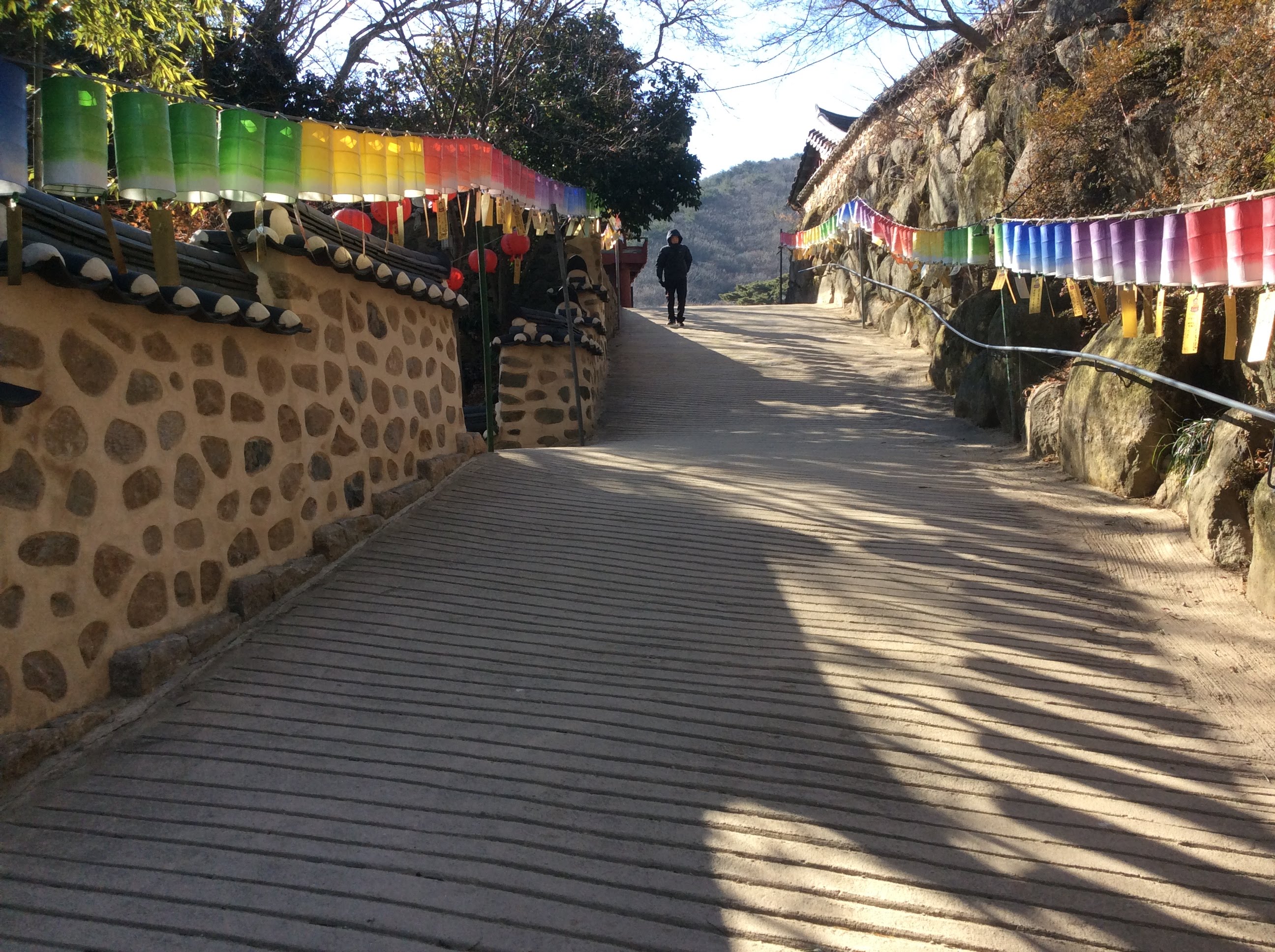
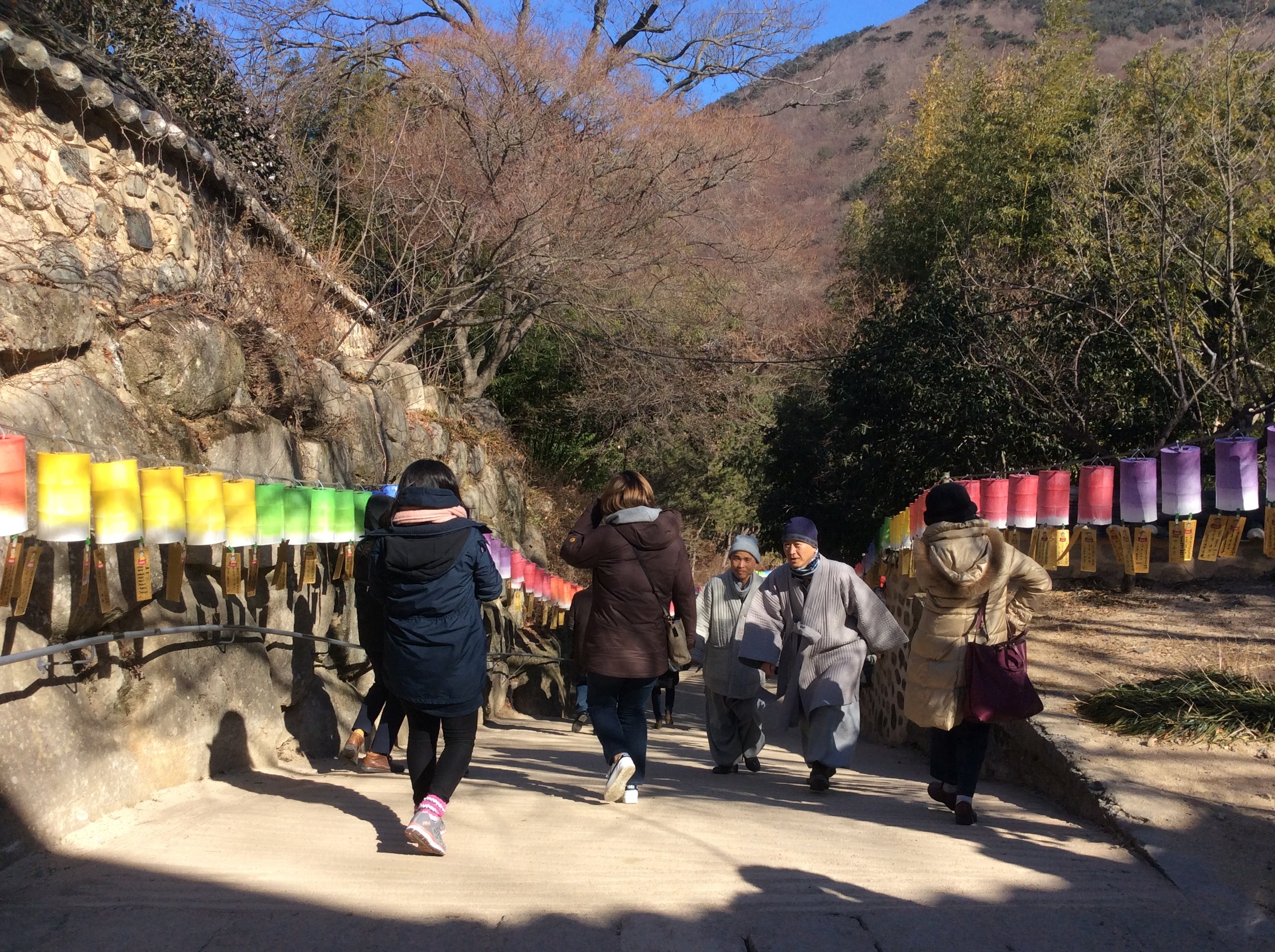
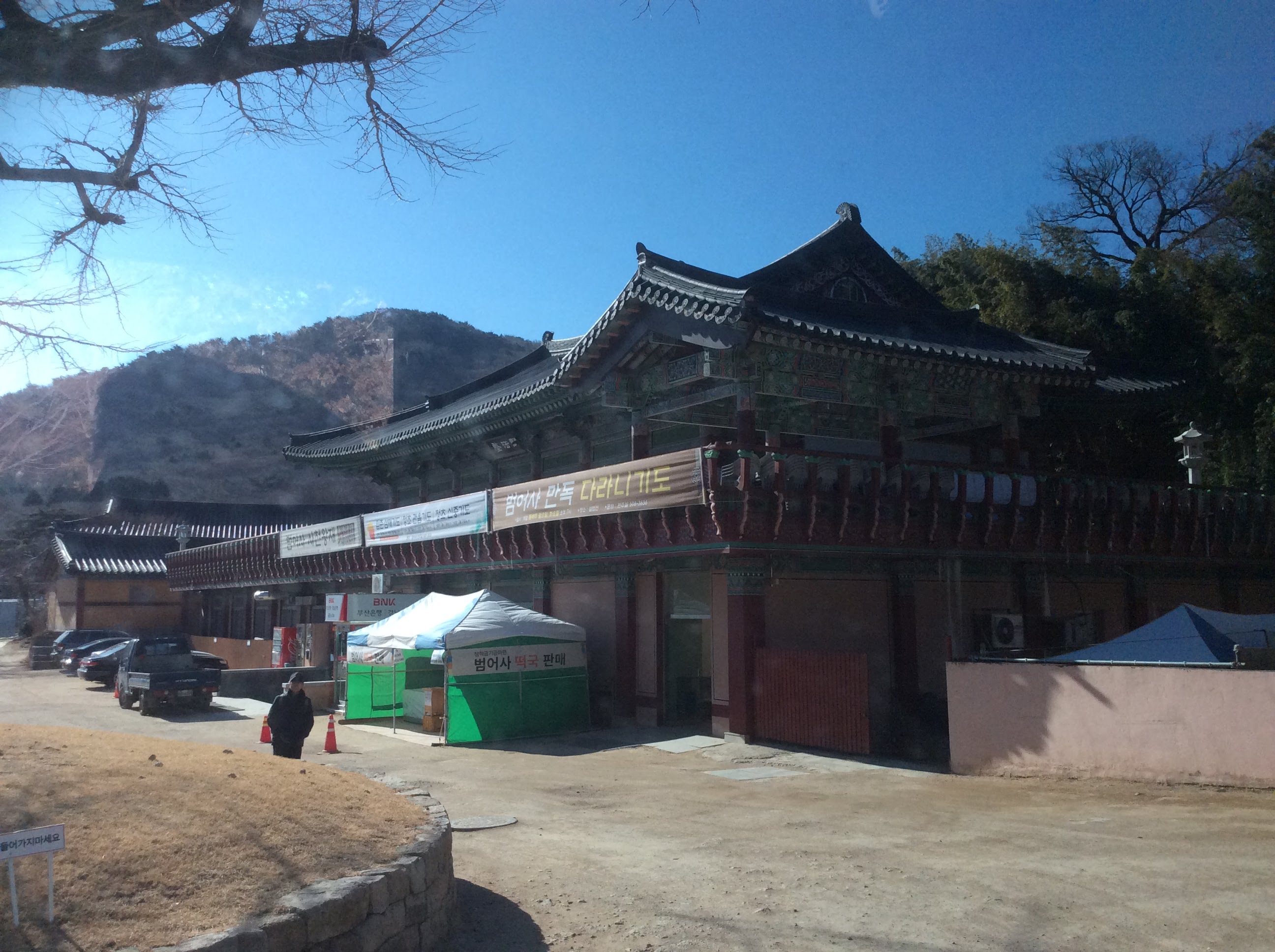
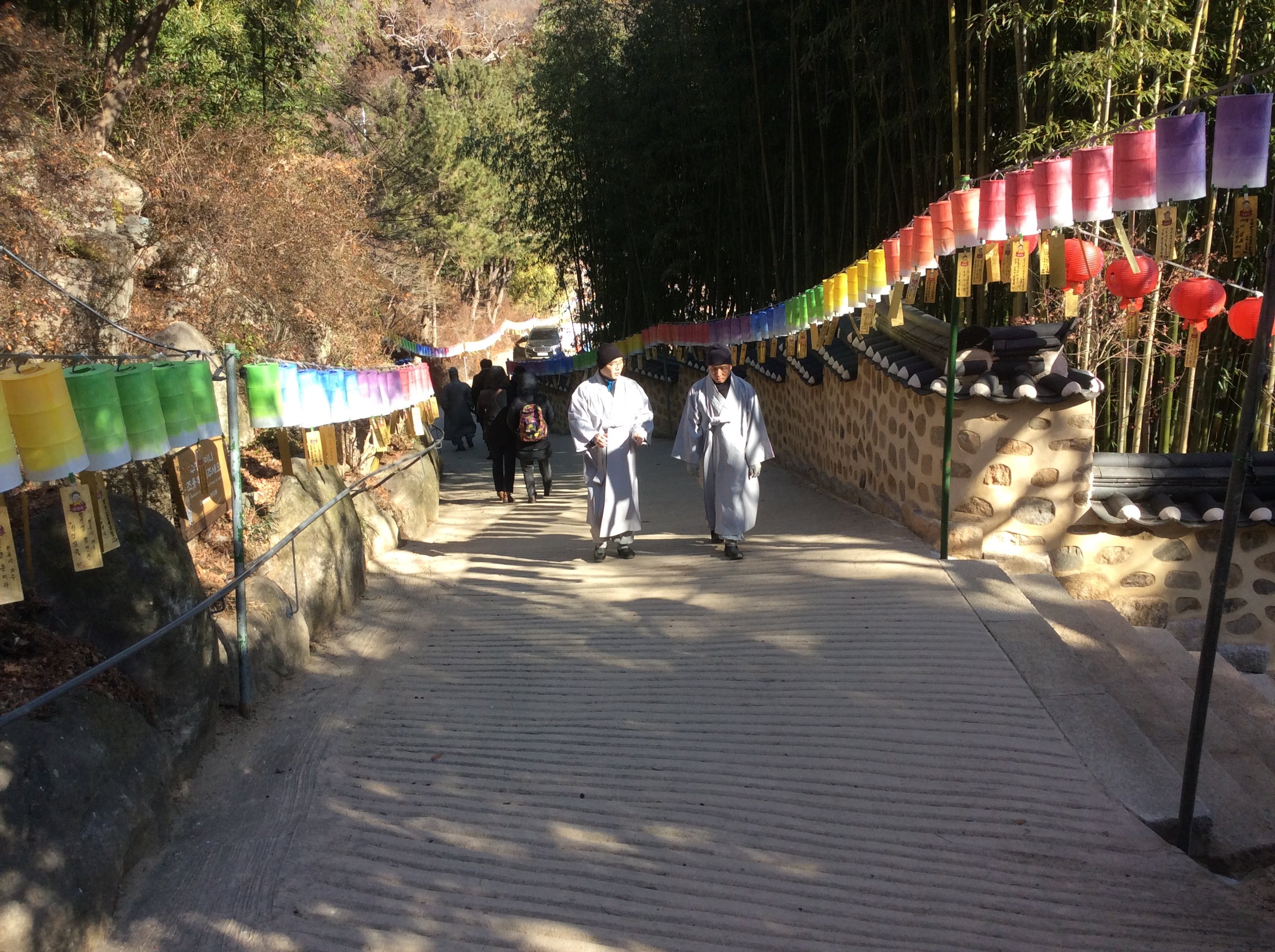
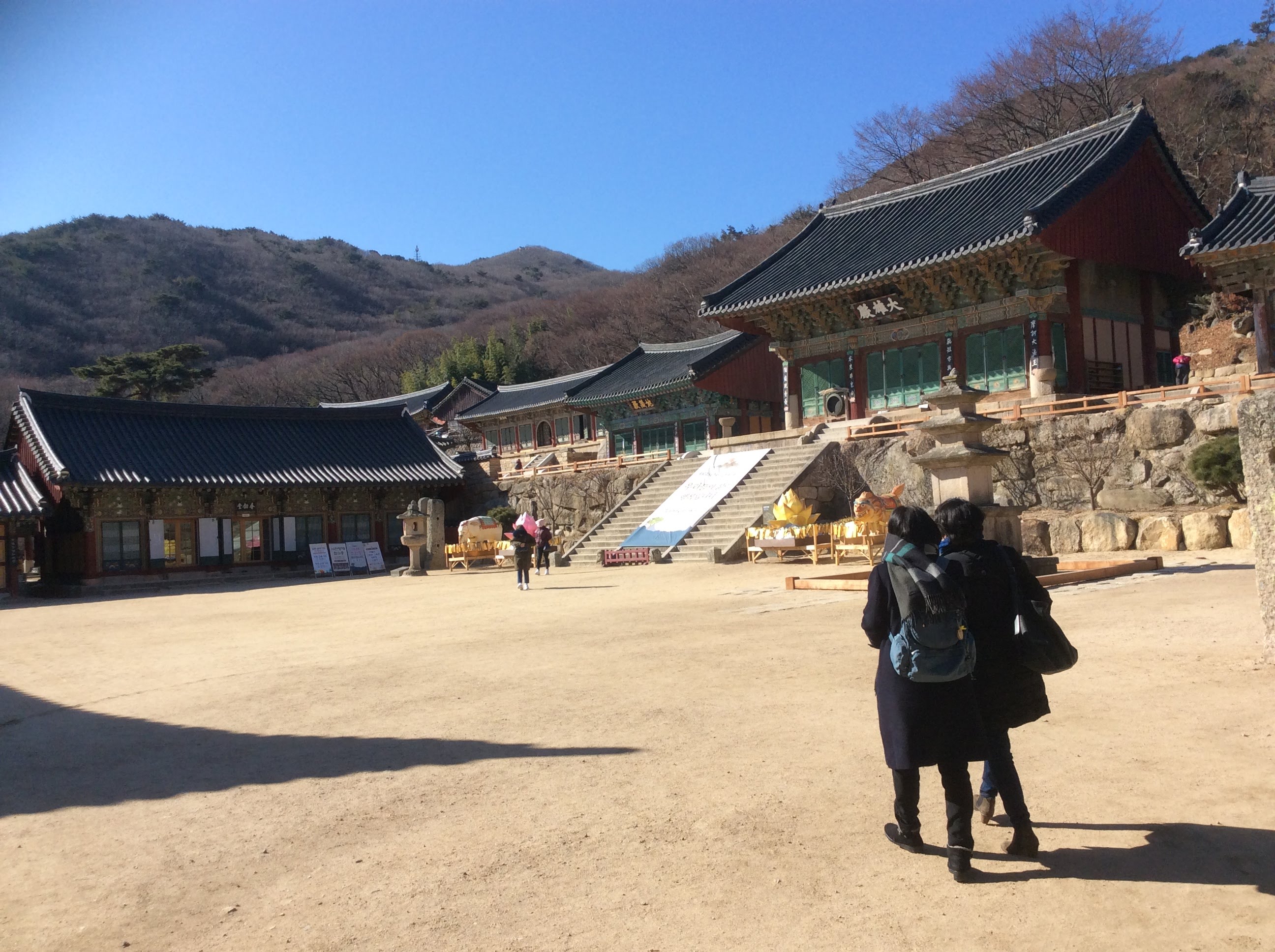
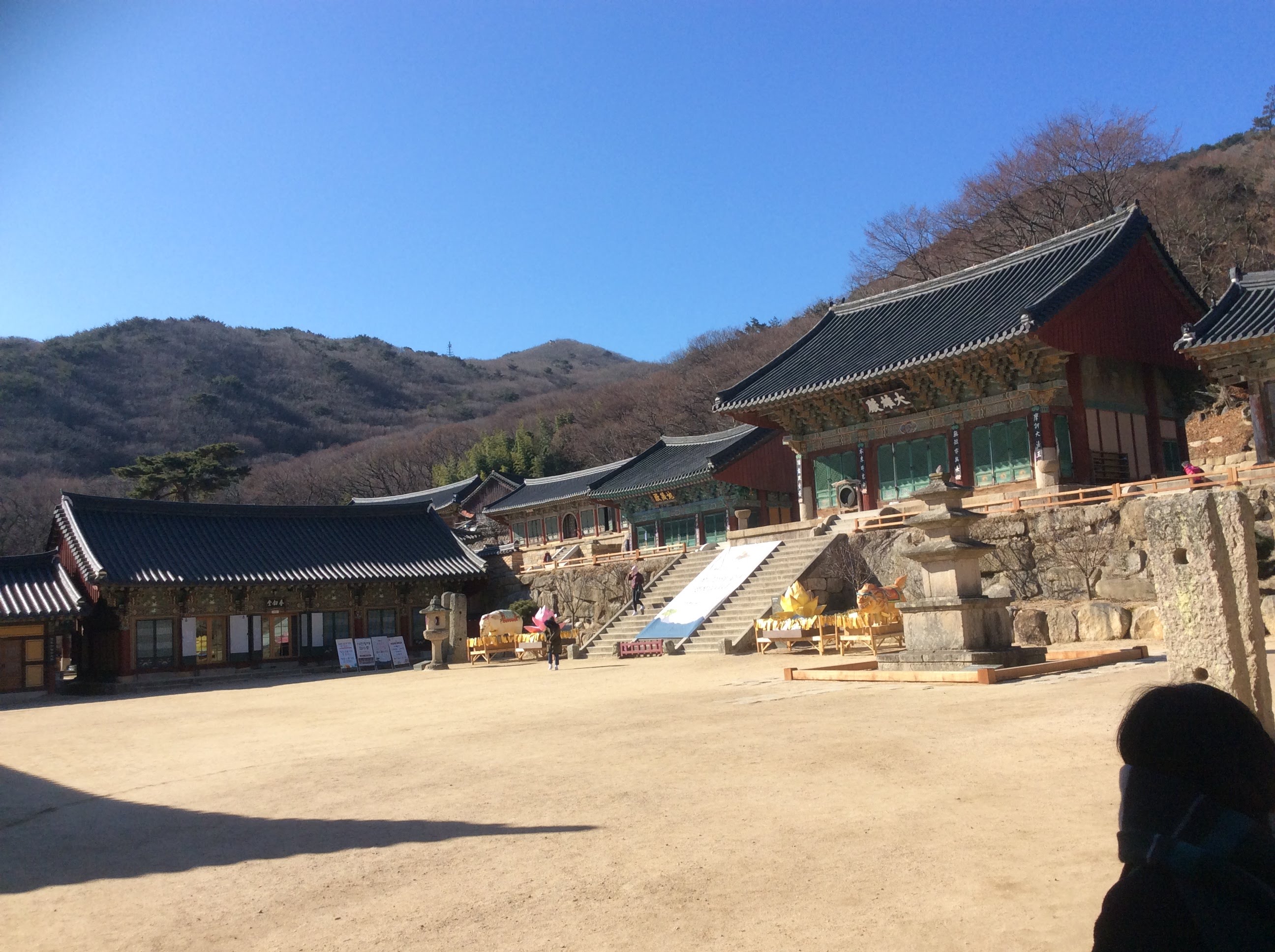
The Beomosa Temple is one of the oldest and most renowned temples in Korea, and in Buddhism. It is located on the slopes of the Geumjeongsan Mountain and was built around 678AD. The original temple was burnt down during the Japanese Invasion of Korea in 1592, but others have been built on the same spot to replace it, with renovation efforts done on some of the items that survived the inferno. One of its most famous treasures is a larger-than-life statue of Buddha, located in one of the halls, where tourists and visitors come to pray or meditate.
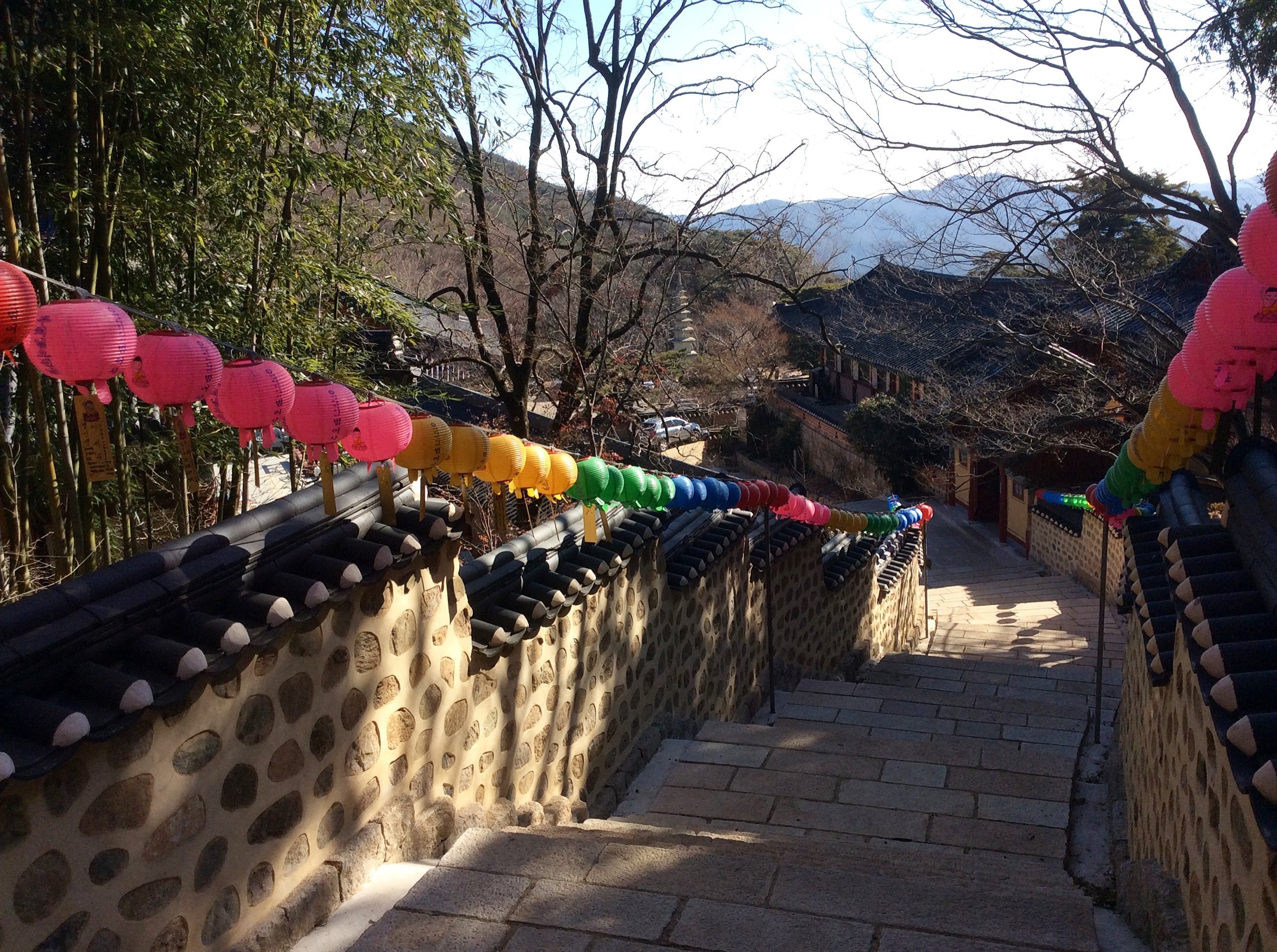
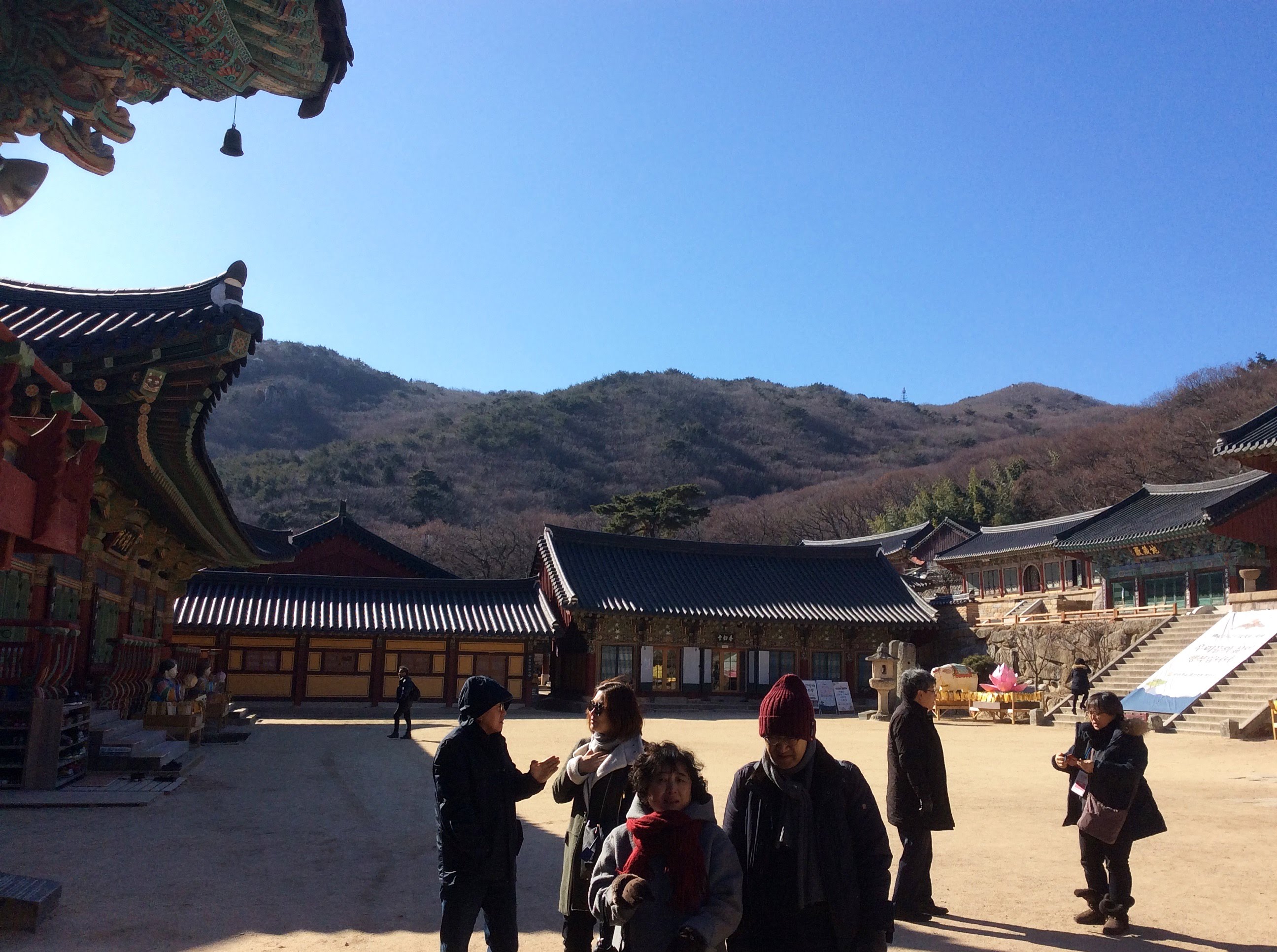


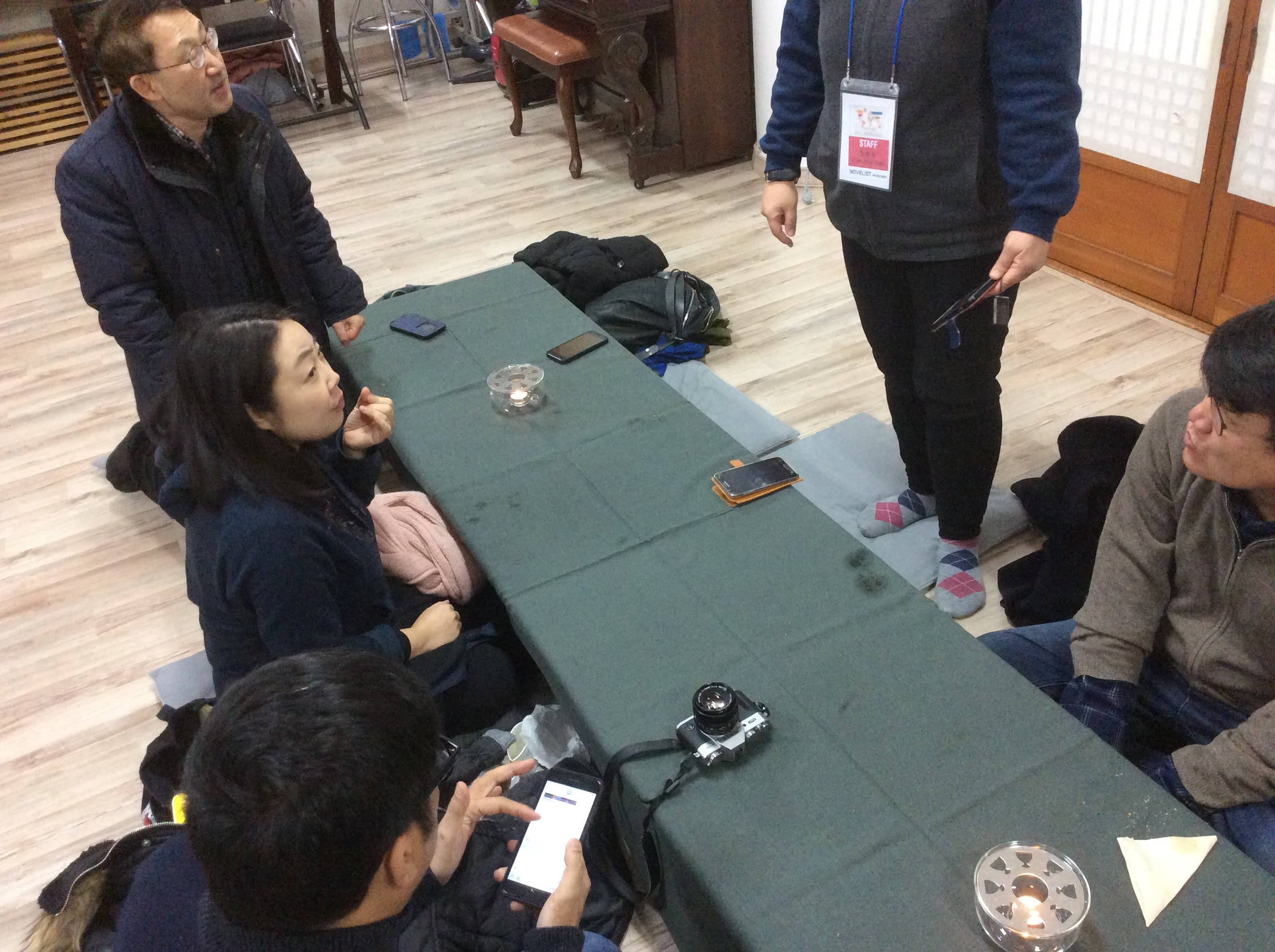
I was at Beomosa, pronounced like [po-mo-saa], recently, visiting with writer and scholar colleagues from different countries who were in Busan for a literature festival/workshop titled New World Literature Beyond Eurocentrism. It was a chance to discuss issues of relevance in the global conversations around the direction of literature. I was on a panel with writers from the Philipines, China, Mexico, and Korea my contribution focused on my work as a writer and linguist in Nigeria and the challenges of African language literature. (The title of this my recent interview with AfricanWriter.com makes the case perhaps more concisely).

The name of the temple – Beomosa – means “Nirvana fish” in Korean, named after a fish reputed to have been found in a river on top of the mountain – a river said to have housed Buddha himself at some point in prehistory. It was my first time in any Buddhist temple, and a rare privilege to have my first visit be at one of Buddhism’s holy places. I learnt a lot about what Buddhism is and what it’s not. It was also interesting to learn that its purpose “to end all suffering” had long been wrongly translated. Our guide said that the better translation would be “to end all unsatisfactoriness”, which made more sense. Most religions of the world profess a kind of longing for the afterlife. Or, at the last, some sort of paradise. In Buddhism, that is an enlightenment that can only come from within. Not by prayers to anyone, not even to Buddha, but a pursuit of an internal state of transcending human disquiet.
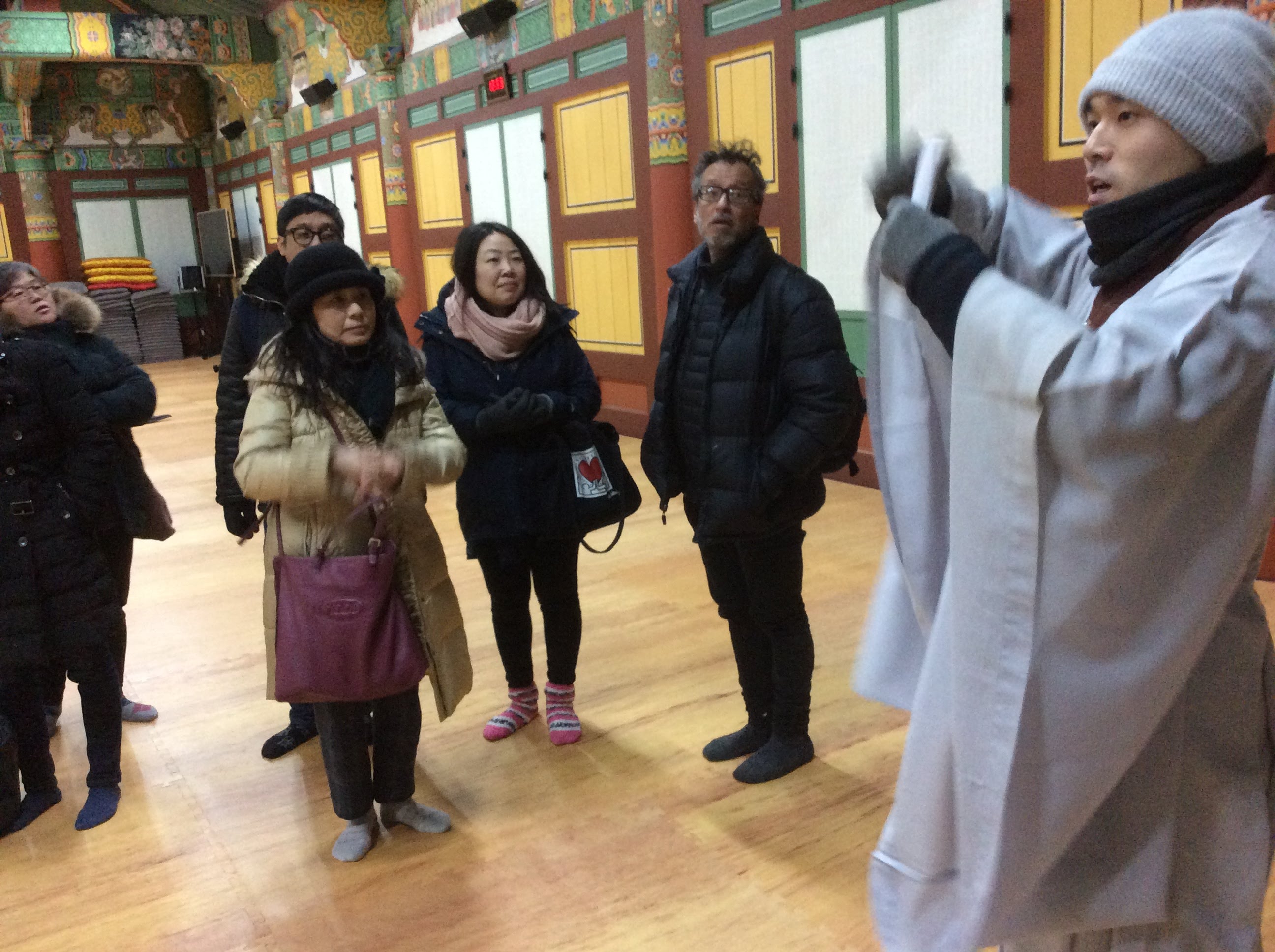
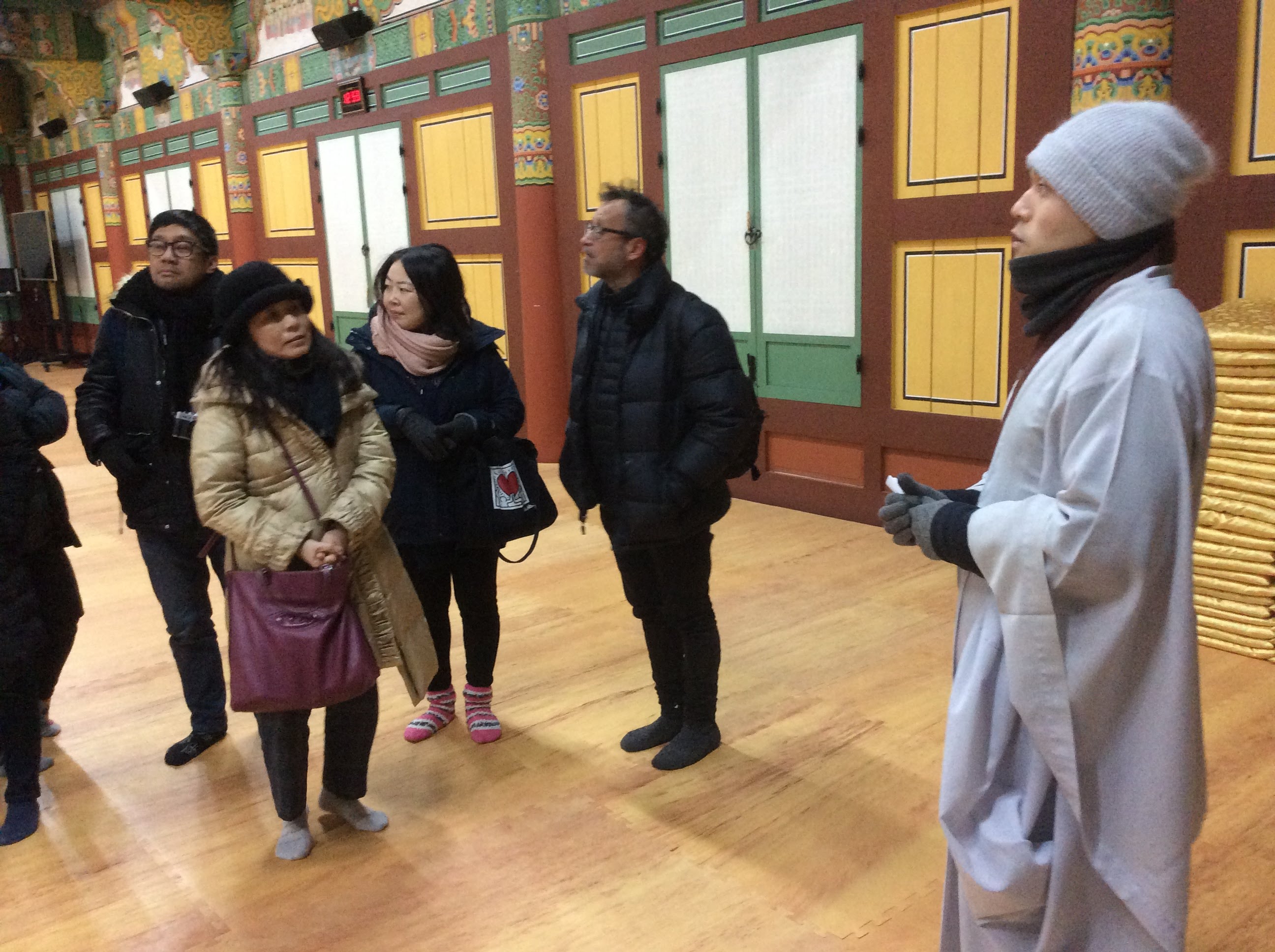


Our guide was a young monk, about 27-ish. He was born in Korea but spent much of his childhood and adult life in the Central Illinois area around Champaign, attending the University of Illinois, Urbana. His accent gave him away pretty quickly, though, according to him, this was the first time he would be using the English language since he returned to Korea just three years ago to become a Buddhist monk.  The language of the temple (and of the environment) is Korean and Chinese. He provided us an overview of the temple, its ancient and contemporary history, and his role as an apprentice monk. A question I wanted to ask, but didn’t, was how he came to the decision to leave the modern life behind in America to become a monk in this remote part of the world. What I managed to ask was whether there are people who begin this journey to become a monk and then give up half-way. The answer is “yes”, but his passion and conviction left me in no doubt that he wouldn’t be one of them.
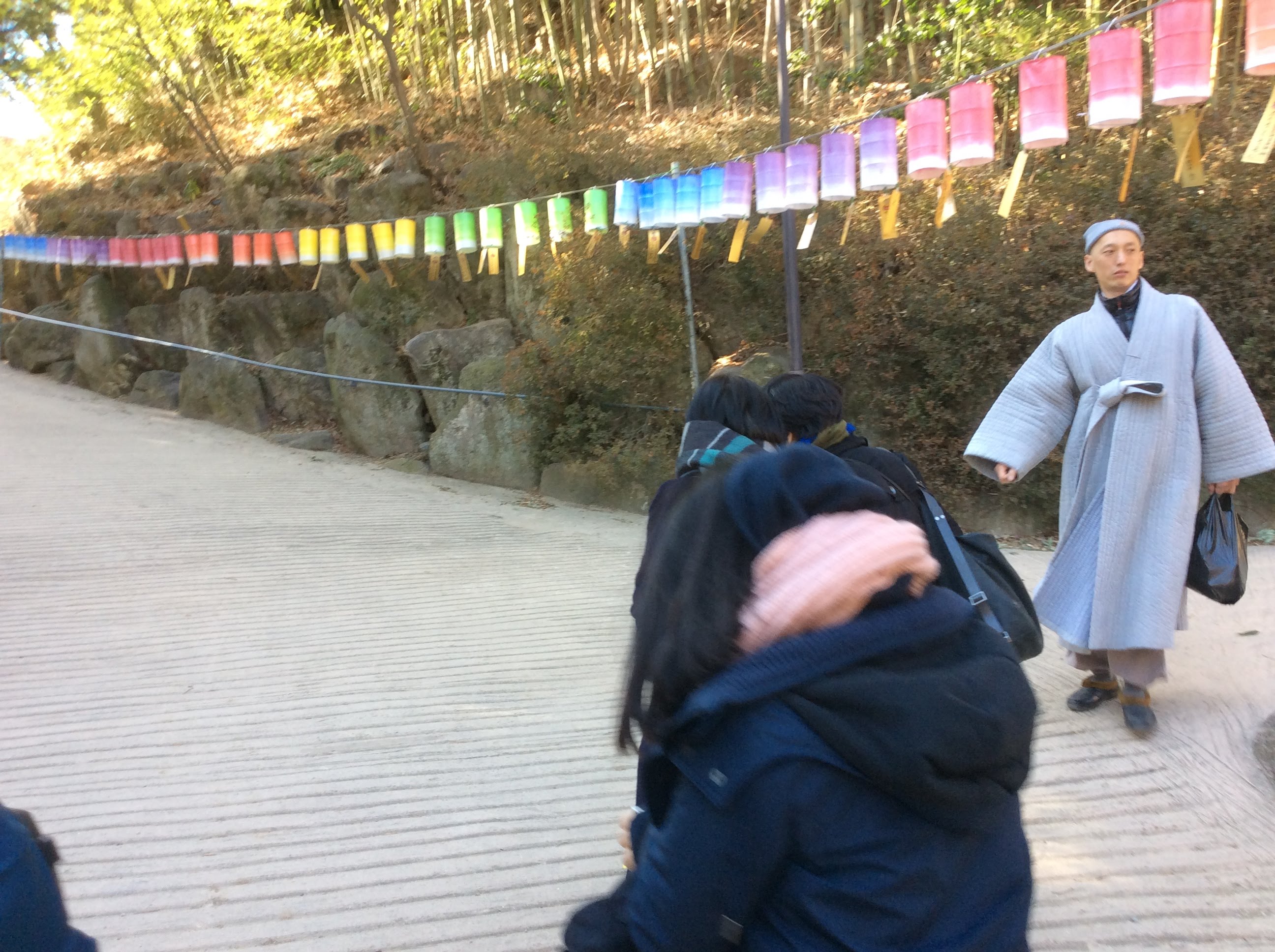
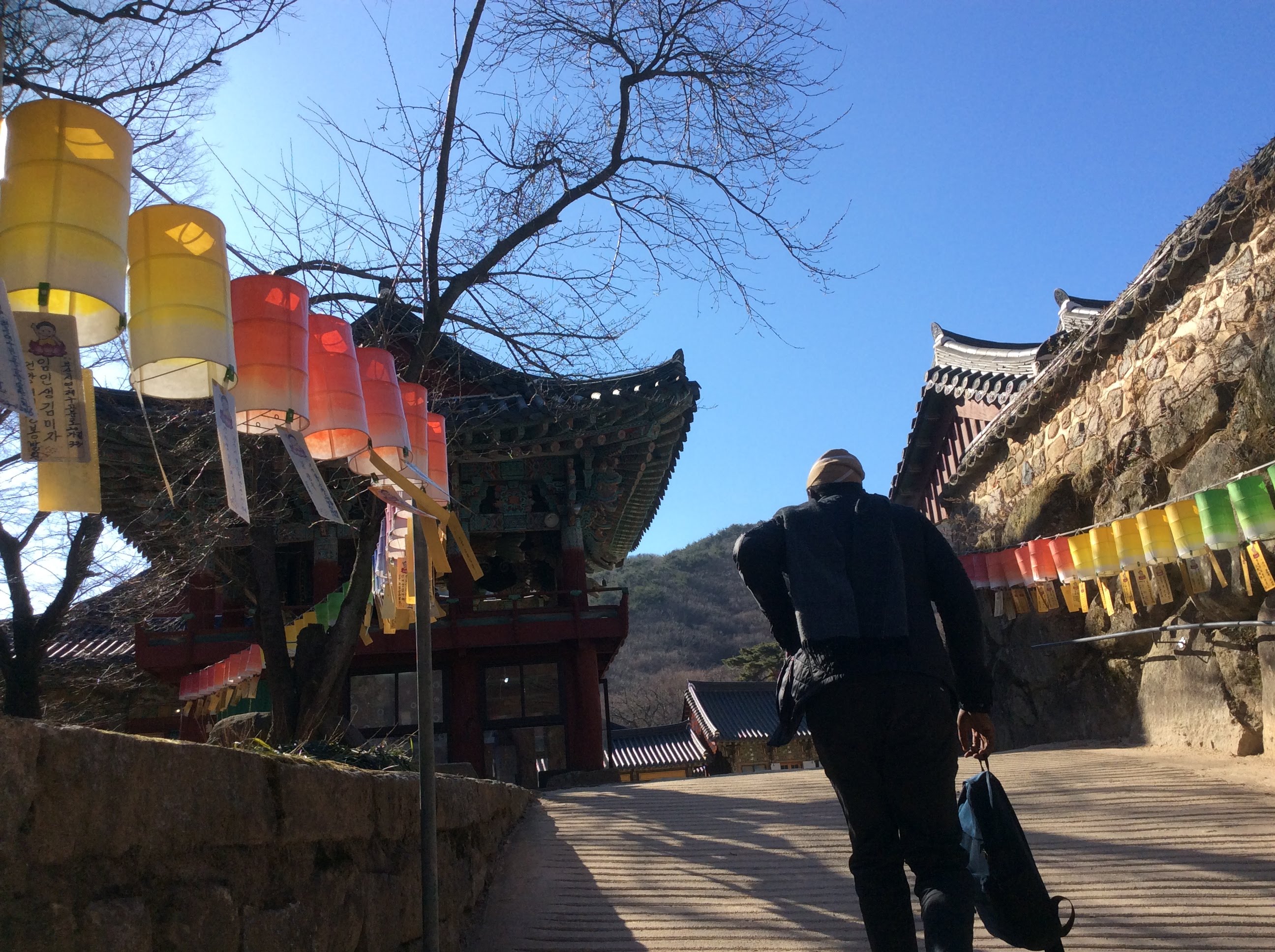


The temperature in Busan on the day of the visit felt like Antartica, but it was around -12 degrees. Not much of a difference to the Nigerian who has been familiar with only two seasons: wet or dry, each hovering around 30 degrees Celsius. Korean travel writer and translator Kim Soo Woo had looked at me with motherly concern earlier in the morning as I came out of my hotel wearing about four shirts over the other. “This won’t be enough,” she suggested. “It would be reaaaaaly cold.” Do I have something else to wear on these four shirts before putting on a jacket? I went back into my room and found a sweater I had thankfully brought along from Lagos, so I slid into it. And yet, on this mountain, beaten left and right by the chilly wind that still managed to pierce deep into my bones through the clothes, I wished that I had more clothes to hide under.

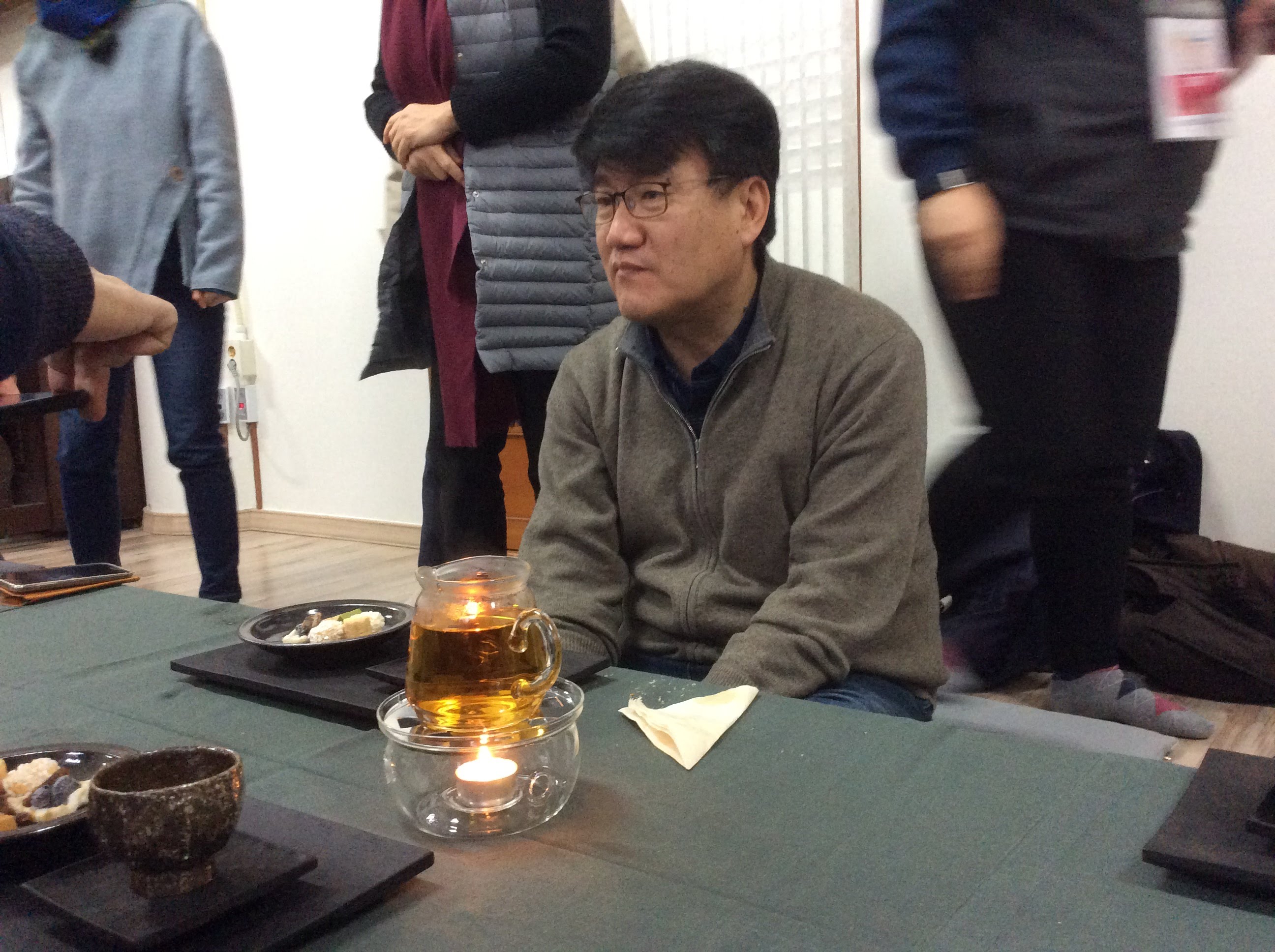
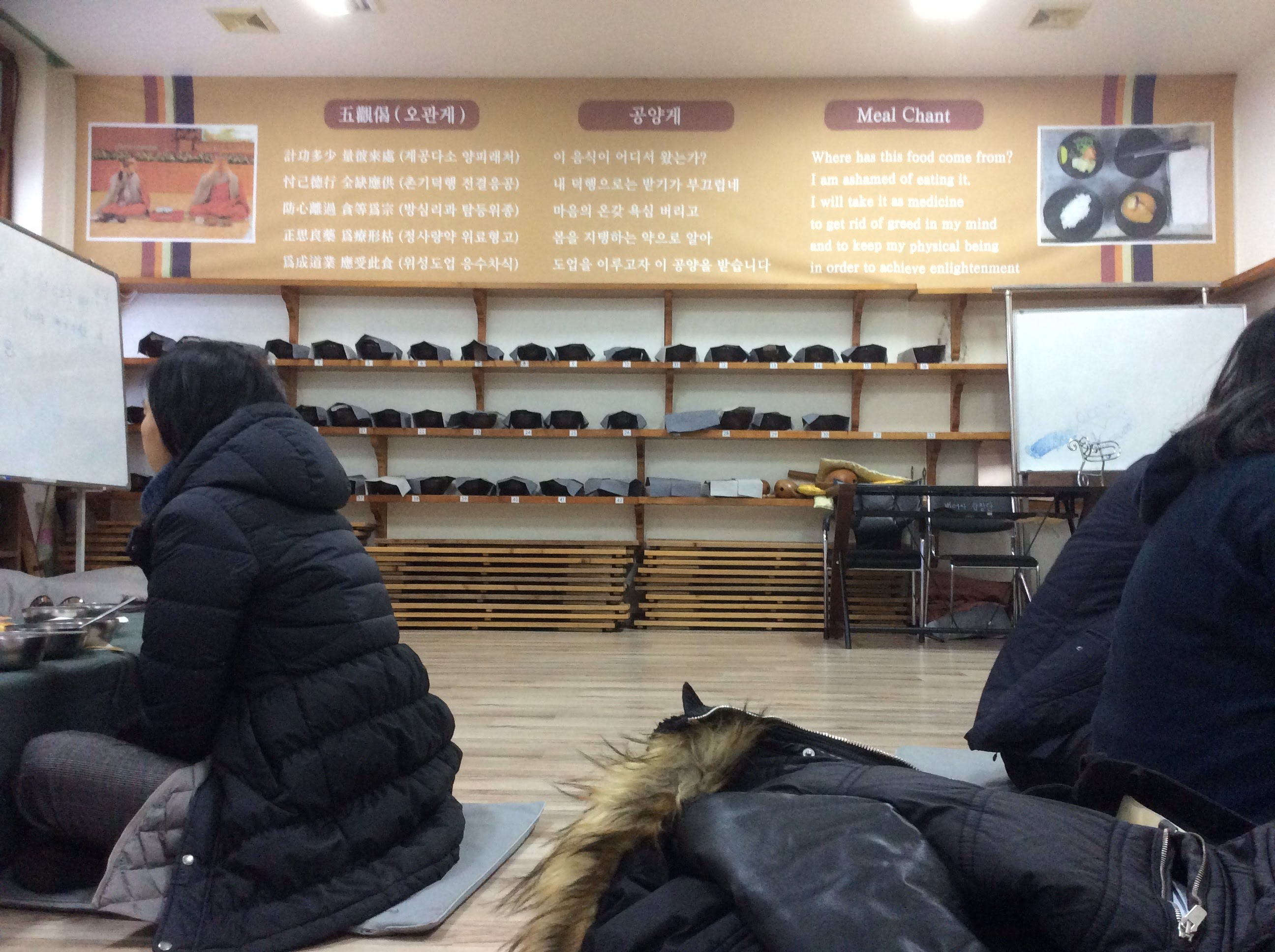
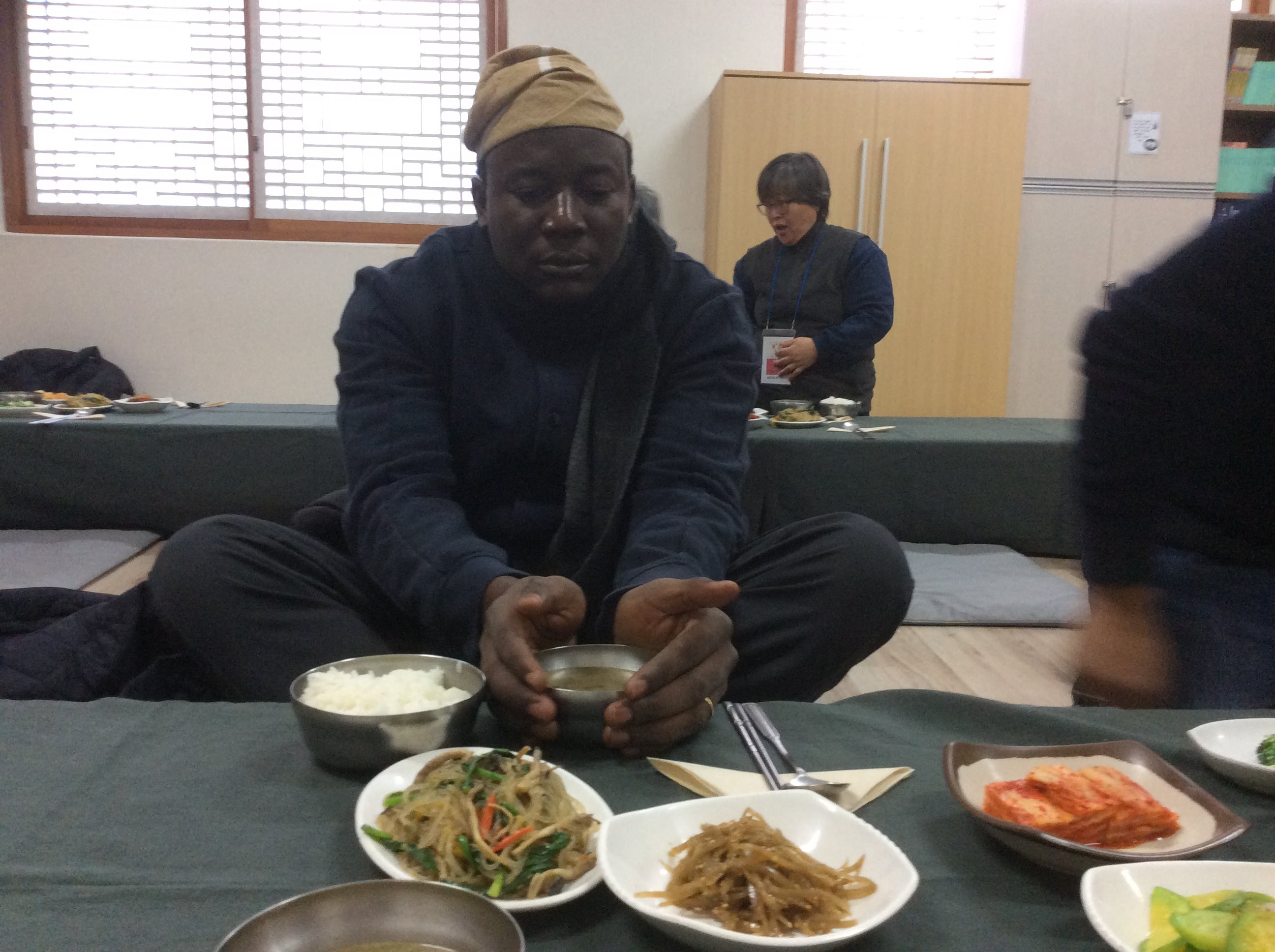
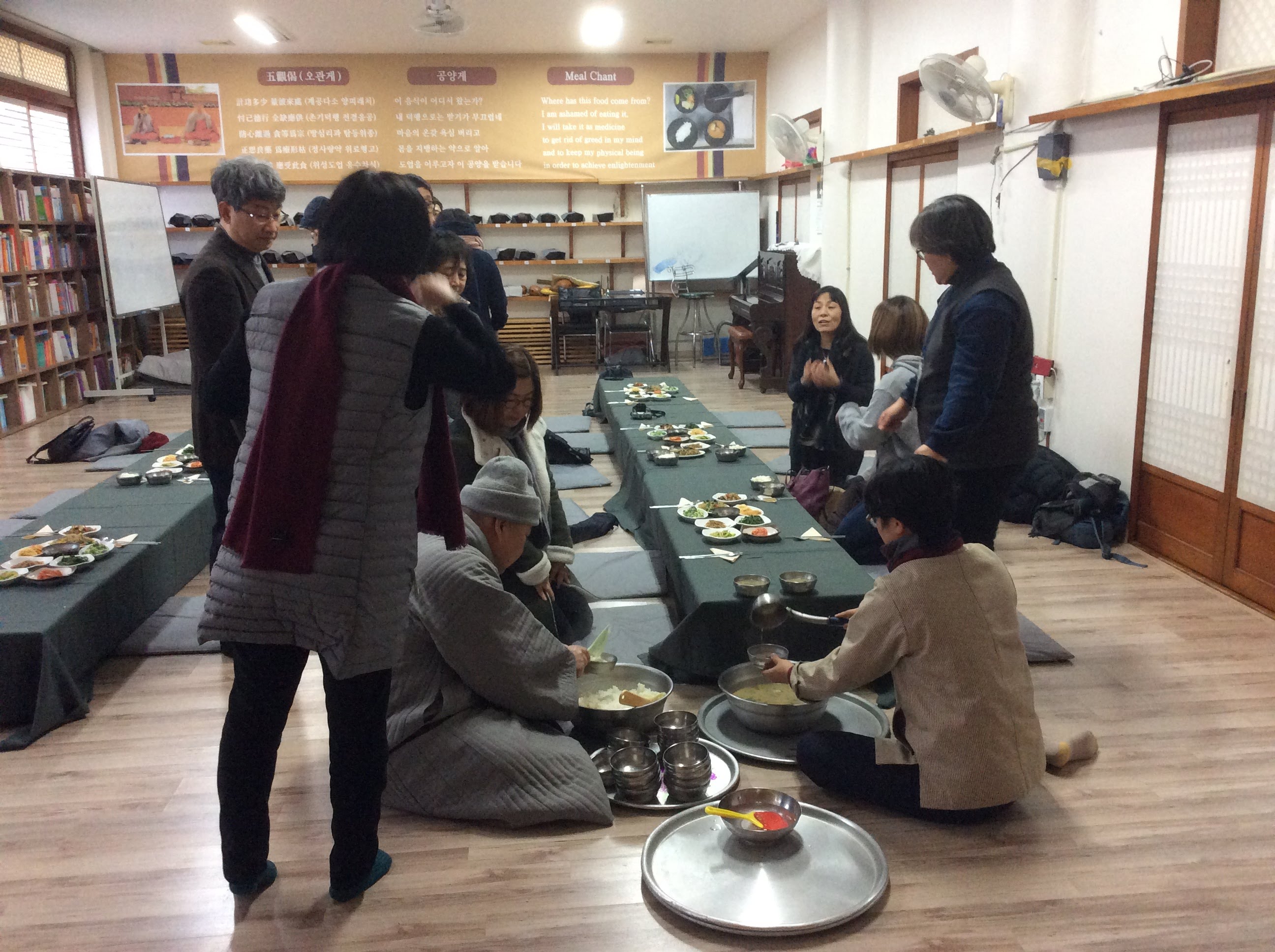
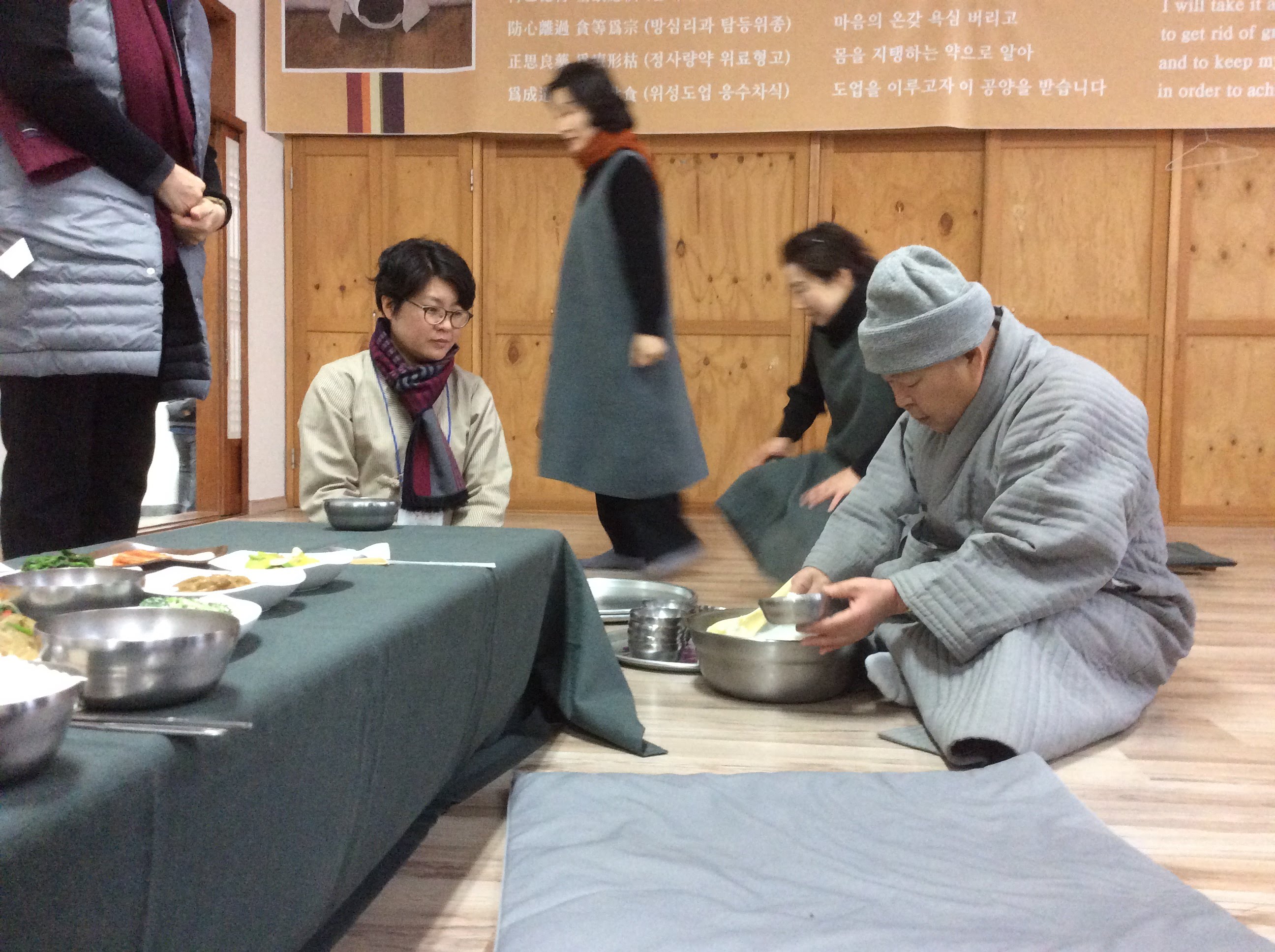
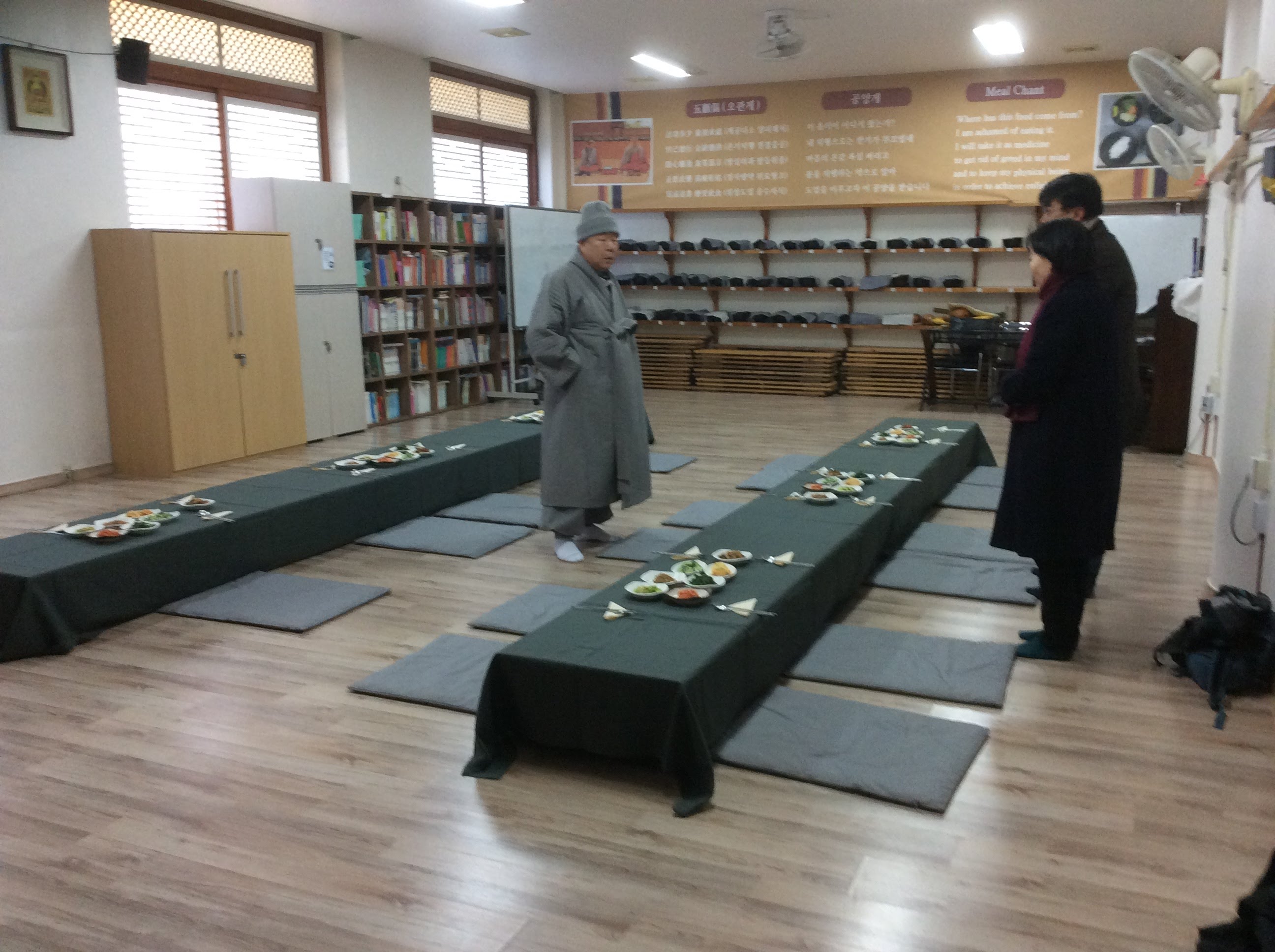
The monks had a special outfit which, I suspect, also had inside insulation. They seemed comfortable in their skin and in this environment. The temple would certainly be a more interesting place to visit in the fall or at any other time of the year, but they didn’t seem discomforted in any way. When it was lunch time, we gathered into the dining hall, and into an inside room open only to the elderly monks and their visitors. It was another rare privilege. On the wall of the dining room is the “meal chant”, in Korean, Chinese, and in English, which says:

Where has this food come from?

I am ashamed of eating it.

I will take it as medicine

to get rid of greed in my mind

and to keep my physical being

in order to achieve enlightenment.


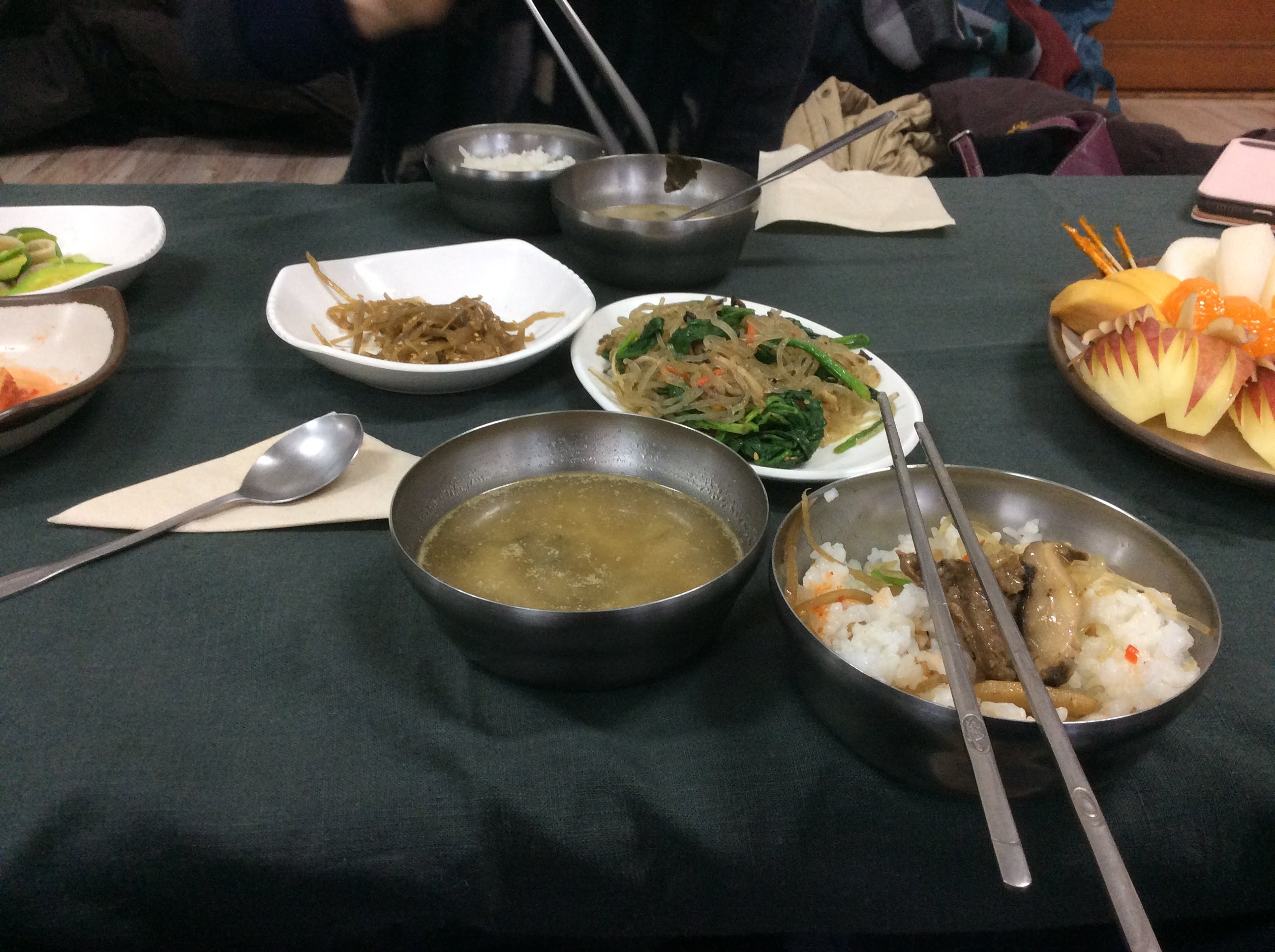
It was delicious food, but I don’t know if the spirit of Buddha would have appreciated this concession of mine to the purpose of food as more than just a means to enlightenment.


The Person That Went to Nigeria is not The Same One That Came Back

Guest post by Anne Maabjerg Mikkelsen


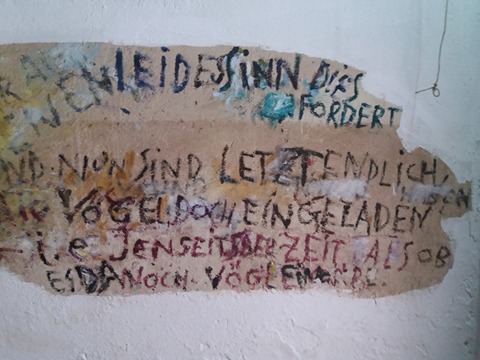
Adunni Oloriṣa’s handwriting on the wall in her former gallery where I slept. Written in German: “Nun sind letztendlich die Vögel doch eingeladen”, English translation: “Now, the birds are yet finally invited.”

“Why do you have to travel so far, Anne?” This was the first reaction from my beloved grandmothers as I told them I would be travelling to Nigeria with the University of Potsdam in October.

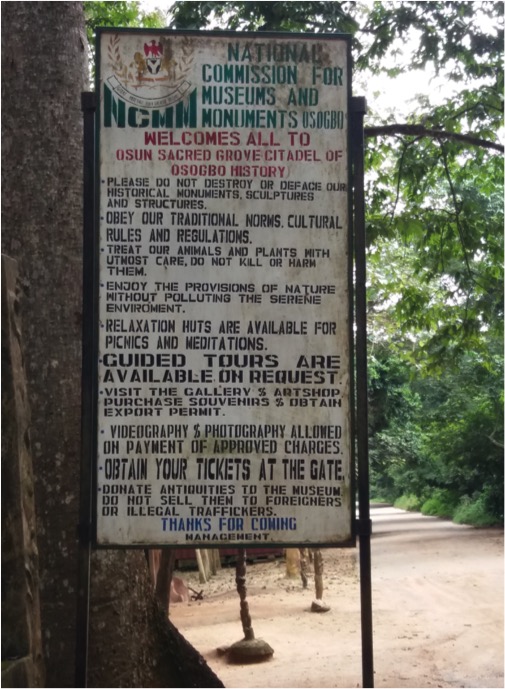
I understand their fears. Nigeria does not have a positive reputation in Denmark because of reports of kidnappings, corruption, diseases, and terror. However, I had to go not just because of my master’s thesis about the Ọ̀ṣun-Òṣogbo Sacred Grove, a UNESCO World Heritage Site since 2005, in Ọ̀ṣun State south-western Nigeria, but because something in Nigeria had been calling my soul.

While writing my thesis about the Grove back in Europe, I struggled with the fact that I had not been there on my own. As I realized that the field trip had been organized, it seemed too good to be true. We were a group of ten people including our professor, who had gotten an invitation letter from the University of Ìbàdàn. Most of our program was scheduled on the University’s campus, and it was a relief to leave for Òṣogbo with the group during the second weekend, since I was longing to see the Grove.

Back home, I had already studied Yorùbá culture, and the playful universe of the Òrìṣàs; the deities of a traditional West African religion manifested as energies and natural forces on the earth. The work and worldview of Àdùnní Olóriṣà (1915-2009), the guardian of the Grove, also known as Susanne Wenger, an Austrian modernist artist who was resident in Nigeria and initiated into the Òrìṣà religion, had also caught my attention. I only expected my visit to the Grove to be overwhelmingly magical. And so it was.

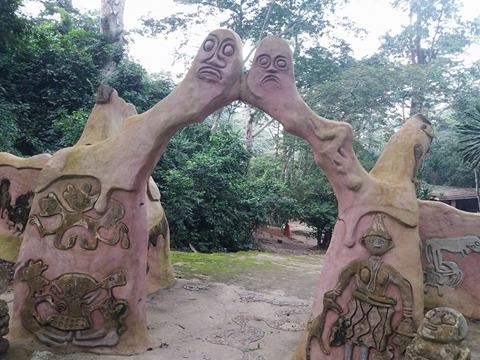
Entering the Grove, I could feel my whole body vibrating and getting charged with the intense energy that flourishes around – the powers of Ọ̀ṣun, the Òrìṣà of fertility, beauty and wealth embodied as the Ọ̀ṣun River, who is in everything there, as she nourishes all.

As the group returned to Ìbàdàn the next day, I stayed in the house of Àdùnní Olórìṣà on Ìbòkun Road with her daughter Doyin Ọlọ́ṣun, an Ọ̀ṣun high priestess, for another three days.

Everything felt so natural, and it was more or less like meeting family. We went to the Grove every day and sat by the River listening to the water curving its way through the virgin forest, sharing dreams and beliefs as the sun made its way through the clouds and sent its warm rays to the surface of the river from where they were gently directed to us. We greeted the monkeys in the green trees around us and the fish that made their arrival as we sat down. Everything here is sacred; no fish can be caught, no animal hunted or tree cut down. No wonder that Àdùnní gave her life to protect this place and the Òrìṣà religion.

It was with a heavy heart and tears in my eyes that I had to leave Òṣogbo, Doyin and her family in the house.

Before Nigeria, I was told that, “the person that went to Nigeria is not the same one that came back.” I must agree. Knowing that I have gotten the permission from the closest people, I feel capable to write my thesis not just through my mind but also with my heart. Moreover, I had the feeling that my thesis was more than just a paper, which would allow me to finish my degree.

My trip to Nigeria reaffirmed that it is also a personal path of self-discovery, and I am certain that I will return. There is much more to tell, still so many questions to be asked, and so many people to thank, among others: Professor Hans-Georg Wolf for organizing the trip; Níke Davies-Okundaye for her open heart; Kọ́lá Túbọ̀sún for his time; Dr Ọbáfẹ́mi Jẹ́gẹ́dẹ́ and the African Studies of University of Ìbàdàn; Robin Campbell from the Susanne Wenger Trust for helping me organize my stay; site manager of the Grove, Mr Olákúnlé Mákindé; and of course my deepest thanks to Doyin Ọlọ́ṣun and her family on Ìbòkun Road.

I am now back in Berlin. My beloved grandmothers are relieved and therefore, so am I. I will do my best to explain to them how magical my experience of Nigeria has been, and that not all Nigerians are bad but rather extremely welcoming and warm-hearted. Where I come from, we could learn from this place and from what the Grove represents: that spirituality is beyond race, that nature is divine and sacred, and the importance of cherishing the feminine principle.

This is exactly my answer to the question “Why do you have to travel so far, Anne?”

____

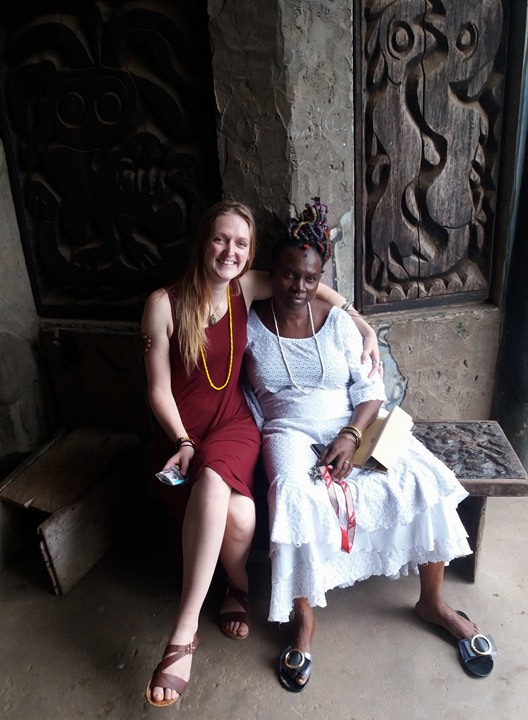
Anne Maabjerg Mikkelsen, pictured here with Ọ̀ṣun priestess Doyin, is from Denmark. She lives and studies in Berlin Germany, University of Potsdam. She spent two weeks in Nigeria as part of an academic visit.

At Gowon’s Family House

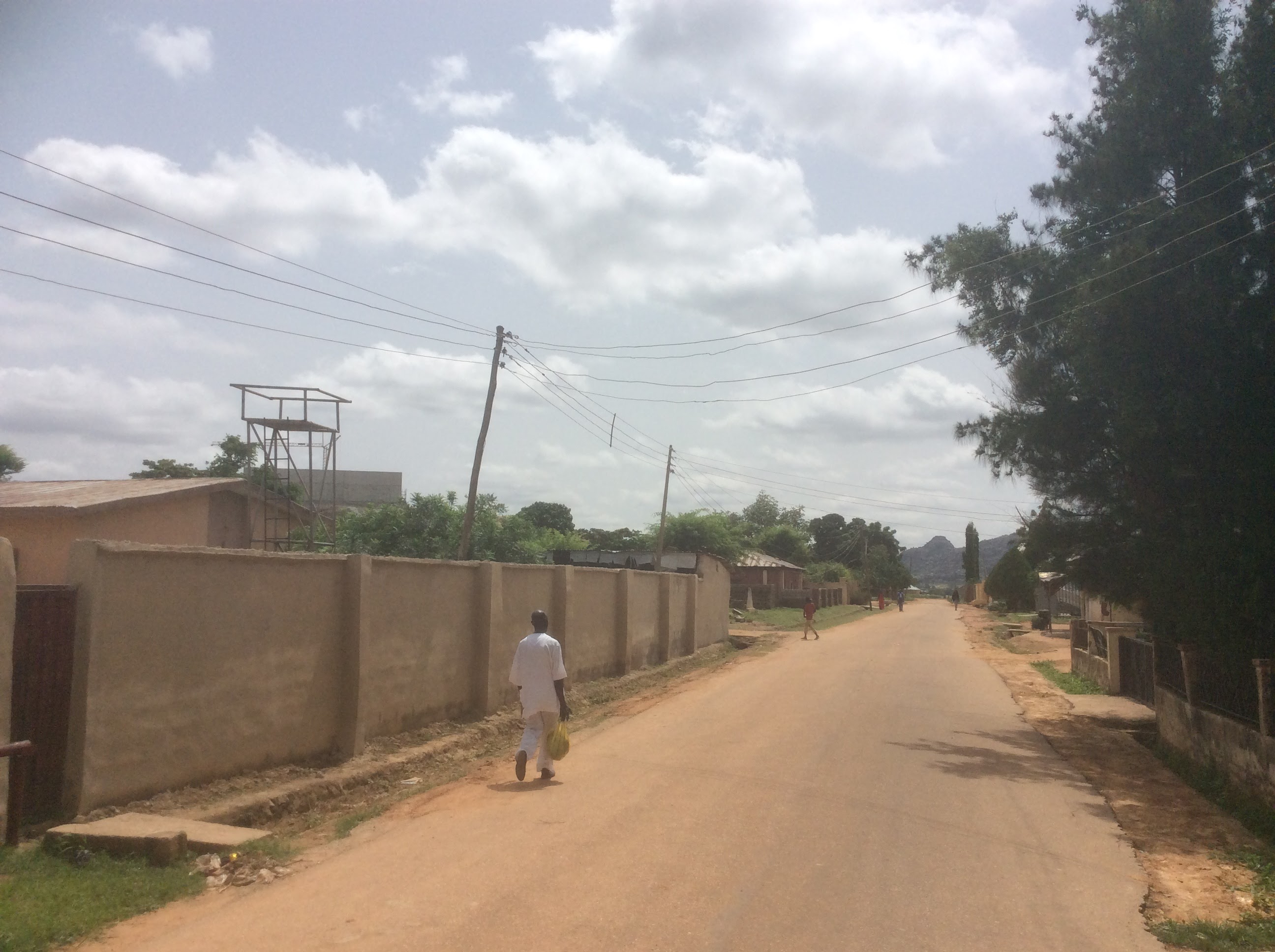
Wusasa. The road in front of Pa Yohanna Gowon’s House

Kaduna seems to throw up more interesting discoveries during every visit. The first time I was there, in the summer of 2010, I had visited the old city of Zaria as well as the church at Wusasa, St. Bartholomew’s, which has the reputation of being the oldest surviving church building in Northern Nigeria, and whose history is tied to that of the region in terms of development.

On returning to the church in Wusasa again this last July, this time in the company of my wife and Kinna Likimani, a writer friend from Ghana, I discovered something else; something I’d known was there, but never had the chance or the guts to discover: the Gowon Family House.  Both my guests and I were hearing of these two historical structures for the very first time.

General Yakubu Gowon is known primarily as the Nigeria’s longest-serving military Head-of-state under whom the Nigerian Civil War was fought from 1967 to 1970. Not much else about him has entered popular culture, with the exception, perhaps, of the fact that he was also the youngest leader. He was a bachelor by the time he assumed office in 1966. He got married in 1969. The general, as they know him in Wusasa, was actually born in Plateau State, but was brought, along with other siblings and family members, to this small missionary town when his father, Pa Yohanna Gowon was transferred there.

It is the story of his father that I have found quite remarkable.

Pa Yohanna Gowon (r) and his wife, Ma Saraya Kuryan.

Born in about 1889 in Lur, a famous Ngas town southwest of Jos, in Plateau State, Pa Yohanna, the crown prince of a prominent chief became interested in missionary work after meeting with the first foreign missionaries that settled in his community in 1907. Christianity, and in the knowledge that these alien settlers brought, fascinated him enough to give up the life of a crown prince and become an evangelist, becoming one of the first to be recruited in his hometown.

In April 1923, he got married and started a family with the daughter of another chief. Missionary work at the time was not very well-paying so he struggled and persevered. But thirteen years later, in 1936, new changes were being made to the structures of the church. One of the changes included the new rule that evangelists would no longer expect a stipend, and would now work as volunteers. He and a number of other Ngas evangelists protested. Some even left evangelical work and moved into the civil service. Pa Yohanna, disillusioned, decided to move his family to Wusasa Zaria, where a newly established mission station had been established outside the Muslim city of Zaria. It presented new opportunities. The Christians in the town had been evicted from the Muslim city of Zaria because of the threat their proselytism posed to the emirate. But at Wusasa, where they were considered outcasts, they would be able to make new Christian converts made up of the rejects of society, the sick, the uneducated, and those not considered worthy enough to live in the city.

It was there in Wusasa that Yohanna’s work as a Christian missionary, and reputation as a fervent and passionate Christian earned him a place in the people’s heart. Although his grasp of Hausa was tenuous, as observed by the people among whom he lived, he continued to work relentlessly as an evangelist until he was finally relieved of his job. But because he still worked for the missionaries sinking wells, digging pit toilets, digging graves etc, he was able to secure scholarships for his children from the Christian mission. He also took up farming, and thrived enough to acquire land right beside the St. Bartholomew’s Church, and build a family house. He died in 1973.

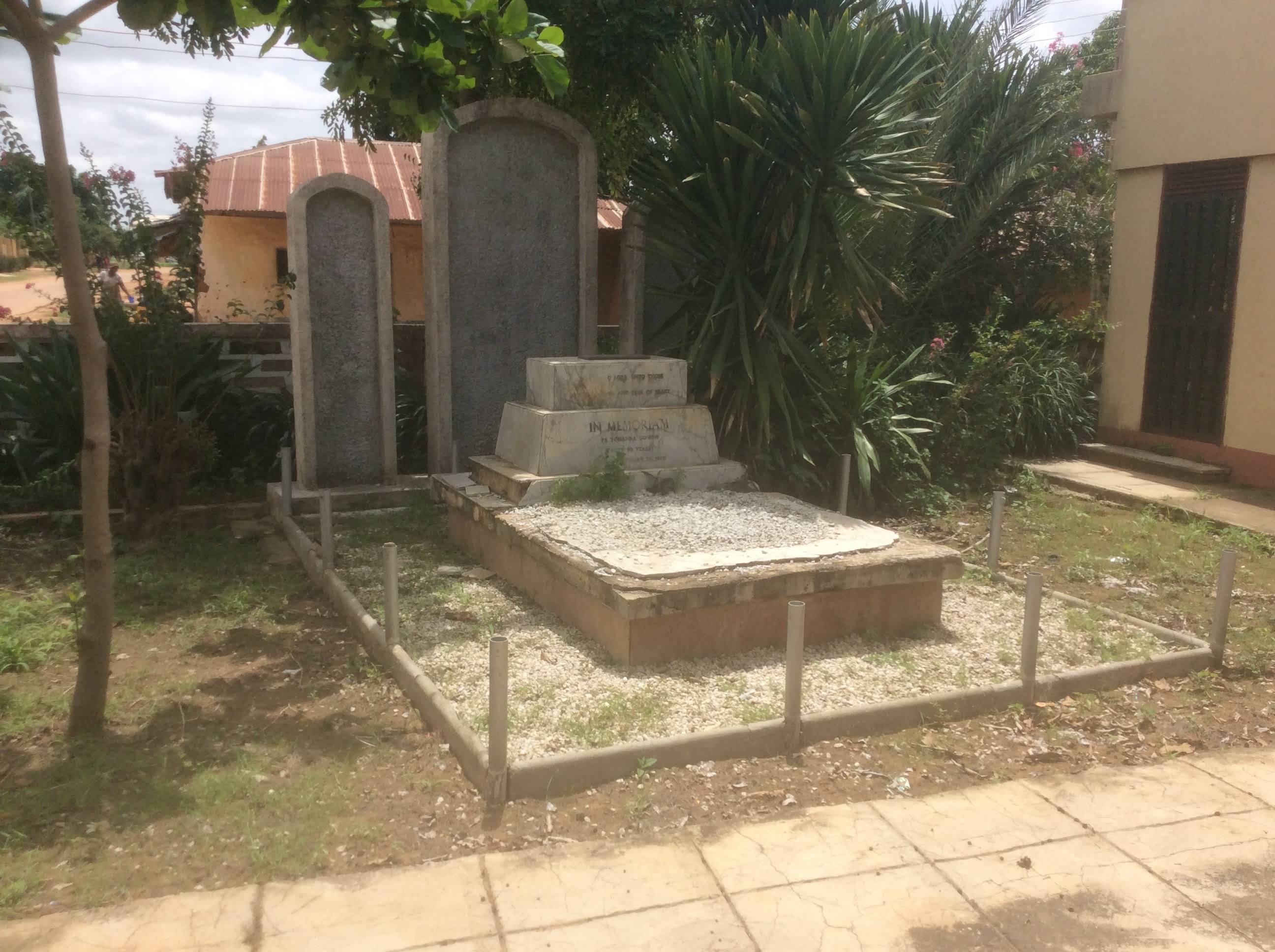
The gravesite of Pa Yohanna Gowon (1882-1973)

When I returned to Wusasa this time, I was content to spend just a little time at the church where, in any case, no one was around to show us around. But I was curious about the Gowon house so I headed there. A small gate led out of St. Bartholomew’s Church onto a small tarred road.  Across from the road was the house I had heard so much about. Painted yellow, the sprawling edifice appeared both modest and tastefully ostentatious at the same time. But its short fence suggested that whoever built it cared as much about openness and accessibility as about aesthetics.

I had never been there before. I did not even know if anyone lived there. The compound was empty and the gates were open, so I helped myself in. My wife didn’t think it was a good idea.

To the left of the entrance was the gravesite of Pa Yohanna. His date of birth and death were written on the gravestones. The silence around the premises didn’t convince me that anyone lived there.

“Now that you’ve seen it. Can we leave now?” Said my wife from the safety of the road that separated the house from the church compound.

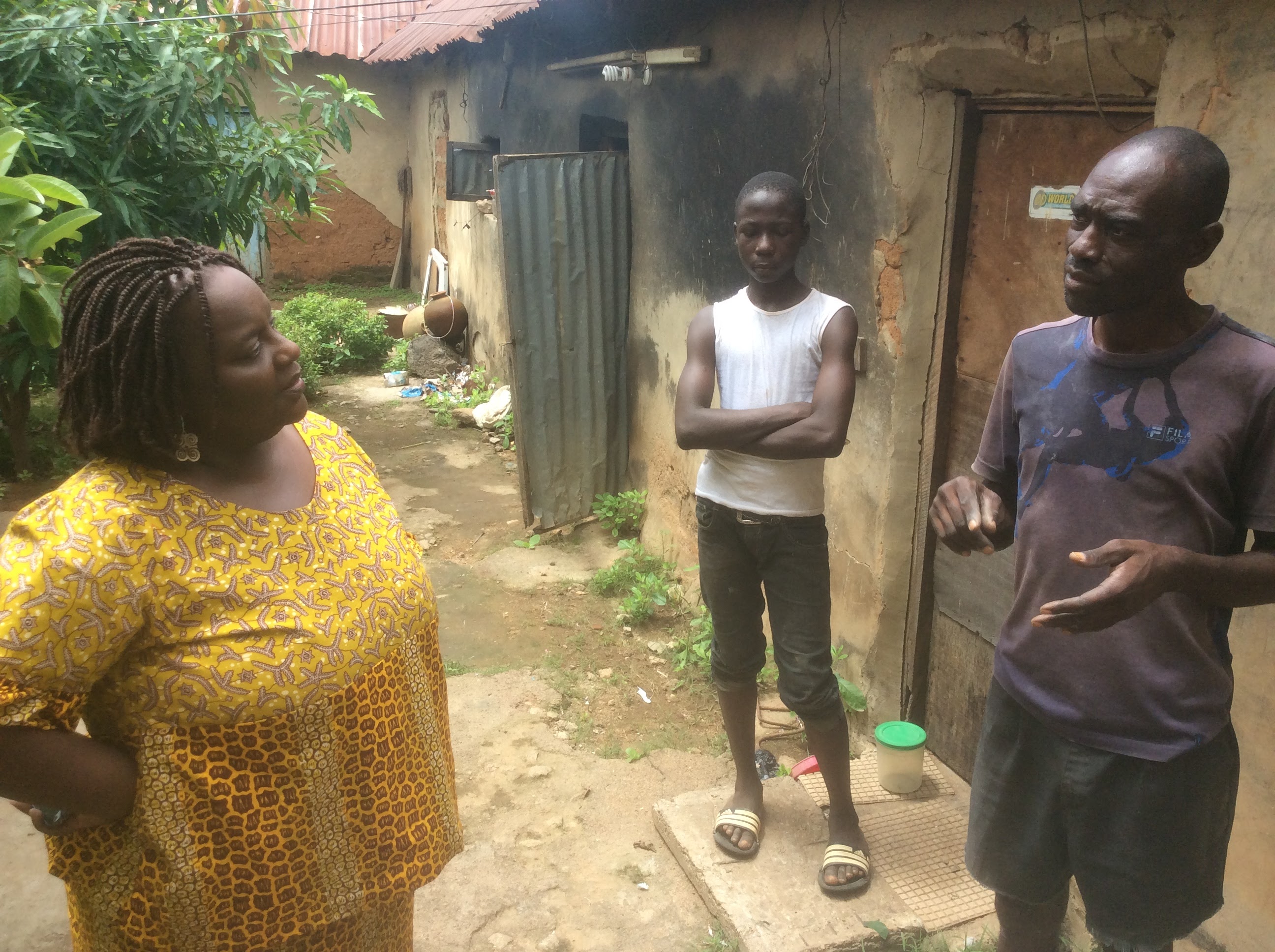
My friend Kinna Likimani, a boy, and Henry Nor.

“I think there might be someone inside.” I responded, half in jest. “Won’t it be nice to be able to talk to them?”

“I don’t think that’s a good idea!”

But there was indeed someone in the house. Our loud conversations going back and forth over the house fence must have caught someone’s attention, and a young boy came out to inquire what we wanted.

I explained myself in the best way I could without seeming threatening. He suggested that there was another person indoors that we might want to talk to. I was more than willing, but my guests were a little wary.

We walked through a small parking garage into a clearing where we were met by a young man, a soft-spoken man of certainly younger than forty.

His name was Henry.

Henry’s mother was General Yakubu Gowon’s sister who had now passed. He had lived in this house for a long time, maintaining it as a labour of love. He was also very conscious of his grandfather’s legacy in the town and was willing to talk when we told him why we had come.

He informed us that the building we saw as soon as we entered the compound wasn’t the house built by Pa Yohanna. That one came much later, perhaps after Yakubu Gowon became the Head of State, and had the means to build a more befitting edifice. Behind the modern edifice that welcomes the guest is the original building, made of mud and other traditional building materials.

Like the Bartholomew’s Church, the Gowon House exhibited a kind of originality in both style and component. Sitting in it felt relaxing. It was about two o clock in the afternoon, with a scorching sun outside, yet the inside of the house felt perfectly insulated. And it had been standing at this spot for decades, with just a few cracks on the ceiling as proof of its advancement in age.

“The general himself comes here often, you know.” Henry told us. “And he also prefers to relax here in the back house and not in the main one. This feels more comfortable, you know.”

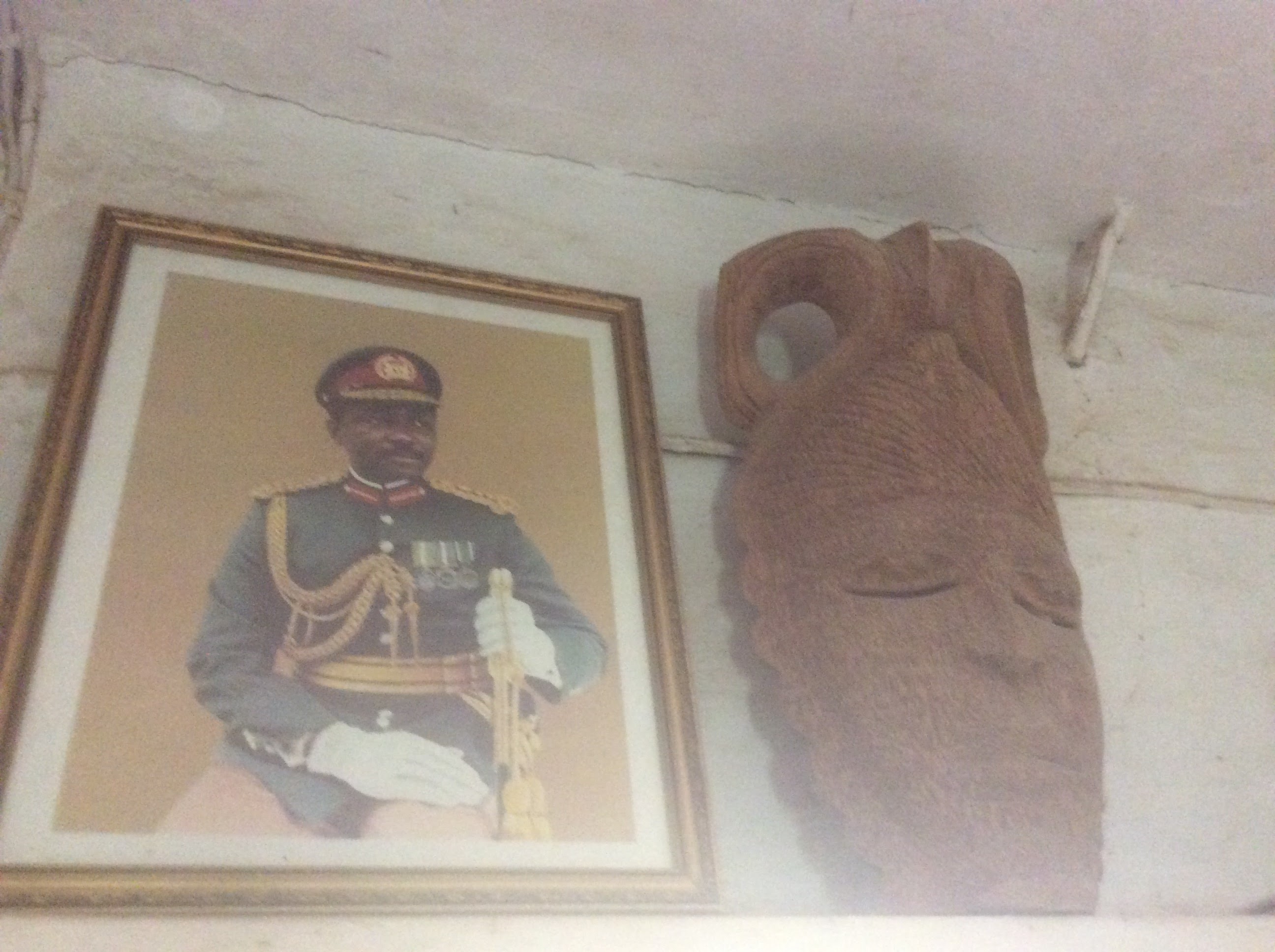
The general and a family mask.

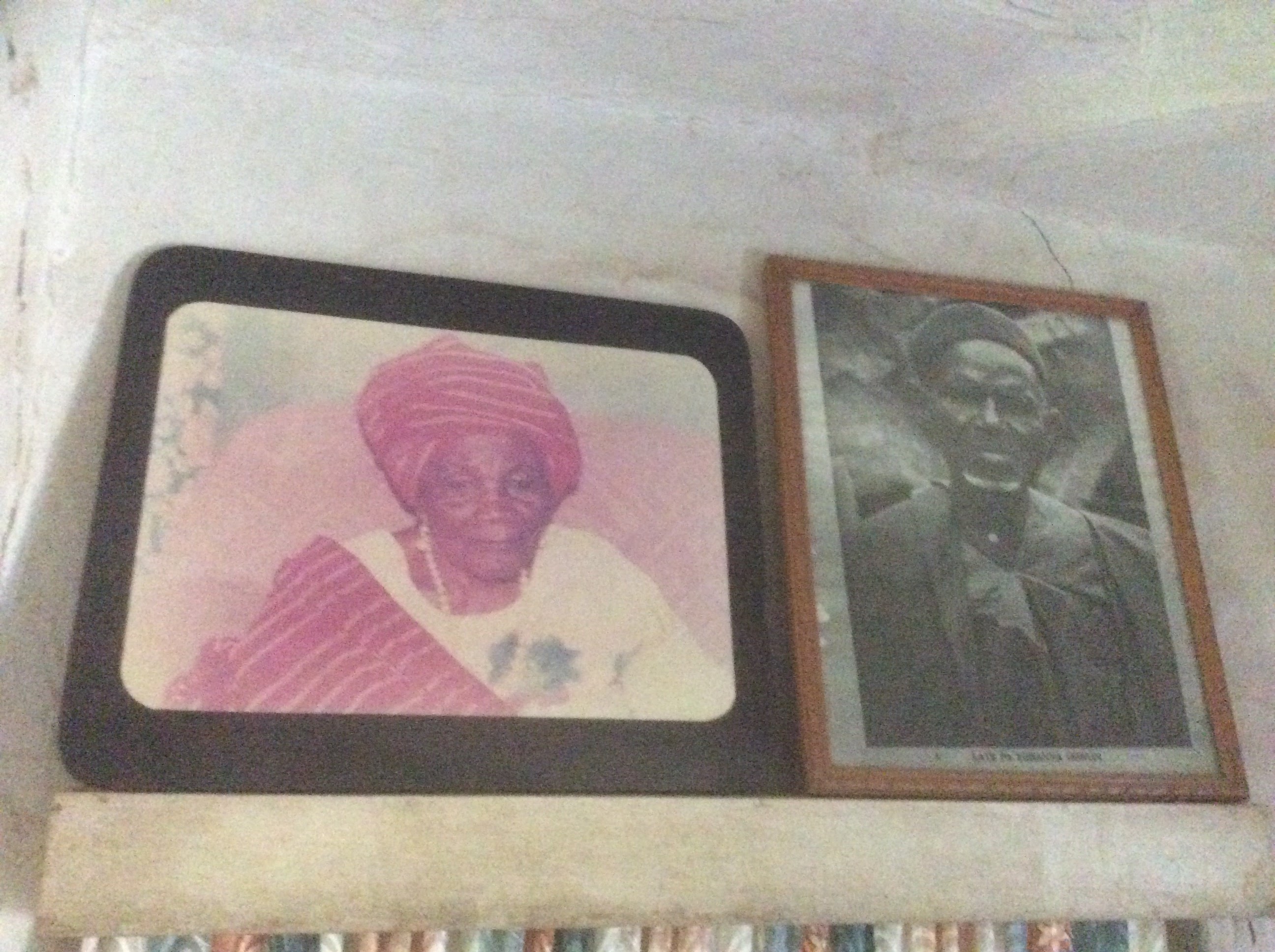
On the wall of the house is a painting of Pa Yohanna. On the doorpost is a framed photo of the general himself, looking like the Head of State he was for nine long years.

We sat and chatted with Henry for what seemed like eternity, but was for shorter than thirty minutes. He appreciated our coming, and was very generous with details and stories of his nuclear and extended families. He is currently an art dealer, he said. A couple of the artworks he once took to the National Museum in Jos, obtained from his family collection, were declared lost and never paid for. “I have taken them to court,” he said, and showed me the documents. When I told him that I intend to write a travel piece about my visit to this historical place, he was glad to encourage me to mention how badly he had been treated by the National Museum. “I think they stole my art, sold it, and kept the money to themselves. Maybe calling them out will let them take me more seriously.”

Yet, for someone this upset at what appeared to be a slap in the face by a more powerful institution, he spoke with such soft and unassuming demeanour, matching the image I have in my head of General Gowon himself, and perhaps Pa Yohanna, the patriarch, whose evangelical vocation brought the whole family to this location.

“I will do what I can,” I said. “But what you have here is a historical property. I’m glad that you are here, and that the family cares enough to preserve Pa Yohanna’s memory by ensuring that his story continues to be told.”

“More needs to be done.” He conceded as we headed out towards our driver who was waiting for us within the compound of the church. “Writing about what you have seen is a good first step.”

“I will be back,” I promised. I hope you’ll still be here.


A Walk to the Zayed Mosque

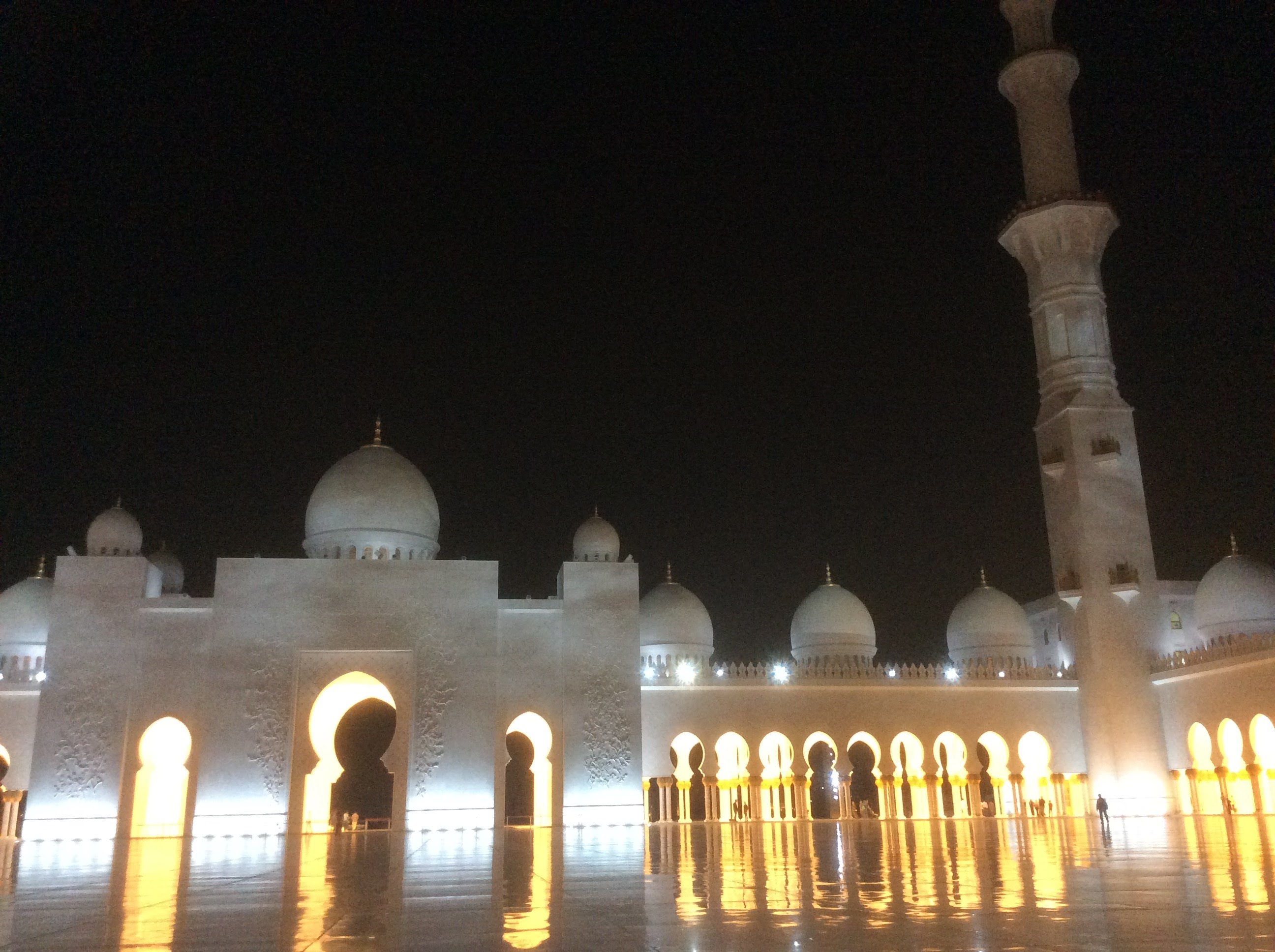
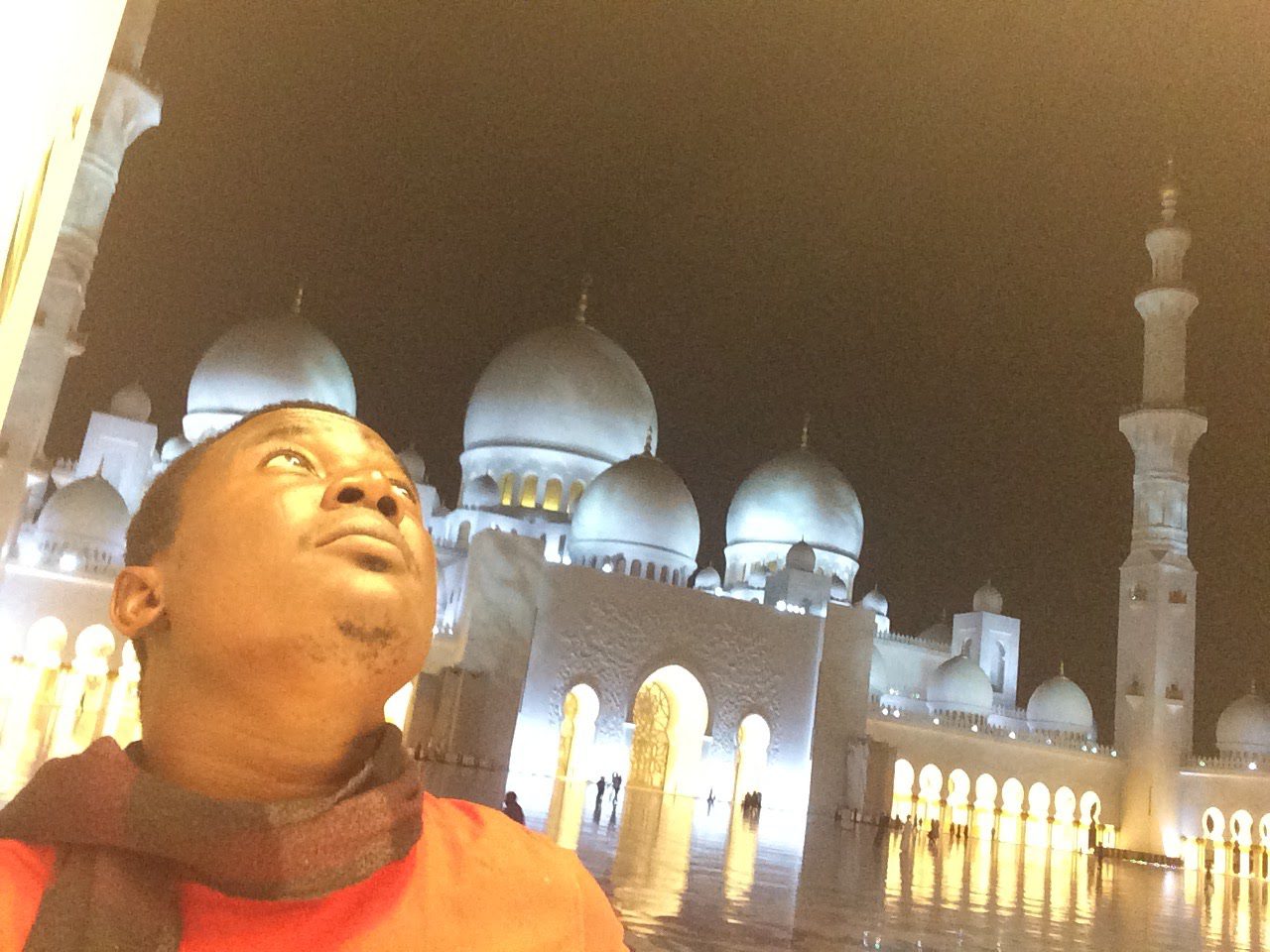
The Sheik Zayed Grand Mosque on the outskirts of Abu Dhabi was completed in 2007 after about 11 years of construction efforts, and about $545million to become the 21st largest mosque in the world by crowd capacity. On a typical Friday, it can host about 41,000 worshippers.

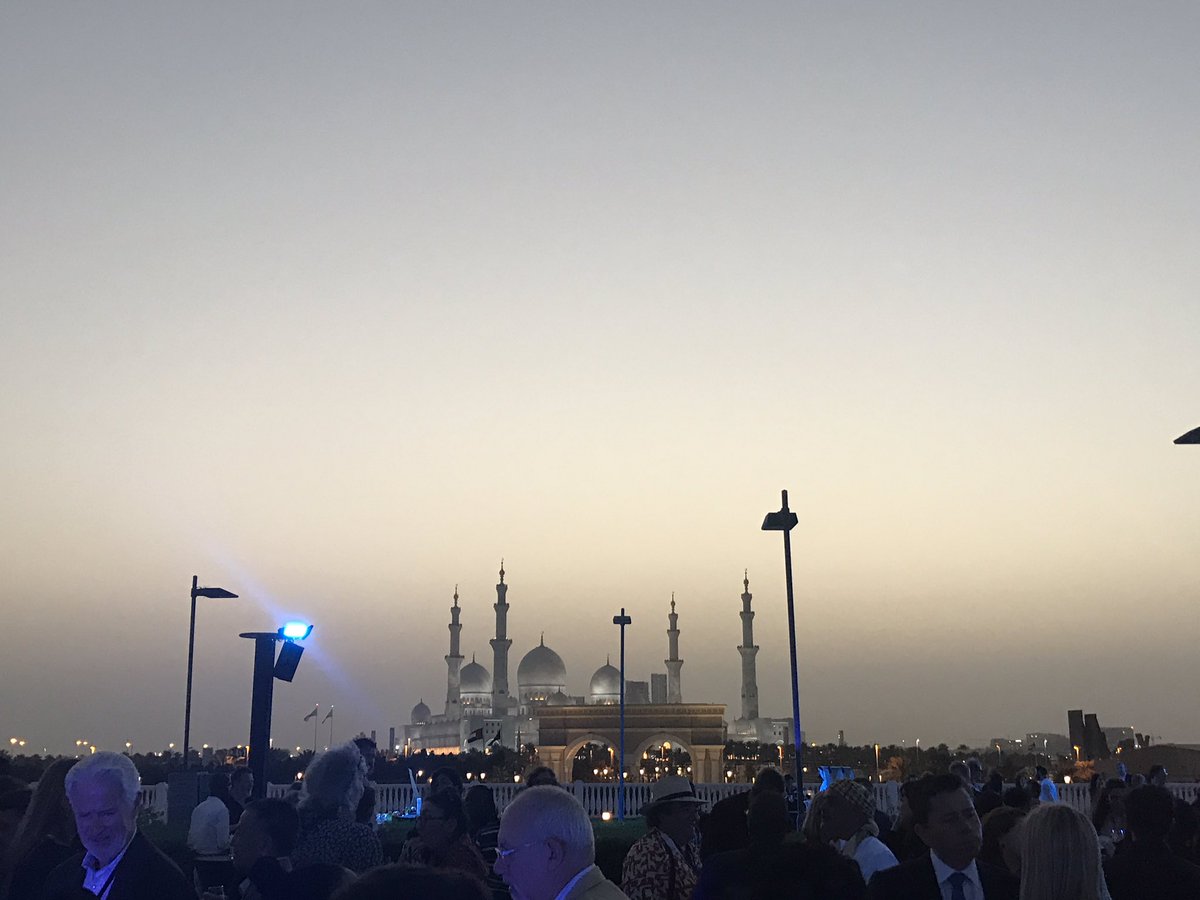
From my room at the Ritz Carlton where I was spending about a week, the view of the mosque dominated the evening, with specialized lighting constructed to reflect the phases of the moon. Luminescent from afar, inviting through the otherwise irregularly lit night, the Zayed Grand Mosque sat resplendent in the distance, refusing to be ignored.

So on one evening, on the day when dignitaries like the former US Secretary of State Madeline Albright were feted in an open ceremony on the lawn of the Ritz Carlton, with the outside temperature dropping significantly to a level familiar with an African’s skin, an opportunity presents itself for an evening walk.

From that hotel, where the security official at the gate merely saluted the stranger as he headed out by himself into an unknown town, the path to the main road was barely lit, but it lacked any overwhelming feeling of fright as guests returning from town drove back into the hotel and taxis headed out into town, occasionally taking a look at the walking traveller as if to offer a better option than walking in what seemed like evening heat. Lagos weather is typically more humid, so this was a more tolerable atmosphere.

On either side of the road were sprinklers that kept the grasses fresh and green, something that must cost a fortune to maintain all through the year, not just in water supply but also in electricity. In an off-site parking lot on the left side were a few cars that I wondered contained plain-clothed policeman awaiting orders about any skirmish in town, or lovers too shy or too broke to book a space in the hotel just a few feet away. To the right of the junction where the road from the Ritz met the highway was the Memorial Park, built to commemorate the death of soldiers who died defending the country in the March 2015 war with Yemen. On the Park is an imposing steel and concrete monument by Idris Khan, a British-Pakistani artist.

At the road, cars flew by towards various destinations. A few feet away to the left is a pedestrian bridge, lit on all sides to solidify the ambiance of security. At the foot of the bridge, built into its base, was an elevator, for elders, children, and the infirm. It looked like it hadn’t seen too much action.

Once on the other side of the road, the mosque emerged within reach. But it was only on getting to its southern steps that one realizes that visitors are not allowed entry through there, even though there are no gates. The security officers there, Indian by their looks and accents, were firm but polite. “Walk all the way”, they said, “by the wide ornamented fence of the premises as if navigating the whole circumference of the mosque grounds. You’ll get to the visitor’s gate, also called ‘the northern parking entrance'”.

To get into the mosque itself, I had to pass through a metal detector. Not knowing better, I tried to take off my shoes as well, and the security man laughed at me. “This isn’t America, my friend.” I found it funny and asked where he was from. “Morocco”, he said.

“What about you?”

“Nigeria. Know about us?”

“Yes. Football.”

***

My feelings on entering the mosque itself have not found easy expression within words. But I concede now that an unfair collision of a perfect weather, full moon, and a highly anticipated contact with this building may have added too much to the most perfect first experience. resulted in so perfect an evening.

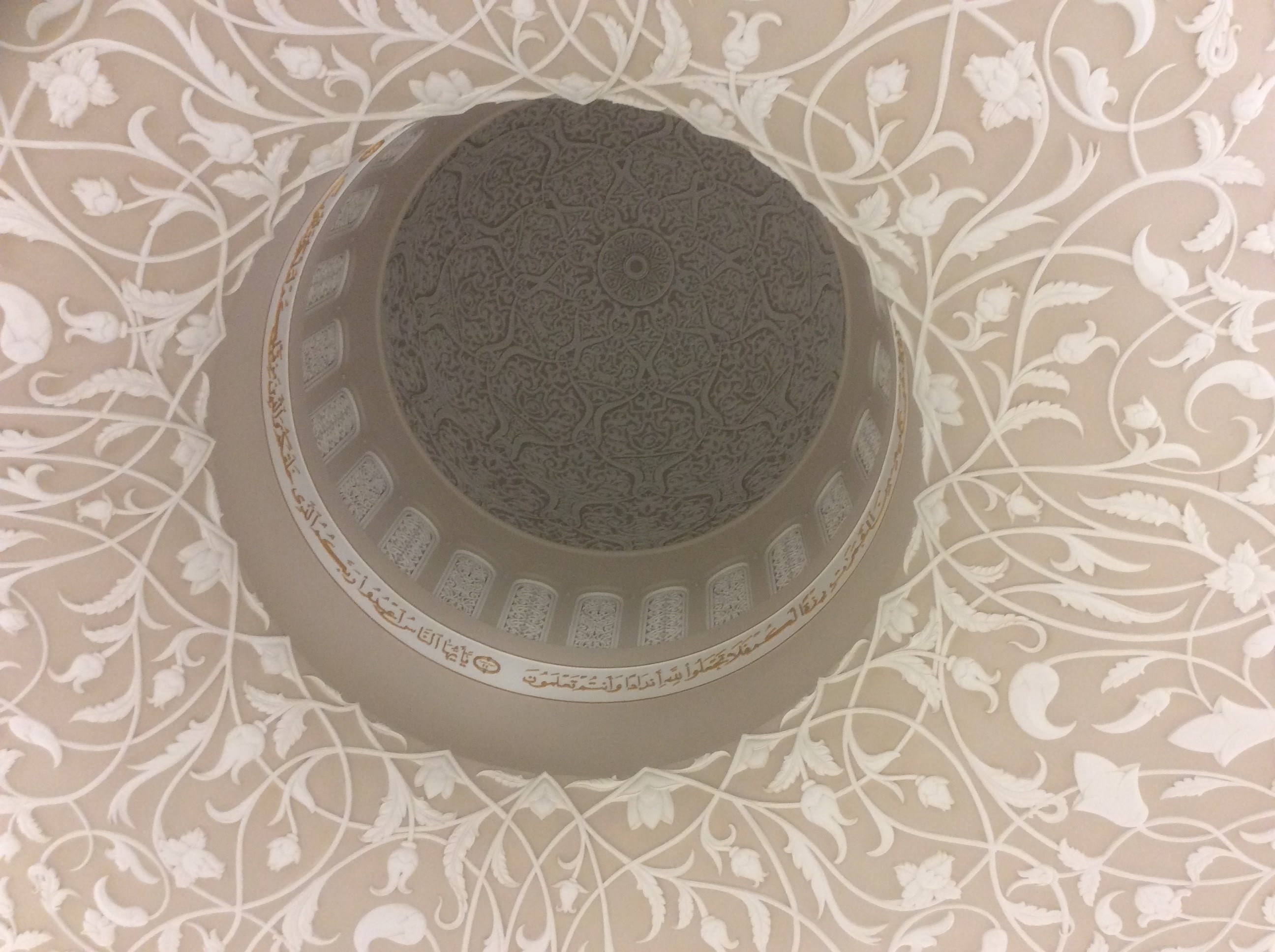
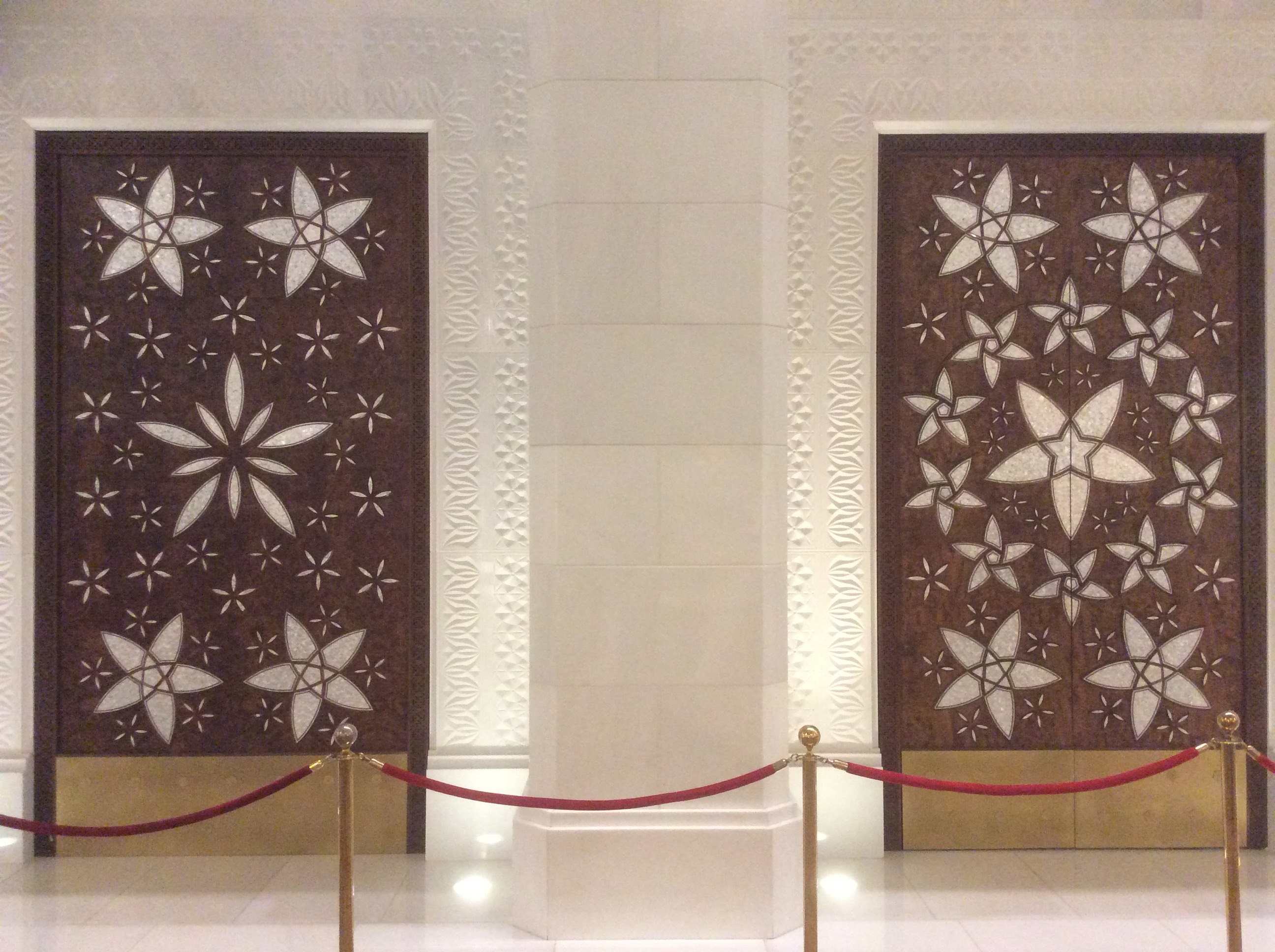
What WonderMondo described as the scope and ambition of the construction as “a structure that would unite the cultural diversity of the Islamic world with the historical and modern values of architecture and art” lived up to its expectation but much more in the way it carried the dignity of the faith it represented and the expectation of awe that its imposing nature adds to one’s contemplation of solitude while within its embrace. I still haven’t found the right words, but if the intention behind the construction included creating a serene space for contemplation of a version of paradise, then it is a successful experiment. I assume, thinking about it now, that most places of worship across cultures have aspired to that physical architectural effect

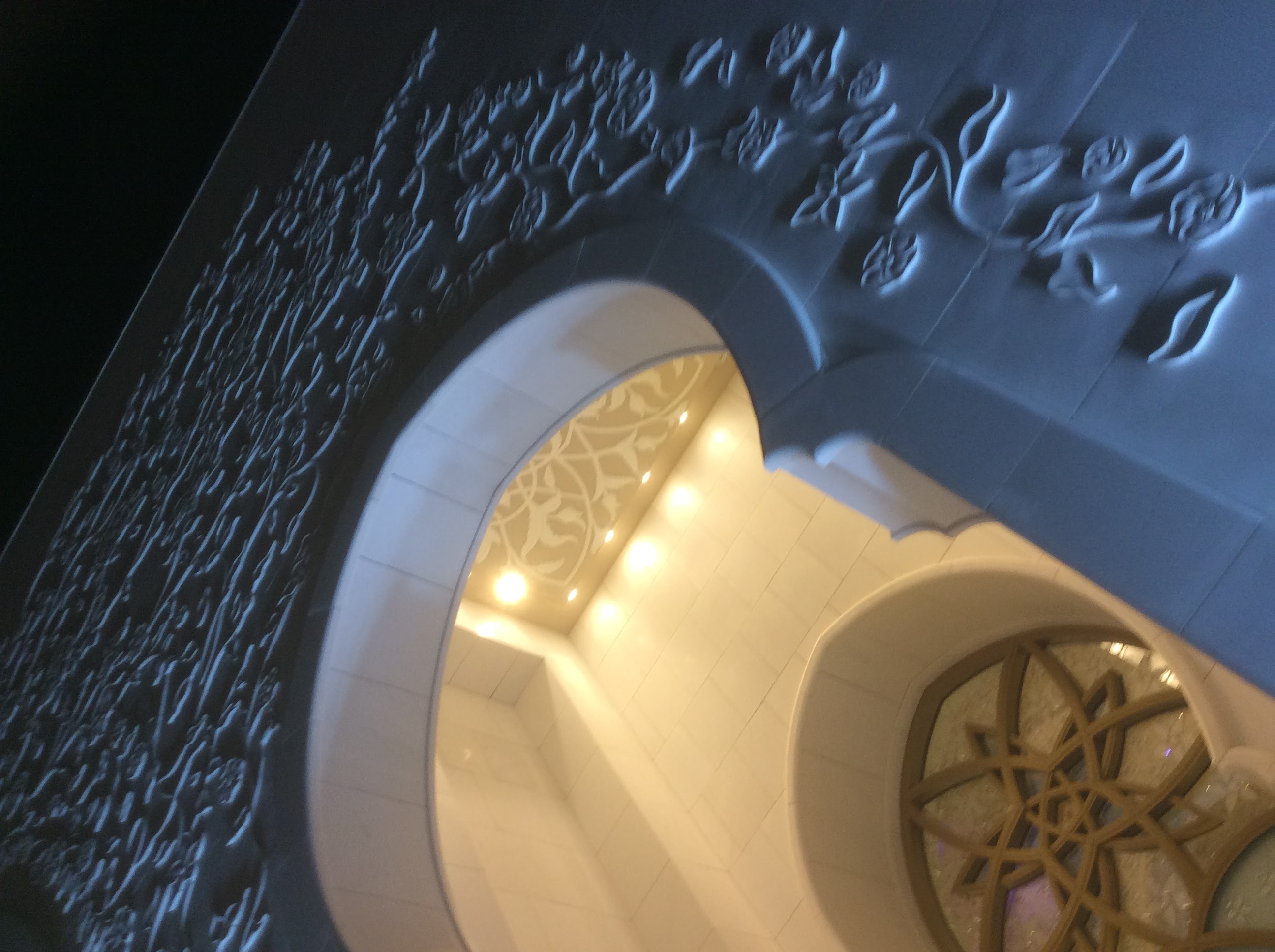
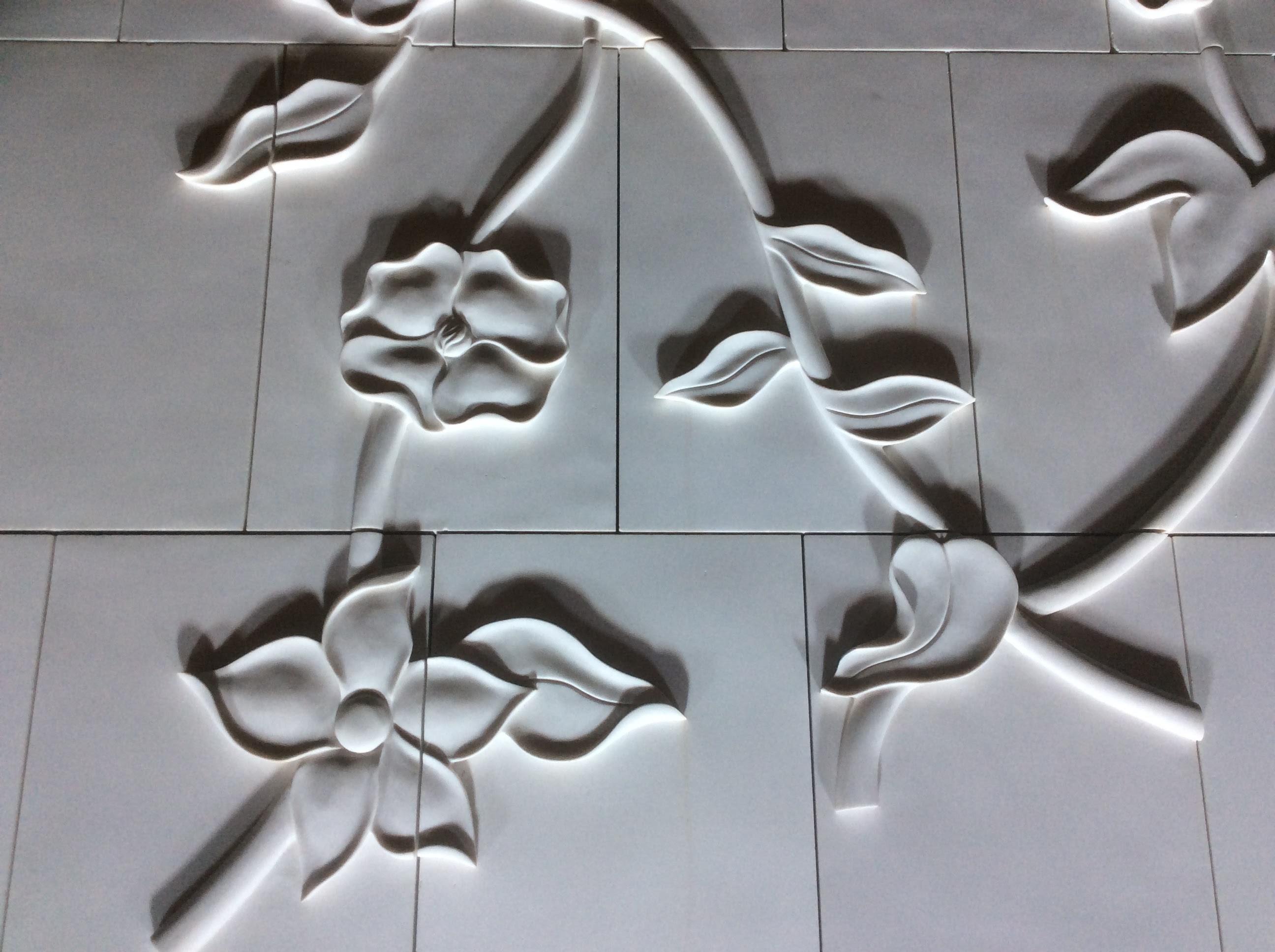
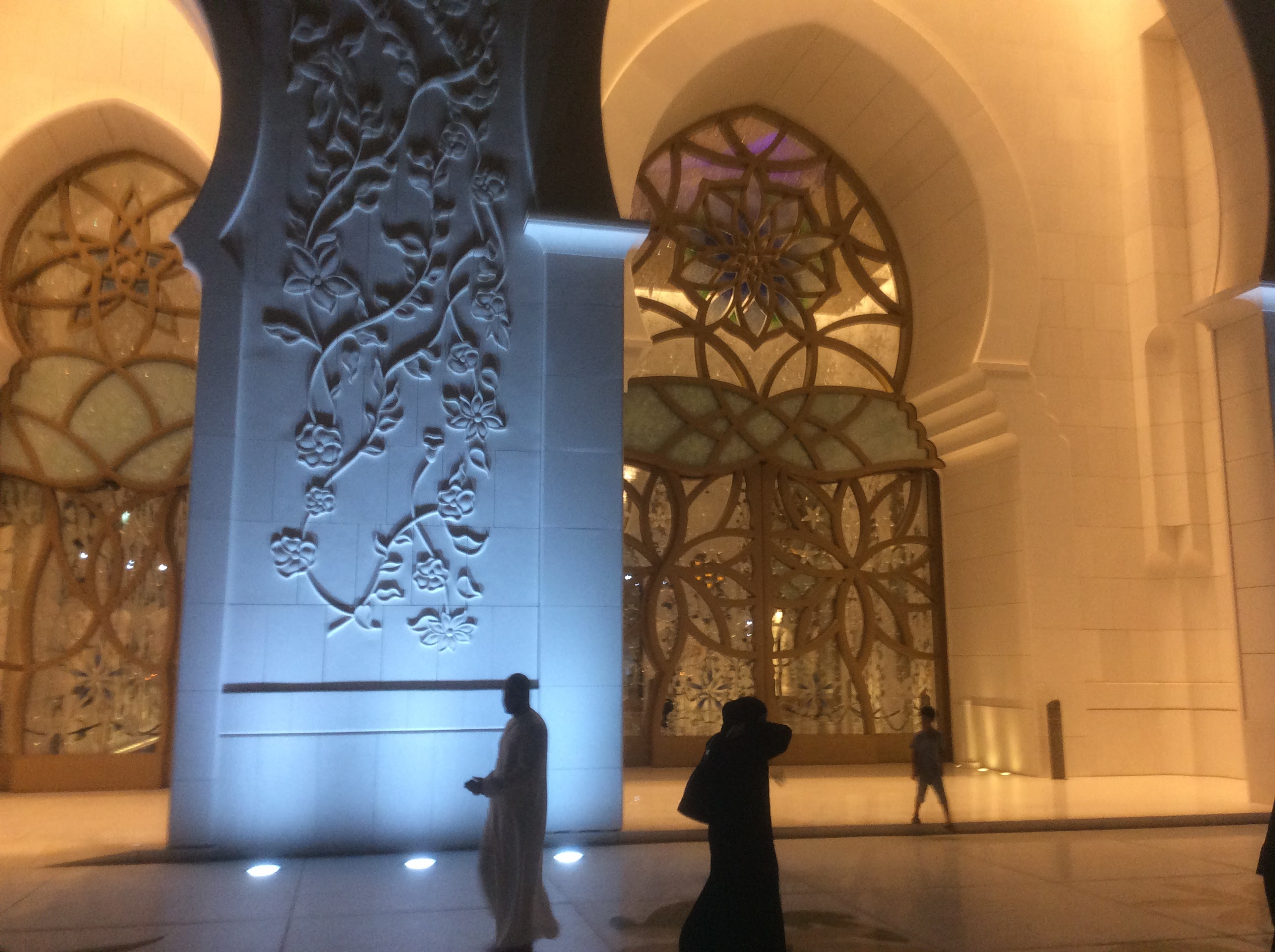
I have experienced this feeling before, at one time while observing the mosaics inside the ceilings at the Cathedral Basilica in St. Louis . The difference here is the scope of the ambition and the archetypal spread that Muslim prayer grounds have typically worn to maximize the smooth passage of breeze. Add to that, a reflecting pool, columns with Arabic calligraphy, marble carvings that go all around the face of the building, and a sense of serenity that surrounds the expectation of piety from worshippers and visitors. It was perfect.

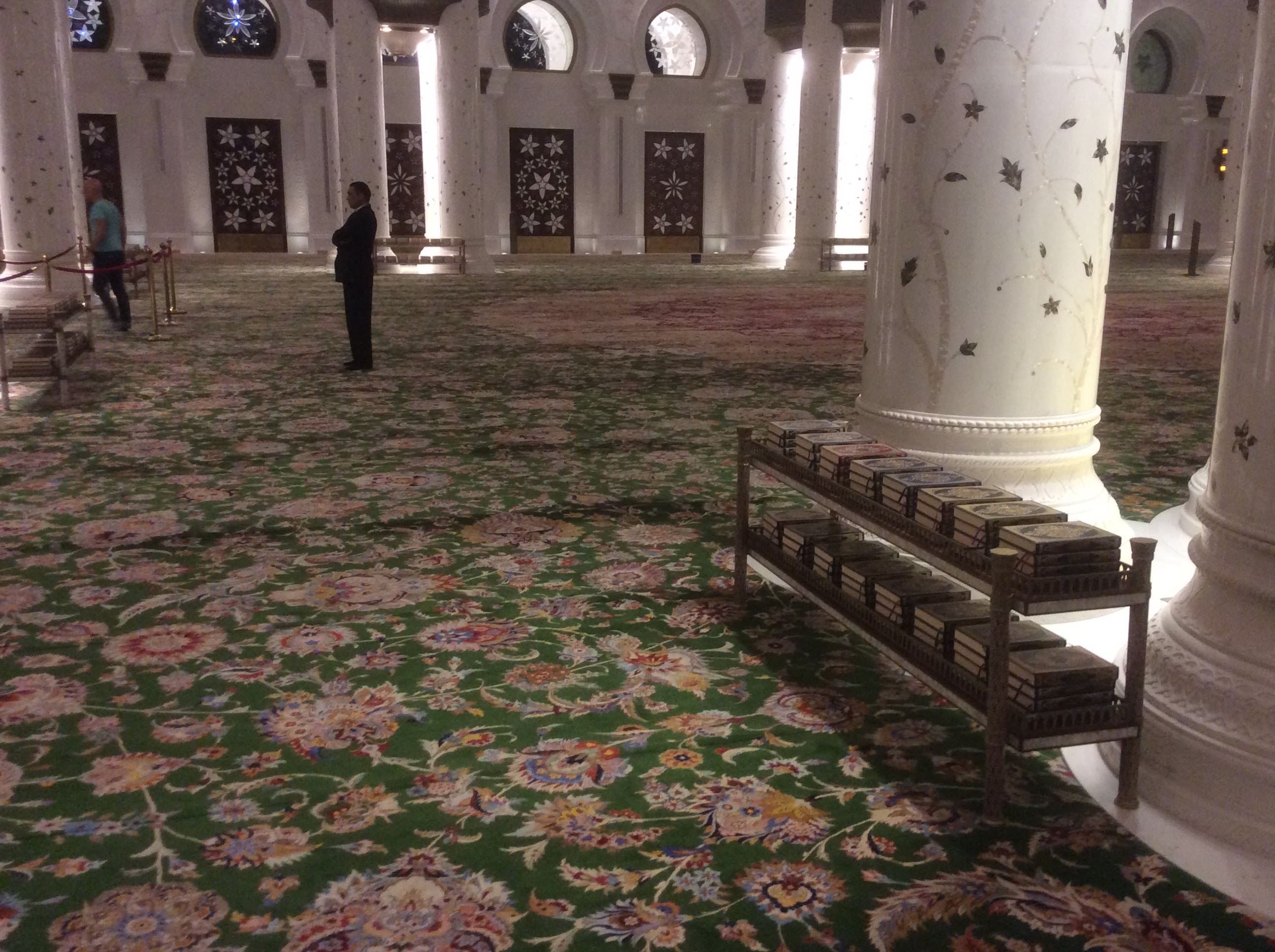
But I was a visitor, and not a worshipper. My agnosticism stood me out, at least in my mind, as an outside gaze into a least familiar space. But like others, I took off my shoes where necessary, and took a tour of the inner chamber where prayers are done every Friday, where all and sundry gathered weekly to submit as the prophet instructed. At that innermost chamber was a rug, the world’s largest carpet, believed to measure 60,570 sq ft,  created by around 1,200-1,300 carpet knotters, and weighing 35 tonne. Without shoes, its soft soothing face massaged my feet as it did others. A security man stood around a rope line preventing visitors from going too far into the centre of the room where, perhaps, the lead Imam led the prayers from every Friday. I imagined too, that this must have been where Sheikh Zayed Al Nahyan, the founding father and first president of the UAE, and in whose honour the mosque was built and named, prayed every week.

He died in 2004, leaving a progressive Islamic country with a culture of (or at least a genuine aspiration to) openness and multiculturalism. Many other structures in the country, and in the hearts of his subjects and children, bear his name. At the Culture Summit where I first encountered his name, an anecdote was told of him having to, some time ago at the founding of the country, park by the side of the road in order to correct someone who had climbed a date palm tree in a way that he, Sheikh Zayed, felt was harmful to the tree. A conservationist, then.

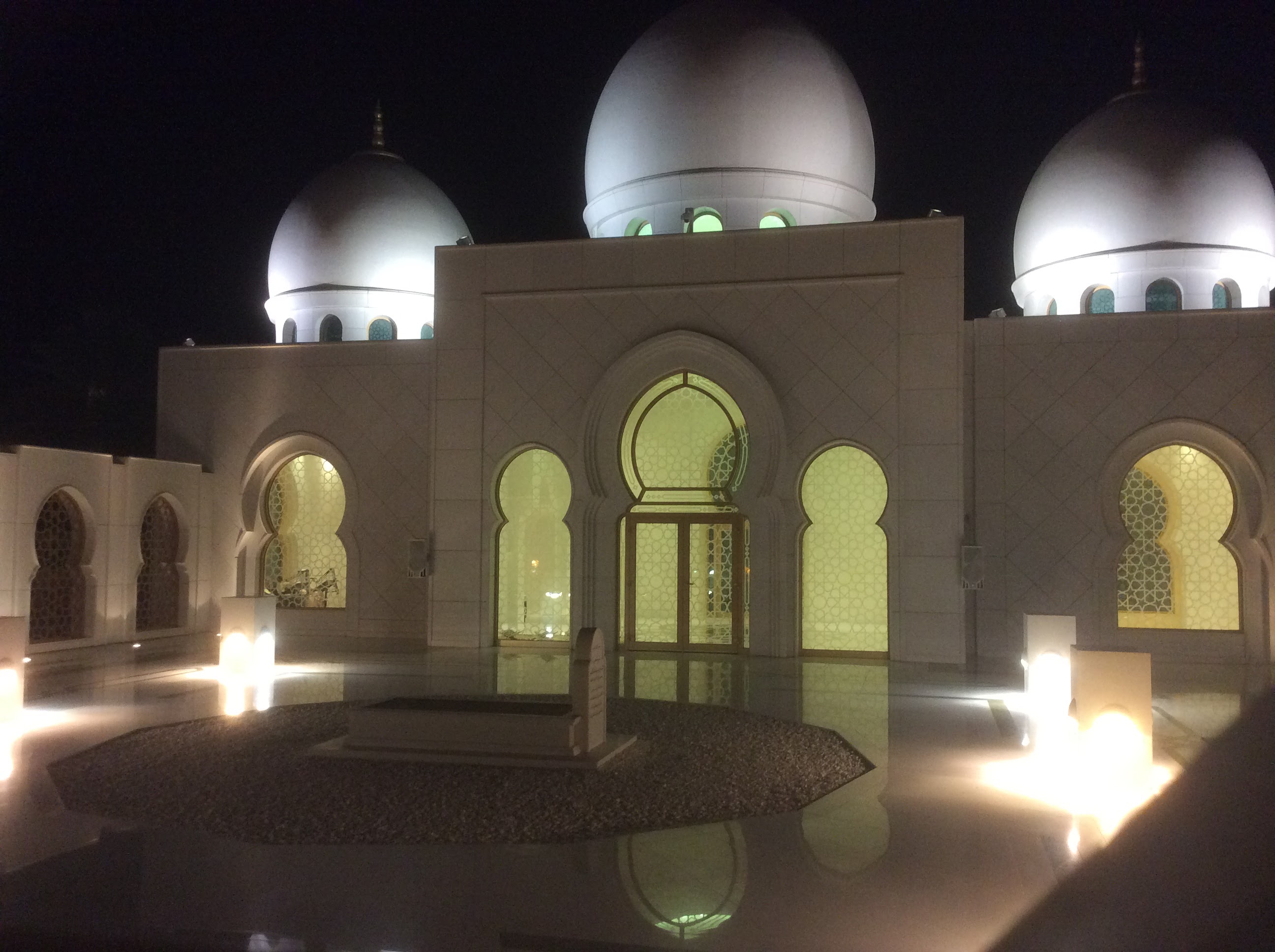
Outside of this mosque, in a small mausoleum constructed for the purpose, lay the rest of him, many feet under the ground. Into the air above where his body lay beneath the marble grounds, loudspeakers blared sequences of Arabic prayers in perpetuity, and a small camera stayed trained on a good view of the small enclosure.

You shouldn’t take pictures here, I was told, much too late.

The mausoleum of Sheikh Zayed Al Nahyan, the founding president of the UAE.

***

The walk back to the hotel was filled with calm recollections of whatever else the night held in store. One of the other random thoughts that entered my head asked why only religious centres benefited from this kind of architecture that invited meditation and reverence. What if, it wondered, bookstores and libraries were also built with this kind of spacious and elaborate architecture in which one could spend many hours just longingly gazing into images of marble and the sentences of Shaw or Chaucer?

I had not taken a book along to the mosque, and suddenly I wished that I had.

Across the West African Coast: Sierra Leone

by Yemi Adésànyà

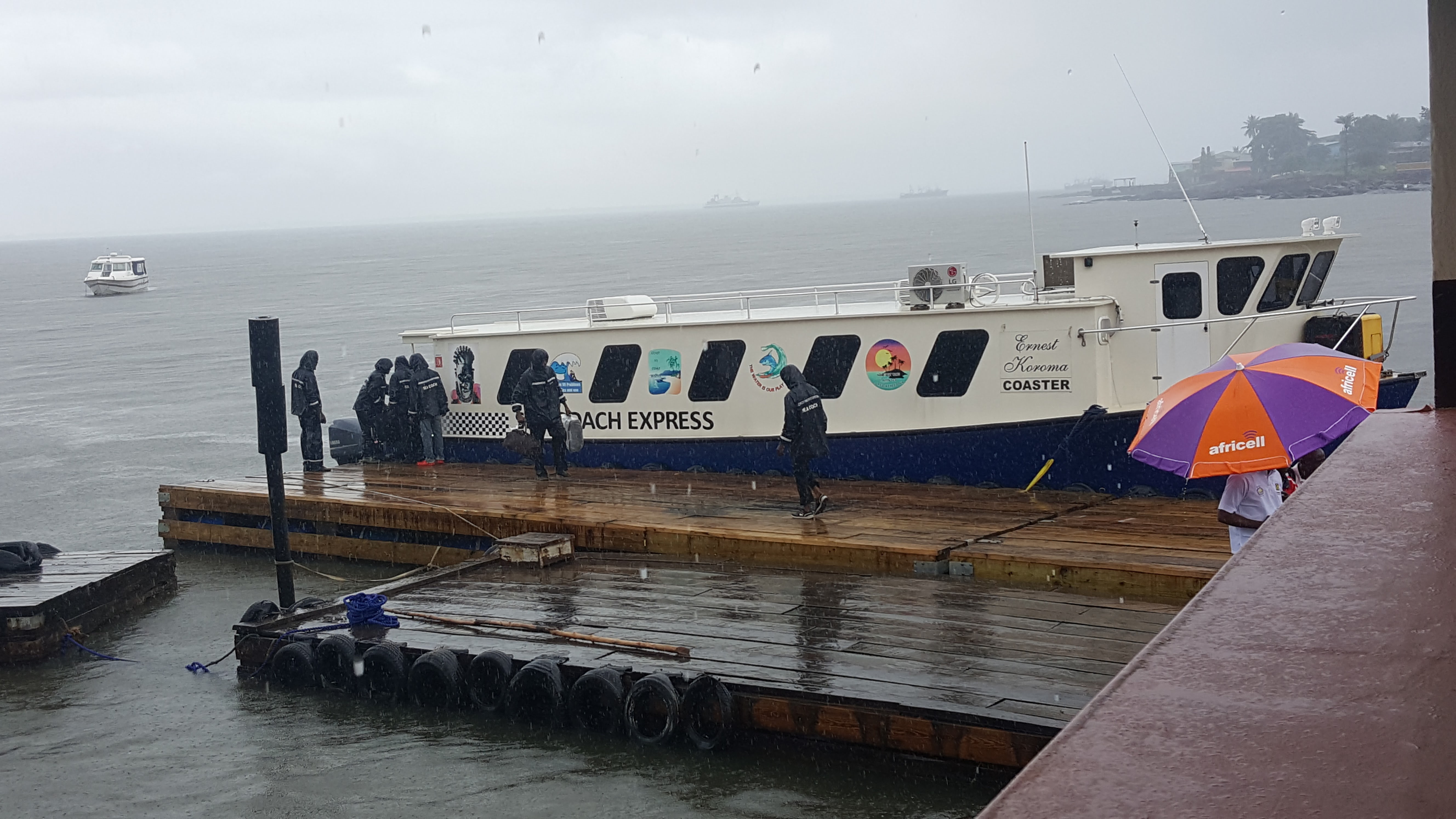
The first mention of a 40 minutes ferry ride from the airport to the city elicited a skittish gasp from me. I wasn’t expecting a boat ride as the primary means of transportation from the airport, and I promptly enquired from my host if I could not be taken, as usual, in a car. It is amazing how living in Lagos, a city with generous water channels and opportunities for water transport, one has been conditioned to driving around in private cars, with boat rides anchored firmly to occasional leisure. Tales of boat mishaps hardly offer any encouragement; that, coupled with the ignominious fact of one’s inability to swim.

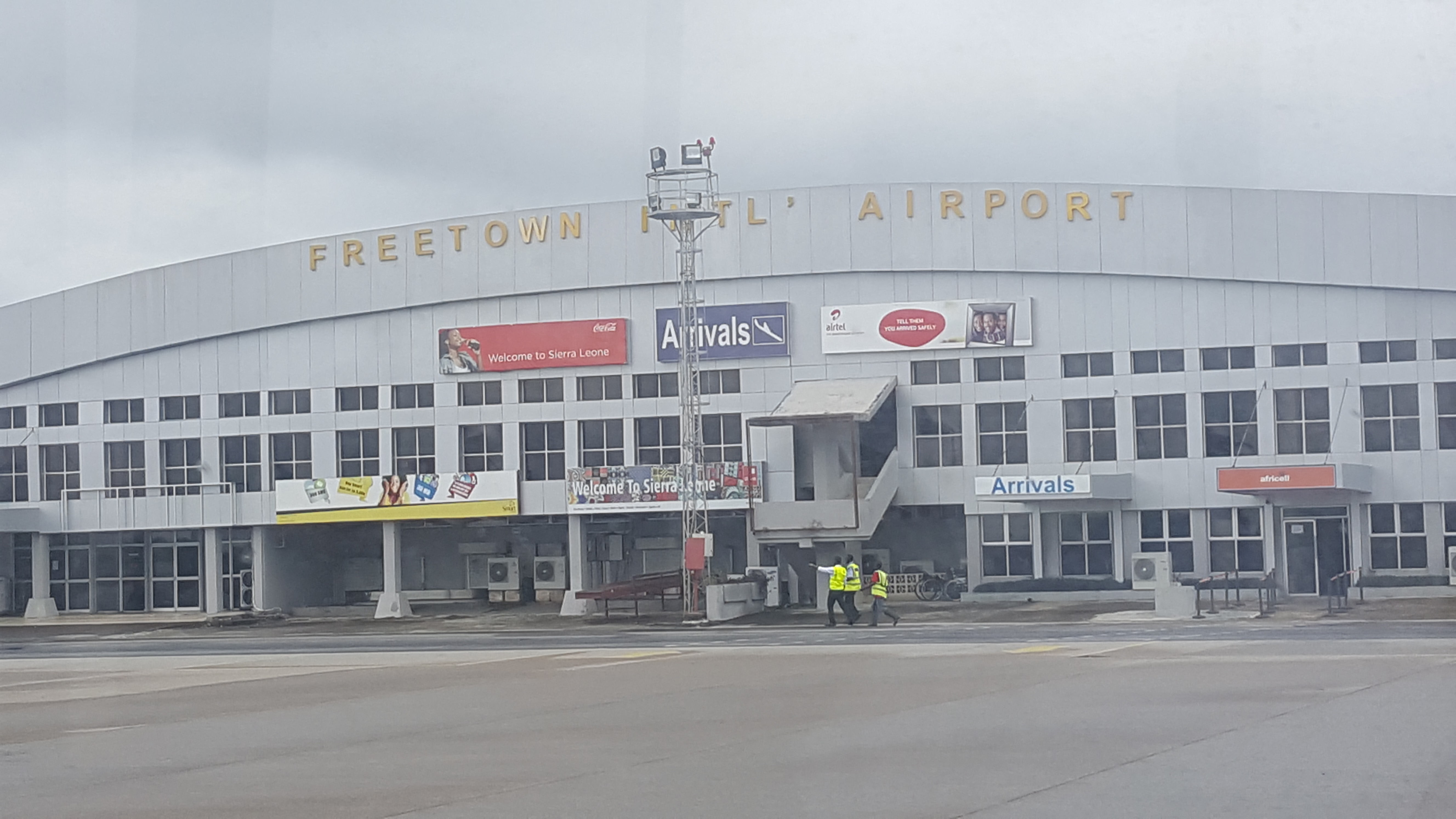
We landed at Lungi International Airport under the cover of a heavy downpour. My first encounter was with an immigration officer who, as usual of entry clearance officers, asked why I was in the country, when I planned to leave and where I would be staying. She must have figured it was my first time in Sierra Leone, and asked if my host was around to receive me.

On learning that I was to take the ferry across to meet my driver at the jetty, what she did next was unexpected and certainly a first for this traveler: She got up and out of her cubicle, and led me to the ferry operator’s kiosk within the airport premises where she bought me a ferry ticket from the safest operator in town (I paid), asked if I needed a local sim card or currency. She only left after I was comfortably settled in the Civilian bus shuttle which was to convey us to the departure jetty.

I am still not certain if this was a typical Freetown kindness, if I would have been in any in any form of danger without her help, or if I was expected to offer some tip to convey my appreciation. I erred in favour of thanking her profusely for her kindness and help, not wanting to offend by assuming that she went through the inconvenience for a paltry tip.

The Pelican Sea Coach ferry ride was thankfully unremarkable, it was enjoyable enough to be reminiscent of my leisure ride to the Statue of Liberty on a recent vacation, and a cruise to Burg al Arab in company of friends in a playful escape from another diplomatic drudgery.

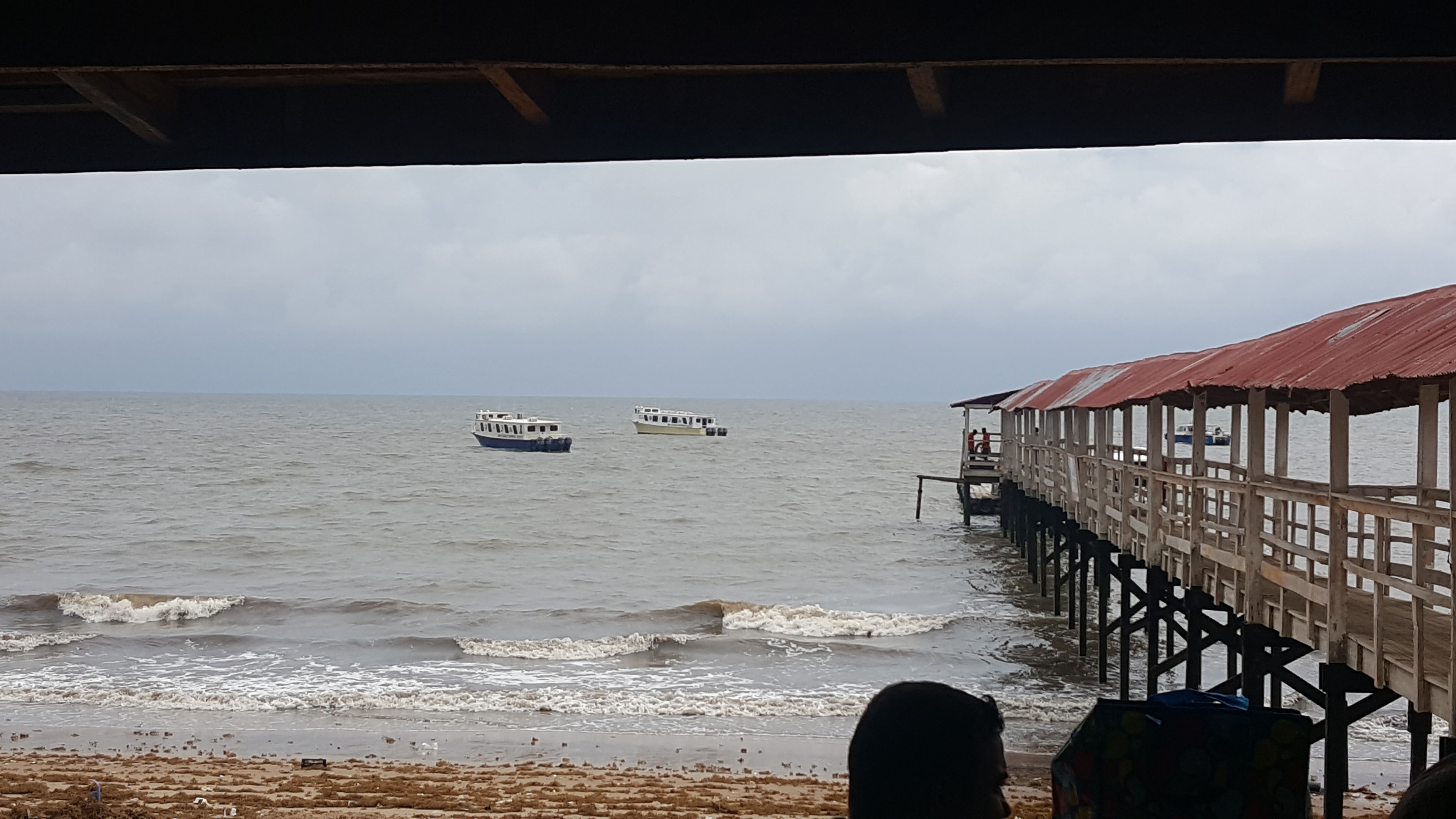
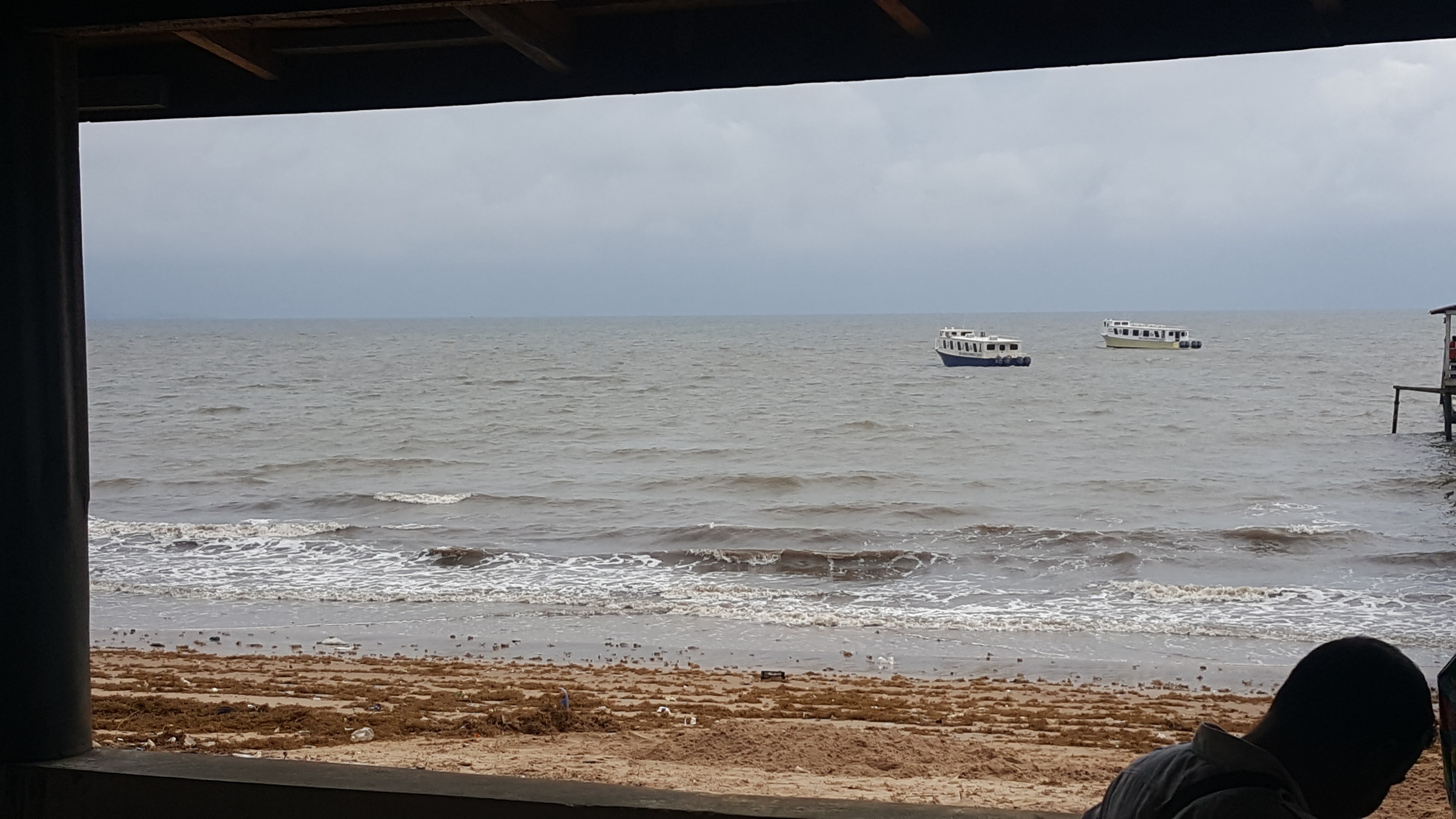
The sight at Lungi ferry jetty left so much to be desired. An embarrassing amount of debris floated on the brown sea-weed coloured waters, and freely littered the jetty. There is a case to be made for putting one’s best foot forward (given that almost everyone passes through the jetty on the way to the nation’s capital), next to Lungi airport, the jetty was another opportunity for Sierra Leone to do that. A comforting feature was free WiFi, available at the jetty and on the ferry. It was slow, but it worked, providing a needful opportunity for travelers to check in with their loved ones.

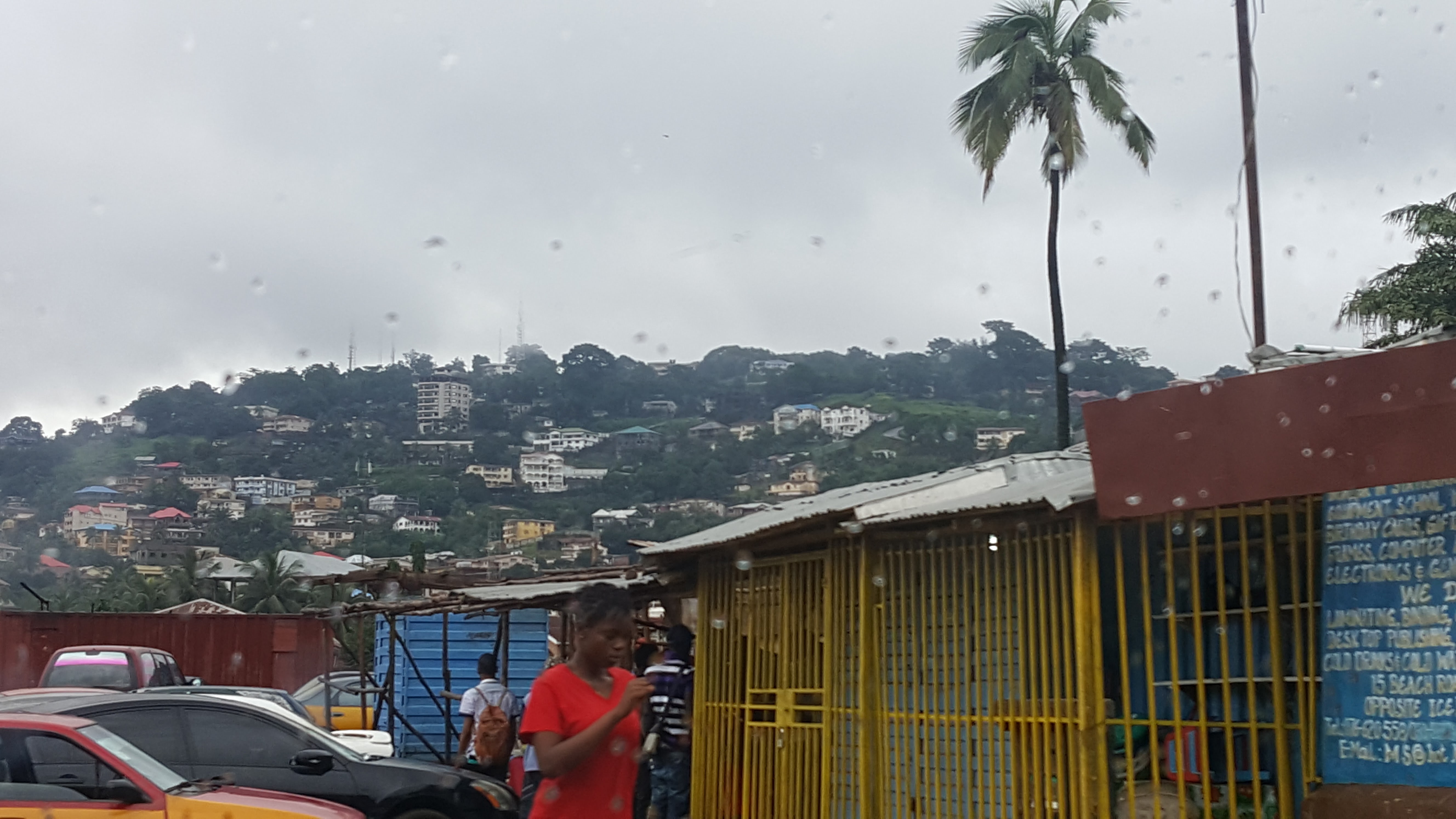
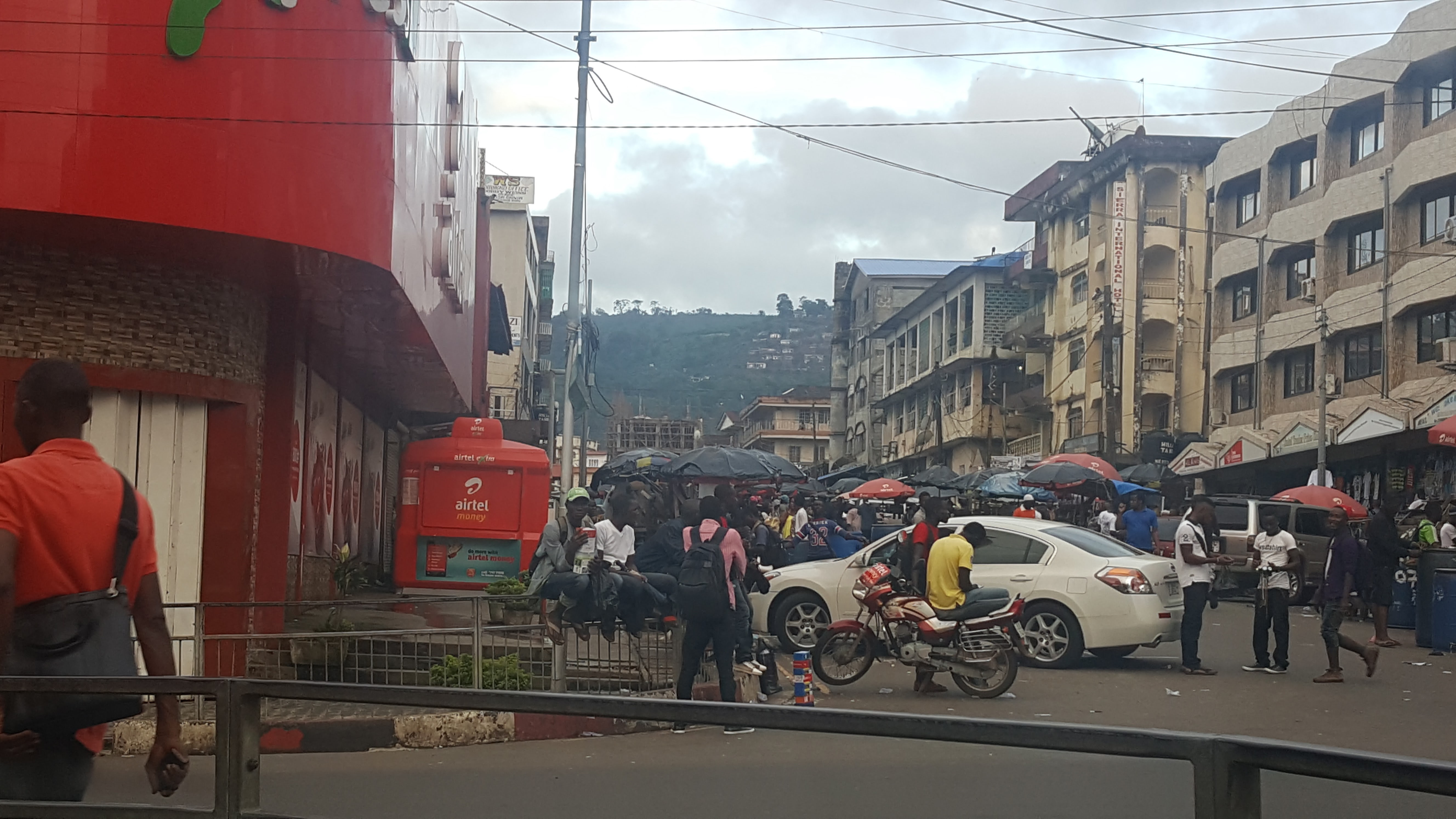
I spent the week at the Family Kingdom Resort along Lumley Beach in Freetown. It was a rainy week which exposed the city’s poor drainage system and lack of town planning. The first noticeable difference between my home city and Freetown was the smell of fish that permeated everywhere in Lumley; I was told the fishy smell emanated from a peculiar kind of sea weed. I soon got used to this minor implacable inconvenience, and ceased to be reminded of my long forgotten first trimester affliction of nausea.

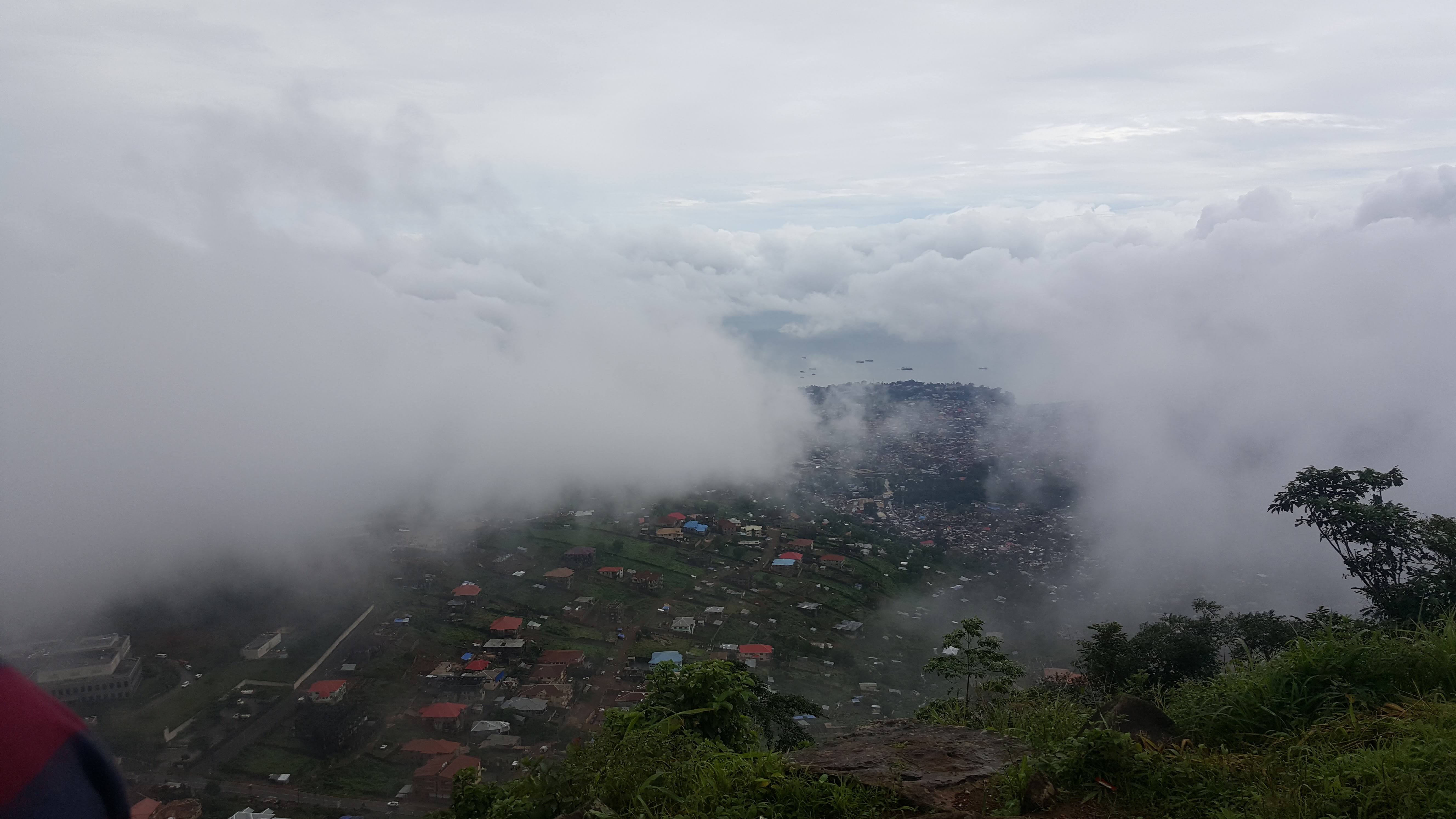
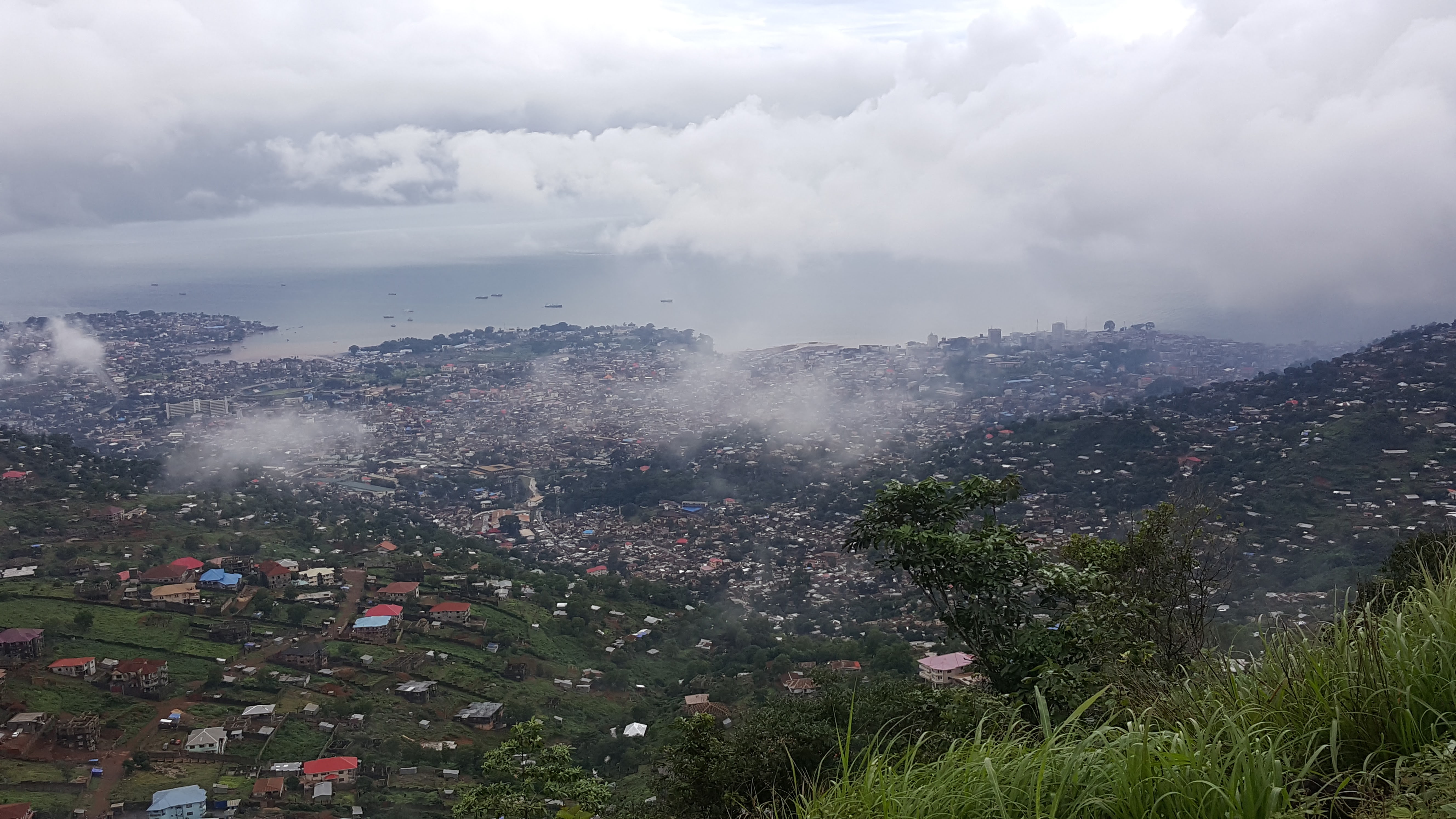
Saturday morning, before my return trip back home, offered an opportunity to see the city. My resident colleagues suggested a trip to Leicester Peak, for an opportunity to drive into the clouds for a one-shot view of Freetown. Geoview puts the mountain at 548 metres above sea level; it is the highest I have climbed, ranks at the 6th highest mountain in Sierra Leone’s Western Area and the 32nd highest mountain in the country. Perhaps with some idle time on my hands and hinds in the future, I could do some more mountaineering.

We spent about an hour looking down on everyone, taking photographs and watching clouds pass. None of us was particularly acrophobic, but we wondered, when some got too close to the edge for a grand photo shot, if a fall would be not be indubitably fatal. The view from Leicester Peak was breathtaking; one wonders how the other 5 mountains would be.

__________

Yẹmí writes from Lagos.