Browsing the archives for the adventures category.

Believing, at the Synagogue

On Friday, I found myself in a Synagogue, wearing a yarmulke, holding a siddur, browsing a Talmud, and reading the Torah in original Hebrew. This doesn’t happen to me every day. It has in fact never happened before. A few minutes earlier, I had just concluded a tour of the city’s biggest Cathedral, and hours earlier had driven the current Fulbright scholar, teacher of Arabic to a mosque for his Friday prayers. All I knew about the Jewish faith was from the few books I’d read, the few movies I’d seen, and the few conversations I’ve had with people who should know and those who shouldn’t, and the Bible.

The bible tells more, of course, and then less. The bible has Jesus, the apostles, the miracles, the disciples and the revelation. But, as I’ve learnt, one can’t be a good practitioner of Judaism by just reading the Bible. It just doesn’t say as much as necessary. That’s where the Talmud comes in. It’s the Torah explained, and this comes in handy especially since people of the Jewish faith don’t believe in Jesus, his divinity or his impending return. He’s just one guy that passed through the world like any other person. The Torah is just another word for the five books of Moses, “the entirety of Judaism’s founding legal and ethicalreligious texts.” And oh, the Torah is not a book. It’s a scroll, a large one, and everything on it is hand-written, in Hebrew (and I think in Aramaic as well). Whoever wrote this one I saw has a very good and regulated handwriting.
It was equally fortuitous that the synagogue visited was not an orthodox one, because, as I found out, the beautiful singing and instrumentation that got me most impressed by the Shabbat service is not a common part of Jewish Shabbats. It’s found only in liberal synagogues. What’s more, it had a woman lead. I didn’t verify if she was the woman rabbi or just the choir/singing leader. All I remember was being transported into realms of believing as she sang, and strummed the guitar to accompaniment of another guitar and a fiddle. The whole service itself was half singing and half reciting, much like a Catholic mass (minus the singing and instrumentation).

The Shabbat (sabbath) starts at Friday evenings and ends about 25 hours later. During this period – commanded by God to be kept holy by all believers – Jews are not expected to use fire, go to work or use electricity. It is for this reason that the only picture I took while in the service was of the siddur, and was my last while in the premises, in respect of the preference of the worshipers. While we were in the Synagogue library, I had to put on the light, and put it off later too. Those laws are strictly respected. If I would ever return to another one of those Shabbat services, it would most likely be because of the music, and the whole attitude of homeliness that one feels while there, even though – amidst a room full of people of a different race and skin colour, it is not hard to be spotted as a wandering stranger. What made up for that were the smiles and warmth of the people who all wanted to know about us and where we came from.

It was surely a fun time, definitely enlightening, as the five other students I went with confirmed. “Shabbat Shalom,” we said.
At the Cathedral Basilica

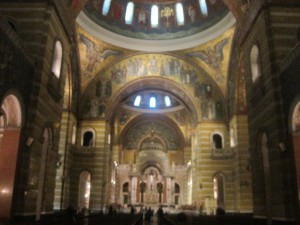
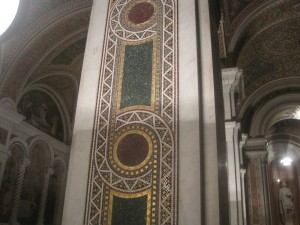
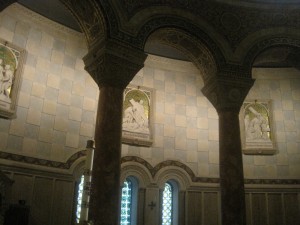
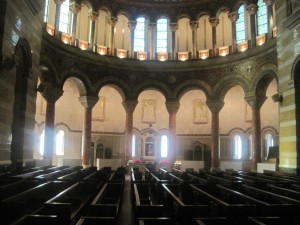
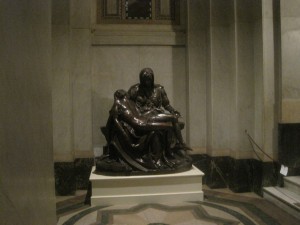
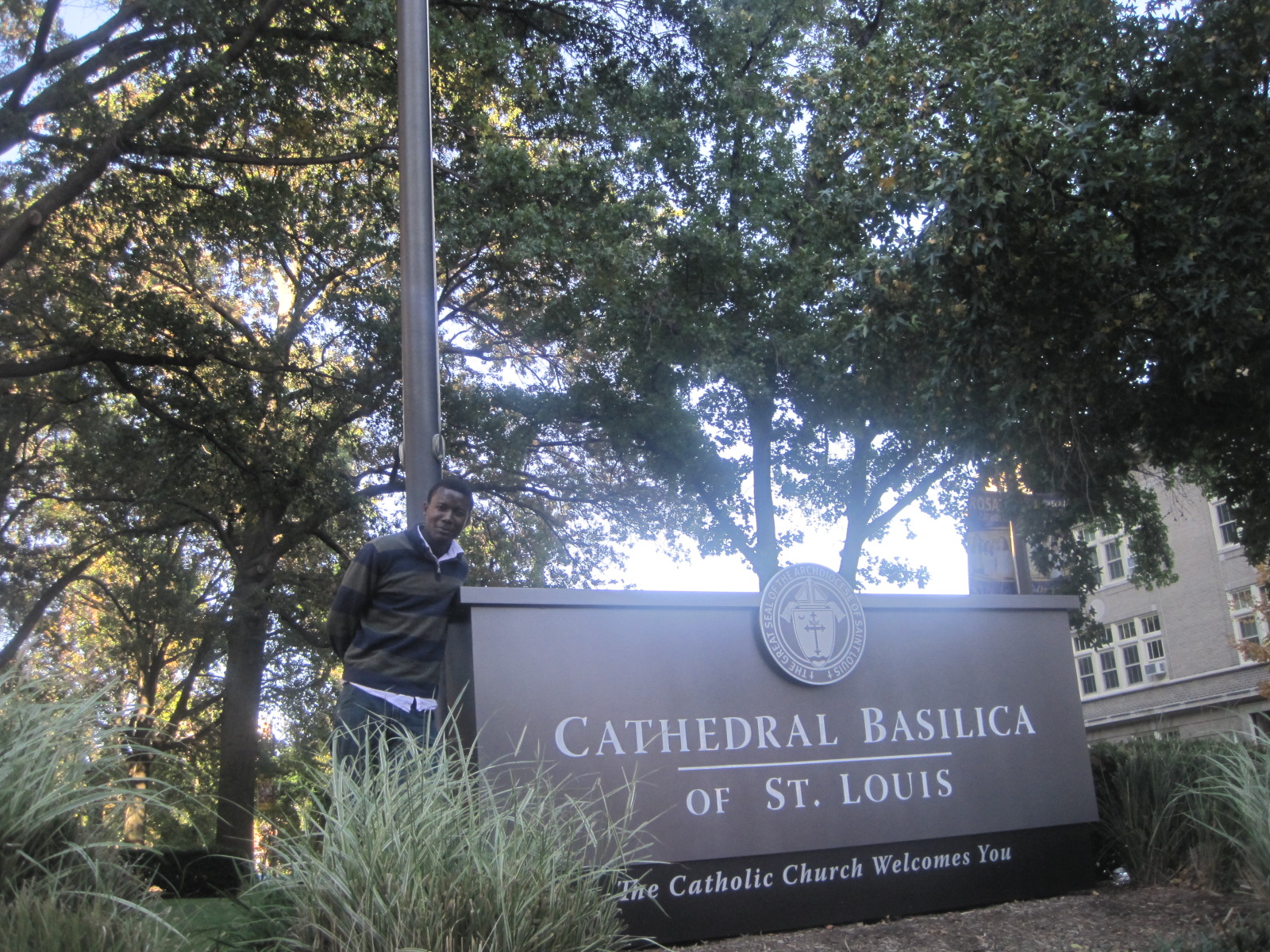
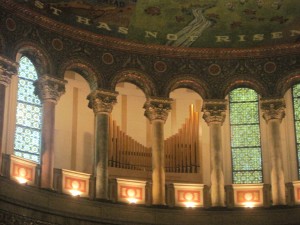
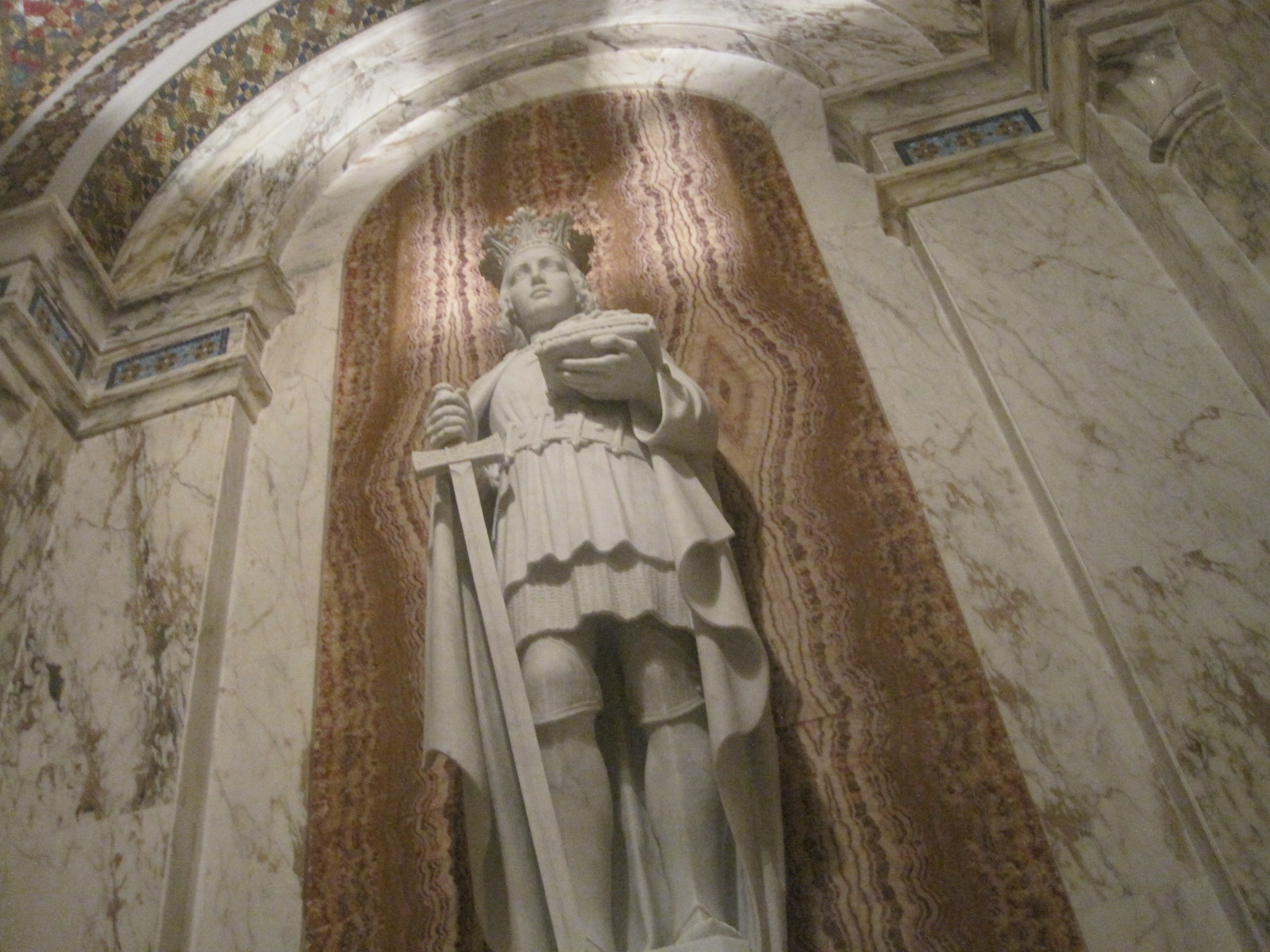
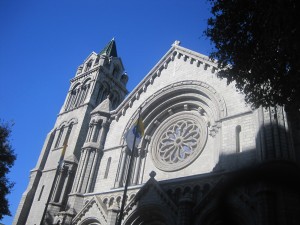
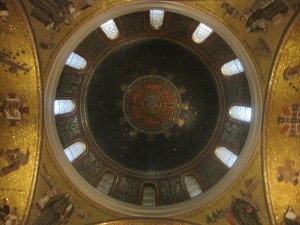
Pictures taken from an inside tour of the St. Louis Cathedral Basilica in St. Louis only a few hours ago. The visit was impressive, the tour guide was nice, knowledgeable and warm. She’s a retired chemist.

The mosaics on the walls and ceilings of the building were nothing short of spectacular, telling stories of the church’s history as well as some key aspects of Christianity as well. There are no painting in the building. None at all. All the drawings on the ceiling and the walls were mosaics all handmade from glass and gold sheets. The St. Louis Cathedral Basilica holds one of the world’s largest collection of mosaic drawings, with over 41 and a half million tiles used for the drawings since the building was completed in 1914. The mosaic drawing was “finished in 1988, uses about 7,000 colors, and covers about 83,000 square feet.” (wiki)

It was only incidental that on this same day, I have got to visit a mosque, and also a synagogue in St. Louis (even participating in a Shabbat service, along with moving songs and readings). More on this later. The experience was worth the journey it took to get there.

Mapping the Country

Living in the mid-west has its perks: you’re far enough from the oceans to live a relatively sane life, and close enough to equally pleasant points of interest to get a feel of outdoors once in a while. A few weeks ago, there was an exhibition of proposals on the renovation of the Gateway Arch and its surroundings. The city of St. Louis along with other donors decided to touch up the nation’s tallest monument and make it live up to its potential as a more viable tourist destination for the country and the world. The winners of the bid have been announced and will have up to 2015 to make the area around the Mississippi the mecca they promised.

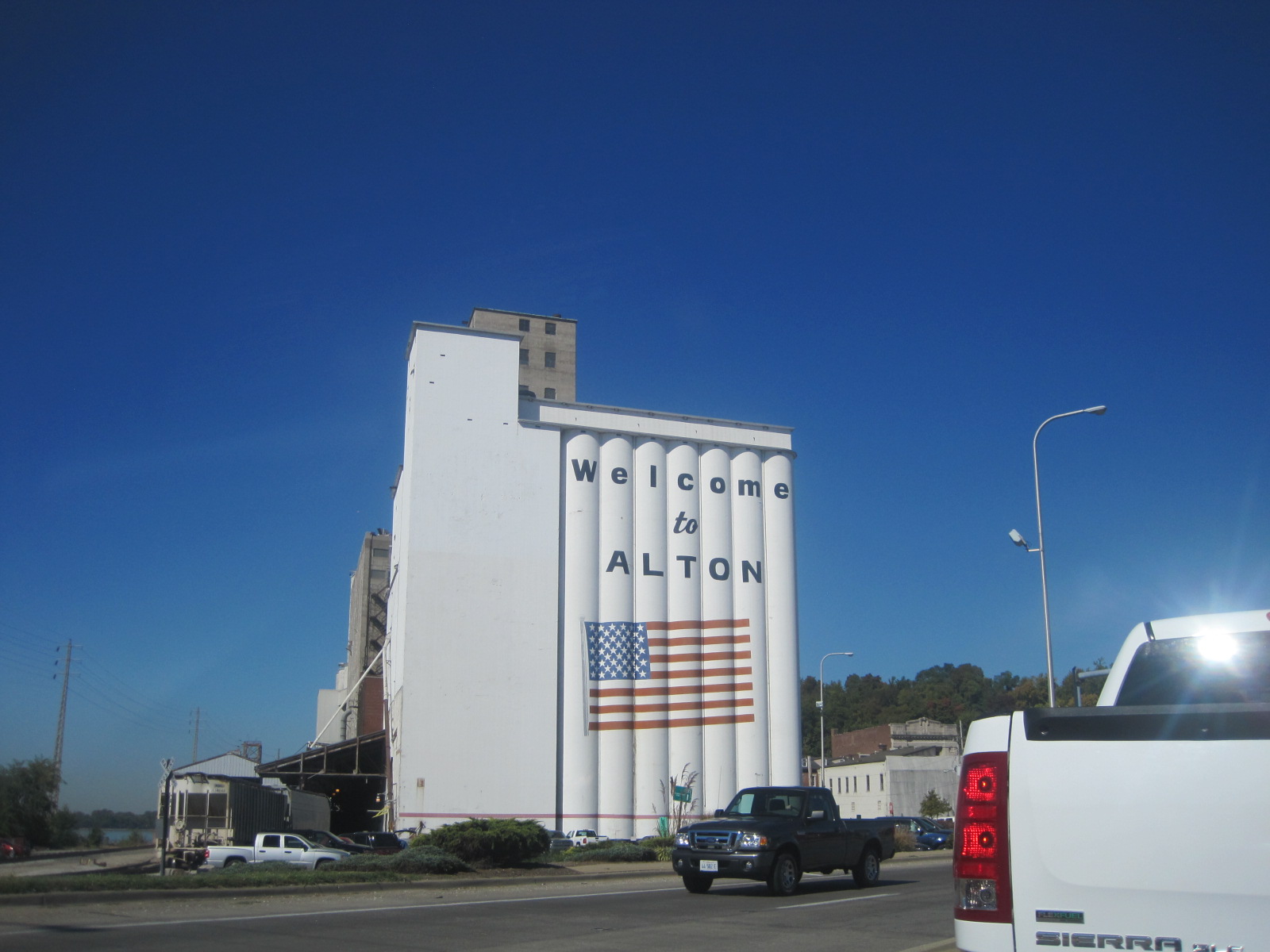
I’ve been thinking about a few other places nearby: eagle watching at Alton at the confluence of the two great rivers, a long overdue visit to the Lemp Mansion (the continued mention of which keeps bringing hundreds of people to my blog since last year. What exactly is it with people and ghosts?), the Cathedral Basilica in St. Louis with its replica of Roman art and paintings, and the famous house of Mark Twain at Hannibal. I remember visiting the tomb of Abraham Lincoln in Springfield and thinking that the city was such a centre of history, and then wondering what I’m going to think when I visit Annapolis and all the spots on the coast where the first slave ships first docked. I’m such a nosy wanderer.

I’m looking for as many pointers as my readers can provide, whether far or near. How much more of this country can I see and learn from in the next couple of months. We are travellers, coming to a city near you.

On St. Louis!

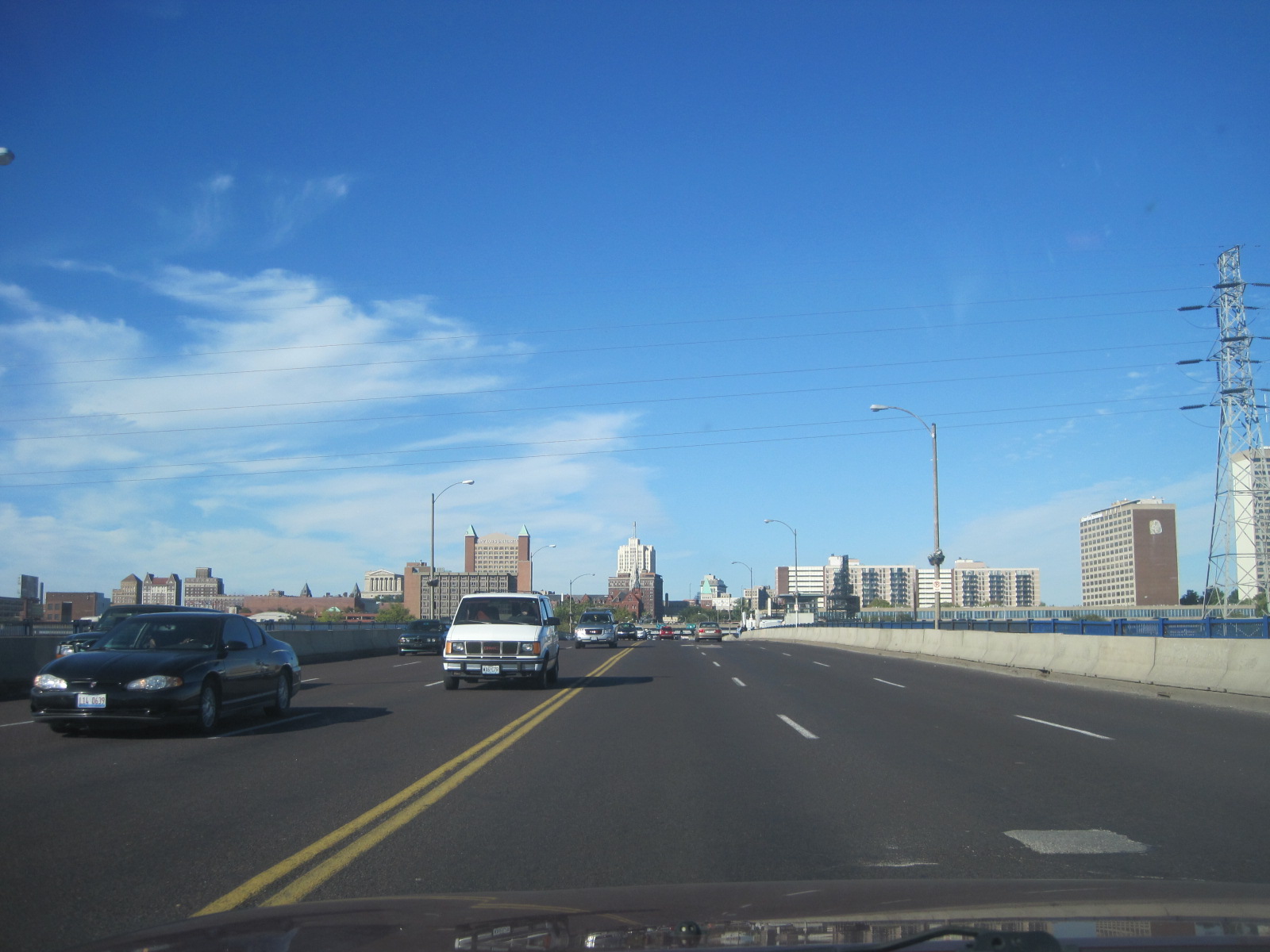
Some thoughts occurred to me on the way to St. Louis earlier today that I must have mentioned “St. Louis” more times than I have mentioned the name of the city in which I have lived for the last one year. Here’s why: it’s the closest big city to Edwardsville, even though it is located in a neighbouring. The other big city around here is Chicago, and it is five hours away. I bet that people in Michigan find it easier to get to Chicago than we do in the south of the state. The city of St. Louis is just twenty to thirty minutes away, just by the bank of the Mississippi river, and it offers all that a big city offers.

It occured to me just today how similar to Chicago it actually is, in structures, atmosphere and general attitudes. It’s “South Side” is just as dangerous as the South Side of Chicago depending on the time of the day or night, and everyone had warned me to be careful wherever I went. Chicago, of course, has more museums and monuments, and taller buildings. While St. Louis has the Arch, Chicago has the Bean and many other attractions. And as a point of convergence, the Jazz artist Louis Armstrong has strong ties to both cities. In any case, the contiguity of St. Louis to much of where I live now has made it one city about which you’ll continue to hear so much for some time to come.

The trip to that big city today was uneventful today, contrary to expectations. Maybe it was because I got a GPS at last and had to endure a loud mysterious voice directing me to turn where necessary. I guess the only memorable part of the trip was when I finally got to my destination, and decided around the block that I wanted to buy some plantain chips to have for lunch, the lady at the desk of the African restaurant asked me if I was paying with food stamps or cheque. I knew what food stamps were, but I said I didn’t, and asked her to explain, because I had felt profiled by her assumption and didn’t like it. In retrospect, it was just a random welcome into a different kind of America and I should have embraced it as such. And I did, in the end.

How was your Monday?

Of Ghosts and Cemetries

The conversation at the dinner table last night eventually led to talk about ghosts and cemeteries, only because one of us had expressed her fear of burial grounds. I was asked if I share the same fear and I said no, which is only a half truth. For, as I have discovered, to my own surprise all fear of ghosts and burial grounds always disappeared whenever I set foot on foreign soil.

Throughout last year, while riding back to my apartment at eleven or twelve o clock at night, I get to pass through a dimly lighted bike path with thick woods on its either side. And I’d always wondered to myself where all the trepidation went that I would usually have while walking at a similar place in Ibadan or anywhere in South-Western Nigeria around the same time. The conclusion, of course, was that the fears were only conditioned by familiarity. Perhaps it is impossible to import fear across such a wide ocean as the Atlantic. Note: I noticed a similar trend of artificially acquired confidence while in Northern Nigeria, and in Kenya. Suddenly, it seems that the best way to rid a human of fear is to transport them to a different environment.

Now when I see cemeteries and tombstones, at whatever time of the night, the only thing I want to do is to take pictures of/with them. It must come from watching too much of Michael Jackson. And yes, I’m still going to spend a night at the Lemp Mansion sometime soon.