Browsing the archives for the adventures category.

Poems of my Present

I want to write about what I read when – in rare times like this when I have all the time in the world to myself – I get the luxury of contemplating sweet, literary stuff rather than bury my head in the tedium of long linguistic theories. If I were to compile a list of recommendations of things to read to a friend – Nigerian or not, this would be a tentative list. There are very many more.

Poems

Suicide Notes. Poems by Dami Ajayi in Maple Tree Literary Supplement Issue 8.

Letter Home by Afam Akeh in MTLS Issue 2 is a long poem that haunts, and soothes.

Mayakovsky by Peter Akinlabi.

Three Poems by Obemata in Sentinel Nigeria Issue #5


What have YOU read that has moved you lately?

Africa Night – A Celebration of Cultures

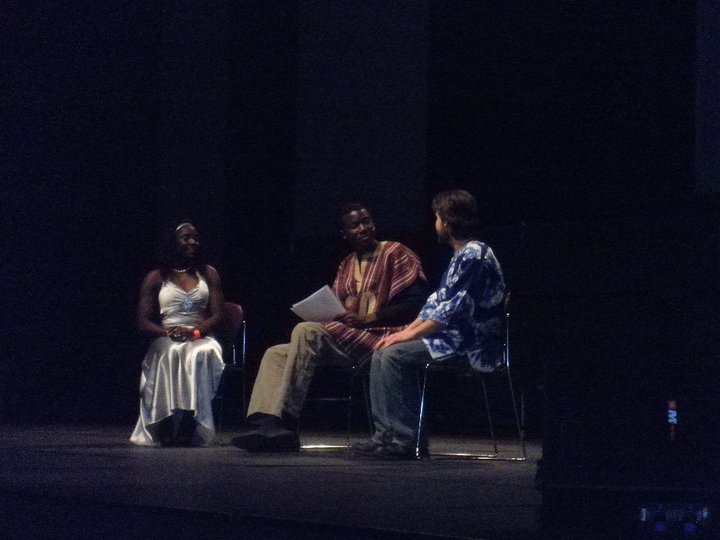
Away from the news of uprisings and unrests in parts of the continent, students and faculty of my university gathered on campus on Saturday to feast and celebrate what unites us all: the beauty of music, the graciousness of fashion, the excitement of dance, and the great pleasure of diversity. It was the annual Africa Night event which took place at the Meridian Ballroom. I was the host, along with Jacob Moorleghen, a volunteer from the S.P.E.A.C club – a charming co-host.

Written as a play of two friends from two countries travelling round the continent discovering places, people, food, artifacts and events, the show centred around showing the audience what they would usually not see on the news about Africa and its various people. A continent of (now) fifty-five countries is something that no one would be confident enough to claim to know without some sort of guidance, and the patience to explore. Jake was the American filmmaker, and I was his resource. A little tension of the “otherness” is added, and the drama of discovery begins. We went from Kenya to South Africa, to Congo and to Ghana, and to Nigeria, touching on sites of historical and economic significance along the way in other parts of the continent. The script was written by Julaine Fowlin and supported by a wonderful cast of students and other volunteers.

I am passionate about things like this – theatre, and such opportunities for social interaction and intervention, and I am very happy that it went very well. More than just the pleasure of bringing the beautiful aspects of the continent’s cultures to the appreciation of the most diverse audience, there is also a joy of being in company of such young people who hold the key to the next generation. It was a great night, and I thank the students for inviting/involving me.

Five People in China

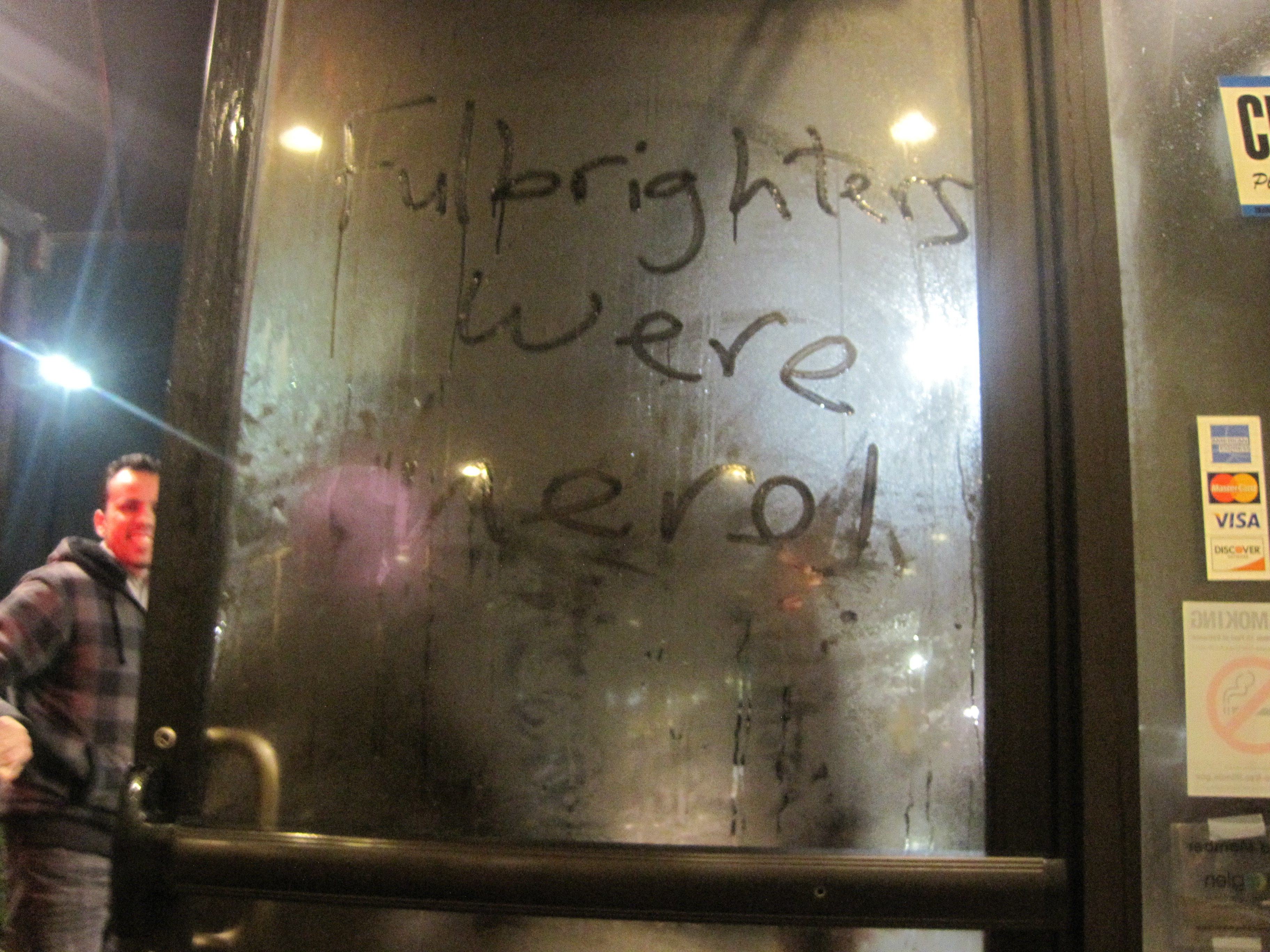
Five students of three countries from various disciplines sat down in a Chinese restaurant downtown Edwardsville today for dinner. It was the first time the five of them would be sitting together in one place, and it soon dawned on them that they were all beneficiaries of the Fulbright program. “Wow,” one of them said. “This is really interesting – three generations of scholars in one place at the same time.”

“By this time next year, if the current two return here, we’d be almost ten,” another person said, “and it would be interesting to gather around again for a discussion like this.”

“We could actually do something right now, you know.” The Egyptian said.

“Yes,” said the Moroccan. “I’ve been thinking of a public project involving us all and this environment, either on campus, or the public school system in the state. Some volunteer project in town, you know.”

“Why didn’t we think of this earlier? This actually sounds great. What do you have in mind?” I said.

“We can go to elementary schools to talk to them about where we’re from and what we do?”

“Or tell them stories, teach them songs, or share some cultural ideas. Or show a movie on campus?”

“It will enlighten them, I believe. I’m sure students will benefit from this. A cultural exchange. Something.”

“Totally.”

By the time the evening ended, they had discovered a new level of usefulness for the bond that they all shared. They had also figured out a more detailed plan of action and the path to putting the many ideas into practice. After all, it was right before their very eyes, and within their collective reach. They just hadn’t noticed it before because of individual commitments. Now everything had become clear. The day had served its usefulness. They cheered and partook of it with all relish.

On the Snorm That Wasn’t

‎”BREAKING: Midwest braces for boring conversations about the weather.” – Andy Borowitz

Alright, in the last couple of days, there has been plenty new words in the midwestern weather vocabulary: Snowtorious (by Baratunde), Snowpocalypse, thundersnow, snowmageddon, and my favourite: snOMG. All of them have pointed at the horrible snow storm the likes of which our area hasn’t seen since 1981/2. Sounds like the government of Hosni Mubarak, right?
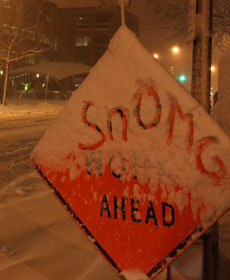
The news of the snow apocalypse that had school closed for two days straight (for the first time in years) had students, staff and residents rushing to buy house supplies: helmets, battery-powered flashlights, food, drinks, lighters, radio etc. When I got to the store to buy groceries yesterday, I found out that all the milk had gone out of circulation. There was none at all to buy. When it comes to panic buying, it seems that my current countrymen are the champs.

Now, at 2.45am on the day billed to be the scariest of the three days the terribly disnowbedient weather, there is no storm, no falling trees and sparkling electric wires, no raging alarms making us head for the basements and bath tubs covered with large matresses. No need for flashlights either. Just bloody snow and icy rain on the ground, and a thoroughly rested populace very glad to get two good days off. It is not all good. My classes take place on Mondays and Tuesdays, so I effectively have the whole week free of classwork, and that sucks. I’m beginning to think that this ruse was sponsored by Walmart and other shoppers so that we can all rush and buy things we don’t need for a weather we can’t handle.

I had made preparations for a different scenario anyway. In the event that power goes completely off and our phones run off that we can’t communicate with one another, and the heaters run out of steam such that we can’t even sleep without having to lay down  together like pickles in a jar, and all hell break lose such that trees fall, and all we have are ourselves against the elements. I figured that it might become a perfectly opportune time to start returning to the basic natures of our humanity: hunting. I had already started making a long list of recipes that can do with some deer and geese meat. When roasted on an open fire made out of fallen trees, and set in public in front of the lake and surrounded by scores of homeless students and residents – add a few bottles of beer or wine bought from the panic rush of the previous days – the fact of hunger and depression will disappear from the world even for a few hours, and all that would remain would be glee, and a certain kind of happiness hard to describe and impossible to forget.

Back to the reality of the present, there is no snowstorm around here. The closest storm we have is in Cairo where protesters have decided that Hosni Mubarak’s televised announcement of intention to leave government in September comes too late and gives too little. That storm is purposeful, unpredictable, and has defied all predictions. Here, citzens that have not been used to more than a few hours of interrupted electricity think that the world has come to an end if something like that should ever happen without notice. Life is good. No snowstorms. All we have are new words, and that one in the title of this post is one of them: mine.
A Nigerian Journey

Those interested in what Christmas looks like in Nigeria should read this evocative piece by Lauren Halloran. While you are at it, check out Kevin’s description of typical Nigerian hospitality in his “Then Nigeria Happened” blog post. Faraway in the American mid-west away from the warm tropics of Western Nigeria, all I have is the perception of others of my (perhaps altogether imaginary) homeland. How do strangers see us? What has changed since all this years? What are the things that I – as a citizen of that land – have taken for granted and have assumed as part of the normal part of the landscape without questioning? What are the new features? What do I miss? What do the visitors see?

In November, I read another blogpost about a man who was going through Africa on a bicycle from London to Cape Town. Along the way he passed through many African cities and he wrote about them. The one that interested me the most was obviously his post about entering Nigeria for the first time. For someone coming with a British eye on a bicycle, what does he see? How does he see it? More, how interesting is it to travel through such a large continent on a bicycle? What was the desert like? What of the shores and the mountains? What about the weather?

The prospects of travelling opened up to me the first time I got on a bicycle – the small BMX-type that I inherited from my brother when I grew tall enough to get on it. How far will one go? And what lay out there? The idealistic cravings of those adolescent days have given way to the reality of cars, aeroplanes and internet pages, and we live every day through the eyes of others. Part in delight, part in envy for the authentic realities of their journeys and the occasional weather-conditioned limits of mine, we watch with required fascination. The world is not so big after all.