Browsing the archives for the Academic category.

A Different Kind of Hoe

This is my post #400.

I have now lost count of how many times I used a perfectly clean English expression only to later discover that it meant something totally different in American English. Once upon a time, the “black book” was a place to write names of people you don’t like. But while telling a story of my first really brutal treatment in the hands of a woman bus driver in Edwardsville, I mentioned in passing that she had now entered my black book, and my students’ eyebrows went up. A black book, I was later informed, is a book where men wrote the name of their objects of desire. Surely that was new to me, and I immediately corrected myself. If I had a black book, the woman bus driver won’t be in it, definitely. Nine months ago, the only time you’d ever have heard me use the word “flashing” would be while remarking that someone had been calling my mobile phone without allowing me to pick it up before hanging up. In Nigeria, as in many other countries, that is “flashing”. I’m now aware – as I have actually been for a while even before coming here, from watching American movies – that flashing doesn’t have much to do with phones at all as with body parts. No, I don’t want to be saying that anyone has been flashing now. No sir, that’s why I have a voicemail. 😀
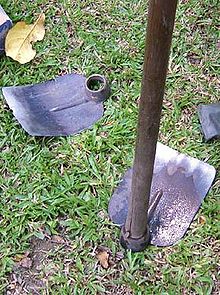
“This is a hoe.” Picture from Wikipedia

The influence of the mass media and their obsession with sex may have done irreparable damage to the innocence of words today. It is nows harder than ever to communicate without the risk of saying something totally different. Growing up in Nigeria in the eighties and nineties, I remember vividly that soda (soft drink) covers used to be called “crown corks” and that on radio during promotion, the jingles always were something like “Look under your corks and you might win a gift of…” (Hint: Nigerians typically don’t pronounce the ‘r’ in these kinds of words). Even to me today, that doesn’t sound to the ears as innocent as used to before, as neither is the use of pussies or doggys to refer to pets. Whatever happened to the language?

I am thinking of these things today only because during yesterday’s class, I was asked to tell the students the meaning of Ìwé kíkọ́ láìsí ọkọ́ àti àdá kò ì pé o and other lyrics of the song that they had learnt for the past three weeks from the class tutor. I painstakingly wrote out the translation on the blackboard (“learning from books without hoes and cutlasses is not a complete education”) and then suddenly realized that I could be wrong to assume that they all knew what kind of farm implements used in rural areas in Nigeria. The song itself came out an old culture of farming, and the grown folks who composed it had hoped to remind the young ones that farming is just as important as schooling. And so I asked, pointing to the writings on the wall. “You know what a cutlass is, right?” They didn’t. “What about a machete?” They did. “Alright, the cutlass is almost like a machete, and it’s used to cut down trees and to farm.”

And then it came. “What about a hoe?” Silence. Giggles. Laughter. Stares of horror.

He mentioned a hoe!

Then someone said, “yes” he knew what it was. I was at first relieved, until a few seconds later when I discovered that he actually didn’t, and it was my turn to be shocked. He definitely knew what he knew. And what he knew is neither used on the farm nor is supposed to be used in decent speech. Sigh. This is what has happened to my beloved English language. Oh, but how exactly did we get here? I’m going back to speaking only Yorùbá from now on, except that when written without sub-dots, the word for hoe in my language doesn’t fare better either on the scale of cleanliness.
A Tribute to Friendship & A Great Session

Chris and I seem to have  come a long way. We met after one of my first classes in the Fall semester, and even the first chance meeting was auspicious from the start. He has inquired how and where I had learnt to speak in English. Now, only a few weeks to my departure, I look at him and wonder how much fun we’ve had and how much I’ll miss the good times we shared from Missouri to Illinois, meeting different kinds of people from different parts of the world. What I’d miss the most are our weekly rendezvous as Starbucks sometimes in company of a few new friends, and sometimes alone, sharing wonders of the world. He’s an uncommon American – not that I have known many Americans on a personal level – but because he has an open-minded approach to the world. Could it be because he’s widely travelled, to Europe and to Mexico, or because being a descendant of immigrant German and Irish settlers, he already appreciates the benefits of diversity? I should marry him, and then both of us would be Nigerians and Americans at the same time :D.

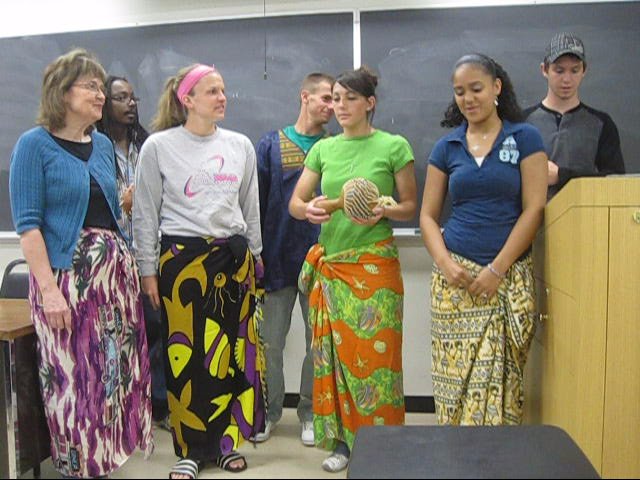
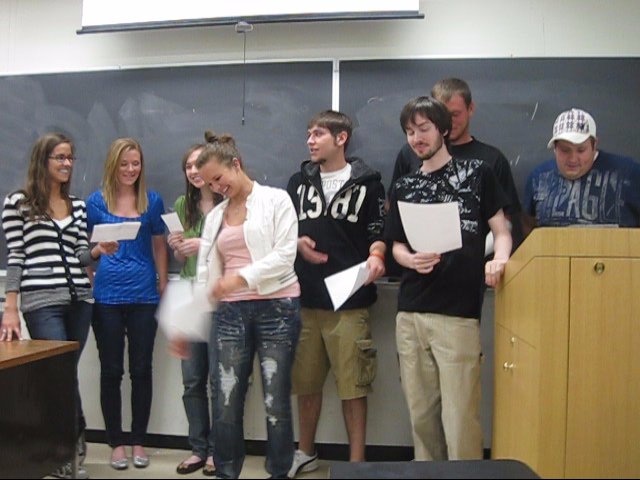
At today’s last class which ends my teaching this semester, and – oh, this session too, there was a singing presentation that was attended by the journalists from the Alestle campus newspaper who asked me almost all questions under the sun. The song the students sang were Ise Agbe N’Ise Ile Wa, Ki Loo Le Se Olurun Mi, Osuba Re Ree O and one more which was a total surprise to me – an American remix of the Ise Agbe song. They had learnt and rehearsed the songs with the help of a student tutor who is a Yoruba student of a different department, and today, I was listening to the songs for the first time from my students, much impressed. I’ve got their permission to put it on YouTube and I will do so in a few hours.

What was emotional for me was reading their perception of the class in a final paper, and how it fit or surpassed their expectation for the semester when they signed up for it. Like it happened last semester, most of them had signed up for the class without a knowledge of what awaited them on the other side. What made them wait till the end, they said, was that their interest was sustained, and for that I’m happy. I hope the next professor of the subject is as lucky as me to have so many fun students as I did, and to have a great one year learning and sharing different experiences of the American life.

Festivity & Fun Feedbacks

Chapter nine of Toyin Falola’s A Mouth Sweeter Than Salt was probably the most difficult for the students to handle. It started on a rather shocking note of the sex songs sung yearly at the Okebadan Celebration of his youth. The songs were supposed to induce fertility in nature, praying down the rain to come and fertilize the earth, yet their words were those of the human anatomy, and they were explicit. Very. And little children as well as adults sang along on the street as they go from house to house taunting each other in the most explicit way possible. According to Falola, the songs for which one would ordinarily be punished had they being sung on an ordinary day would be sung loudly in public throughout the celebration and everyone would be joyous.

I have just finished reading my student’s report on the chapter and many of their observations left me in stitches of laughter. Many claimed to have been confused. Some were shocked, and a few said they found it interesting. Those who were shocked claimed not to have been exposed to any occasion in America where sex is discussed in such an open manner. I’m guessing that they had never attended the Mardi Gras. 🙂 In all, I have always had a good time reading their feedback on the text portrayed by Falola. Interestingly I myself have never witnessed the Okebadan festival, but beyond the words of the songs by the little children singing them, I don’t believe that it ever got any “raunchier” – to use the word – than the Mardi Gras, which I still think is a wonderful celebration of life as well.

This was – verbatim – one of the reports from a student:

The most interesting part of the ninth chapter for me by far was the beginning. The groups of people were running around the city and going to different houses singing all kinds of crazy sexual songs. It was not just the fact that the songs were somewhat explicit that made them interesting. The logic of the songs was rather interesting as well. One song stated that “Penis times vagina equals penis. Vagina times penis equals vagina.” I am not sure about this. Still, I found the songs very comical. After all, I am not a mathematics major.

Reading it here in my room, especially the last sentence, I couldn’t stop laughing at his sense of humour. And somewhere in my mind, I believe that Toyin Falola must have taken great efforts to make this chapter controversial with a subtle confrontation of African sexuality and spirituality with accepted Western standards of morality and propriety, since it looks like the book was written with foreign audiences in mind. Or why else would he devote so many pages at the beginning of that chapter to the matter of sex and the Okebadan festival? I’m glad at least for the discussion it generates. How for instance there is so much sex portrayed in the American media, and how different and conservative the real life society seems when observed at a close range. It’s all an interesting paradox.

PS: Photo taken at the 2010 Mardi Gras in St. Louis of two guys simulating homosexuality with rubber penises.

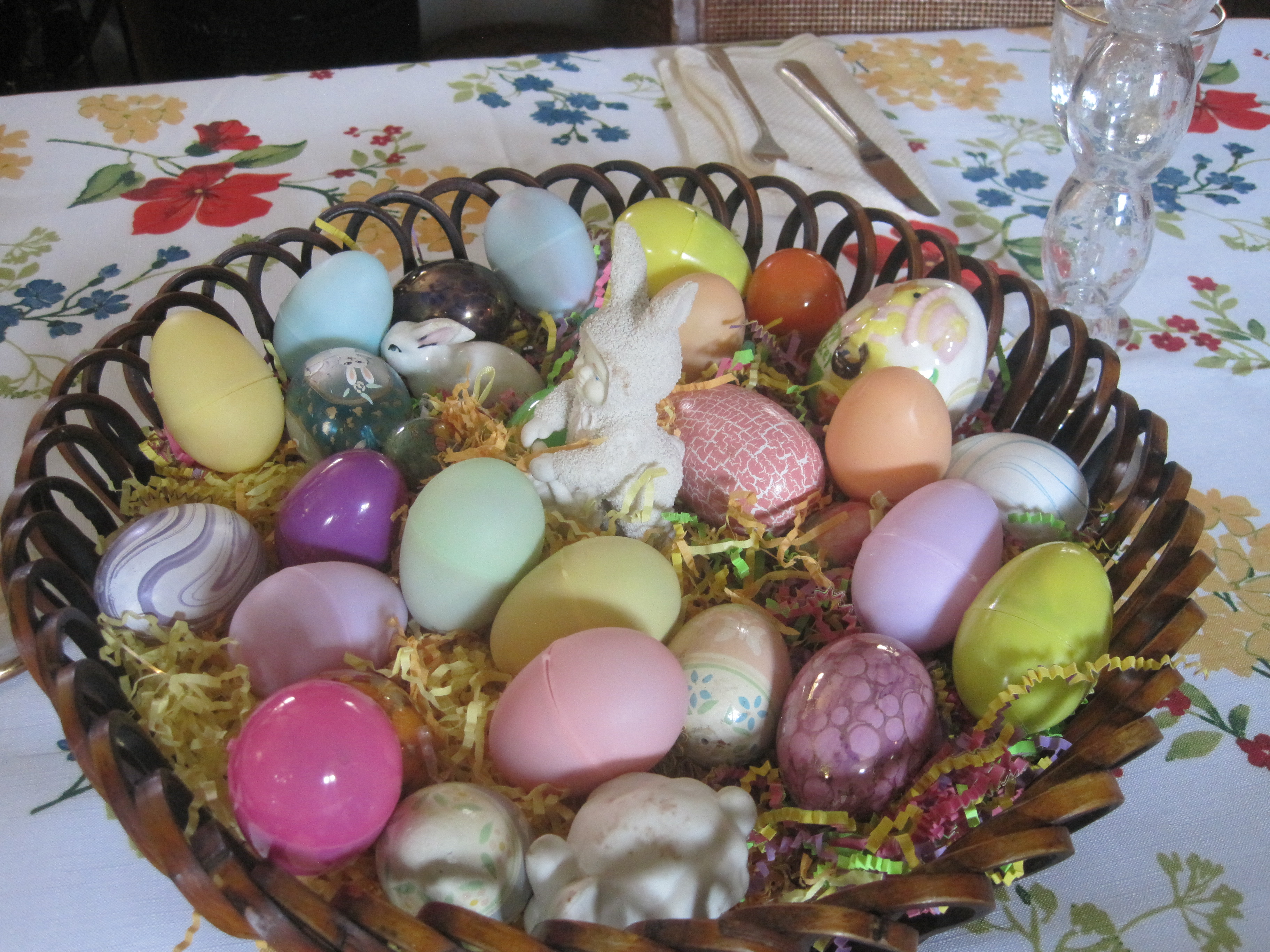
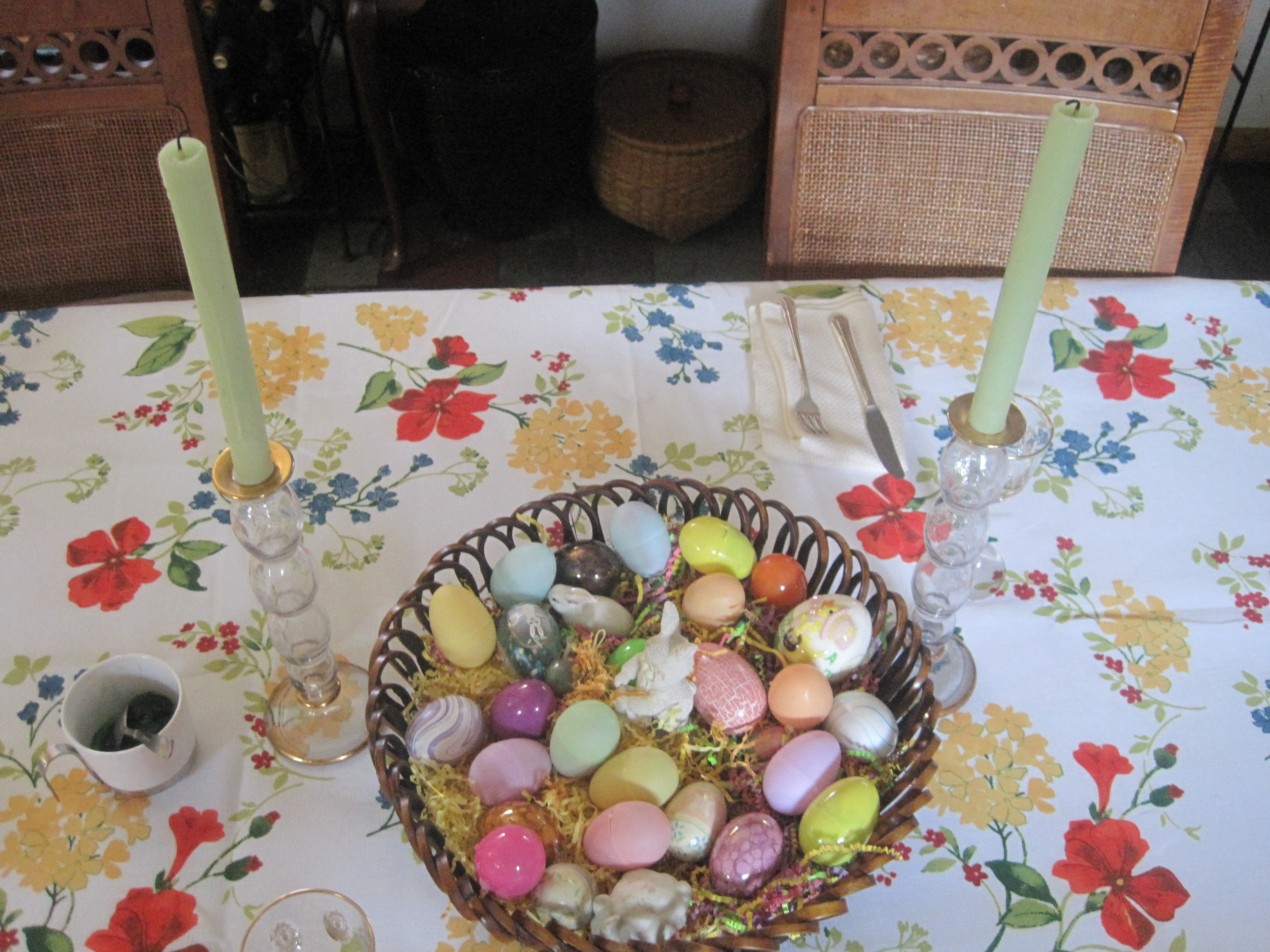
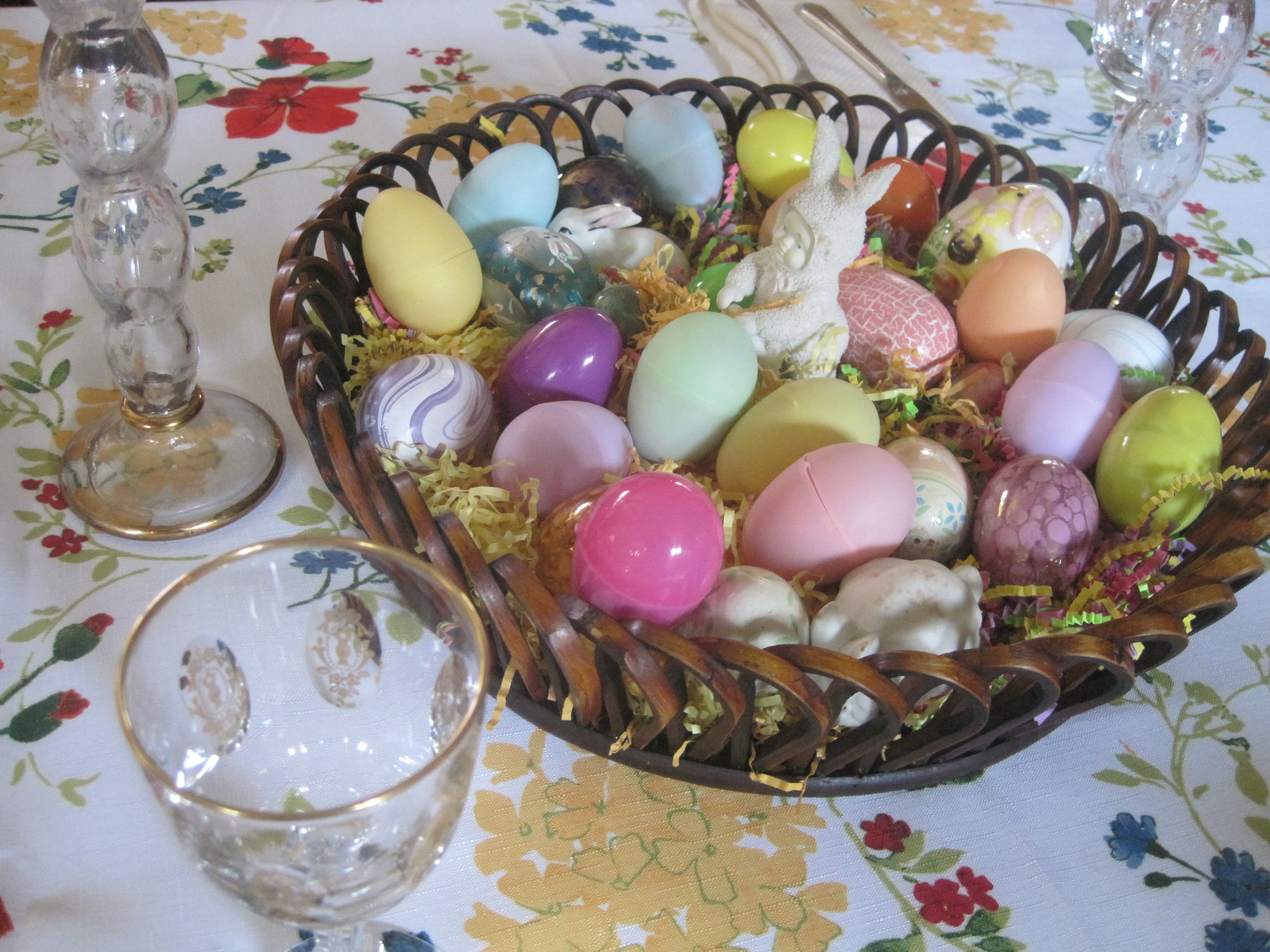
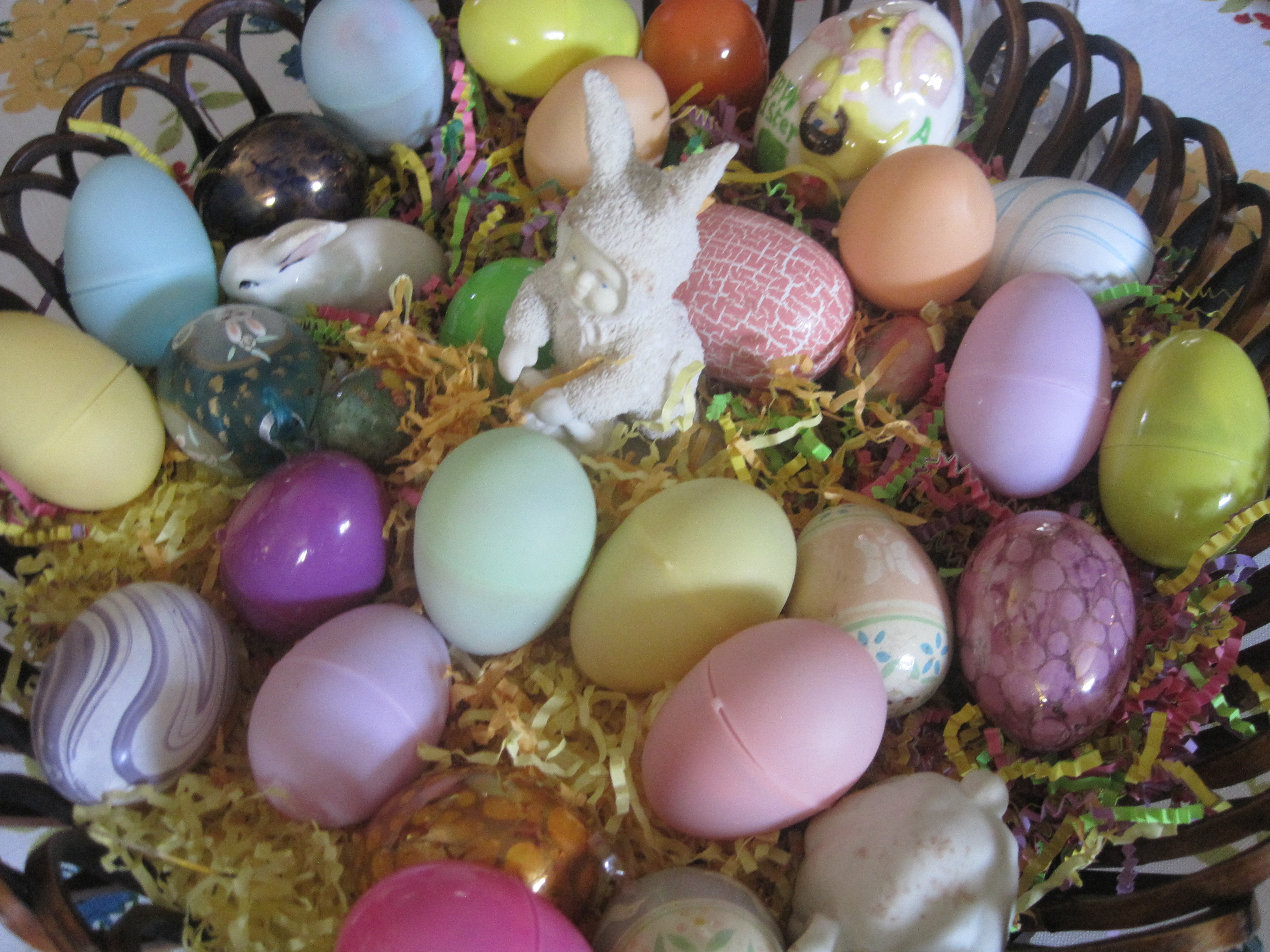
Easter Eggs

According to Wikipedia the “egg was a symbol of the rebirth of the earth in celebrations of spring and was adopted by early Christians as a symbol of the resurrection of Jesus.”

One more thing I discovered today is that unlike in Nigeria, Easter Monday is not a public holiday. It’s a good thing that I’ve discovered this early enough to send an email to tell my students that contrary to an earlier one wishing them a good work-free Monday, we will be meeting in class. Sigh. The life of an American professor. I can’t complain though. 😀

Measuring Blackness

This is a guest-post by the brilliant Nneoma Nwachucku of Pyoo Wata Blog. She is an American of Nigerian origin, and in this article she explores the very many dimensions of being African American even though none of her ancestors was brought to the United States as a slave. Race obviously is still a very interesting issue since being African itself is not limited to being black, except we intend to exclude fair skinned Arab North Africans in Egypt, Sudan and Northern Nigeria; White, Jewish and Indian South Africans; and the now indigenous White residents of Zimbabwe – which won’t make any sense. Anyway, enjoy the interesting piece.

Previous guest-posts can be found here.

_______________________________________

Despite protests from my family members and other Nigerians in my community, I consider myself first and foremost African American. Personally, it has taken quite some time for me to embrace this realization. And personally, I grew tired of explaining the contradictions inherent in adopting dual citizenship from two very different nations.  You see, I straddle between two different communities, one foot in Nigeria, which I fondly refer to as home; and foot planted in the United States – where I currently pen from. I am African American in the truest sense of the word – an African living in America. Yes, if we parse it down, I could very well label myself as Nigerian American, Igbo American…Ohuhu American (?). It can get unnecessarily specific. In light of this I still, towards the end of a survey or application, proudly place my check next to “Black, African American.” <– Can someone tell me when the US Census will decide to drop the word “Negro” from its lexicon…forget being politically correct, it’s just redundant.  I get it, I’m black – I don’t need a reminder in Portuguese…anyway, I digress.

The African-American experience, I have come to find, is an incredibly diverse one. We include those whose ancestry stems from the trans-Atlantic slave trade, to recent Haitian immigrants, to black Londoners who now call the US their own.

Even those who find their roots strongly laid in the soils of long-forgotten Southern plantations are themselves brimming with a rich genetic diversity, featuring parentage from Caucasian, Native and other American sources. Though popular news sites and blogs during the 2008 US presidential campaign season continued to argue about whether to classify President Obama as black, white, or biracial, I still maintain that he is the first African American president of the United States. Heck, if word got out that Puerto Rican American Supreme Court Judge Sotomayor’s great-great-great-great-great grandmother may have been black, I’m claiming her too.  Lord knows we need all the good press we can get.

In light of our differences, I always thought that it would be a difficult task to pin any one cultural experience as that which defines our blackness, particularly here in the US. However, these days, I stand to be corrected.

“…uknowurblackwhen…,” read the title of a recent article from an online black magazine I read a while back. The article sought to explore the story behind a Twitter trend in which black twitterers would key the strokes #uknowurblackwhen followed by their perception of shared African American experiences. Being a moderately avid black twitterer myself, I was familiar with this trend before reading the article. Though my familiarity with this phenomenon was merely limited to the only “uknowurblack” tweet I received from a follower, who admitted we both failed to meet several of the standards posed by our fellow African American twitterers.

No, I don’t … “drink Koolaid from the pickle jar” (old butter tubs, yes).

Nope, I do not have in my possession…“a busted car with a bangin’ sound system” (both car and sound system are “busted,” thank you very much).

My fake hair pieces (weaves) are not the most expensive items I own.  See above re: busted car with busted sound system.

Later, upon checking out several of the “uknowurblack” tweets, I found I had more in common with those followed by the “uknowurnotblack” tags.

The quest to define what it means to be African American is not a recent phenomenon nor is the discussion limited to playground fights, casual tweets, and heated debates in the media. Many in the social sciences are aware of the African American Acculturation Scale (AAAS) which seeks to assess the extent to which an individual has adopted the culture, attitudes, and behaviors of blacks in America. The scale is based on eight parameters, which include items such as religion and superstitions, disposition towards race relations and interracial relationships, and interestingly – “a preference for African American things.” While this scale could be somewhat predictive health outcomes, voting behaviors and the like, I contend that it is hardly reflective of the actual African American experience, which comprises of a melting pot of different groups and nationalities. The notion of a “traditional” African-American who represents all of us, is one I find problematic. The traditional African American person flies in the face of our everyday realities as a varied group of black males and females living and thriving in the United States.

If there ever were to be a black version of the Statue of Liberty, I imagine that she would daily call out for the black, “huddled masses yearning to be free,” regardless of whether these masses hail from grassy New England suburbs, rural communities in North Carolina, or the cosmopolitan reaches of Lagos, Nigeria. “Send these…to me,” she cries. And she would take us – all of us – just as we are. (Take that, you anti-immigration psychos out there) …I kid ;).

____________________________

The piece first appeared in the Clutch Magazine. Nneoma can be found on twitter at http://twitter.com/pyoowata.