Invisible Borders at Photography Museum of Amsterdam

Over recent years, in all kinds of places around the globe, collectives have been formed that are not tied to specific institutes or to ways of organising activities that are imposed from above. There is a growing tendency among photographers and artists as well to join forces and organise themselves. Many such collectives are based on do-it-yourself principles of ‘cut out the middleman’.

Although their points of departure, artistic strategies, processes and visual end products are extremely diverse, they have in common an enthusiasm for interdisciplinary collaboration and an open view of the world. The collectives differ in organization and form: some are no more than loose associations of varying composition without an agenda, while others operate as far more business-like undertakings. One collective might present itself as an auction house, another as a shop, digital flower-power movement or tirelessly travelling caravan.

The digitalisation of photography and the rise of social media have unleashed a huge flood of images. The immense quantity and the transience of photos may make it hard to attribute more significance to photography than is intrinsic to a quick glance at yet another picture on Instagram. Working together to attach value and meaning to images is the central theme of the exhibition Collectivism. Collectives And Their Quest For Value. Some collectives investigate the mechanisms and distributions systems that cause financial values to be attributed to images. Others operate as social agents, bringing people together by means of images and creating communities, online or otherwise. The exhibition also presents collectives that concern themselves with the value of images in the media and the organisation of dissenting voices to challenge the mainstream media.
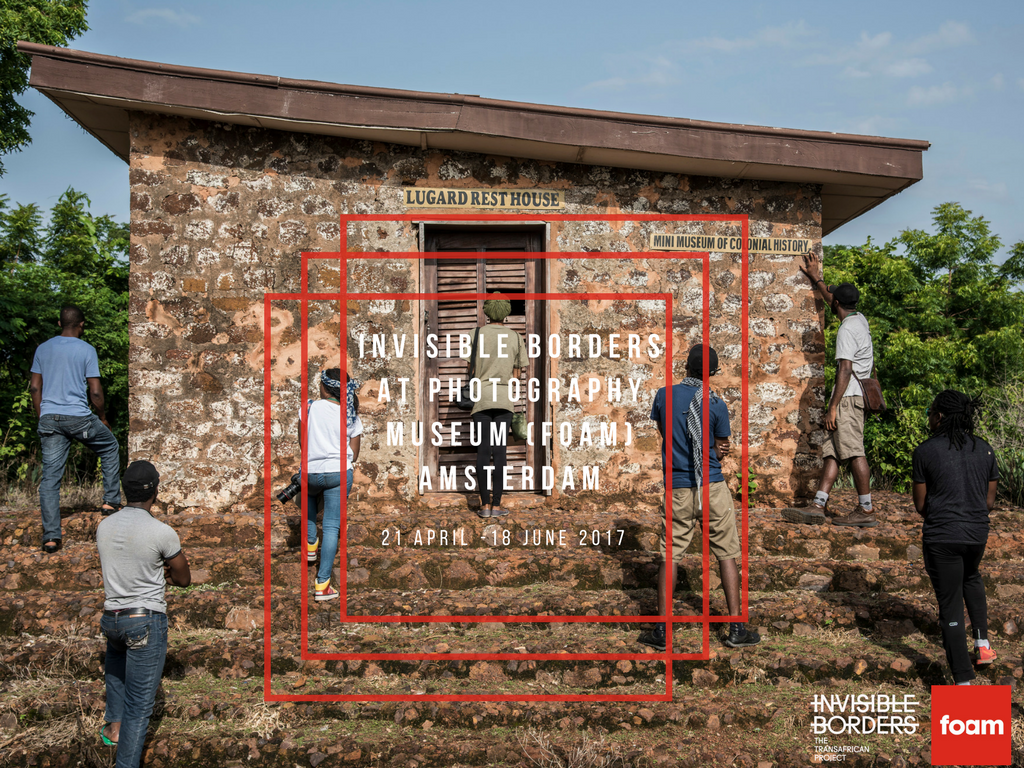
In a world obsessed with artefacts – the physical, final object – as the preferred form of artistic outcomes, Invisible Borders shifts the gaze to emphasise the never-ending, evolutive nature of Process. No distinction, hence, is made between the value of images showing the work-process and images showing the outcome; they are complementary. The artist’s presence on the road is as important as the work that commences from that presence.

Central to the Invisible Borders Installation in the exhibition Collectivism. Collectives and Their Quest For Value is the idea of the collective as a platform for the nurturing of mindsets and perceptions that offer alternative methodologies and ways of being in an increasingly narrow and enclosed notion of place, territory, and identity. As such, we shall employ as a metaphor the Road ‘s unending nature. The project will be presented as a work-of-process, an interminable voyage so to speak.

Thus, the works of the participating artists will be presented as a complimentary association between process and precipitated outcome, consisting of images, texts, sound, and videos.

Artists whose works make up the Invisible Borders exhibition are: Ala Kheir, Amaize Ojeikere, Jídé Odùkọ̀yàLilian Novo IsioroTeresa Meka, Tom SaaterVanessa PetersonJùmọ̀kẹ́ Sanwó, Charles Okereke, Uche Okpa Iroha, Emmanuel Iduma, Ray Daniels Okeugo, Uche OkonkwoLucy Azubuike , Yínká ElújọbaEmeka Okereke. 

Contributing collectives of the entire exhibition are 8Ball Community (USA), Dead Darlings (NL), # Dysturb (FR), The Eternal Internet Brother/ Sisterhood (GR), De Fotokopie (NL), InvisibleBorders (NG), and Werker Magazine (ES/NL).

###

For more information, visit: https://www.foam.org/museum/programme/collectivism
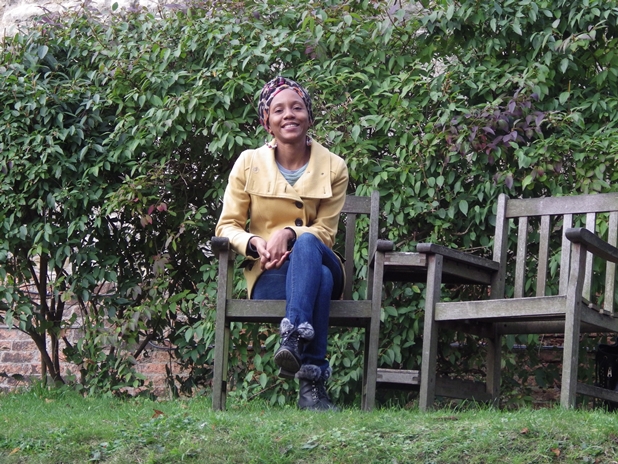
“There’s a lot of ignorance amongst ourselves.” Interview with Uche Okonkwo

Uche Okonkwo is one of the participants in the ongoing Invisible Borders road trip. Born in September 1988, she has an MA in Creative Writing from the University of Manchester, UK. Her short stories have been published in print anthologies and online. She lives in Lagos, Nigeria where she works as a Managing Editor at Farafina. In 2014 she won the first ever Etisalat Prize for Flash Fiction for her story, ‘Neverland’. Her work is forthcoming in Ploughshares, Per Contra and ellipsis. I caught up with her for a brief chat about her work and her experience on the road.

___________

Uche-Okonkwo2Do you hear this question “Is ‘Uche’ a female name?” very often?

I think Uche is a fairly common female name. I know more female Uches than male actually. But, strangely enough, I get this question often.

You currently work as a managing editor in Lagos. What does a managing editor do?

A managing editor manages an editorial department. So, along with actual editing, a managing editor manages other editors, graphics designers, authors, illustrators and freelancers. A managing editor also decides (or plays a key role in deciding) what gets published by the publication or publisher.  

Your interest in this trip, you mentioned, is to explore this same issue of identity with the people you meet, trying to understand how their language competence affects the way they look at the country. I’m very interested in this. What have you found so far?

Well, I’ve shifted the core focus of my work on this trip from language. Now my focus is on questioning the idea of ‘unity in diversity’. Language will become secondary to my work, one of the ways through which I will look at the idea of diversity in the various locations where we visit.

I’ve chosen to shift focus in this way because I realize that this (the subject of Nigeria’s diversity and how we are able or unable to be unified because of or in spite of it) is actually the big question behind my thoughts, and it then leads into language, identity and so on.

What informs your artistic and creative interests, besides the multiethnic nature of your upbringing – which many Nigerians share? And how long have you had these curiosities?

Simple answer: anything can and does inform my artistic and creative interests. I cannot name one thing. Books, movies, other writers, places, my faith, romance and heartbreak, human behaviour, it could be anything. But more specifically, I tend more toward exploring human relationships in my writing.

As far as “the multi-ethnic nature of my upbringing” goes, it’s not something that I can say has been of particular or special interest to me with my writing. It’s just the thing that sparked my interest in looking at identity and diversity, for this particular Invisible Borders road trip.

But relationship with Asaba must also play a role. It was moving to read your account of your father’s recounting of growing up in Asaba during the Nigerian Civil War.

I wasn’t brought up in Asaba. My family moved to Lagos when I was about three years old, and we’ve been there since. Which is why, even though I have visited Asaba over the years (though not very often), the story of the place and its history are not very familiar to me. Uche3

Who are your biggest artistic/creative influences?

The writers that I read (of which there are many). And the people in my life: friends, family, relatives.

Your story “Neverland” which won the first Etisalat Prize for Flash Fiction is a beautiful tale of love, heartbreak, vengeance, mischief, and redemption, in under 500 words. You said it was inspired by nostalgia, and that was evident. How many more like that have you written, and when should we expect a book?

I’ve written many pieces of flash fiction, a lot of which appear on my blog. I’ve also written many short stories, some of which have been published or are forthcoming in magazines and journals. I’m currently working on putting together a collection of short stories, but it’s not something I’m in a big hurry about.  

What do you remember most fondly about the Etisalat Prize experience?

I think my fondest memory of the experience was the awards ceremony itself, when Ama Ata Aidoo announced my name. She went, ‘oh, it’s a girl!’ and there was such happiness in her face and tone. I liked how pleased she’d seemed.

How did you get into the Invisible Borders project?

I heard through a friend that Invisible Borders was looking for a writer for this road trip. I had heard about Invisible Borders before and had always been intrigued by the idea. And so when I heard this I told my friend I was interested, and I sent a sample of my writing, which she passed on to Emmanuel Iduma, and that was how it began. It’s been a great experience so far, working with these wonderful artists and learning so much. And the people from the Diamond Bank team (who are travelling with us) have been amazing as well.

Uche2I got on this road trip because I recognized it as something important and timely. I think that as much as we say that Nigeria is one country, there’s a lot of ignorance amongst ourselves; about our past, about the country’s different ethnicities. There’s also a lot of uncertainty about our future as a nation. Projects like this road trip help us to explore and ask questions and start necessary conversations about our identity, as individuals and as a people.

On a more personal note, I enjoy travelling, and road trips more so. No way was I going to pass up on this opportunity, in spite of my fears about visiting a place like Maiduguri.

Considering your experience for the last couple of weeks on the road, what would you describe as your most memorable experience?

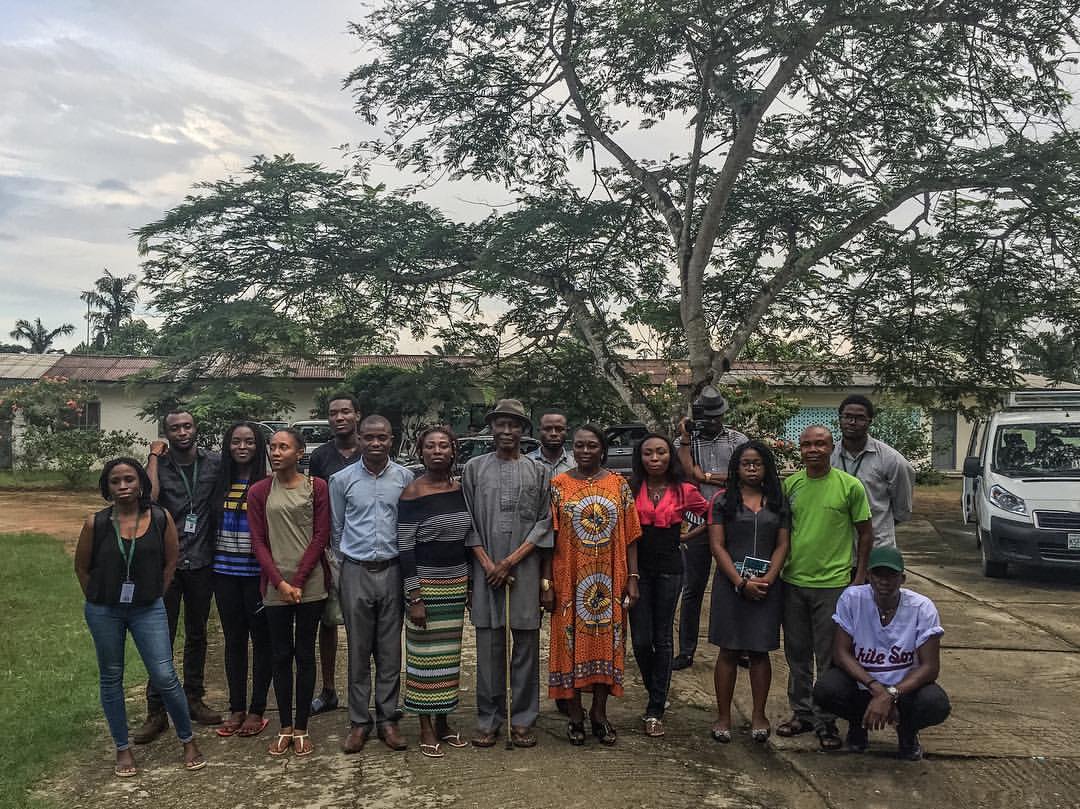
I think that so far my most memorable experience has been in Asaba. Hearing my dad talk about his experience of the civil war was particularly powerful for me. Besides that, there have been many other precious moments during the trip: from visiting with Pa Ayomike in Warri to meeting the Iyase of Asaba, and the many serendipitous encounters with strangers that ended up having such a profound impact. Even just sitting and talking with the other participants of the road trip is often enriching and insightful.

What are your plans for the nearest future?

My plans are to keep writing and finding ways to do (or keep doing) the things that I enjoy, and to take life one day at a time.

Thank you for talking to me.

Thank you for your time as well. It’s been a pleasure.

__________

Photos from Invisible-Borders.com and KonnectAfrica.net.

You can read interviews of other current participants on the trip here and here and here.

Partnership With Invisible Borders

Today, I’m glad to report to you on a collaboration with the guys at Invisible Borders Project. For the next few months, this blog will bring to you news, interviews, blog posts, and reportage from this beautiful travel project of the Invisible Borders: The TransAfrican Project. For those not familiar with them, for a couple of years now, this small organisation has organised trips across long distances, taking along writers, photographers, and other artists to document the human, social, literary, and cultural landscapes from one point to another, giving the reader a chance to journey across spaces they’d never otherwise traverse through the eyes and thoughts of the travellers.

This time, they would be travelling across Nigeria! (Read more about the 2016 trip here). Nigeria

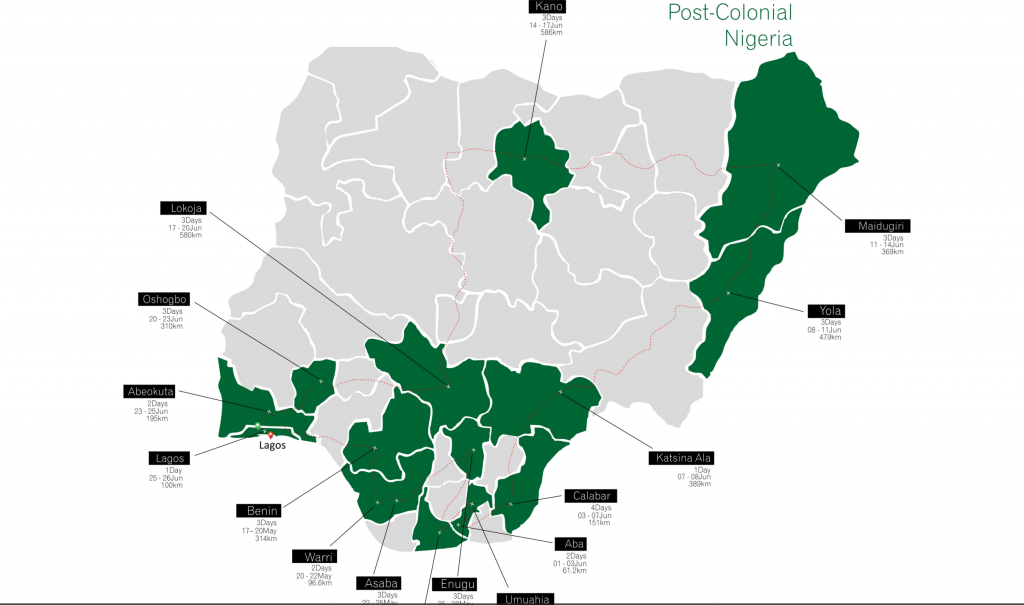
Hear more: “In a period of accumulating upheaval across Nigeria—the recurring threats of Boko Haram fundamentalists in the northeast, and pro-Biafra agitations in the southeast—a trans-Nigerian road trip will elucidate the ambiguities of contemporary Nigerian existence. The Nigerian experience we seek to question is contemporaneous and global. In the absurdity of their rhetoric and the severe consequences of their violence, Boko Haram and the Islamic State are products of artificially constructed maps and policies – an indictment of the colonial project so to speak.” (See the map of the trip around Nigeria here).

KEY FEATURES OF THE PROJECT: 

  • A Team of 10 participants – 8 artists (4 photographers, 2 film makers, 2 writers) and two administrators (a driver and a project manager)
  • participants will travel together in a van, all the while, living, working and interacting with each other.
  • Participants are expected to develop concrete bodies of work in the form of photography, short films, and essays.
  • Outcomes and experiences of the project will be shared online, on a daily basis via a dedicated blog/app. See example from our 2014 Road Trip:http://app.invisible-borders.com/.
  • A Book articulating the photographic works as well as essays shall be published at the end of the project in conjunction with a feature-length documentary film.
  • The duration of the project is 46 days from May 12 – June 26, 2016.

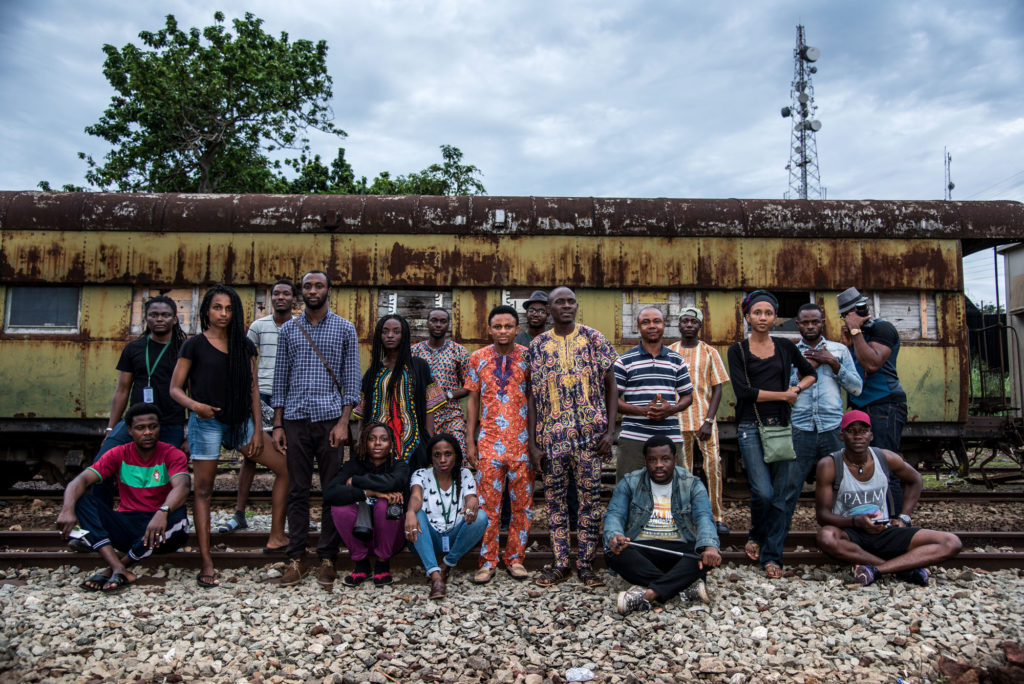
The participants in the trip are Zaynab Odunsi (photographer), Emmanuel Iduma (writer), Eloghosa Osunde (photographer/writer), Yagazie Emezi (photographer), Yinka Elujoba (writer), Uche Okonkwo (writer), Emeka Okereke (Filmmaker/ photographer), Innocent Ekejiuba (Project Manager), and Ellen Kondowe (Head of Communications). You can read more in-depth profile of them here.

***

At KTravula.com, we will follow the trip, serving interviews, photos, thoughts, blog posts, and other artistic input from participants of the project. All these will come along with the usual posts from guest posters, and other updates from my pedestrian trips around Lagos and its environs. Keep a date.

Follow us on twitter and like our Facebook page for instant feeds.