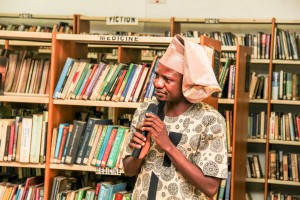
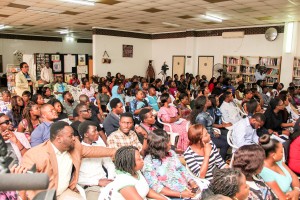
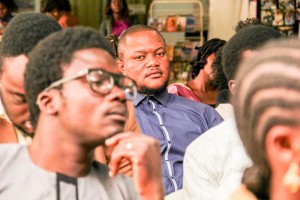
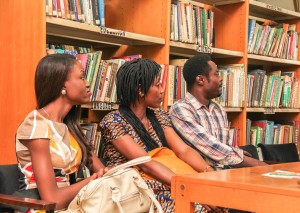
 On Friday December 4, 2015, film lovers gathered for the screening of Firm Media Production’s short film The Bargain. The film screening was part of the commemoration of the annual United Nations 16 Days activism against Gender-based Violence. The film screening opened up a well of stories about domestic violence.
Story One. Multimedia artiste and the producer of the film, Fẹ́mi Amógunlà introduced his project—a media project on gender based violence. He shared stories of various women through his photography, pictures that he still shares every day until December 10. He had taken various pictures of different women in different situations and asked their opinion on gender based violence. These faces, these issues, these stories set the tone for the many stories that would be shared during the day.

 Story Two. The main character in the film, a woman experienced violence from childhood through adulthood. The film is in fact this character’s narration, of her experience, of the different lessons that women should learn. First lesson: as a woman, never respond. Second lesson: never out on a man. Third lesson: as a woman, you never struggle. Take everything lying low. Fourth lesson: As a woman, you should never grow too big. Never let your career grow big enough to shrink your husband’s balls. These lessons are from the book of society.
Story Three. Abíádé Oláwànlé, the founder of Humans of Substance Empowerment Initiative, a non-profit based in Ibadan shared her experience in an abusive marriage. She had married as a virgin with high expectations—and that did not include a divorce. Hers is also a story of courage, to walk out of abuse. Abíádé’s talk put the statistics of domestic violence in flesh and blood.
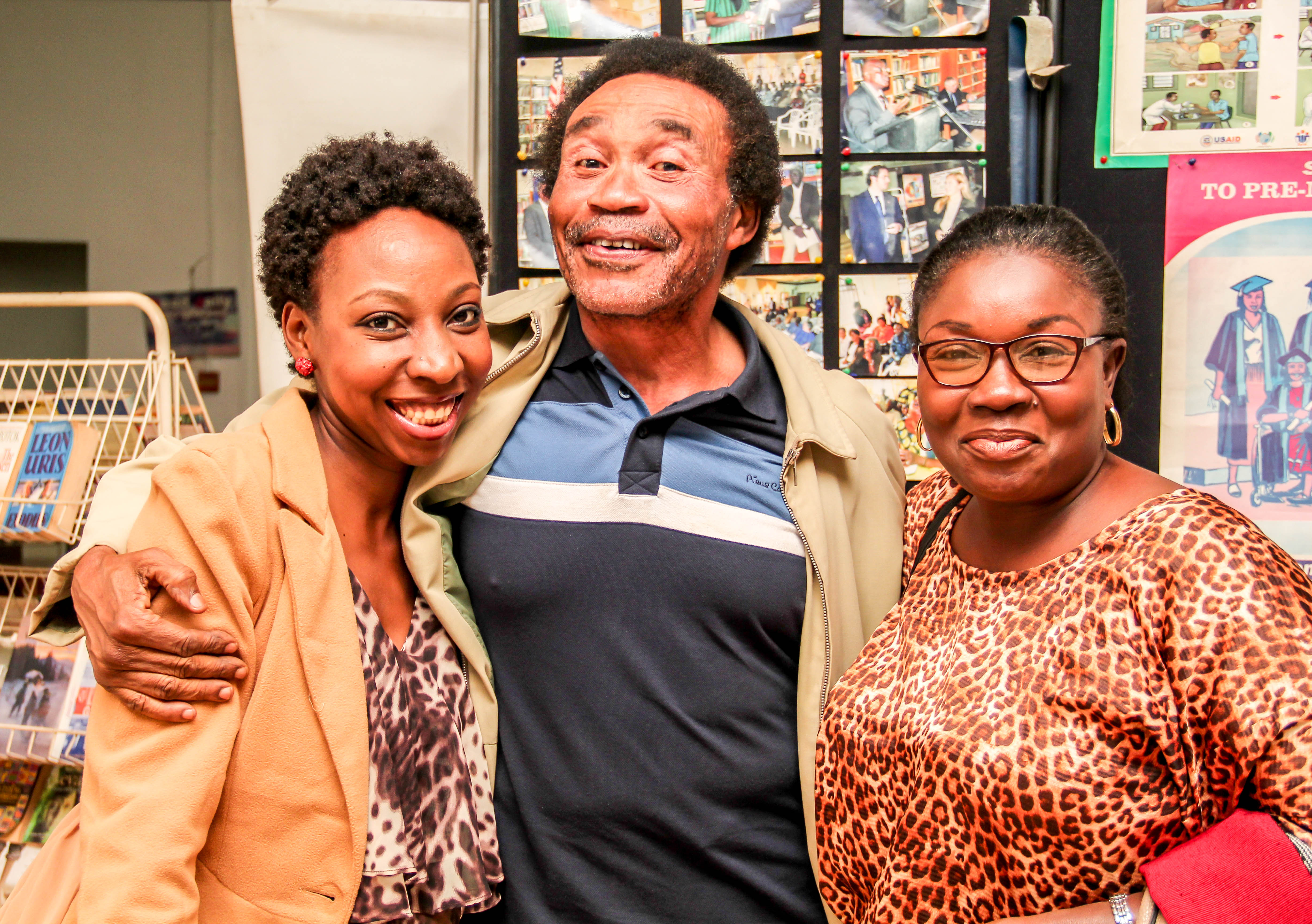 “My ex agreed not to beat me but he abused me in every other way. I expected people to tell me to take my life into my own hands but they told me to endure. So, I stayed but when I knew that I wouldn’t get the church or the society’s approval, I packed my bags and I have never gone back.” Abíádé said that once violence starts, the victim has a role to play to break the chain—for there to be an abuse, there must be an abused.
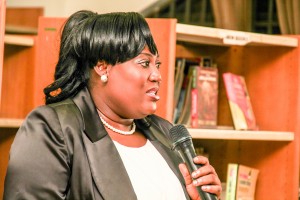
Story Four. Dr. Oláyínká Egbokhare, a lecturer at the Faculty of Arts gave a sobering presentation that “simplified” the complexity of abuse, especially among young people.
“Some people even partake in abuse without knowing it.” She says that it is important to talk about the issues. She interspersed her presentation with stories: of a man who perpetually abused his wife who worked at UCH; of how he killed her and committed suicide after the act, leaving their four children as orphans. She reminded the audience of the story of the banker who was stabbed to death by her husband. She told the story of how she used to admire a couple that always wore anko, same clothes. Only for the wife to show her the fresh wounds beneath her gorgeous bùbá lace one day. If abuse must stop, everyone must be ready to be called a rabble-rouser, she said.
 “How many of you are willing to be accused of asking a married woman to leave her husband’s house?” She asked as she buttressed her point on the challenge that comes with change.
After the presentations, the other members of the panel: lecturer and only male panelist, Sọjí Cole; OAP and author, Ifẹ́olúwapọ̀ Adéníyì and lawyer, Edem Ossai engaged the issues. What role does culture play when it comes to violence? What do parents need to do to prevent their children experiencing sexual abuse? What needs to change?
Sọjí Cole called for shared responsibility. Male and female, husband and wife, are responsible for what their families and the society become. This should come into play even in the way chores are shared in the house. Cole who has been married for four years says he washes clothes in his house.
Ifẹ́olúwapọ̀ Adéníyì brought the issue into perspective by showing that not just men are culpable of violence against women. “How about the pain that women bring on other women? Who are the mothers-in-law maltreating their daughters-in-law? Who are the husbands maltreating their wives?” She queried. Her point: abusers are not ghosts; they are male and female.
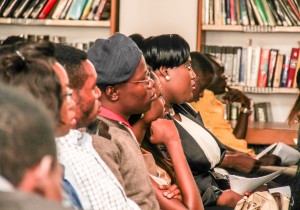 Edem Ossai emphasised the role of the society. It is not only in marriages. Teachers are abusing students. House girls are abusing house boys. Fathers are abusing their daughters. Rather than deal with the issues, we blame the victim and ask, in case of sexual abuse: what was she doing there? What was she wearing? Failure of the law at punishing violence in the Nigerian society also makes abuse thrive. “If you have to run to a judge who himself is an abuser, what do you do?” Ossai stressed the importance of parents being more watchful when raising their children; it is important to raise children who respect all human beings, male and female.
It is not enough to talk about these stories without action. The film screening ended in the afternoon but with once certain thing—with more programmes like this, Nigerians will begin to see gender-based violence the way it is. They will begin to see that it is a mindset, steeped in years of repeated action, and that it can stop. That it is not about bargaining with words; but it will take everyone, male and female, one small action at a time, to stop it.
____
Report sent from Ìbàdàn