I never met him in person, but his spirit reached out to me from as far back as 2000 at such a distant place as a negligible classroom in the University of Ibadan when I first read Nwokedi. The play featured blood, gore and very very angry philosophical retorts to life. I do not remember any of the lines in the play now, but I still carry its name in my head everywhere I go – was one of my first books to challenge my self-inflicted limits of playwriting imagination. My eyes hang heavy now. Esiaba Irobi, the roaring poet and playwright, has gone to be with the elders. He was greatness personified. I feel as pained to think of him in the past tense as I write a tribute to someone that I got to know only for a fleeting moment, but not nearly enough.
 Rarely have books moved me the way Nwokedi did. Perhaps it was my innocence, or my search at that time for meaning and answers, or perhaps the mixed feeling that overwhelmed and sustained me from page to page as I pored over a work nuanced in poetry with satire and anger. I had always wanted to know who he was. Thinking about it now, it must also have been from the amazement that someone with that firebrand imagination and craft could have eluded popular discourse for so long. All we heard then was Wole Soyinka and Femi Osofisan in the field of playwriting. Where was Irobi when these great names were compiled? And why was I discovering this gem only in a first year course in my first week in the University? I forgot about the first year drama class, but I did not forget the name.
And then in 2006 or 2007, I joined the Wole Soyinka Society Yahoo group and was happy to find the man in the same creative space as I. We did not become friends, but we did exchange ideas about so many things. That group owes the robustness of its archives to that man. He was frank and unpretentious, and he was as fiery in his thinking as he was gentle in his appreciation of the little things of life. He wrote love poetry. (Who could tell?). He missed Nigeria and he reminisced about the frustrations he had while living there. At a point in 2008, he volunteered to donate his books free to people in Nigeria who were ready to start a reading club. On his own expenses, he was ready to ship as many as fifty books to whoever had asked for them. I asked for some on behalf of the Union of Campus Journalist in the University of Ibadan whose president I was for 18 months before I left the University, but I didn’t follow up on the request. He promised many other people as well.
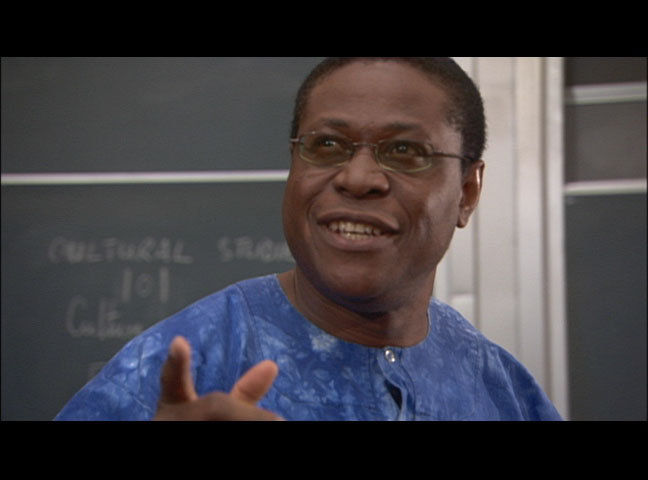
A few months later, I learnt that he was fighting cancer. His participation in discussions on the forum dwindled until it was finally nil. And yesterday, I heard of his passing – a very very terrible loss. Those who know him will say how cerebral, and how genuinely personable he was. I can’t say as much, but from the snippets from his brain and person that I met through his novel Nwokedi and another one I read shortly afterwards, and from testimonies of his teaching style, fervour and humour, I wish I had met him. This Facebook Group made for him had celebrated his life for a couple of years now. Now, only tributes mark the wall.
Rest in Peace, oh great intellectual of repute; a joyful fellow, playwright, poet, educator, lover of all things good, storyteller, and in the words of tribute by one of his students in Ohio University where he finally got tenure after years of working, “the most brilliant teacher I’ve ever known.” Sleep well.
Now I have to go find Nwokedi to read again.