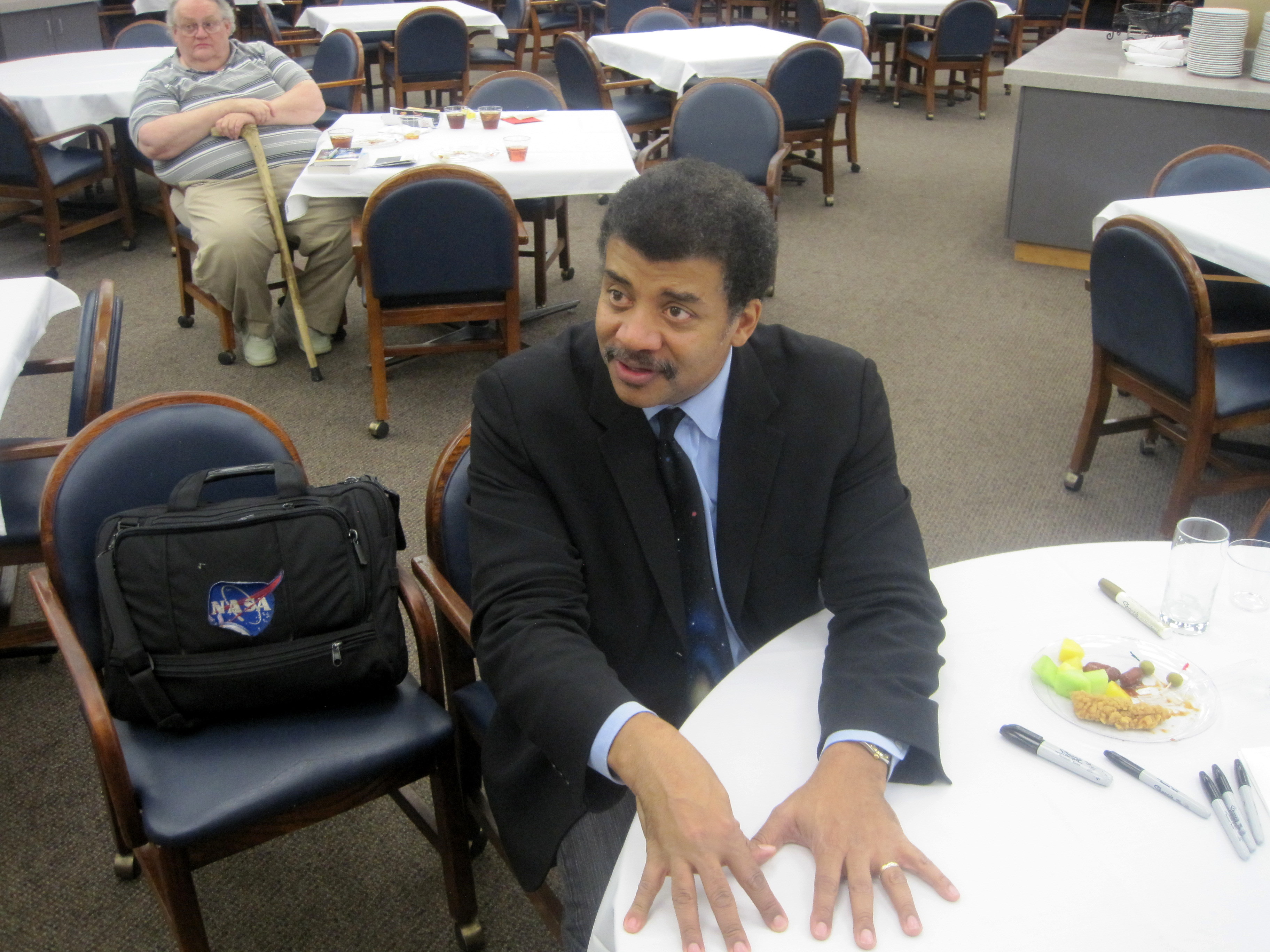
 America’s most famous astrophysicist dropped by campus today for an event of the SIUE Graduate School. Dr. Neil deGrasse Tyson is the director of the Hayden Planetarium in New York City and the recipient of the NASA Distinguished Public Service Medal, the highest award given by NASA to a non-government citizen. He is also the author of The Pluto Files and Death by Black Hole (and other Cosmic Quandaries).
His talk, titled “Our Past, Present, and Future in Space” focused on the regression and eventual end of the US space program, and the contribution of public and political apathy to this end. Those who have heard him talk will already be familiar with his worldview: a passionate defense of imagination and a unified, inspiring public policy for science. The end of the space program, according to Mr. Tyson, is one of the worst things to have happened to America in a long time not only because of the now total absence of motivation among young people, but also because of how the general apathy has now negatively affected the status of the country in the world. In a preview to the visitor’s speech, Dean Aldemaro Romero of the Faculty of Arts & Sciences had this to say: “While I was growing up in Venezuela and told my parents that I wanted to be an astronaut, they told me ‘You have to be either an American or a Russian.’ Now, many decades later, as an American citizen, I have found out that to go to space, I’d either have to be Chinese or Russian.”
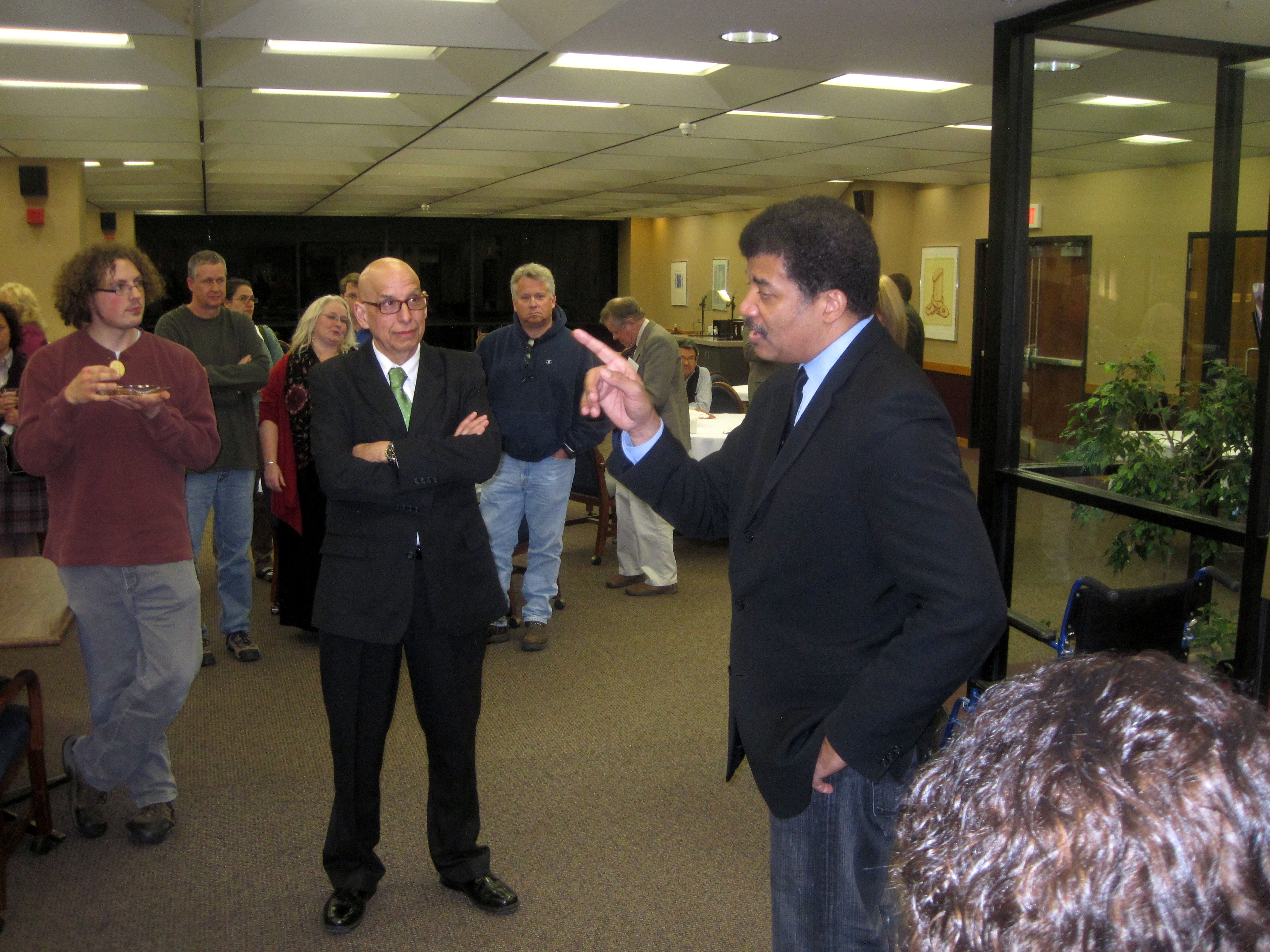 There was a lot more. The maps of the world, when plotted on a chart on the basis of resources spent on science (and, on another chart, on the basis of scientific progress/development in the last decade) shows the African continent virtually invisible. What concerned Dr. Tyson however – as well as the members of the audience – was the shrunken shape of the American map as well. Even Brazil, and Japan, on this map showed far more encouraging progress, to the dismay of all who have previously believed this country as being on the farthest frontier of future advancements. Many things are wrong, among which is the absence of a political will and imagination.
At the reception party arranged for him, I asked for his opinion on the absence of scientific advancement in Africa, and whether the frontier had irrevocably moved westwards. He disagreed, opining instead that like every great civilization had come and gone, the continent would have its turn again at some point in time. There is a particular initiative at the moment in South Africa, he said, where scientists have begun training young high school students in order to be able to produce the next big scientist (of the stature of Albert Einstein) and a Nobel Prize in Physics from the African continent. What did he think of Physicist Richard Feynman? “He’s as brilliant as he has been described,” he replied.
Known among young people in America today as the man who relegated Pluto from the status of a planet to that of a mere floating astral rock, Neil has contributed to the progress of modern science and astrophysics in popular culture than most people in the world today, and continues to do so. It was quite an enlightening event. His autograph on my copy of his book simply read: “To Kola, welcome to the universe.”
His book, The Pluto Files details in a fun manner the arguments and debates surrounding the relegation of the former planet Pluto, including also letters from angry young children and cartoons from the media weighing in on the many sides of the relegation debate.
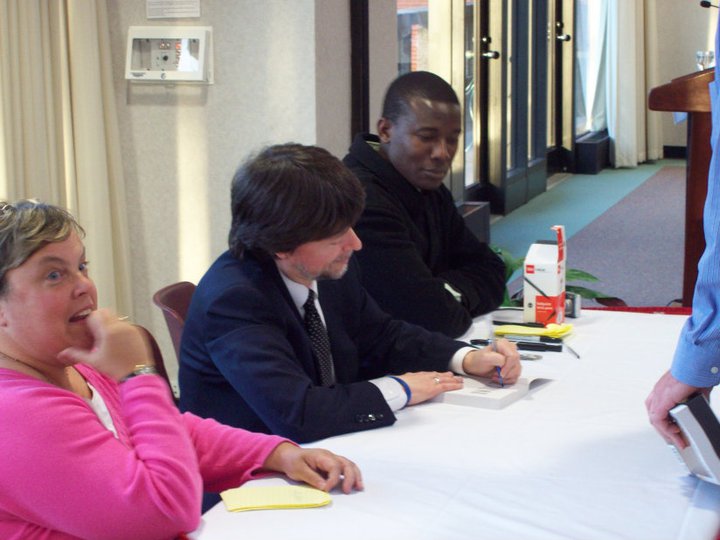
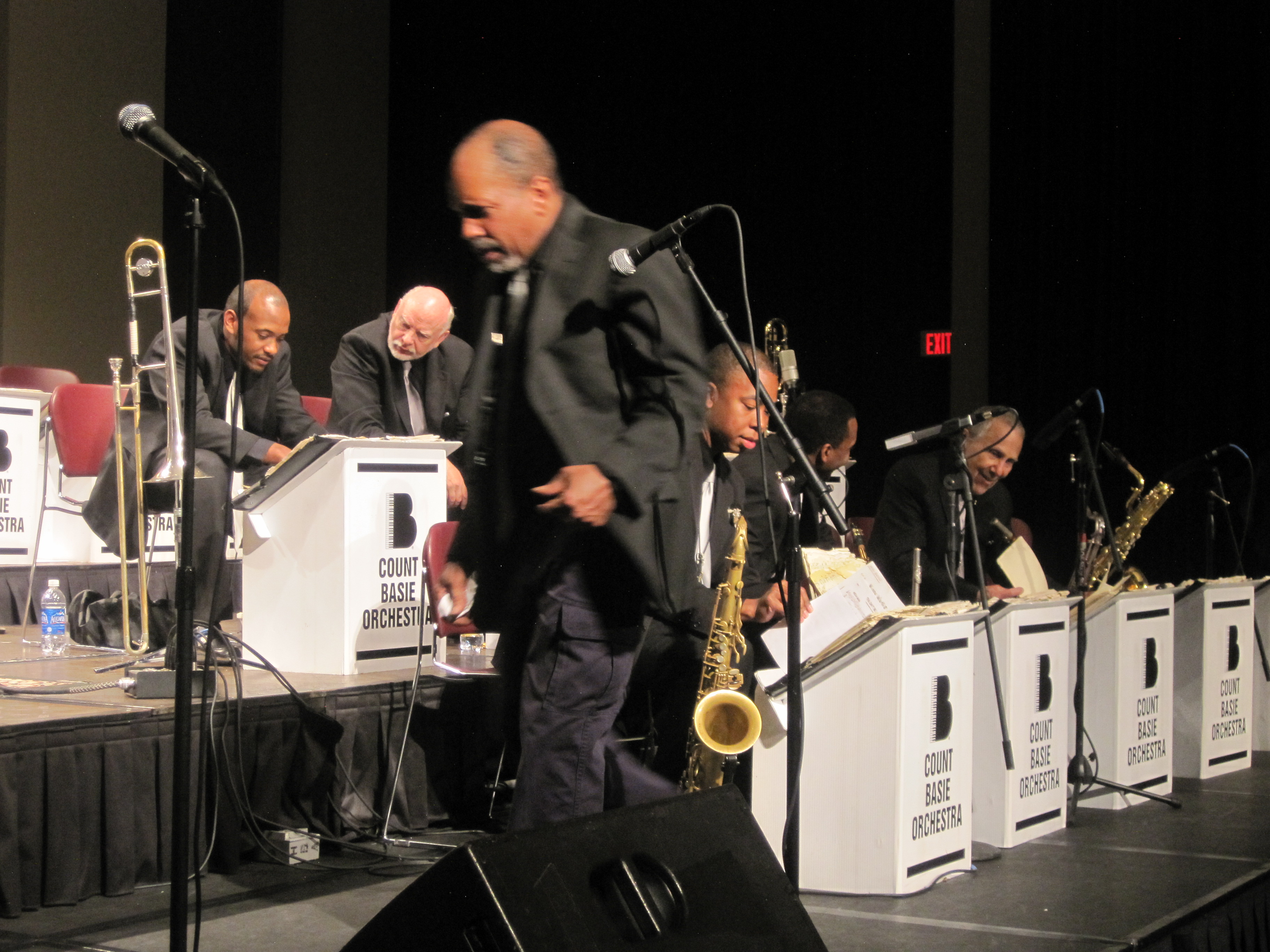
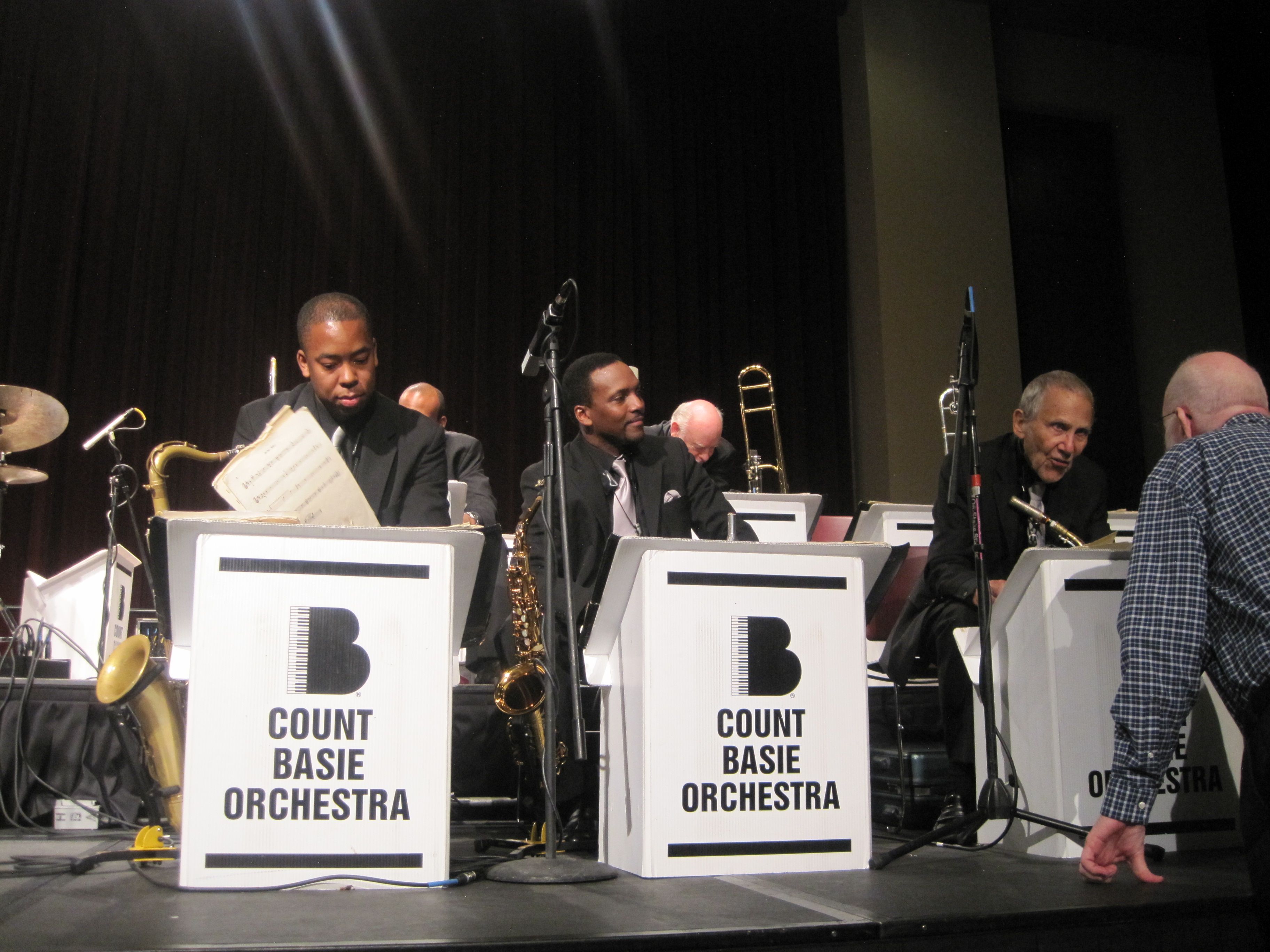
Previous guest speakers at the Arts & Issues events here include Maya Angelou, Ken Burns, and the Basie Count Orchestra. I recommend this video, by the way, Dr. Tyson in conversation with Stephen Colbert. (H/T @loomnie)

 There was a fore-warning that there would be no question and answer segment, but listening. Only listening and laughing, for the poet is one who commands her audience in charm, and holds them spellbound as soon as she steps onto the stage like an acrobatic masquerade. She was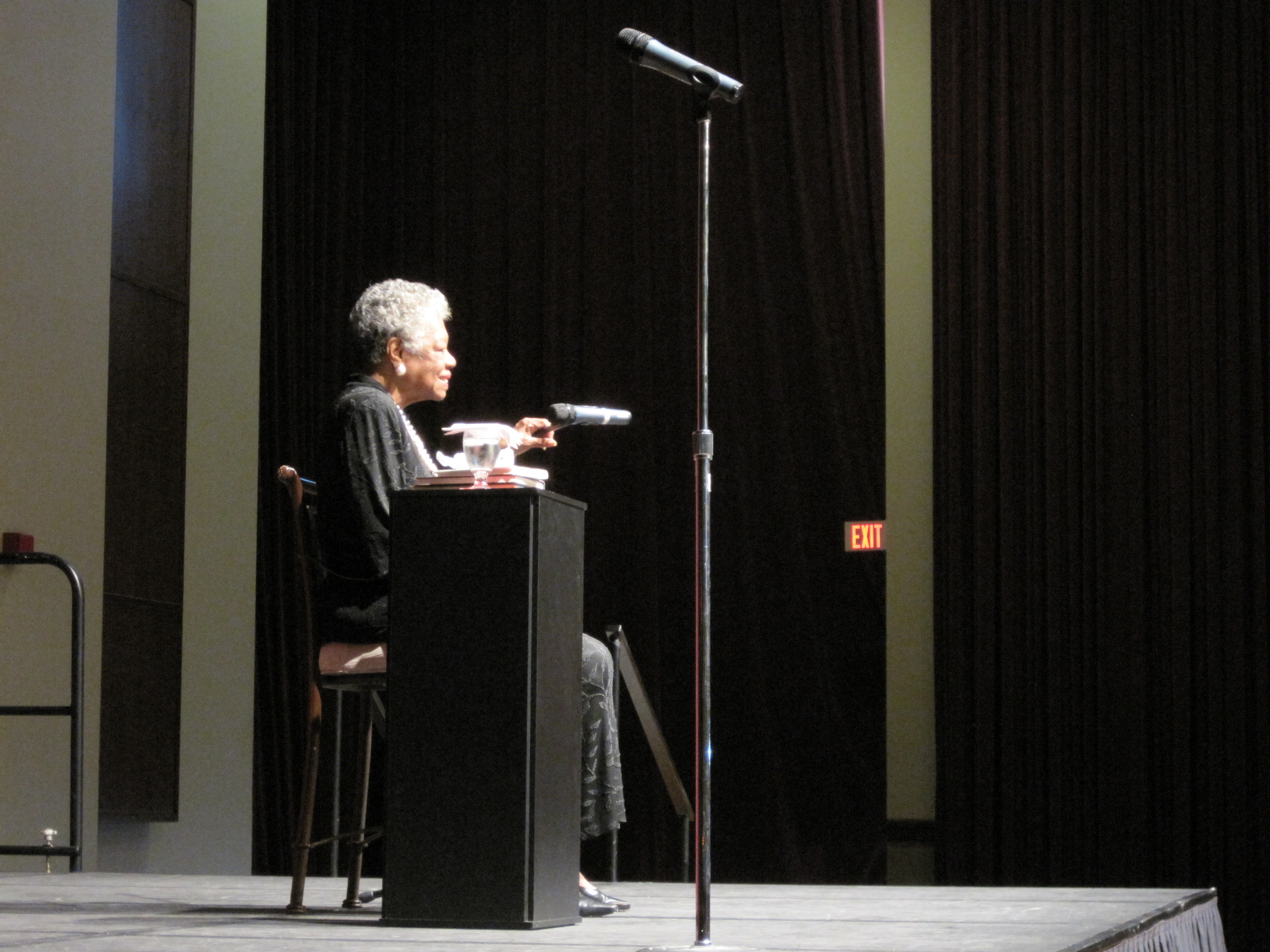
 And then she told stories from her past, in a husky voice that bellowed around the room. She told of discrimination, and hope, and joy, and rebellion, and progress, and love. “We are all rainbows,” the author said, “placed in the clouds to make some other person happy. And we’ve all been paid for,” she continued, “with either blood and human excrement from the slave ships from Africa, or the blood and brine of fleeing Jews from the camps of Eastern Europe, or the sweat from the brows of the Asians who came to this country in the 1800s to lay the railroad tracks, and buy properties so that their descendants can lay claim to the new nation.” Each one of us has an ancestry of brave people who have suffered so that we may enjoy. And so when we go out in the morning, just a little word of hope, of compliment, can always, always make a difference in some other person’s life.
 And then she sang, beautifully. Pleasantly. At her age, one would expect brokenness. But no, she definitely didn’t sound coarse or broken, but rather mellifluous. She let it be known that she had written a couple of songs for some of Roberta Flack’s albums, and she sang one of them today as well, to rounds of laughter and applause.