 Brown University to Examine Debt to Slave Trade
March 13, 2004
http://www.nytimes.com/2004/03/13/education/13BROW.html
PROVIDENCE, R.I., – When Ruth J. Simmons became the president of Brown University nearly three years ago, one striking fact could not be overlooked.
A great-granddaughter of slaves, Dr. Simmons was the first African-American president of an Ivy League university. But the 240-year-old university she was chosen to lead had early links to slavery, with major benefactors and officers of it having owned and traded slaves.
“It certainly didn’t escape me, my own past in relationship to that,” Dr. Simmons said. “I sit here in my office beneath the portrait of people who lived at a different time and who saw the ownership of people in a different way. You can’t sit in an office and face that every day unless you really want to know, unless you really want to understand this dichotomy.”
Now, Dr. Simmons, whose office is in a building constructed by laborers who included slaves, has directed Brown to start what its officials say is an unprecedented undertaking for a university: an exploration of reparations for slavery and specifically whether Brown should pay reparations or otherwise make amends for its past.
Dr. Simmons has appointed a Committee on Slavery and Justice, which will spend two years investigating Brown’s historic ties to slavery; arrange seminars, courses and research projects examining the moral, legal and economic complexities of reparations and other means of redressing wrongs; and recommend whether and how the university should take responsibility for its connection to slavery.
Dr. Simmons, one of 12 children of an East Texas tenant farmer and a house cleaner, said she was motivated by a sense that the multifaceted subject of reparations had too often been reduced to simplistic and superficial squabbles.
Brown University’s Debt to Slavery
October 23, 2006
A long-awaited report on Brown University’s 18th-century links to slavery should dispel any lingering smugness among Northerners that slavery was essentially a Southern problem.
The report establishes that Brown did indeed benefit in its early years from money generated by the slave trade and by industries dependent on slavery. It did so in an era when slavery permeated the social and economic life of Rhode Island. Slaves accounted for 10 percent of the state’s population in the mid-18th century, when Brown was founded, and Rhode Island served as a northern hub of the trans-Atlantic slave trade, mounting at least 1,000 voyages that carried more than 100,000 Africans into slavery over the course of a century.
The Brown report is the latest revelation that Northern businesses and institutions benefited from slavery. Countless other institutions might be surprised, and ashamed, if they dug deeply into their pasts as Brown has over the past three years.
The Committee on Slavery and Justice, composed of faculty, students and administrators, found that some 30 members of Brown’s governing board owned or captained slave ships, and donors sometimes contributed slave labor to help in construction. The Brown family owned slaves and engaged in the slave trade, although one family member became a leading abolitionist and had his own brother prosecuted for illegal slave trading. The college did not own or trade slaves.
The hard question is what to do about it. The committee makes sensible recommendations — creating a center for the study of slavery and injustice, rewriting Brown’s history to acknowledge the role of slavery, creating a memorial to the slave trade in Rhode Island, and recruiting more minority students. Other proposals are more problematic. But the value of this exercise was to illuminate a history that had been “largely erased from the collective memory of our university and state.”
Steering Committee on Slavery and Justice
Today.
http://www.brown.edu/Research/Slavery_Justice/
In 2003, Brown University President Ruth Simmons appointed a Steering Committee on Slavery and Justice. The committee, which included faculty members, undergraduate and graduate students, and administrators, was charged to investigate and to prepare a report about the University’s historical relationship to slavery and the transatlantic slave trade. It was also asked to organize public programs that might help the campus and the nation reflect on the meaning of this history in the present, on the complex historical, political, legal, and moral questions posed by any present-day confrontation with past injustice. The Committee presented its final report to President Simmons in October 2006. On February 24, 2007, the Brown Corporation endorsed a set of initiatives in response to the Committee’s report.
ktravula’s comments: Brown has become the first Ivy League institution to come to terms with its slaving past. It is not only commendable, but admirable. I won’t be surprised if it influenced the movement of Professor Chinua Achebe to the old institution to join other members of staff like Ama Ata Aidoo of Ghana.
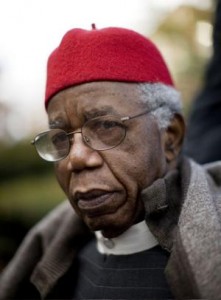 PROVIDENCE, R.I. [Brown University] — Brown University announced today (Monday, Sept. 14, 2009) that internationally acclaimed Nigerian novelist Chinua Achebe has joined the Brown University faculty. Achebe comes to Brown after 19 years on the faculty of Bard College, where he was the Charles P. Stevenson Professor of Languages and Literature.