 There was a fore-warning that there would be no question and answer segment, but listening. Only listening and laughing, for the poet is one who commands her audience in charm, and holds them spellbound as soon as she steps onto the stage like an acrobatic masquerade. She was introduced by poet Eugene B. Redmond (Poet Laureate of East St. Louis) who calls her his sister, and the audience rose in applause. Maya had come.
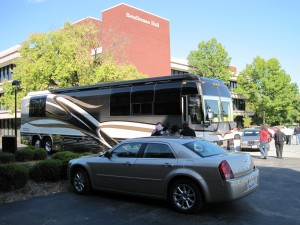
She came in a coach, a large bus that also functions as a mobile house, with bathrooms and other conveniences. According to her, she stopped flying in planes about nine years ago when she found it impossible to go out in public without someone pulling her clothes, making an embarrassing scene that often bothers on the ludicrous. In a funny but scary encounter, the pilot of a plane she was on had showed up by her seat a few seconds after take-off in order to pay homage. “We just took off! We are barely at cruising altitude” She recalled screaming. “Who is in charge of the darn plane?”
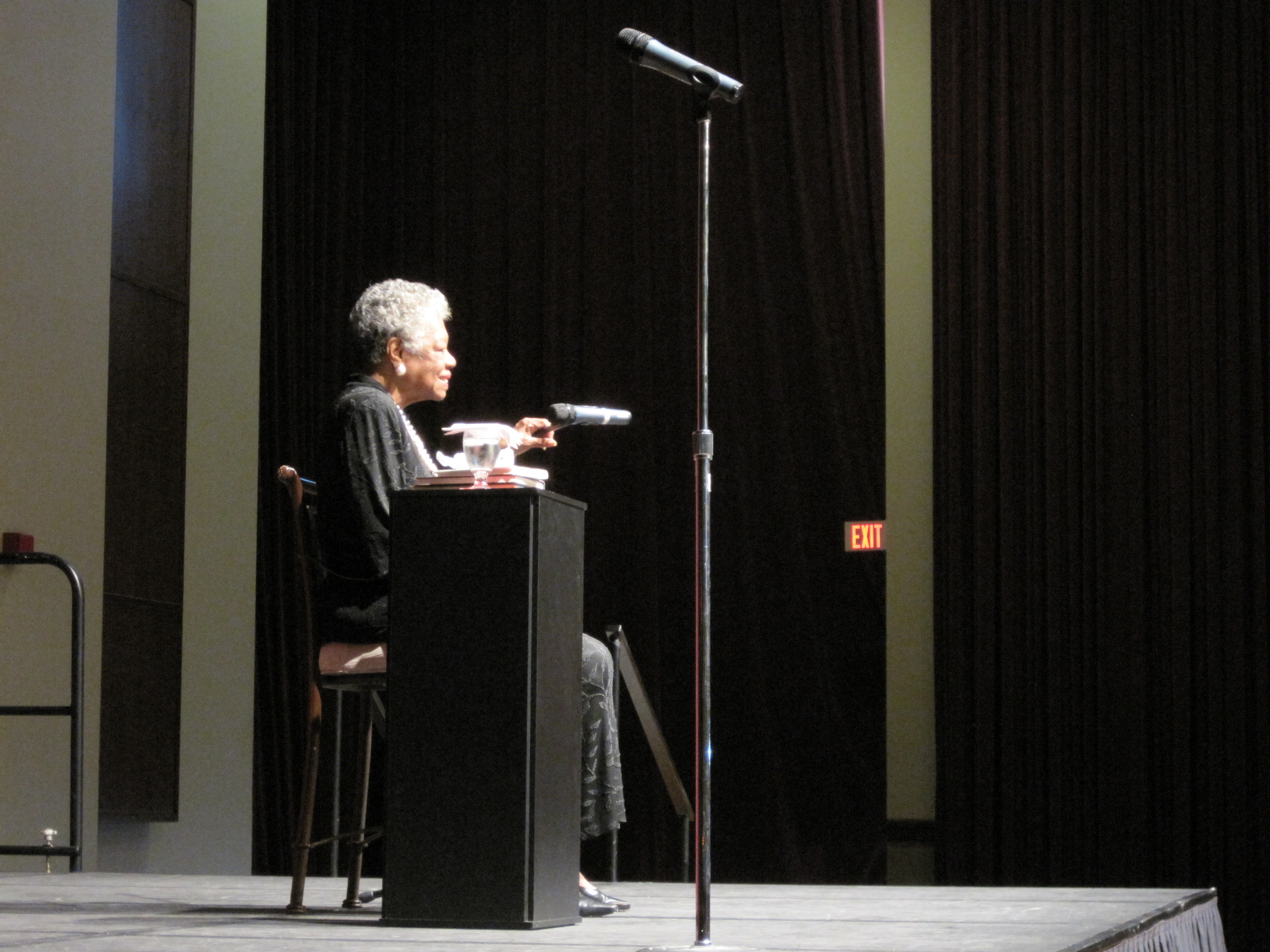 She gave another instance of someone screaming above her lungs as soon as she saw Maya get out of her car somewhere in Arkansas. “Maya Angelou is getting out of her car,” the stranger yelled. And the poet pulled her close and asked why she was screaming towards a set of (white) people a few feet away who didn’t ask for it. “Because they don’t know you,” the other replied, to the poet’s amazement and everyone’s rounds of laughter as she relayed it. But we knew she was serious. From then on, she said, she realized that it was time to take charge of her own travel. So whenever she traveled in the United States, she took her private bus on the road rather than air plane flights. On this day, she had been on the road all the way from Carolina to Illinois, and she would be going straight to New York, also by road.
She also joked, and took time to correct news stories that claimed she was sick and dying. “Don’t believe them,” she said. “It’s not the truth. Here I am.”
Then she read from her poem, “The Health Food Diner“, a poem she wrote in response to a diner in Mississippi where a staff had warned her not to smoke.
 And then she told stories from her past, in a husky voice that bellowed around the room. She told of discrimination, and hope, and joy, and rebellion, and progress, and love. “We are all rainbows,” the author said, “placed in the clouds to make some other person happy. And we’ve all been paid for,” she continued, “with either blood and human excrement from the slave ships from Africa, or the blood and brine of fleeing Jews from the camps of Eastern Europe, or the sweat from the brows of the Asians who came to this country in the 1800s to lay the railroad tracks, and buy properties so that their descendants can lay claim to the new nation.” Each one of us has an ancestry of brave people who have suffered so that we may enjoy. And so when we go out in the morning, just a little word of hope, of compliment, can always, always make a difference in some other person’s life.
About the racist N-word, Maya compared it to poison pills in a labelled container. Putting the pills into a nice plate of gold would never make them less poisonous, or less potent, she said, in response to today’s youths (take that, Jay-Z!) who present new filmsy reasons in the entertainment circuit as justification for the continued use of these words. Poison is still poison, Maya said, no matter how it is wrapped, and I agree.
 And then she sang, beautifully. Pleasantly. At her age, one would expect brokenness. But no, she definitely didn’t sound coarse or broken, but rather mellifluous. She let it be known that she had written a couple of songs for some of Roberta Flack’s albums, and she sang one of them today as well, to rounds of laughter and applause.
I remember meeting her the first time as an undergraduate while browsing through the now rested Microsoft Encarta Africana CDs, and watching her perform her poem, “Still I rise.” It was an enchanting experience. While reading more about her, I realized how impossible it would be for anyone not to be enchanted, considering how much of remarkable stories her life embodies. She was born in St. Louis, grew up in Southern California and Arkansas, then moved over to Ghana with her African Revolutionary husband whom she had met in the United States during the anti-colonial movement of the fifties. She returned to the States after her first son to the African, became a dancer, writer, teacher, public speaker, novelist, poet, film director and movie producer and later Inaugural Poet, the first African-American so honoured to recite for the in-coming president. She read her poem On the Pulse of Morning for the Bill Clinton in 1993. She is also a script writer, having written Down in the Delta, and acted in a few other films about African-America life. She also acted in Roots, a TV miniseries made from Alex Haley’s 1977 best-selling and Pulitzer-winning book.
This traveller did get the photos he had planned to get of the traveling writer, but could not get an desired autograph, at least not immediately. Like he had dreaded, the 81 year old woman had sneaked out of the hall before anyone else could, immediately after her completing her reading, and got onto her big dark coach before any member of the audience got there. But something else happened afterwards. Poet Eugene B. Redmond has taken away with him my new copy of Maya’s last autobiography, All God’s Children Need Travelling Shoes, to be duly autographed by the author, and returned to me. Within its pages is something that I had slipped in, with his collusion, brought all the way from home: a compact disc of songs and poems from Yorubaland, signed in my trembling student ink: “To Maya, With Love.”
 “I wanna live. I don’t wanna die. That’s the whole meaning of life: Not dying! I figured that sh*t out by myself in the third grade.”
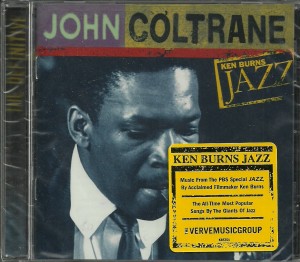 Jazz has taken over my life.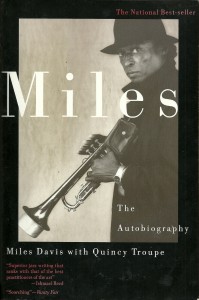
 I can only blame adrenaline because there was no reason why I should have been speeding so much at the time, or standing up on the bike while riding, or – as I discovered while laying flat out on the grass – stretching one hand instinctively and without need to touch an overhead tree branch as I rode under it. By the time I brought my hand back on the bike handles, I had lost total control and was doing a 360 degree tumble from the bike track/road onto the nearby grass – luckily. The lake was still a few feet away, and I had a helmet on. There were no cuts or broken bones, but there was a little bruise, and a dirty spot on my cream chino’s trousers. It was some relief to find that there were no passers-by at all – male or worse female students – who could have had no choice but to laugh or giggle at me as I tried vainly to pretend that all was fine and I didn’t have grass slivers somewhere in my mouth. The supernatural almost always kicks in to save me from undeserved embarrassment. I’m grateful.
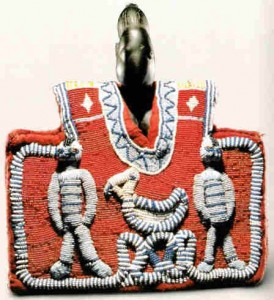 “Do you still have kings there?” Another one asked.