Browsing the archives for the Fun category.

Famine – An Excerpt

Stolen from the text of today’s presentation titled “Exploring Yoruba Culture Through American Eyes”, about to begin.


The realities of life are not to be evaded. Rather, they are celebrated, even the negative or unpleasant. Appeasement? Magic, perhaps? No matter. Challenges are thus acknowledged and countered, often with humour, (and) certainly with resolve.

Famine

The owner of yam peels his yam in the house. A neighbor knocks on the door. The owner of yam throws his yam in the bedroom. The neighbor says “I just heard the sound kr kr that’s why I came.”

The owner of yam says, “Oh, that was nothing. I was sharpening two knives.”

The neighbor says again, “I still heard something like gbi sound behind your door.”

The owner of yam says, “I merely tried my door with a mallet.”

The neighbor says again, “What about this huge fire burning in your hut?”

The fellow replies, “I’m merely warming water for my bath!”

The neighbor persists, “Why is your skin all white when it is not the harmattan season.”

The fellow is ready with his reply, “I was rolling on the floor when I heard of the death of Agadagbidi.

Then the neighbor says, “peace be with you”

Then the owner of yam starts to shout: “THERE CAN’T BE PEACE UNTIL THE OWNER OF FOOD IS ALLOWED TO EAT HIS OWN FOOD!”

As translated by Ulli Beier and performed by Wole Soyinka
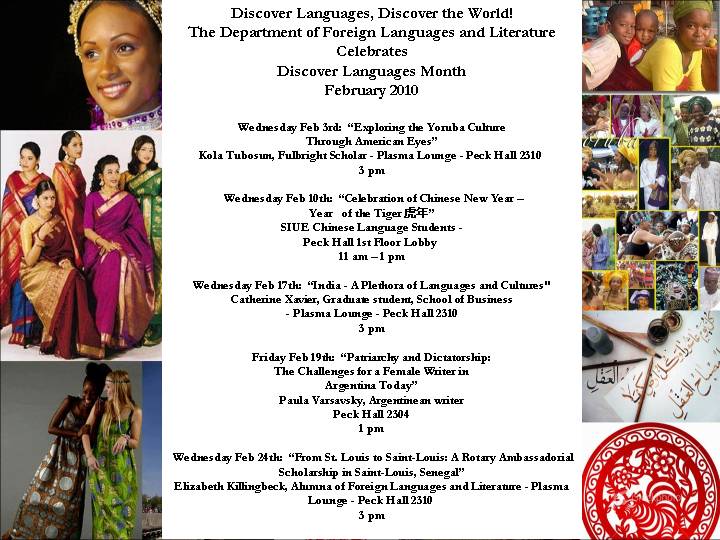
You’re All Invited

Come one, come all.

@Oyefolak, you’re highly welcome too. If you can make it up here in time from North Carolina, I will consider giving you a ride back home on my bike.

😉

Schwartzfahrer

This 10-min short video by Pepe Danquart won an Oscar in 1994 for its portrayal of a particular aspect of everyday Germany. I caught Yvonne, my colleague at the office and German professor, watching it last week and I joined her. I enjoyed it, laughing my head off at the end. You should too. The dialogue is in German, but it is subtitled.

The title Schwartzfahrer in German means “Black Rider”, which originally referred to those who board public transportation without tickets, particularly the foreigners.

iSkits

Scene I

+++++


Kola: Ben, what’s your favourite Apple product?

Ben: I gotta say, the iPod.

Kola: The iPad?

Ben: No, not the iPad. The iPoood. [Pronounced as “iPaaad”]

Kola: What? You like that new product?

Ben: No, you’re not listening. I mean the iPod, the iPod; the small one that fits into your breast pocket. That one you’re holding.

Kola: Oh, the iPawd, you mean.

Ben: What is that? iPawd?

Kola: Well, the way you’re pronouncing it, I couldn’t tell the difference between when you say iPod and when you say iPad. Can you say “iPod,” this time in English?

Ben: Good God, you’re terrible.

Kola: Don’t you mean “Good Gawd?”

******************

Scene II

++++++

Kola: Hello, am I speaking with the Apple representative? I made an online order of the new iPad.

Operator: Oh nice. I’m here to help you. Was it the iPod classic or the iPod touch?

Kola: Does it come in those options?

Operator: Yes. The Classic comes in 160GB, 120GB and 80GB types…

Kola: I think you’re getting me wrong. I mean the iPad.

Operator: I got you right. You want the iPod, right?

Kola: Yes, and I’m told it has come to knock the Kindle off its lazy ass.

Operator: [Silence.]

Kola: Hellooo.

Operator: Yes. There must have been a mistake. Did you say you want the iPad or the iPod?

Kola: From what you just said, I really can’t tell them apart. Maybe you should please let me speak with someone who speaks English.

Operator: Good Gaad!

Kola: [Click]

******************

PS: None of these conversations has taken place, as far as I know. But I won’t bet against the possibility that they are taking place right now in parts of the United States, especially between Nigerians and Americans.


Short Observations from Class

  • Most students tended to make hasty generalizations from what they read. The book A Mouth Sweeter Than Salt had very many interesting stories from the perspective of the then young and uneducated Toyin Falola and his upbringing, but most who read it tended to think that his story was true for everyone else, e.g. people not remembering their date of birth. This happened last semester as well. Maybe we should bring Chimamanda back.
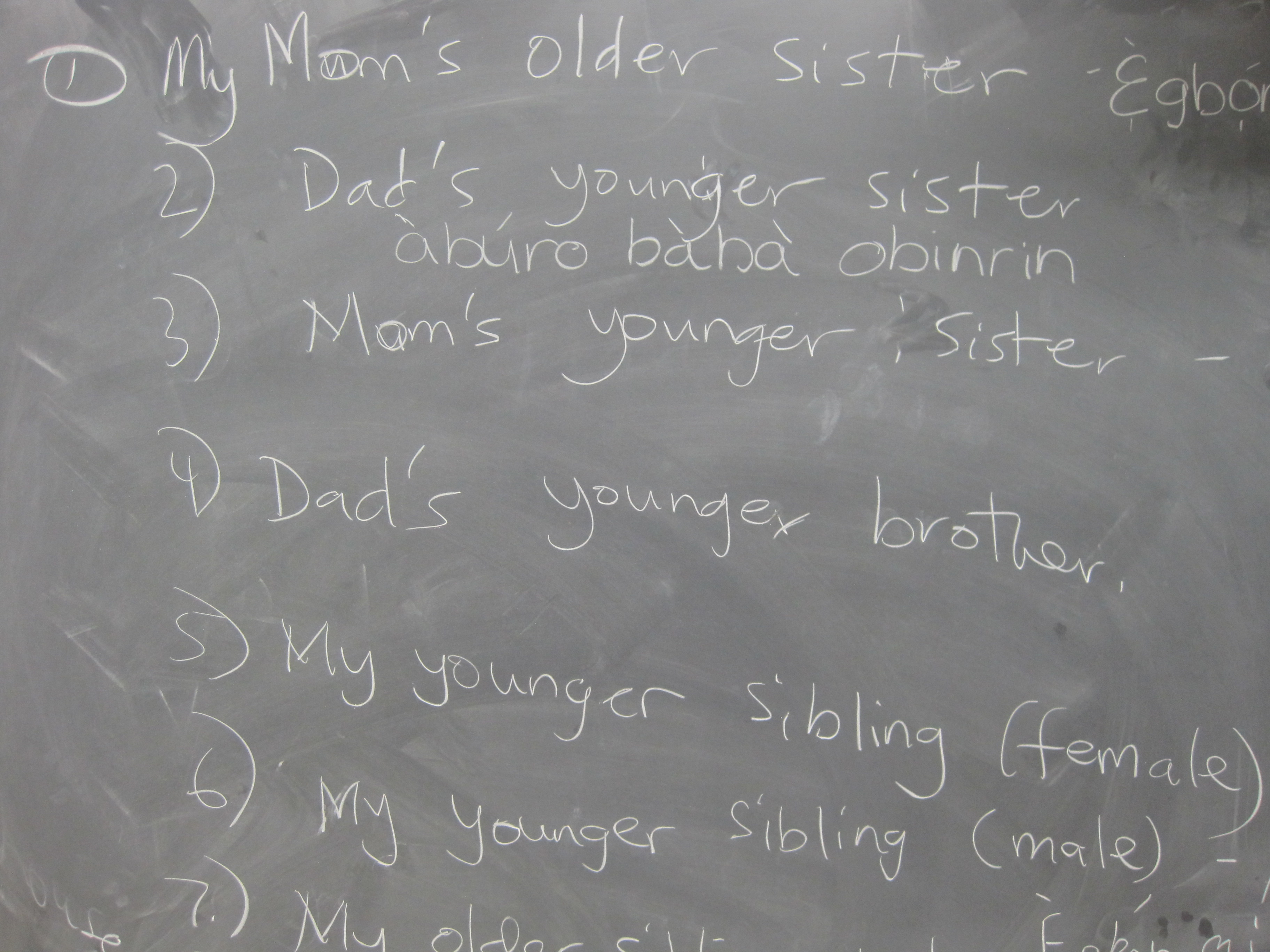
  • Americans wrote the shortened form of the English word for mother as “Mom” instead of “Mum” as I have been used to. I didn’t know this before. I’ve always written it as Mum, until someone from class gently corrected me after I wrote it on the blackboard. Then I gently corrected her too, and voiced my reluctance to ever adapt to American English. They found it amusing.
  • One of my students said on Monday after submitting an assignment to write a summary of the life of Wole Soyinka that his mother had met the Nigerian Nobel Laureatte once before, and found him to be brilliant. “Cool,” I said.
  • Many students used Yoruban whenever they used Yoruba as an adjective in an English sentence, rather than the usual Yoruba, e.g Yoruban boy, Yoruban culture, instead of Yoruba culture. Yoruba boy etc. I noticed this in the scripts of my Fall semester students last year as well. Do British English people make this generalization as well?