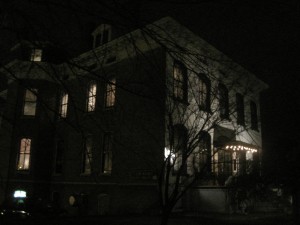
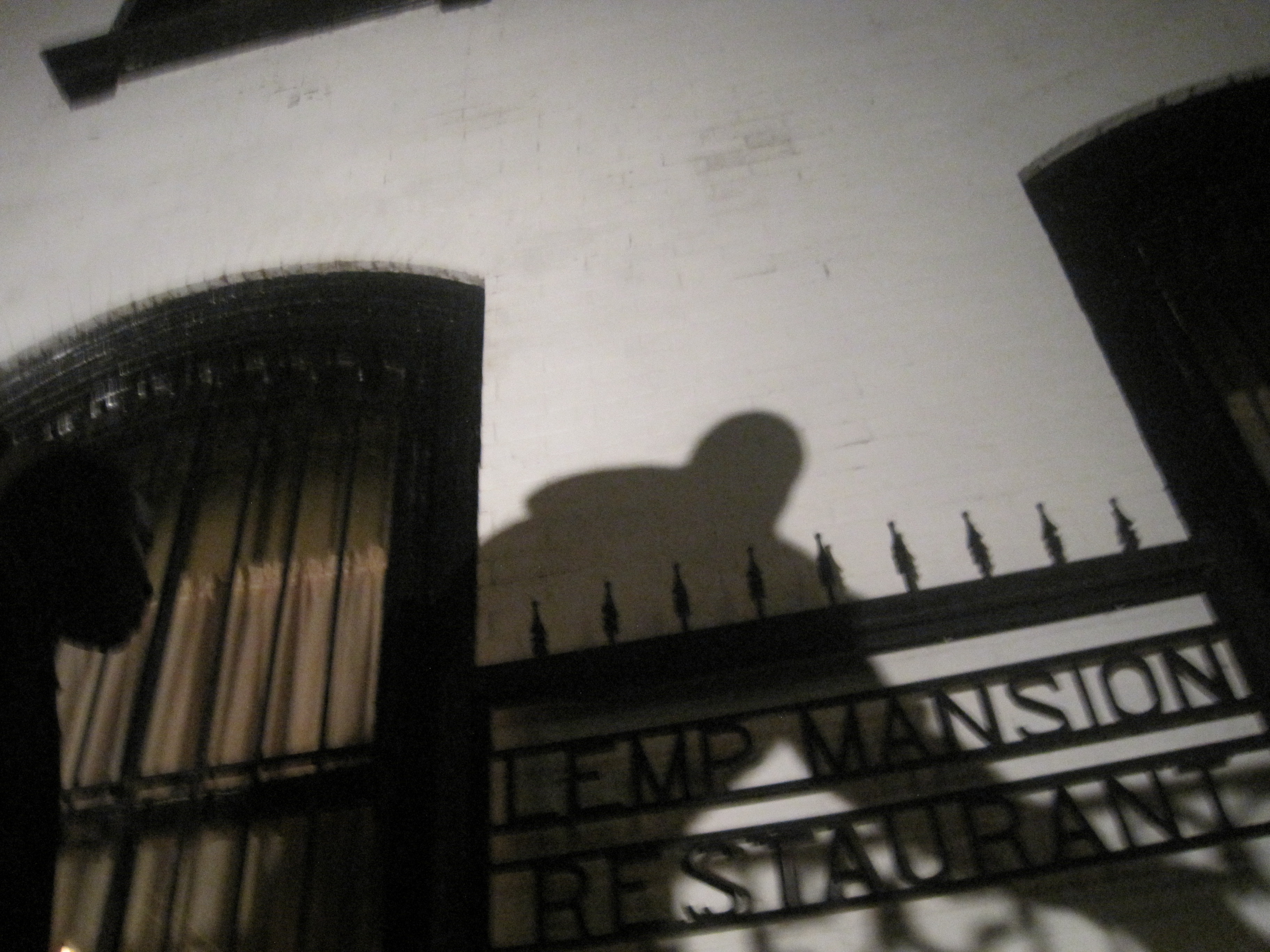
 Place: The Lemp Mansion, St. Louis.
Time: A little past 12 midnight.
Number of accomplices: 5, all human.
No ghosts,
Yet.
Browsing the archives for the adventures category.
Place: The Lemp Mansion, St. Louis.
Time: A little past 12 midnight.
Number of accomplices: 5, all human.
No ghosts,
Yet.
or Narratives Around My Childhood, a guest-post by Ibukun Babarinde, a Nigerian published poet, and friend. His first collection of poems is titled Running Splash of Rust, a sort of journeying around Ibadan and its human landscape. He sends this from Wolverhampton, United Kingdom, and he can be found on Facebook. Enjoy.
________________________________
One of the questions that troubled my young days was the mystery behind the enthralling view of the top of the rocks that peeped into the sky lines over my home town, Saki. There are many mountains towering into the sky in the town, and all of them stood in different positions. Their view like an alluring drama set, offer different scenes and sights at different time of the day, and also different views throughout the seasons of the year. The most fascinating to me is the morning view of the mountain tops, especially in foggy and hazy weather conditions. The cloud formation on the mountain would literarily make the mountain top look as though it had poked into the heavens.
On sunny afternoons, a clear view of the mountain appears in the brightness of the tropical sun, and the scanty vegetation along the mountain steep would flaunt its greenness and all together a very lovely scene to view.
The most prominent of the mountains is the Asabari, Asabari is believed to be to Saki as what Olumo Rock is to Abeokuta. History had it that the people of Saki had sought refuge in the Asabari in times of war, another rock of equal relevance is the Oloogun rock, but with a singular distinguished attribute, it is only natives of Saki that are allowed to climb the Asabari, while Oloogun accommodates every one.
Other mountains and rocks also exist; Isia, Otun, Aganran, Efun, Sangote, Ayekale, Ofeefe. These rocks sit in places as though they are survey pillars mapping the whole Saki town into quarters.
At different times of the year and season some of the mountains are worshiped, the tradition of the town ascribed some element of deity to the mountains. But to me, every day I worshiped them.
Some Christian sect also do their picnics and some other spiritual gathering on one of the mountains, they had some kind of legacy in a particular mountain called ‘Oke Adagba’ the Baptist missionaries had settled on the mountain side, and left some old college buildings and beautiful premises behind. Every Easter, all Christians in the town would gather on the mountain from morning to evening, in simulation of the Galilee where Jesus met His disciples before he ascended into heavens.
As I moved from one junior class to the other in my early school days, I had a profound preference for chairs by the window side, so that I could view of the mountains any time I wanted to. I had very close view of the Isia rock, and at quite a distance, the view of Adagba rock which has the pinnacle of the first Baptist church towering out of dark of its evening shadow.
By evident reasons, I chose to go to Ayekale Community High School, as though to retrace my ancestry. The school was built in a valley, with the Oloogun rocks on the hind side, Ayekale rocks merging into ofeefe rock, at left and front. The secondary school had a small entry road, steeply and winding, as though folding into a valley. I spent the first two years of my secondary education in this school environment before I was snatched away by the city life.
One of the most fascinating and point of my attachments to this environment is the echo that naturally occurs as a result of reverberations caused by the guardian rocks. Even now, I still remember how the period bells in the school would resound, echoing twice or more, and how the voice of the then school principal, Mr. Afonja would be snatched by the waves hovering over the valley.
_______________________
You can find previous guest-posts here. Thank you Ibukun!
I got home from school yesterday to find these post-it notes on my door. Ben had left them there.
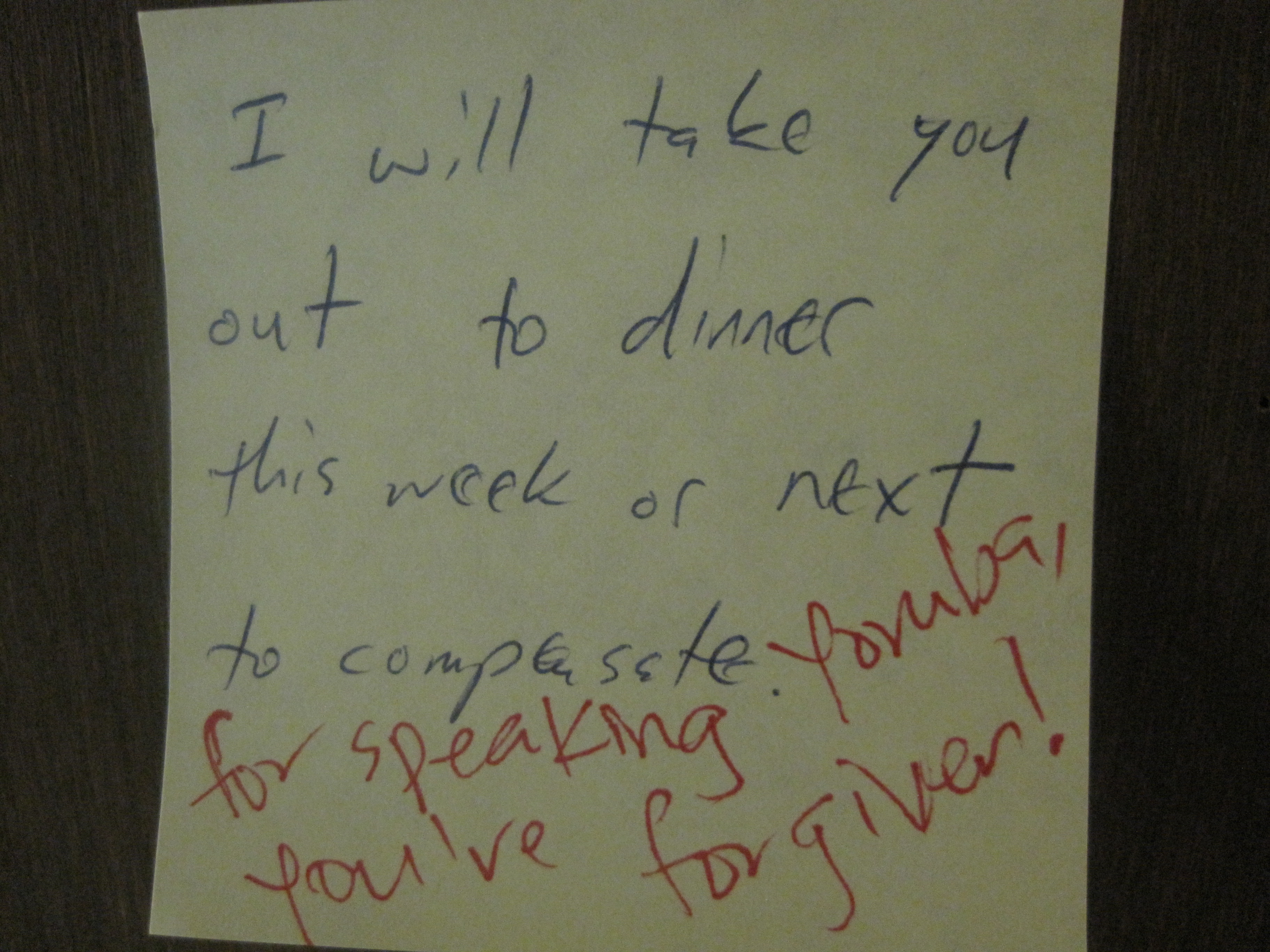
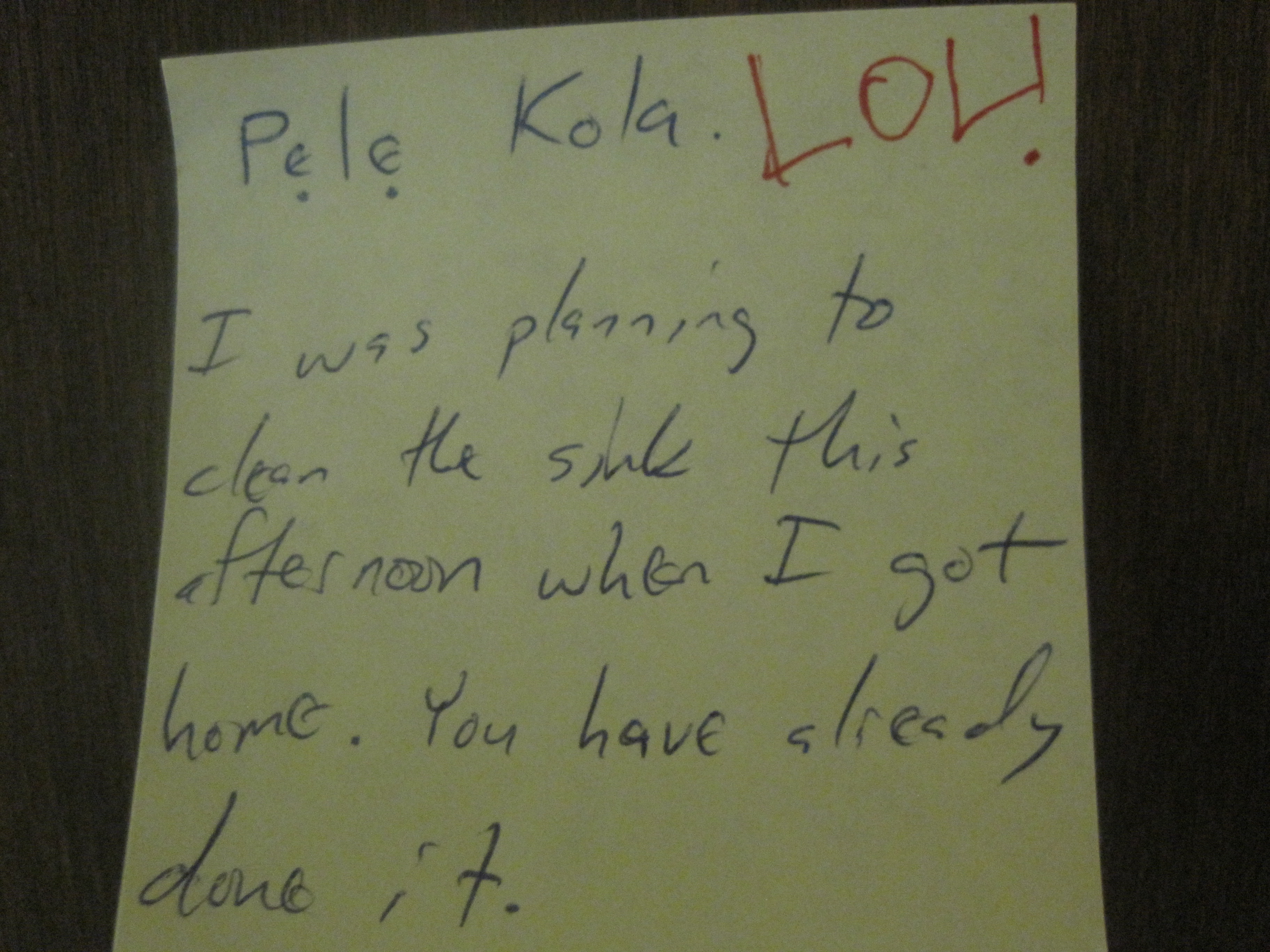
I wrote my reply in red, and left the sheets on the door so that he can see it whenever he comes back. When I see him, I intend to inform him of how impressed I am at his resourcefulness since, as I know for a fact, I wasn’t the one who taught him pele (the Yoruba word for “I’m sorry/forgive me” ) and there is no other Yoruba person living in this building, or within a mile of our residence.
 “Lemp Mansion is a house in St. Louis, Missouri. The ghosts of several Lemp family members are said to haunt the mansion.” – Wikipedia
“There is no place in the city of St. Louis with a reputation that is quite as ghostly as the Lemp Mansion. It has served as many things over the years from stately home to boarding house to restaurant…but it has never lost the fame of being the most haunted place in the city. In fact, in 1980, Life Magazine called the Lemp Mansion “one of the ten most haunted places in America”. – http://www.prairieghosts.com/lemp.html
“The Lemp Mansion is located in St. Louis, Missouri, a short distance away from the Mississippi River. Take Broadway from Interstate 55 and follow that to Cherokee Street. Go west on Cherokee and turn right onto De Menil Place. The address of the mansion is 3322. The Pointer Family has owned and operated the Lemp Mansion since 1975. The Lemp family line died out with him and the family’s resting place can now be found in beautiful Bellefontaine Cemetery.” – http://www.hauntedamericatours.com/hauntedhouses/LempMansion/
Now that we know (almost) all about this building, where it is located, and what makes it so remarkable, could someone tell me why this traveller is now thinking of actually going to spend a night there?
This is a guest post by one of my “veteran” readers and commenters from Lagos, Nigeria now living in Birmingham, UK. Adeleke Adesanya is a literary spirit in an accountant’s/economist’s bottle, and I am not sure that he has successfully resolved the conflict that those almost opposite preoccupations of money and literature must pose to the stability of his mind. Along with his beautiful wife and daughter, he runs the shoes, bags and clothing outfit in Lagos called Laurensonline and has been a supporter of this blog and blogger for a long time. Now a student in the United Kingdom, he has sent this beautifully written reaction to the weather, environment, language and people of Birmingham. I hope you enjoy this as I did.
____________________________________
I have often found that when I put pen to paper, it is easier to express my feelings and thoughts than the sight and sounds around me. Perhaps, this is because I am often so lost in thought, and I don’t look around so much, and this is why, I find, I keep my losing my way. Perhaps this also allows me to say a lot about the environment in a way a visual description would not allow. Nothing expresses better the warm welcome I received on arrival in Birmingham than how my mind related to its cold weather.
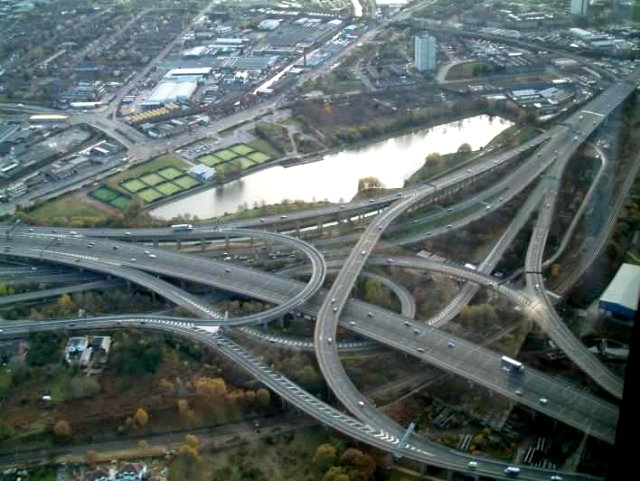 Getting lost in Lagos was no big deal. I confess my propensity to get lost, in the marketplace of my mind, is an old habit. Many a times I had driven straight ahead to Ojota, on the way to Victoria Island, because at that split second when I should have turned right towards the Third Mainland Bridge, I was lost in thought, pondering perhaps the similarities between Buddhism’s belief in reincarnation and that of Yoruba native beliefs. I would find this ironic and maybe funny, considering I had, un-Buddha-like, been unable to drive “in the moment”.
But getting lost in Lagos is a piece of cake. You might have to drive against traffic, “one way” in local parlance, to get back in track. Or you could hail an Okada, the commercial motorcyclist, to take you through back roads, back to your destination. And then, as a Yoruba proverb hints, you aren’t yet really lost in Lagos if you do ask around for directions.Getting lost in Brume is a different pot of stew. I am not so crazy as to attempt driving myself; they drive on the wrong side of the road, you see. My right to travel is entirely dependent on route schedules determined by local transport companies.
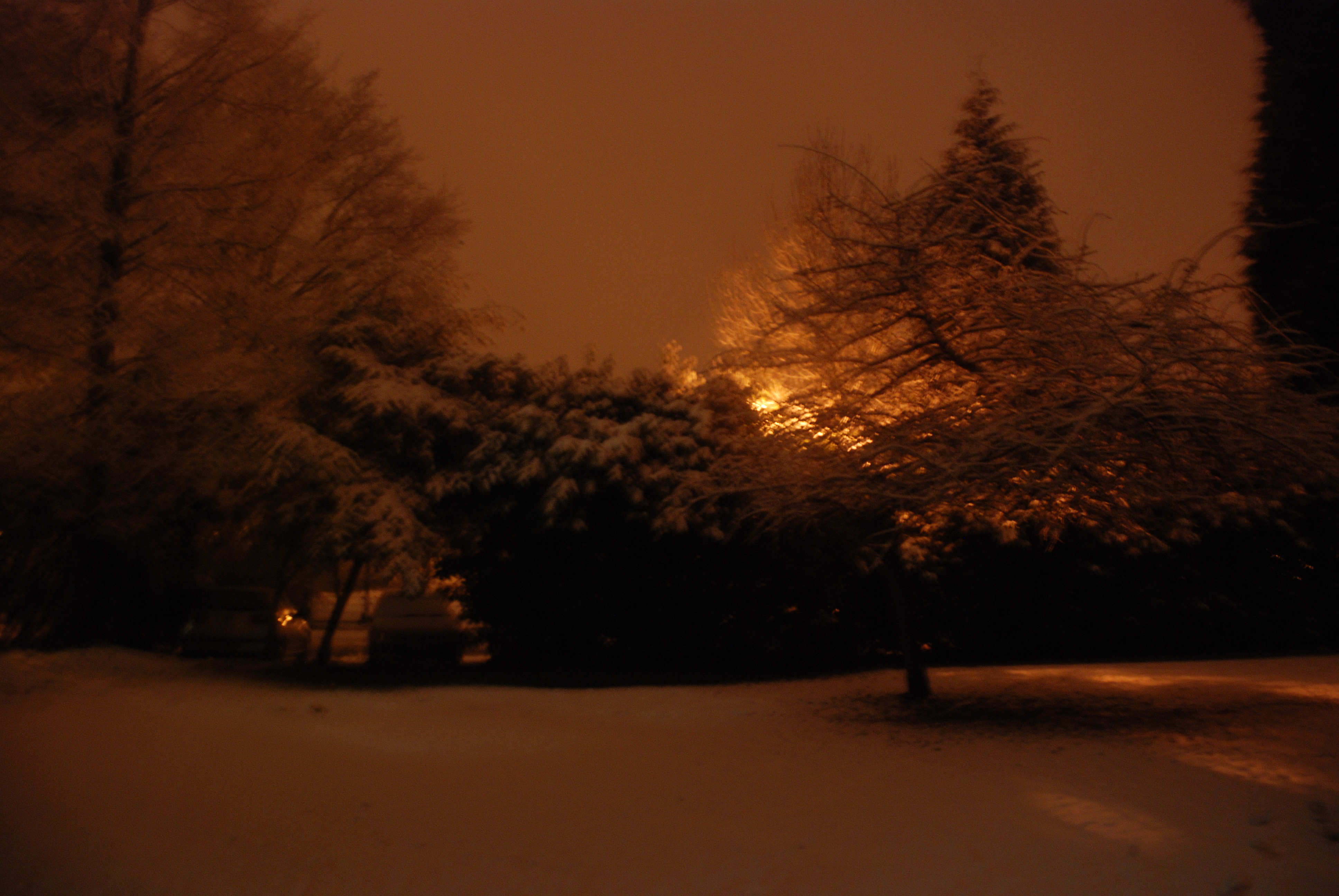 As soon as I find a seat on a bus and look through the pane onto those cold, snow covered streets, my mind retreats into its marketplace, ruminating over morbid thoughts like, if one was to die of exposure and is buried in this cold, frozen land, would the cadaver ever know corruption? It is not entirely strange that over and over again, I miss my bus stop and get driven around the outer circle of the town. Once I made a mistake of coming down from the bus. Picture me, unwisely clad in a suit, fending off snowflakes with bare freezing fingers. I tried to cheer myself up by singing lustily the chorus of Don Mclean’s American Pie with extra emphasis on “this would be the day that I die!”
And then I start asking for directions, which is not as simple as it appears. For one, the aborigines (whether white, Indian or Jamaican), I find, do not speak the English Language. Their accents are so thick; it is virtually another dialect, nay, language. It sometimes makes more sense to acknowledge the verbal challenges and try to communicate via sign language. Now they, I mean the natives, would politely go through detailed explanations of buses I should take and changes I must make, while I put on my best Nigerian smile. But in the end, I am in no wit wiser.
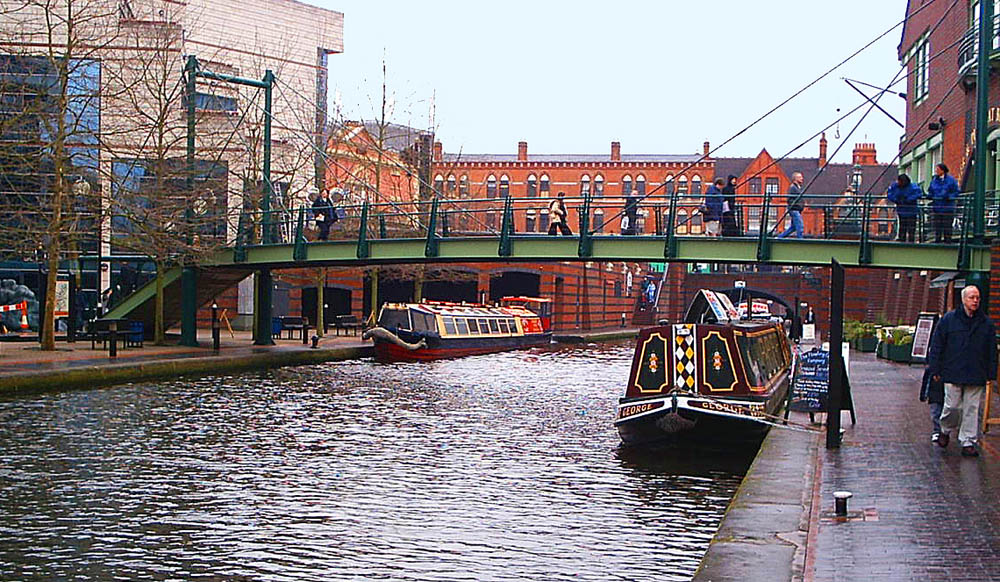 A few times, when the bus driver appeared African, I wrongly assume that linguistic challenges would easily be resolved if not eliminated. Alas, this clan is mostly of taciturn types, more eloquent in communicating by nods and grunts. I once wondered whether they had signed a pact not to speak in complete sentences in order not to betray their Nigerian accent. As if that is a bad thing…
In the end, I learnt to cope by using the internet to research my route and printing detailed maps. I also avoid travelling at night, when visibility may not be as clear. On the bright side, getting lost has its benefits. It is the perfect alibi for lateness. It makes for humorous jokes when with good company. And if you are a stranger and you really want to know the town, you really should get lost sometime. It is wonderful, the things you find and the people you meet, when you get lost, sometimes.
__________________________
He used to blog as Kiibaati, Adeleke can now be found on Twitter @adelekeadesanya.