ktravula – a travelogue!

reflections on the world

Browsing ktravula – a travelogue! blog archives for October, 2011.

Go Cardinals!

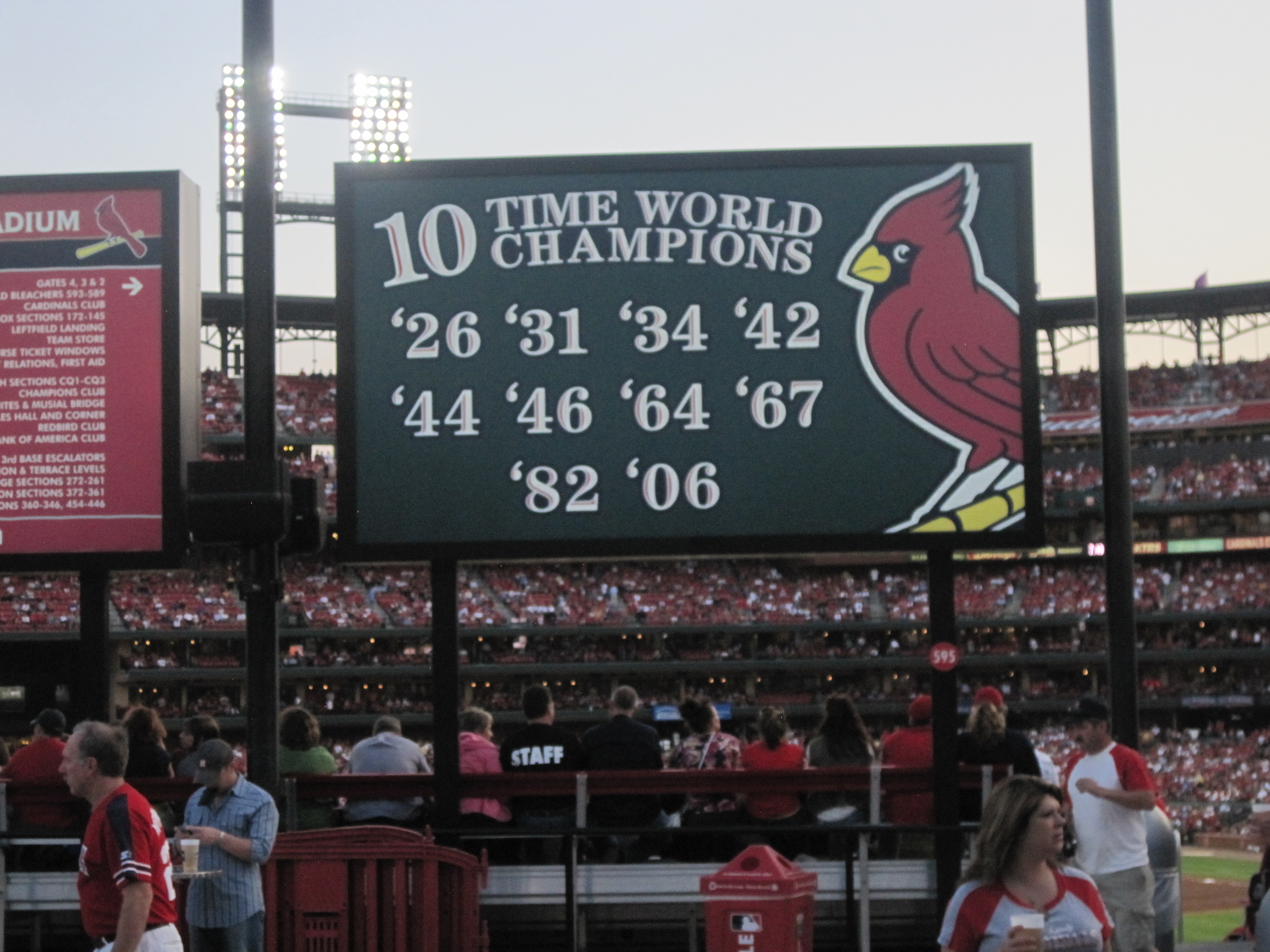
The last in the 2011 American World Series games will take place tonight. The St. Louis Cardinals are playing with the Texas Rangers. I support the Cardinals, of course, not only because they’re our team, but because they have come back with resilience in each game where they’ve been written off. Whoever wins today’s game will become the “World” Champions. Why shouldn’t it be the Cardinals?

Here’s another conceit: maybe Governor Rick Perry of Texas will reconsider running for president if his team loses. I’m kidding, of course. :)

Go Redbirds!

Update: We Won!!! The Cardinals are the World Champions!

VN:F [1.9.17_1161]
Rating: 0.0/10 (0 votes cast)
VN:F [1.9.17_1161]
Rating: +1 (from 1 vote)
Share

Book, Blook, Bloog, Blog…

Ikhide Ikheloa has joined the blogging community. This next sentence, otherwise supposed to describe him in a few words and put him in the context of Nigerian and African literature, will however be used to tell you something else: that blogging is the future, or at least the way to it. With electronic data content and text being gradually becoming the most viable medium of communication, it takes no prophet to see that what literature is will also eventually take on a more pro-electronic bias. I have said this before, and let me repeat it here (as if it needs repeating, duh) that the future of literature depends in some form (if not entirely) on the internet. A future Nobelist from blogging, anyone?

You should also follow @SalmanRushdie and @TejuCole on twitter while we’re still talking about the internet as a literary resource.

VN:F [1.9.17_1161]
Rating: 10.0/10 (1 vote cast)
VN:F [1.9.17_1161]
Rating: 0 (from 0 votes)
Share

Evening in Edwardsville

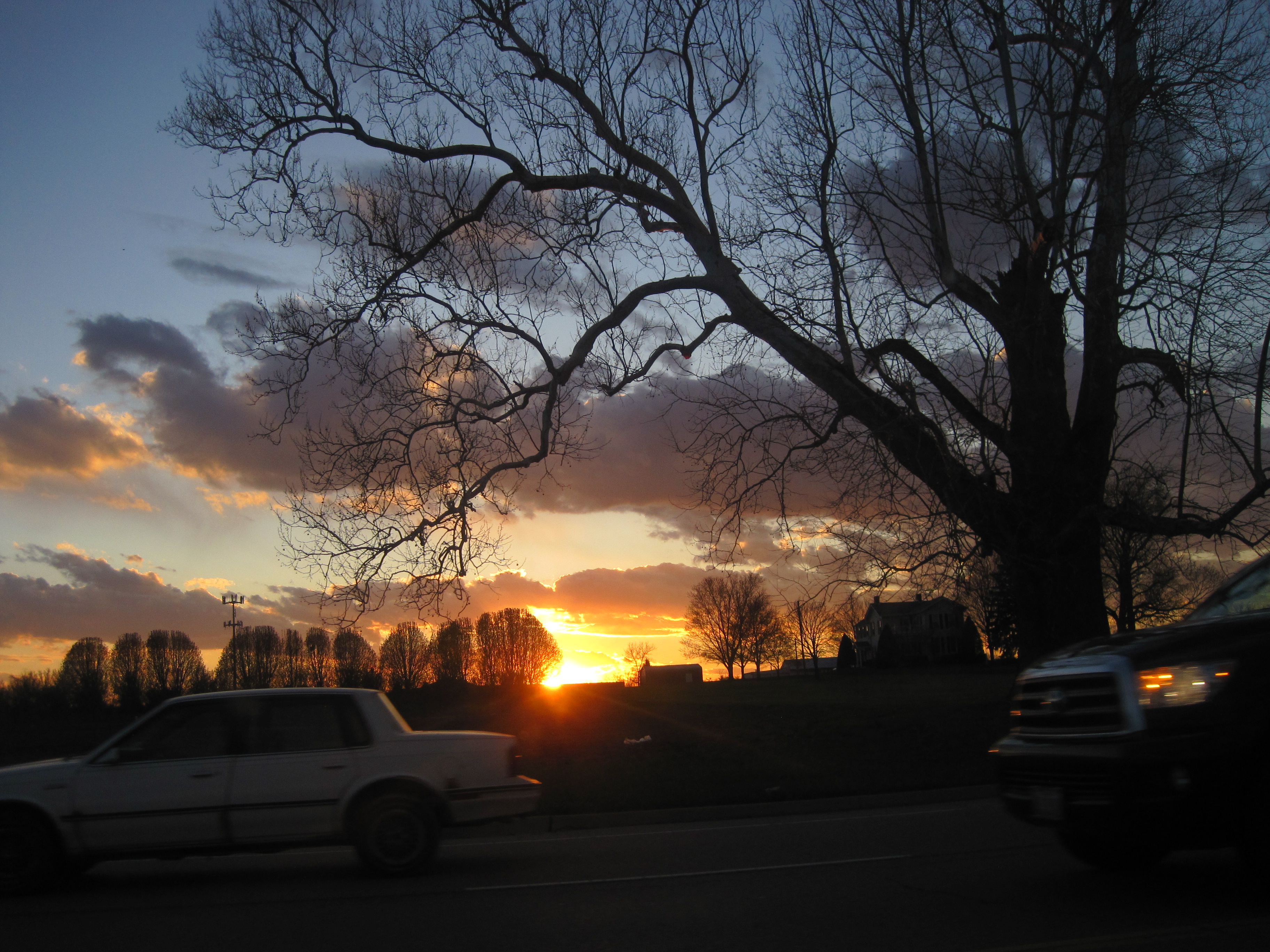
I took these series of photos in April.

The flatness of the land here makes it easy to have some of the best sunset views I’ve ever seen. My current apartment also overlooks an expanse of westward land that makes it a very delightful place to be relaxing between five and six during summer and fall evenings.

VN:F [1.9.17_1161]
Rating: 10.0/10 (2 votes cast)
VN:F [1.9.17_1161]
Rating: +1 (from 1 vote)
Share

How I Earned the Right to Speak about Anything

By Emannuel Iduma (Also published on Blacklooks)

It is hard, as I am sure most writers know, to efface the person, render it impotent in the face of the writing life. Who I am always haunts my writing; and this is why and how I argue that I have earned the right to speak about anything – and you might want to consider this word ‘right’ as encompassing as it is in the legal regime. To make this process easier (this essay is a process, every word builds into revelation), I have charted two layers: Identity and Ethnicity. You might have to be dishonest with me – you might have to forgive how I render myself so bare; all writers eventually do this, pushing themselves, in fiction, in poetry, to the place where there’s no telling what is reality and what is not, because everything is reality, everything written is real. Helene Cixous says this ofClarice Lispector, for instance.

I should give a background. I was born to an itinerant preacher – when I was born my Daddy was an employee of the Scripture Union, an interdenominational organization with offices around the world. His job description was ‘Travelling Secretary’; clearly, he ‘traveled.’ So, I begin my questioning from this point – I was born fluid; I was not to stay too long in one place, my Present was always in motion.

Of identity, I ask myself: Am I or aren’t I? How do I begin to define myself? What is the crack in the surface in which Me leaps into visibility? You should know that I do not feel Ibo enough, because I can’t speak the language well, because I respond in English when my Daddy speaks to me in Ibo. So, I am not keen to identify myself as This or That. In my case, there is no This, and no That. Perhaps it’s a This-That.

Which is why, in December 2009, when we were moving again, I wrote: ‘Who am I, after this transition?’ I cannot think this irrelevant – I am a borderline person. I have transited too much to be just one person. It is simply a question of identifying myself. What I want is to be able to say, This is Me, when a million others stand beside me, with me, in a crowd. So far, I should tell you, it has been difficult.

The antonym of ‘easy’, Anne Berger says, is not ‘difficult’. It is ‘impossible.’ If then it is not easy to define myself, is it perhaps impossible? Will I, as I remain on the border of who I am and who I can be and who I am meant to be, never identify myself in the crowd? I cannot tell if this is a shared feeling – but when I am in Ile-Ife I am not Yoruba, and when I am in Umuahia, I am not Ibo. I am simply, perhaps, Emmanuel, a person, but not the kind of person who feels ‘Emmanuel’ enough. Not inferiority, of course. It has never been a question of being less; perhaps it is that I am not ‘more’ enough, that I have ascribed too much to Being, and I am yet to meet up with that definition.

Speaking of Ethnicity might make this clearer. You see, I am an English-only onye Ibo who can comprehend Ibo spoken at any speed but is reluctant to utter any word of it, for fear of sounding incorrect. In fact I can comprehend Ehugbo, the language of Afikpo, which Ibos from other parts cannot comprehend. My Daddy wanted us to speak English first, in Akure, because he feared that we might become mischievous urchins, too ‘local’ in an urban space. So, we lapsed into an Anglo-consciousness. I do not blame him; I should not blame him. You want to blame him? English is a ‘lingua franca’, isn’t it? He remembers being mocked when he was a little boy of his inability to speak English – he remembers desiring to speak English like his brother.

But I realize that no matter how loaded, conflicted and difficult the word may seem to me, I am Ibo. By heritage. Perhaps there is some new meaning I can confer to it. I am, like, Carmen Wong, “A mishmash and hodgepodge of conundrums and contradictions.” I am ready to stay hyphenated, to add a dash to my personality, something like ‘English-only-onye-Ibo.’

Let’s imagine that there are others like me. Let’s further imagine that these others are – because this is the occupation dearest to my heart – writers. What will happen to their writing? Will it embody the same mishmash of their borderline personalities? How will they speak true to their sense of ethnicity? What home could they define for themselves, what sense of place?

Yes, I speak about myself, asking questions that bother my art. And there’s a sense of urgency, too. There is, for instance, a Facebook identity, a Twitter narrative, the acculturation that comes from being an internet user. Should we only consider the internet as utility, not as lifestyle? Isn’t the internet a border, a separate identity, part of the dashes I’ve acquired?

I’ve decided to be a writer, which in itself is an acceptance of the Borderline, an acceptance of staying a hybrid, remaining fluid, accepting that one word cannot define your process, your heritage. How do I come to the point where I am not simply termed as an ‘African writer’? I do not fear this label because I am not from Africa, or not black, or because Africa has been derogatorily called blah blah blah. I fear it because it is, somewhat, a closed parenthesis. I want to work within an open parenthesis. I want my definition to start from ‘an English-only-learning to speak Ibo-onye Ibo-internet-using writer’ with a […] around the term, leaving space for more dashes. Because I am always more; and my writing will always be bothered with this More-ness.

Hence, it is this fact that gives me the right to plunge into uncharted courses, to use unused language, to speak about anything, because there is nothing like This or That in my head. There is the possibility of everything and anything.

But this is not, cannot be, the subject of a single post. I’ll publish a Kindle e-book with the same title in January 2012. I hope my ranting is heard.

VN:F [1.9.17_1161]
Rating: 9.0/10 (1 vote cast)
VN:F [1.9.17_1161]
Rating: 0 (from 0 votes)
Share

Fading Landscapes

Spoke to mother hours ago. Two men from the landscape of my childhood just passed away. One was Pastor, the leader of one of the first churches that shaped my most vulnerable childhood times. He is around sixty years old. The other was Bro Kenny, younger, the director of the youth arm of the other church I belonged to as a teenager. Together with a select group of agile young people who all lived around that area of our youth, Bro Kenny as we called him then, led us through that period of our young restlessness.
Childhood and youth seems to fade away fast enough, and suddenly becomes a lifetime away. Faces from times past come flashing back, with strong energy currents of a familiar place… worshipers in church about three evenings a week, loving life with purest of enthusiasm, young innocent teenagers developing a crush for the very first time for fellow members of the youth group, trial music composers, dancers, proselytizers, picnickers, thespians, and general happy-go-lucky innocent boys and girls growing up within a bible-based yet liberal upbringing. Childhood was a little stricter, with religious instructions that extended beyond the church walls looming around as a constant threat and bulwark against our otherwise footloose rascally tendencies.

Where did all that go, dusty feet all around Akobo where all of this began? The naivete of youth, and the delightful profundity of biblical directions that sought to explain everything away? The simplicity of the day, the sweetness of the rain, the long pleasant smell of the harmattan at Christmas, the noise of little children during church services, the laughter of grown women and the intensity of their prayers up to heaven, the offering baskets and the coins we put in them, the general fervent intensity of youthfulness and mischief – all just floats around the plate of memory. Maybe this is what one death – or two – does: remind of how much was lost. And more importantly, how much more once was.
VN:F [1.9.17_1161]
Rating: 0.0/10 (0 votes cast)
VN:F [1.9.17_1161]
Rating: 0 (from 0 votes)
Share

I Am Confident…

…that one other positive thing about the regime change in Libya is that there will now be new Fulbright FLTAs from that country from now on. The year 2009/10 was the first time that anyone from Afghanistan was admitted into the FLTA program in a long time. A new day will hopefully lead to more understanding and better relation with these parts of the world.

VN:F [1.9.17_1161]
Rating: 0.0/10 (0 votes cast)
VN:F [1.9.17_1161]
Rating: 0 (from 0 votes)
Share

Top Twenty Questions FLTAs Would Be Dying To Ask

Every time I start believing that I am sufficiently removed from my Fulbright experience to return to my anonymous student life, I get requests like this from readers like Darsh who want to know more about the FLTA experience in the United States. I’ve once written about what to expect in a one-year trip away from home, but here are a few more. As soon as you have passed the initial stages of being selected at your local country consulate, you are almost on your way to the United States.

1. How much is the monthly stipend? A: In 2009/2010, it was a little over $1000 per month. I hear that it also depends on where in the US you’re posted to. If you are on the coast, you get a lot more (but then spend a lot more as well for food, and rent).

2. Is the stipend ever sufficient? A: Yes. With very prudent use, you would usually spend about half of the whole stipend monthly on food, housing and books. At the very worst case scenario, you would still be able to save about $300 every month.

3. Can relatives visit me from home? A: Technically, they can, but that is not what the program is about, so it is not encouraged. Believe me, the last thing you want is carrying the home baggage with you. But then, it’s up to you.

4. Can I date my students? A: No. Bad idea.

5. Can I date other students on campus? A: Yes.

6. If any of the people I date at #5 ever become my student in another semester, what should I do? A: I have no idea. But the fact that you know that such scenario is possible should make you re-think #5. You’ll find very many opportunities to meet other new people.

7. Will I need a mobile phone? A: Yes, but you don’t have to bring it along from your country.

8. Will I need a car? A: Not usually. You’d be able to get by without one on most campuses. Many FLTAs however often apply for, and obtain, a driver’s licence before they leave the US. It could be a worthwhile endeavour.

9. How cold is a cold weather? A: Very cold. If you have never seen snow before, chances are you will start needing to buy winter clothes and boots as soon as late October. Right now, it is 6 degrees Celsius.

10. Can I stay in the US after the program? A: No. There is a mandatory “return policy” which you’d sign on your way in. As soon as you’re done, you are required to head home first, before you do anything else.


to be continued…


VN:F [1.9.17_1161]
Rating: 0.0/10 (0 votes cast)
VN:F [1.9.17_1161]
Rating: 0 (from 0 votes)
Share

Defining Racism Wrong

I have come across this pernicious argument more than a few times now, and lately from Donald Trump and the “Hercules” actor Kevin Sorbo who appeared on Fox News yesterday to make the same point. The argument goes this way, that those who complain about Tea Party racism should direct their anger at what is the real racism: the fact that over 95% of black people voted for President Obama in 2008.

Sigh.

And there I was thinking that I live in a country that speaks English as its first language.

Sigh.

So here it goes, the real problem with that really pernicious argument: racism is defined as “the belief that inherent different traits in human racial groups justify discrimination.” I’ll break it down: racism is deciding that someone should NOT get something that everyone has access to, just because of the colour of their skin.

So, here again is a reason why it is less likely that it is racist that Obama was voted overwhelmingly into the White House by an overwhelming black vote: by the time he was voted as president, he was the first person of his race ever to get that close to a position that had been dominated for hundreds of years by people of a certain race.

I’ll make another analogy. Imagine these scenarios.

A: There is a school somewhere in the world which for four hundred years had admitted only people of a certain height/hair colour/dentition etc, and then one day, people who have for that period of time had been excluded from that process found a candidate that qualified as an outsider and was overwhelmingly supported – along with other support from the people who hitherto had that privilege. The student shorter than the average height requirement/hair colour/dentition is finally admitted, and everyone is happy.

B: There is a school somewhere in the world in which only one shorter/different-hair-coloured/wrongly-dentitioned student was recently admitted after about four hundred years. He is about to be removed by an overwhelming majority of the “establishment” regular people for no other reason that made sense, or had been applied for other “regular” people up until then.

Now, here is my conclusion. There is absolutely no evidence from the above to show that there is racism in any of the two scenarios A and B. Perhaps.

But…

It is MUCH LESS LIKELY racist that an underdog is collectively SUPPORTED to get equal opportunity, than that an underdog is collectively DENIED access to equal opportunity. And this is where Sean Hannity, Hercules, Donald Trump, and all the others got it wrong.

And here is one more thing. There is a clear difference between racial and racist politics. It is racial politics to vote for someone on the basis of their skin colour, but not necessarily racist. It is however clearly racist (as well as racial) to try to remove someone from a position because of their skin colour. The difference is the harm inherent in only one of them.

And here is one more thing I found on a Youtube comment: “black (and other minority) people, until 2008, have voted 100% for white candidates.” How racist is that?

VN:F [1.9.17_1161]
Rating: 10.0/10 (2 votes cast)
VN:F [1.9.17_1161]
Rating: 0 (from 0 votes)
Share
.