ktravula – a travelogue!

teaching. lanugage. travel

Browsing ktravula – a travelogue! blog archives for May, 2011.

Advances in Indigenous Language Technology

I am fortunate to have worked with some of the most prominent people at the forefront of language technology development in Nigeria. In 2004, during the West African Languages Congress (WALC 2004) conference co-hosted by the Department of Linguistics in my alma mater in Ibadan and the African Languages Technology Initiative, I came across some of the new advancements in localization, and efforts in making African languages relevant to changing times. Work in the area of language technology has produced a Yoruba (and I believe Igbo, Hausa) keyboard for computers, a corpus for translation of computer/technology terms from English to local languages, and a growing body of researchers working between Engineering, Computer Science and Linguistics to bring local languages into the global marketplace. I was the webmaster and quasi-secretary of the conference and I remember the breadth and depth of the number of presentations we had from linguists and scholars from all over the world. (You can find the proceeds from the conference in this bookalso available on Amazon).

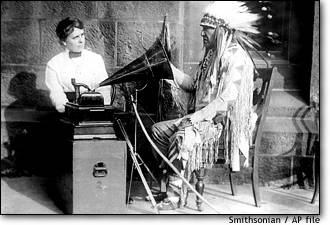
Photo from http://www.u.arizona.edu/~cashcash/ILAT.htmlAll new mobile phones aimed at Nigeria today from Nokia, Samsung and Sony, as well computer products from Microsoft have made options in prominent local languages a part of their products. I’ve worked since 2004 in the field of such translation work. Today we have Facebook and Twitter as the most prominent means of global interaction, but they are still mainly in major world languages. Twitter announced their translation centre a few months ago but have still not opened it up to any African language in spite of (I can at least vouch for my) repeated calls and bids for a chance of voluntary participation. I would personally love to see twitter usable (at least) in Yoruba (and I will keep badgering twitter’s translation centre until they budge.) It will take a while for major languages on the continent to catch up with the speed of technological advancements, but significant changes are made everyday.

This article – published in Farafina Magazine’s Issue #12 - documents one of my earliest experiences with language translation involving technology, mixed with some of my personal reflections on the field, on life and culture, and on the process and interactions involved in translation. I wrote it in 2006 and it was published in December 2007. (H/T @toluogunlesi for bringing this piece back to my attention today.)

VN:F [1.9.22_1171]
Rating: 0.0/10 (0 votes cast)
VN:F [1.9.22_1171]
Rating: +1 (from 1 vote)

The News Paradox

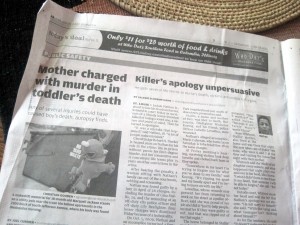
The biggest headline on today’s St. Louis Post-Dispatch is the story of a family found dead in their home, killed in a domestic dispute. A few days ago, it was the tragedy in Joplin, and before that the story of someone sentenced for having shot two or three people to death. What is common to all the headlines I have read in this paper since I’ve had access to it is the way they meticulously document the tragedies that happen around us every day. I have a problem with that – not in the fact that tragedy happens, but in the way it assaults my senses when I wake up in the morning. I don’t know about you, but I like to have my breakfast while reading something even remotely encouraging. So I skip to the art section to read cartoons, and reviews.

“Do you think it leads to a kind of schizophrenia” Ron asked me once, “when you live every day as ordinarily as possible, and then open the paper and see news of murder, accidents, death sentences etc that you never hear of during the day?” It might, I believe, if one spends everyday poring through the many sad news scattered around the pages of the daily. St. Louis has been called the most dangerous city in America – no doubt because of the amount of bad press it gets, yet in all my visits the city, even to the so called dangerous parts, I have never encountered anything remotely frightening. But there it is: a city judged by the media reports of the amounts of crimes that take place within its borders. I guess if one were to make travel or leisure plans based on media reports alone, we would never go anywhere.

A friend of mine said his biggest fear of coming to America was based on the fear of coming to school one day (or walking on the street) and having someone come in and start shooting, or hold everyone up at gun point. Thanks to Hollywood, cable tv and news reports from America to all the parts of the world, reckless use of firearms tops the list of the most defining characteristics of the country’s street life. And yet – until I went with a group of friends to a firing range just a few weeks ago – I had never seen a gun with anyone in the country except the cops (who always have them safely tucked in their holsters). People who make a decision about visiting Nigeria from reading what the papers report every day will go through this same schizzy process of reconciling the normal everyday life of its citizens, comparable to any elsewhere in the world, with the newspapers’ fascination with tragedy.

Do newspapers know just how much they influence foreigner perception. Well, of course they do. But what can they do about it?

VN:F [1.9.22_1171]
Rating: 0.0/10 (0 votes cast)
VN:F [1.9.22_1171]
Rating: +1 (from 1 vote)

Weekend in the Town

Memorial Day comes up on Monday, which means that we have a four day weekend, and time for Pirate of the Caribbean 4, Hangover II and some good old home theatre with leg stretched on the leather sofa. In an alternate world, there will also be some tone project transcribing, short writings, bibliography gathering for forthcoming MA project, and some hours of being serious reading abandoned books and babysitting cats. Four days is not so long when one thinks about it. Have a good one, readers.

VN:F [1.9.22_1171]
Rating: 0.0/10 (0 votes cast)
VN:F [1.9.22_1171]
Rating: 0 (from 0 votes)

Riding the Storm

There was a huge tornado in this area four weeks ago, and I was in it. It was a most frightening experience. I was returning home from campus, and it ended with my car being spun 360 degrees and tossed off the road along with the meal of fries I had just bought at McDonald’s. (It gives a new meaning to “taking the car for a spin”, doesn’t it?) Luckily I wasn’t hurt, and neither was the car. But by the time I read the news and saw what it had done to the airport in St. Louis that same night, I knew how much luckier I had been. It moved planes and cars, broke glasses and knocked down electric systems. Since then I’d sworn never to ignore tornado alerts.

The biggest storms I’ve ever experienced in Nigeria usually happened at night. There have been tornadoes but they are rare and spaced out so I’d never actually been in one. They’re deadly nevertheless. Imagine walking in the rain at night and have the wind throw an aluminum roof straight at your jugular or at your car while you drove. Just a few years ago, father went to bed in a large house of two storeys and woke up with an open roof. The whole roofing frame had been moved a few miles down the street. My grandfather’s house once suffered the same fate many years later.

The houses in America are built differently, it seems, and thus suffer a seemingly greater damage. Then there is the powerful wind running at such speed that can wreck anything in its way. Two days ago, another big stormed roamed this parts and killed about 117 people from Missouri to Minnesota. Pictures from Joplin MO looked like a war zone. When people say “be thankful for little blessings”, I guess they mean that one should be grateful for not being in a place like this when the storm comes. It is a frightening, and often devastating experience.

UPDATE: President Obama has promised to visit the town on Sunday.


VN:F [1.9.22_1171]
Rating: 10.0/10 (1 vote cast)
VN:F [1.9.22_1171]
Rating: 0 (from 0 votes)

Ramblings on Tone

What can be observable in the process of acquisition of tones by L1 speakers of English? Chinese (and a host of other languages in South East Asia) already gives us an enormous database of observable patterns. African languages (in this case Yoruba) occupy another level of the problematic realm for those merely accustomed to a language based on intonation, stress and inflections. Why is it funny when my friends call me in a way that rhymes my name with Cola or “caller” rather than with the uptalk mode of pronouncing the “sugar” in “sugar daddy” or the “brother” in “brotherly love”. Tone is music, rising and falling as needed. What makes it imperative that speakers of English relate to it only in one direction, viz (usually) as a high-low in a two syllable word? Why will “Bolaji” sound like “allergy” rather than the “beautiful” in “beautiful girl”?

What other nuggets are observable? How much proficiency can an L1 English speaker really acquire in a tonal language like Yoruba? With the many years of study by people like Karin Barber and (perhaps) Susanne Wenger, could they/did they pass the native-like proficiency test? What is the bar for native-like proficiency anyway?; and besides the general list of impediments across second language learning processes, what are the specifics in L2 tonal language learning that presents the greatest obstacles? And how does it happen? It is after all equally easy, equally difficult to learn any language either at L1 or L2 level given an equal and sustained level of interest and low affective filter. Jargons, jargons.

A linguist might know, or at least be neck deep in the long process of finding out.

VN:F [1.9.22_1171]
Rating: 0.0/10 (0 votes cast)
VN:F [1.9.22_1171]
Rating: 0 (from 0 votes)
.