Whenever I sit and stare at an empty page like tonight, my mind wanders to the the many things I could be blogging about besides the adventures of class and teaching. Earlier today I tried without luck to write a poem about the foods I eat with names I can’t pronounce. I failed. The reason for that, in my opinion, is that I was hungry. I had the image I wanted to portray in my head, but my stomach hurt a little from not having eating in the morning so I couldn’t get my words out in the particular order of my choice. Feeling deflated, I went out and got myself some really nice microwave-ready food which was ready to eat in less than ten minutes. But by the time I got well fed and satiated, the muse had left. I was left only with desires of different kind so I went into Facebook to stare at pictures instead. When poet Maya Angelou came to SIUe in early October, one of the poems she read was called The Health-Food Diner, a satirical response to a particular occasion when she was stopped from smoking in a public restaurant. In the absence of a own lyrical response to my particular situation at the moment, I will leave you with Maya Angelou’s words. It’s certainly one of her funniest poems.
| The Health-Food Diner |
No sprouted wheat and soya shootsAnd Brussels in a cake, Carrot straw and spinach raw, (Today, I need a steak). Not thick brown rice and rice pilaw Or mushrooms creamed on toast, Turnips mashed and parsnips hashed, (I'm dreaming of a roast). Health-food folks around the world Are thinned by anxious zeal, They look for help in seafood kelp (I count on breaded veal). No smoking signs, raw mustard greens, Zucchini by the ton, Uncooked kale and bodies frail Are sure to make me run to Loins of pork and chicken thighs And standing rib, so prime, Pork chops brown and fresh ground round (I crave them all the time). Irish stews and boiled corned beef and hot dogs by the scores, or any place that saves a space For smoking carnivores. -- Maya Angelou
Culled from http://www.cs.rice.edu/~ssiyer/minstrels/poems/383.html
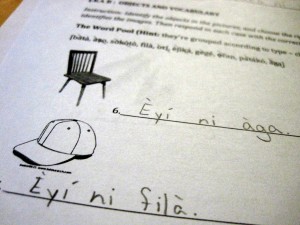 The test of students’ progress is not always as tricky if one is lucky to have listened to the students beforehand and to have understood what they are used to and what they are not. In most cases, as long as the teacher knows that his purpose in the test is not just to surprise and attack but to monitor his own progress, there would be less tears and heartbreaks when the day is over.